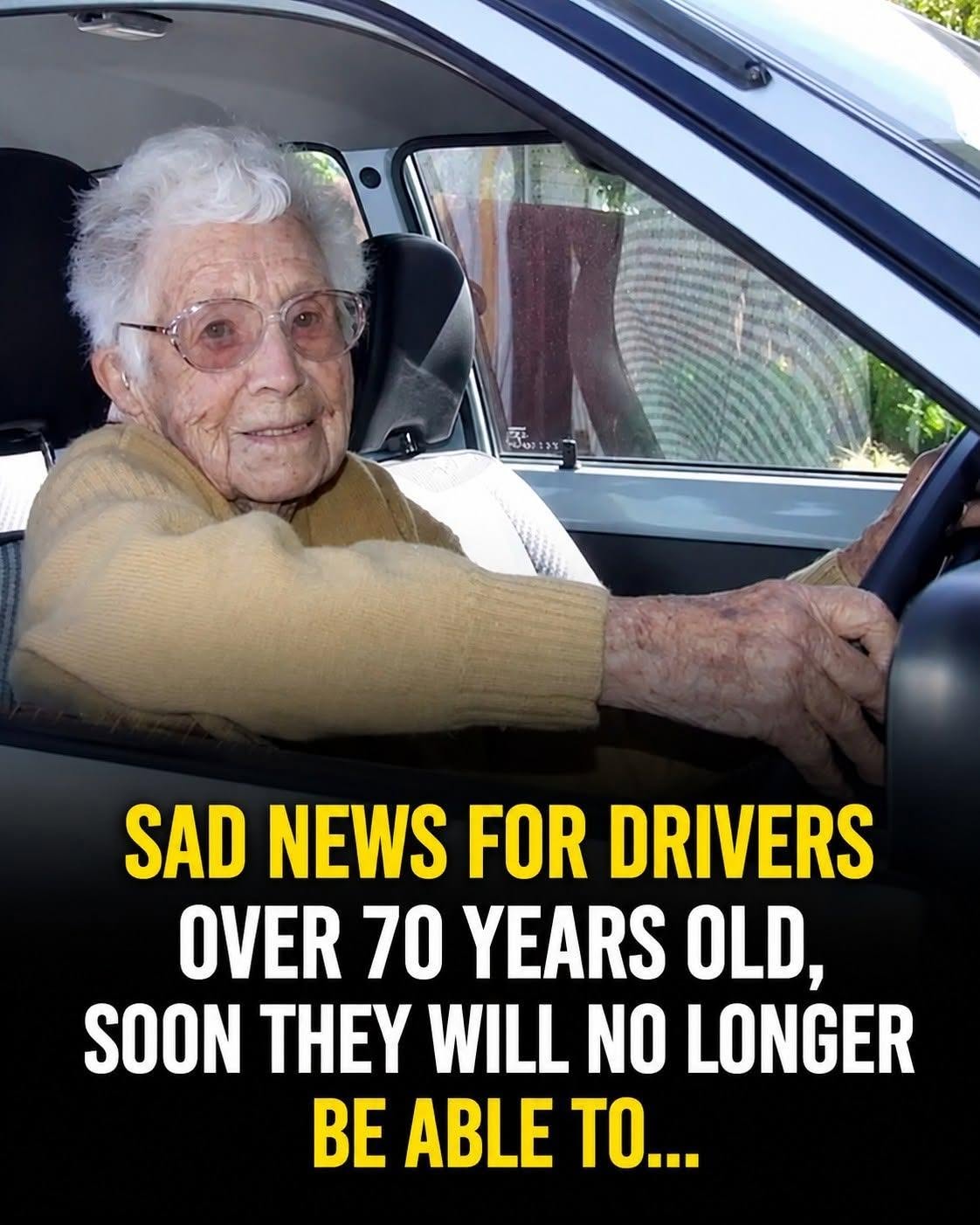
Turning 70 does not automatically mean handing over the car keys.
Millions of older adults continue driving safely well into their 70s, 80s, and sometimes beyond. At the same time, aging can gradually affect vision, hearing, reaction time, mobility, and other abilities that are important behind the wheel.
So the important question isn’t simply, “How old is too old to drive?”
It’s: “Can this person still drive safely?”
Is There an Age When You Must Stop Driving?
In many places, there is no universal maximum driving age.
Driving rules are established by individual countries—and, in countries such as the United States, often by individual states or jurisdictions. Some require older drivers to renew their licenses more frequently, appear in person, undergo vision testing, or provide medical information.
Therefore, claims that everyone must stop driving at 70, 75, or 80 should be treated cautiously.
Your age alone doesn’t determine whether you’re capable of driving safely.
Always check the licensing rules where you live because renewal requirements can differ considerably.
Why Driving Can Become More Difficult With Age
Driving requires several abilities to work together simultaneously.
You need to see road signs and pedestrians, hear important sounds, move your head and limbs comfortably, react quickly to unexpected events, judge distance and speed, and make decisions in rapidly changing situations.
Some of these abilities can gradually change with age.
That doesn’t necessarily make an older person an unsafe driver. It simply means that regular evaluation becomes increasingly valuable.
8 Warning Signs That Deserve Attention
1. Getting Lost on Familiar Roads
Occasionally missing a turn happens to everyone.
But repeatedly becoming confused in familiar neighborhoods, forgetting the destination, or struggling to navigate routes that were previously easy can be concerning.
2. Frequent Near-Misses
A near-miss isn’t necessarily proof that someone should stop driving.
Repeated close calls, however—particularly when the driver doesn’t recognize the danger—deserve attention.
3. New Scratches or Dents on the Car
Finding unexplained damage on mirrors, bumpers, wheels, or doors can sometimes indicate difficulties judging distances.
This becomes more concerning when damage appears repeatedly and the driver cannot explain how it happened.
4. Difficulty Staying in the Correct Lane
Regularly drifting between lanes, striking curbs, making unusually wide turns, or struggling to position the vehicle can indicate problems with vision, attention, coordination, or spatial judgment.
5. Confusing the Gas and Brake Pedals
Pedal errors can have devastating consequences.
Any repeated difficulty distinguishing or operating the accelerator and brake should be taken seriously.
6. Difficulty Reacting to Traffic
If traffic lights, pedestrians, braking vehicles, or unexpected obstacles seem to appear “too quickly,” reaction time or attention may need evaluation.
7. Increasing Confusion at Intersections
Complex intersections require rapid processing of signs, signals, other vehicles, pedestrians, and right-of-way rules.
Repeated hesitation, inappropriate stopping, or dangerous turns can indicate that driving has become more demanding than it once was.
8. Passengers Are Becoming Afraid
Family members aren’t always objective, but repeated concerns from several people shouldn’t automatically be dismissed.
If passengers regularly feel unsafe, ask what specific behaviors they have noticed.
Vision Matters More Than Many People Realize
Good driving requires more than simply being able to read letters on an eye chart.
Peripheral vision, depth perception, contrast sensitivity, and the ability to see in low light are also important.
Conditions that become more common with age—including cataracts, glaucoma, and macular degeneration—can interfere with driving ability.
Regular eye examinations can identify problems before they seriously affect everyday activities.
Medications Can Affect Driving Too
This is an often-overlooked issue.
Certain prescription and over-the-counter medications can cause drowsiness, dizziness, blurred vision, slowed reactions, confusion, or impaired coordination.
The risk can become greater when several medications are taken together.
Never discontinue prescribed medication simply because you’re concerned about driving. Instead, ask a doctor or pharmacist whether any of your medicines—or combinations of medicines—could impair driving.
Does Slower Reaction Time Automatically Mean Stop Driving?
No.
People age differently, and many older drivers compensate intelligently for changing abilities.
Someone might avoid driving after dark, stay away from congested highways, leave greater distances between vehicles, avoid severe weather, or choose familiar routes.
These adaptations can help maintain independence while reducing unnecessary risk.
However, compensating has limits. If fundamental driving skills are significantly impaired, avoiding nighttime driving alone won’t solve the underlying problem.
A Professional Driving Assessment Can Help
When families are uncertain, the decision doesn’t necessarily have to become an argument between parent and child.
A healthcare professional can evaluate relevant medical issues, while a qualified driving rehabilitation specialist may assess vision, cognition, physical abilities, reaction time, and actual driving performance.
This can provide a more objective answer to the question:
“Am I still safe behind the wheel?”
When It May Be Time to Stop
Giving up driving can represent a major loss of independence, so the decision deserves sensitivity.
But safety has to come first.
Repeated crashes, serious near-misses, getting lost, significant cognitive impairment, inability to follow traffic rules, severe visual limitations, or dangerous pedal mistakes can indicate that independent driving is no longer safe.
In those circumstances, stopping driving isn’t a punishment. It’s a safety decision for the driver, passengers, pedestrians, and everyone else on the road.
Plan for Transportation Before the Keys Are Gone
One reason conversations about driving become so emotional is that the car often represents much more than transportation.
It represents grocery shopping, medical appointments, visiting friends, seeing family, and deciding where and when to go somewhere.
Planning alternatives early can make the transition easier: family transportation, taxis, rideshare services, community transportation programs, public transit, grocery delivery, and medical transportation may all play a role depending on where someone lives.
The Bottom Line
Being over 70 does not automatically make someone an unsafe driver.
Some 80-year-olds remain excellent drivers, while some much younger people have medical or cognitive problems that make driving unsafe.
The best measure isn’t the number on a birth certificate. It’s the person’s vision, cognition, physical ability, reaction time, medication effects, driving behavior, and accident history.
Age should prompt greater awareness—not an automatic loss of independence.
And when warning signs begin accumulating, addressing them early can protect both independence and safety for as long as reasonably possible.
More Blog
- Drinking Water on an Empty Stomach — What Science Actually Supports (No Hype, Just Facts)
- Waking Up Between 3 and 5 AM? It Might Be Your Soul Trying to Talk to You
- What a “Bleach” Patch on Your Underwear Really Means — And Why It’s Actually a Good Sign
- This Drink May Weaken Your Bones From The Inside — But Everyone Drinks It Anyway