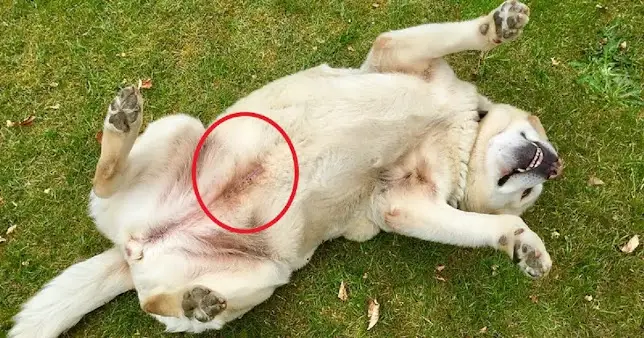
Have you ever noticed a small blue or green line tattooed on a dog’s belly and wondered what it means?
At first glance, it can be surprising. Some people assume it’s decorative or even unnecessary. However, this tiny mark serves an important medical purpose and is commonly used by veterinarians, shelters, and animal rescue organizations.
Far from being cosmetic, the blue line is a simple, humane way to communicate a critical piece of information about a dog’s medical history.
In most cases, it means the dog has already been spayed or neutered.
What Is the Blue Line Tattoo?
The blue line is a small tattoo applied by a veterinarian during a spay or neuter procedure. It is usually placed near the surgical incision while the dog is already under anesthesia.
The mark may appear as:
- A short blue line
- A small green line
- One or two dots
- A tiny symbol depending on veterinary practice
Unlike decorative tattoos, this mark serves only one purpose: to indicate that the animal has been sterilized.
Quick Facts
| Detail | Explanation |
|---|---|
| Purpose | Indicates a dog has been spayed or neutered |
| Timing | Applied during surgery |
| Location | Usually near the incision site |
| Color | Most often blue or green |
| Pain | None beyond the existing procedure |
| Visibility | Designed to remain visible throughout the dog’s life |
Because the tattoo is applied while the dog is anesthetized, it does not cause any additional discomfort.
Why Is the Tattoo Important?
Many people wonder why a permanent marker is necessary when veterinary records already exist.
The answer is simple: records do not always follow the animal.
Dogs may change owners multiple times throughout their lives. They may be surrendered to shelters, transferred between rescue organizations, or found as strays with no medical documentation.
A small tattoo helps eliminate uncertainty.
Common Challenges Without a Tattoo
Surgical Scars Can Disappear
Over time, surgical scars often fade and become difficult to see, especially beneath thick fur.
Records Can Be Lost
Medical documents may be misplaced, destroyed, or unavailable when a dog changes ownership.
New Owners May Not Know the Dog’s History
Many adopted or rescued animals arrive with little or no reliable background information.
Microchips Don’t Always Contain Medical Details
While microchips are excellent identification tools, they are not always updated with complete medical histories.
The tattoo provides instant visual confirmation that sterilization has already been performed.
Preventing Unnecessary Surgery
One of the most important reasons for the tattoo is avoiding repeat surgical procedures.
Imagine a stray dog arrives at a shelter with no paperwork and no visible scar.
Without confirmation of sterilization status, staff may have to schedule exploratory surgery to determine whether the dog has already been spayed or neutered.
The tattoo eliminates much of that uncertainty.
Benefits of the Tattoo
- Permanent identification
- Immediate recognition by veterinary professionals
- Reduced risk of unnecessary surgery
- Lower costs for shelters and rescue organizations
- Improved continuity of care
A mark that takes only seconds to apply can prevent significant stress and expense years later.
Why Blue or Green Ink?
The color choice is practical rather than decorative.
Blue and green inks are commonly used because they remain visible over time and contrast well against a wide variety of skin tones and coat colors.
Advantages of Blue or Green Ink
High Visibility
The colors are easier to identify during routine examinations.
Veterinary Standardization
Many veterinary organizations recommend blue or green markings for sterilization tattoos.
Long-Term Durability
These pigments tend to remain recognizable for years.
Medical Recognition
Veterinarians and shelter workers often immediately associate these colors with sterilization procedures.
The goal is not appearance. The goal is clear communication.
How the Tattoo Is Applied
The process is quick and straightforward.
During the spay or neuter surgery, the veterinarian completes the sterilization procedure as usual.
Before finishing, a small amount of sterile tattoo ink is placed just beneath the skin near the incision.
The tattoo then heals alongside the surgical site.
Because the dog is already anesthetized, no additional restraint or procedure is required.
Typical Candidates
Shelter and Rescue Animals
Most shelters routinely include sterilization tattoos before adoption.
Low-Cost Spay and Neuter Clinics
Many community clinics use tattoos as standard practice.
Private Veterinary Practices
Policies vary, but many veterinarians either offer or recommend them.
International Programs
Usage differs by country but is common throughout North America and many parts of Europe and Australia.
Common Questions About Sterilization Tattoos
Does the Tattoo Hurt?
No. The tattoo is applied while the dog is already under anesthesia.
Will It Fade Over Time?
It may become lighter as years pass, but it generally remains visible enough for identification.
Can Long Fur Hide It?
Sometimes. However, parting the fur usually reveals the mark.
Are There Other Veterinary Tattoos?
Yes. Some organizations use ear tattoos or other small marks for identification, vaccination programs, or specific medical procedures.
Can a Dog Receive the Tattoo Later?
It is possible, but most veterinarians prefer applying it during the sterilization procedure itself because the animal is already anesthetized.
Is the Ink Safe?
Yes. Veterinary tattoo inks are specifically designed for medical use and are considered safe when properly applied.
Benefits of Spaying and Neutering
The tattoo itself represents a broader commitment to responsible pet care.
Sterilization offers several potential benefits:
For Female Dogs
- Reduced risk of uterine infections
- Lower risk of mammary tumors
- Prevention of unwanted pregnancies
For Male Dogs
- Elimination of testicular cancer risk
- Reduced likelihood of certain behavioral issues
- Prevention of unwanted litters
For Communities
- Reduced pet overpopulation
- Lower shelter intake numbers
- Improved animal welfare outcomes
The tattoo simply serves as a lifelong reminder that this important step has already been completed.
A Small Mark with a Big Purpose
At first glance, the blue line may seem insignificant.
Yet that tiny mark communicates valuable information to veterinarians, shelters, rescue workers, and future pet owners.
It helps prevent unnecessary procedures.
It preserves medical history.
It supports responsible animal care.
Most importantly, it ensures that years from now, even if paperwork has disappeared and ownership has changed, someone will still know that the dog received appropriate veterinary treatment.
Final Thoughts
If you discover a small blue or green line tattoo on your dog’s abdomen, there is usually no cause for concern.
In most cases, it simply indicates that the dog has been spayed or neutered.
The mark is safe, painless, and highly practical. It serves as a permanent medical identifier that can help veterinarians and shelters provide better care throughout the animal’s life.
What looks like a simple line is actually a thoughtful tool used across the veterinary community—a quiet symbol of responsible pet ownership and long-term care.
Sometimes the smallest marks carry the most important messages.
And in this case, that message is simple:
This dog has already received the care it needs.
More Blog
- Drinking Water on an Empty Stomach — What Science Actually Supports (No Hype, Just Facts)
- Waking Up Between 3 and 5 AM? It Might Be Your Soul Trying to Talk to You
- What a “Bleach” Patch on Your Underwear Really Means — And Why It’s Actually a Good Sign
- This Drink May Weaken Your Bones From The Inside — But Everyone Drinks It Anyway