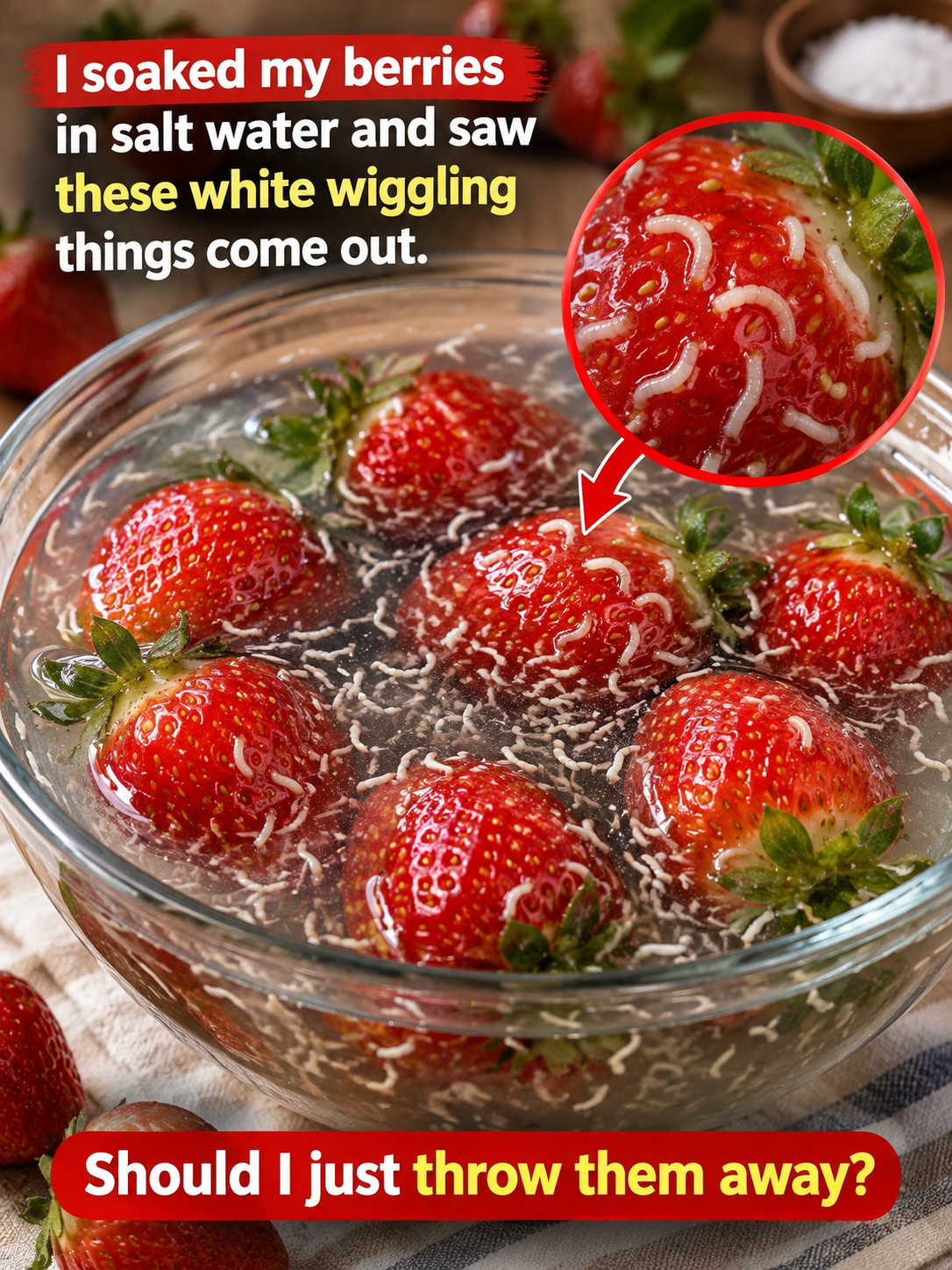
I soaked my strawberries in salt water and saw white worm-like things, and the first reaction is usually disgust followed by one urgent question: should the whole batch go straight into the trash?
Not necessarily.
Fresh strawberries can sometimes carry tiny insects, larvae, mites, bits of plant material, or other small organisms. Because strawberries grow close to the ground and have a soft, textured surface, they can pick up more debris than fruits with thick peels. Salt water may cause some small organisms to move or become easier to notice.
However, seeing something wriggle does not automatically mean the strawberries contain dangerous parasites. It also does not prove that every strawberry hides “worms.” Viral videos often make this look far more dramatic than it really is.
The more important question is whether the fruit looks fresh, smells normal, and has been handled safely.
I remember the first time I saw one of those strawberry soaking videos online. It made me look at a perfectly normal carton in the refrigerator differently for a few minutes. Then I realized the video showed one batch under unusual conditions, not proof that all berries were unsafe. After that, I started paying more attention to practical signs instead. Mold, softness, leaking juice, and bad smells tell you much more about whether strawberries belong in the trash than a scary social media clip does.
I Soaked My Strawberries in Salt Water: What Are Those White Things?
Tiny Insects or Larvae Can Occasionally Be Present
Strawberries develop outdoors where they come into contact with soil, leaves, moisture, and insects.
That means tiny organisms can occasionally be present on the fruit.
Small insects may crawl on the surface.
Mites can be difficult to see.
Fruit flies and other insects may lay eggs near ripe or damaged fruit.
In some cases, small larvae may develop around overripe or compromised produce.
However, identifying a tiny moving object from a photograph or video is difficult.
Not every white strand or speck is a worm.
Some material may come from damaged fruit tissue, flower parts, dirt, or debris.
Water movement can also make lightweight particles appear alive when they are not.
Magnification makes the effect even more dramatic.
Something almost invisible to the naked eye can look enormous in a close-up video.
That can make an ordinary produce issue seem alarming.
It is also important to distinguish fruit-associated insects from parasites that infect humans.
Many tiny organisms found around plants cannot live inside the human body.
Therefore, spotting one does not automatically mean someone who ate the fruit will develop an infection.
Still, most people understandably do not want insects in their food.
That is why inspection and proper washing make sense even when the health risk appears low.
Salt Water Can Reveal Things, but It Is Not a Safety Test
Salt-water soaking became popular because it can disturb some insects.
Changes in the surrounding water may encourage small organisms to move away from the fruit or become more visible.
That makes the method visually convincing.
However, salt water does not tell you whether strawberries are safe from bacteria, viruses, pesticides, or other contaminants.
It also does not guarantee that all insects have been removed.
A batch that produces no visible movement is not necessarily sterile.
Likewise, seeing one small organism does not mean the entire batch is dangerous.
That is why salt water should not be treated as a definitive test.
It can show you something interesting.
It cannot replace normal food-safety practices.
The safest routine remains straightforward.
Inspect the berries.
Discard spoiled ones.
Rinse fresh fruit under cool running water.
Dry it properly.
Store it in the refrigerator.
These steps matter far more than whether a salt soak produces an alarming-looking video.
Should You Throw the Strawberries Away After Seeing Something Move?
Look for Mold, Slime, Leaking Juice, and Bad Odors
The condition of the strawberries matters more than the presence of one tiny insect.
Fresh strawberries should feel reasonably firm and smell fresh.
Some softness may develop as they ripen, but major deterioration is different.
Discard berries that show visible mold.
Also discard fruit that feels slimy, smells fermented or unpleasant, leaks excessively, or looks badly decomposed.
Strawberries have soft flesh and high moisture content.
Because of that, mold can spread beyond the spot you can see.
Cutting a fuzzy section off a soft berry does not provide the same reassurance you might get when trimming mold from a much firmer food.
If one strawberry in a package shows mold, remove it promptly.
Then inspect the surrounding fruit carefully.
Berries touching the moldy one deserve extra attention.
You do not always need to discard the entire container automatically, but widespread mold or moisture damage is a good reason to throw the batch away.
Use common sense.
A healthy-looking berry with one small surface insect presents a different situation from a carton filled with soft, leaking, moldy fruit.
A Small Insect Does Not Automatically Mean the Fruit Is Dangerous
Finding a tiny larva can feel disturbing.
However, unpleasant and dangerous are not always the same thing.
Many small insects associated with fruit are not human parasites.
Accidentally eating an insect fragment also does not automatically cause illness.
In fact, small amounts of insect material can occasionally occur in many agricultural foods.
The larger food-safety concern with fresh produce often involves microorganisms that you cannot see.
Bacteria can contaminate fruit through soil, water, handling, transport, or storage.
That is why visibly “clean” fruit still needs rinsing.
If strawberries look fresh and you discover one small insect, rinsing the remaining berries thoroughly may be enough for many people.
However, personal comfort matters too.
If the experience makes you unwilling to eat the fruit, discarding it is reasonable.
Food should not create anxiety at every bite.
The important point is that you do not need to assume the berries are full of dangerous worms.
How to Wash and Store Strawberries More Safely
Running Water Is the Simplest Routine
For everyday cleaning, cool running water works well.
Place the strawberries in a clean colander.
Rinse them thoroughly while gently moving or rubbing them so water reaches the surface.
You do not need dish soap.
Do not use detergent.
Do not apply bleach or household cleaners to fruit.
Produce can absorb residues, and those substances can create their own health risks.
After rinsing, dry the strawberries gently with a clean paper towel or allow them to air-dry on a clean surface.
Remove stems according to your preference, although washing the fruit before cutting can reduce the chance of transferring surface contamination inward.
If the fruit has visible dirt, spend a little more time rinsing it.
Still, avoid aggressive scrubbing because strawberries bruise easily.
The goal is to remove surface debris while keeping the fruit intact.
Wash Berries Close to the Time You Plan to Eat Them
Strawberries spoil quickly when they remain wet.
Extra moisture encourages mold growth.
For that reason, washing a large batch immediately after bringing it home can shorten shelf life if you do not dry it thoroughly.
A practical approach is to store strawberries unwashed in the refrigerator and wash them shortly before eating.
Inspect the container when you bring it home.
Remove any damaged or moldy berries.
That can reduce the chance of spoilage spreading.
If you prefer to wash berries in advance, dry them very well before refrigeration.
Use a clean container with some airflow rather than trapping excess moisture.
Storage conditions matter almost as much as washing.
Strawberries left at warm room temperature for too long can deteriorate quickly.
Refrigeration slows spoilage and helps maintain texture.
Salt Water, Vinegar, and Other Popular Strawberry Washing Tricks
Vinegar and Salt Can Have Limited Uses, but They Are Not Sterilizers
Many online tips claim that salt water or vinegar can “kill everything” on strawberries.
That overstates what these methods can do.
A diluted vinegar rinse may reduce some surface microorganisms.
Salt water may disturb small insects.
However, neither method sterilizes the fruit.
Neither method guarantees the removal of all pathogens.
Neither can restore strawberries that have already spoiled.
If the berries are moldy or rotten, soaking them longer does not make them safe again.
That distinction matters.
Cleaning can remove some surface contamination.
It cannot reverse decay.
People sometimes focus so much on elaborate washing methods that they overlook obvious spoilage.
The better approach is simpler.
Start with good fruit.
Store it properly.
Wash it before eating.
Discard anything questionable.
Avoid Turning Produce Washing Into a Complicated Ritual
Food-safety advice works best when people can follow it consistently.
A complicated routine involving salt, vinegar, baking soda, long soaking times, repeated rinses, and special equipment may sound thorough, but it is not always necessary.
Long soaking can also soften delicate berries and reduce quality.
Strawberries absorb water easily because their skin is thin and their structure is fragile.
That can leave them mushy.
For most households, the most useful routine is still the basic one.
Inspect.
Rinse.
Dry.
Refrigerate.
Do not use soap.
Do not eat visibly spoiled fruit.
This simple routine is much easier to repeat every time.
Frequently Asked Questions
Are the white worm-like things in strawberries dangerous?
Not necessarily. They may be tiny insects, larvae, mites, or even bits of plant material. Many fruit-associated organisms are not human parasites.
Does soaking strawberries in salt water make all bugs come out?
No. It may disturb some small organisms and make them easier to see, but it does not guarantee complete removal.
Should I throw away strawberries if I see one small larva?
Not automatically. Inspect the fruit carefully. If the berries are fresh, firm, and free from mold or spoilage, thorough rinsing may be enough. If they look rotten or damaged, discard them.
Is vinegar better than plain water for washing strawberries?
Vinegar may reduce some surface microorganisms, but plain running water remains a practical standard for routine washing. Vinegar does not sterilize fruit.
What if I already ate strawberries before seeing the “worm” videos?
There is usually no reason to panic. Accidentally eating a tiny fruit-associated insect does not automatically cause infection. Seek medical care only if you develop serious or persistent symptoms.
Conclusion
I soaked my strawberries in salt water and saw white worm-like things, but that does not automatically mean the whole batch is dangerous.
Fresh strawberries can occasionally carry tiny insects, larvae, mites, or debris because they grow outdoors and have a delicate, textured surface.
Salt water may make some of those things easier to see.
However, it is not a reliable safety test, and it does not prove that every strawberry contains hidden worms.
Instead, pay attention to the condition of the fruit.
Discard strawberries that are moldy, slimy, leaking, badly damaged, or unpleasant-smelling.
For fresh berries, rinse them thoroughly under cool running water and dry them before eating or storing.
Avoid soap, detergent, bleach, and exaggerated “detox” methods.
If you already ate strawberries without soaking them first, there is usually no reason to worry.
The best protection comes from ordinary food-safety habits, not viral tricks.
Inspect your berries, wash them properly, refrigerate them, and use common sense when anything looks spoiled.
More Blog
- Drinking Water on an Empty Stomach — What Science Actually Supports (No Hype, Just Facts)
- Waking Up Between 3 and 5 AM? It Might Be Your Soul Trying to Talk to You
- What a “Bleach” Patch on Your Underwear Really Means — And Why It’s Actually a Good Sign
- This Drink May Weaken Your Bones From The Inside — But Everyone Drinks It Anyway