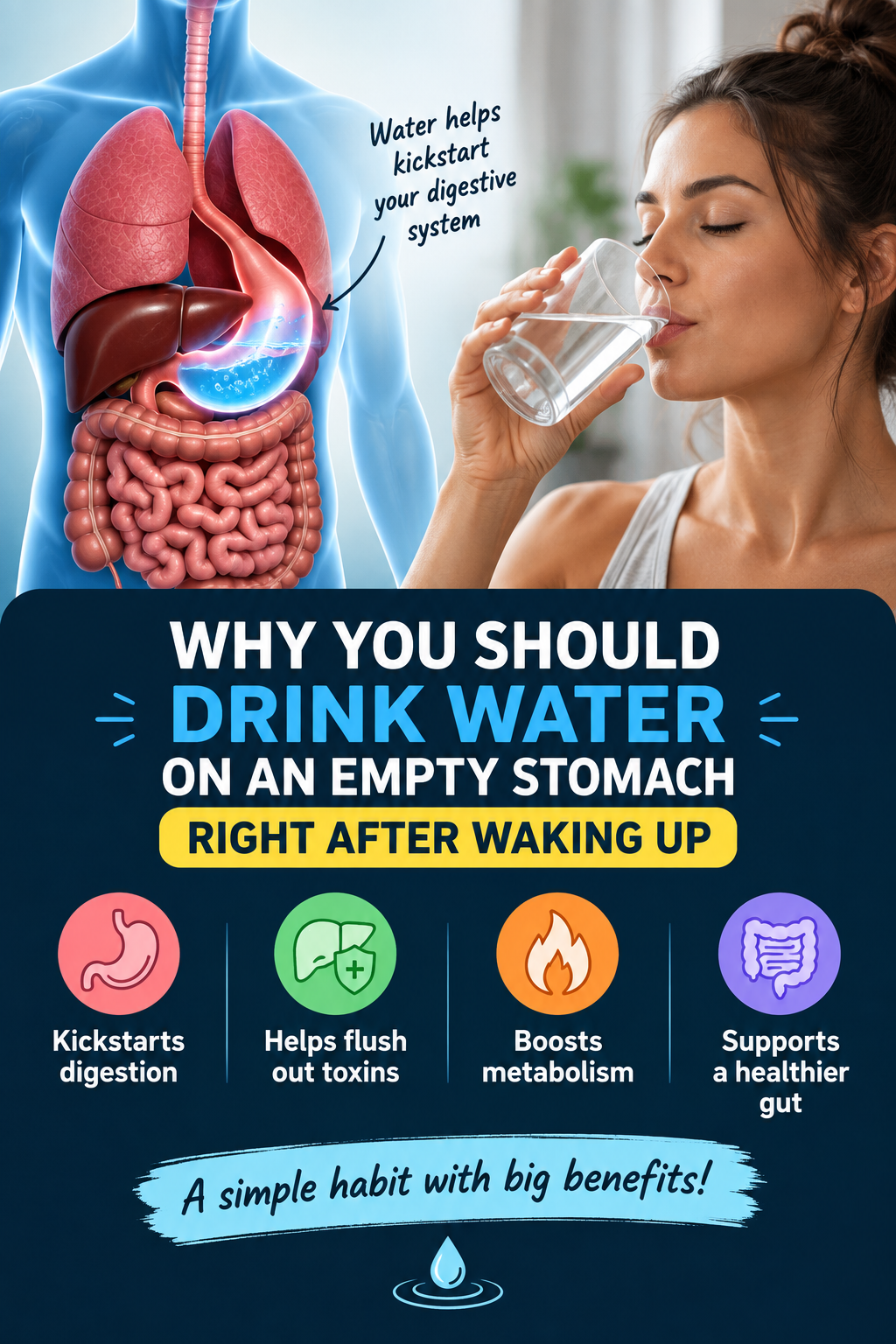
Drinking Water on an Empty Stomach has become one of those wellness habits surrounded by surprisingly dramatic promises. Some posts claim it flushes toxins, melts fat, clears the skin, boosts metabolism, or “activates” the digestive system. Others insist the water must be warm, lemon-infused, or consumed in a specific quantity before breakfast.
The reality is much simpler. Drinking Water on an Empty Stomach can be a healthy and convenient way to start the day because your body has gone several hours without fluids. Water supports normal hydration, digestion, circulation, temperature regulation, and kidney function. However, drinking it before breakfast does not give water special detoxifying powers that disappear once you eat.
I started keeping a glass of water beside the kitchen sink because mornings used to begin with coffee before anything else. After a few weeks, I noticed that drinking water first made me feel less dry and more awake, especially on warm mornings. I did not suddenly lose weight, develop glowing skin, or experience some dramatic “detox.” What changed was much more ordinary: I started the day hydrated instead of waiting several hours before remembering to drink. That simple habit turned out to be useful precisely because it was easy, not because it was magical.
So what does Drinking Water on an Empty Stomach actually do? The evidence points toward modest, practical benefits. The important factor is hydration itself, not a narrow morning window.
Why Drinking Water on an Empty Stomach Can Feel Helpful
Rehydration After a Night of Sleep
Your body continues losing water while you sleep. You breathe out water vapor, perspire, and produce urine throughout the night. Therefore, waking with a dry mouth or feeling thirsty is completely normal, especially after sleeping in a warm room or eating salty foods the previous evening.
Drinking Water on an Empty Stomach replaces some of that lost fluid. That can make you feel more comfortable and may reduce mild symptoms of dehydration such as thirst, dry mouth, or a slight headache. However, not everyone wakes meaningfully dehydrated, and there is no universal amount of fluid that every person needs immediately after getting out of bed.
Hydration needs vary according to body size, climate, diet, physical activity, pregnancy, breastfeeding, medications, and medical conditions. People who exercise early in the morning or live in hot environments may naturally need more water than someone spending the morning indoors.
The useful part of the habit is consistency. If drinking a glass of water after waking helps you remember to hydrate, then the timing works in your favor. You do not need to force down a huge bottle before breakfast to receive the benefits.
Morning Water and Alertness
Mild dehydration can affect concentration, mood, and physical comfort. Therefore, drinking water after several hours without fluid may help some people feel more refreshed when they wake.
However, water does not act like caffeine. It does not directly stimulate the nervous system in the same way coffee or tea does. Instead, it helps restore normal fluid balance, which allows the body to function as intended.
People sometimes describe this effect as “waking up the metabolism.” That phrase sounds scientific but often means very little. Your metabolism never switches off overnight, and it does not require a glass of water to restart in the morning.
Drinking Water on an Empty Stomach may still feel energizing because thirst and dehydration can make you feel sluggish. Replacing water can therefore improve how you feel without causing a dramatic metabolic transformation.
If you prefer coffee first, you do not need to panic. Coffee contributes fluid too, although adding a glass of water can make overall hydration easier to maintain.
Digestion, Bowel Movements, and the “Detox” Myth
Can Morning Water Help With Constipation?
Water plays an important role in normal digestion. The digestive system needs enough fluid to help keep stool appropriately soft and easier to pass.
For someone who does not drink enough during the day, increasing overall fluid intake may support bowel regularity. A morning glass can become part of that routine, especially when combined with adequate dietary fiber, physical activity, and regular bathroom habits.
Some people notice the urge to have a bowel movement after Drinking Water on an Empty Stomach. The act of eating or drinking can stimulate gastrointestinal movement, and warm beverages may feel especially soothing. However, this response varies widely.
Water alone does not cure chronic constipation. Persistent constipation can result from medications, low fiber intake, pelvic-floor problems, hormonal conditions, reduced intestinal motility, and many other causes.
If constipation continues despite reasonable lifestyle changes, or appears with bleeding, severe abdominal pain, vomiting, unexplained weight loss, or inability to pass gas, medical evaluation matters more than simply increasing morning water.
Water Supports Detoxification, but It Does Not “Flush Toxins”
The word “detox” gets used so loosely that it often creates confusion.
Your liver continuously processes substances in the bloodstream. Your kidneys filter waste products and help regulate water, electrolytes, and acid-base balance. Your lungs remove carbon dioxide, while the digestive system eliminates solid waste.
Water supports these normal processes because the body requires adequate hydration to function properly. However, Drinking Water on an Empty Stomach does not suddenly accelerate detoxification or force mysterious toxins out of your body.
The kidneys do not wait until morning to begin filtering blood. The liver does not shut down while you sleep. These organs work continuously.
Drinking extreme amounts of water does not improve detoxification either. In fact, excessive water intake can dilute sodium levels in the blood and become dangerous.
A healthier perspective is simple: drink enough throughout the day to maintain normal hydration. You do not need an aggressive “flush.”
Weight Loss, Metabolism, and Other Popular Claims
Does Drinking Water Before Breakfast Burn Fat?
Water can support weight management indirectly, but Drinking Water on an Empty Stomach does not cause fat to melt away.
Water contains no calories, so replacing sugary beverages with water can reduce total calorie intake. Additionally, drinking water before meals may help some people feel slightly fuller, which could influence how much they eat.
However, these effects remain modest. Weight management depends on total energy intake, food quality, physical activity, sleep, medications, hormones, medical conditions, and many other factors.
Older studies sometimes reported a temporary increase in energy expenditure after people drank water. Later research has questioned how large or meaningful that effect actually is. Even if water slightly raises energy expenditure for a short period, the change is far too small to serve as a reliable weight-loss strategy by itself.
So Drinking Water on an Empty Stomach can fit comfortably into a healthy weight-management routine. Just do not expect the timing itself to burn significant body fat.
Skin, Immunity, and Disease-Cure Claims
Hydration matters for healthy skin, but drinking water first thing in the morning does not directly cure acne, erase wrinkles, or create dramatic skin changes in an otherwise well-hydrated person.
Likewise, water supports normal immune function because every cell in the body depends on appropriate fluid balance. Still, Drinking Water on an Empty Stomach does not “boost immunity” in a way that prevents all infections.
It also does not cure diabetes, high blood pressure, kidney disease, digestive disorders, or chronic fatigue. Those conditions require appropriate diagnosis and treatment.
Be especially cautious when a wellness article links morning water to dozens of unrelated diseases. That usually signals exaggerated marketing rather than strong evidence.
Water remains valuable without dramatic claims. It supports circulation, temperature control, digestion, kidney function, physical performance, and many other ordinary processes.
Sometimes ordinary benefits are more useful than miracle promises.
How to Make Drinking Water on an Empty Stomach a Healthy Habit
How Much Water Should You Drink in the Morning?
There is no scientifically required “perfect” amount of water that everyone must drink immediately after waking.
For many adults, one ordinary glass is a comfortable starting point. You can drink more if you feel thirsty or have higher fluid needs. The goal is not to force a large volume quickly.
Total daily hydration matters far more than consuming a specific amount before breakfast. Water from beverages and foods both contributes to overall fluid intake. Fruits, vegetables, soups, milk, tea, and other foods and drinks all add water.
Your urine can offer a rough clue about hydration, although it is not a perfect measurement. Pale yellow urine generally suggests adequate hydration, while consistently dark urine may indicate that you need more fluid.
Certain people need individualized fluid guidance. People with advanced kidney disease, heart failure, liver disease, or disorders affecting sodium balance may receive specific instructions from a healthcare professional.
In those situations, following medical advice matters more than generic recommendations about Drinking Water on an Empty Stomach.
Warm, Cold, Lemon, or Plain Water?
You do not need warm water for better absorption. Your body can absorb cold, room-temperature, or warm water effectively.
Warm water may feel pleasant, especially in cold weather or for someone who dislikes drinking cold beverages early in the morning. Cold water can feel refreshing after exercise or in hot climates. Choose whichever temperature encourages you to drink comfortably.
Adding lemon can improve flavor and contributes a small amount of vitamin C, depending on how much you use. However, lemon water does not transform ordinary water into a detox drink.
Frequent exposure to acidic drinks can also affect tooth enamel. If you regularly drink lemon water, avoid holding it in your mouth for long periods, and rinse with plain water afterward.
Plain water remains perfectly effective.
The best version of Drinking Water on an Empty Stomach is simply the version you can maintain comfortably without turning it into an elaborate ritual.
Frequently Asked Questions
Is drinking water on an empty stomach healthier than drinking it after breakfast?
Not necessarily. Your body benefits from adequate hydration throughout the day. Drinking water before breakfast can be convenient after several hours without fluids, but the empty stomach itself does not create special health effects.
Does drinking water first thing in the morning detox the liver?
No. Your liver continuously processes substances in the body, while your kidneys continuously filter waste. Water supports normal organ function, but morning timing does not create a special detoxification effect.
Can drinking water on an empty stomach help you lose weight?
It may support weight management if water replaces sugary drinks or helps you manage appetite, but it does not directly burn meaningful amounts of fat. Overall diet, activity, sleep, and long-term calorie balance matter much more.
Is warm water better than cold water in the morning?
No strong evidence shows that warm water hydrates you better than cold or room-temperature water. Choose the temperature that feels most comfortable and helps you drink enough.
Can you drink too much water in the morning?
Yes. Drinking excessive amounts of water too quickly can lower blood sodium levels in rare cases and become dangerous. Drink according to thirst and individual needs rather than forcing several liters at once.
Conclusion
Drinking Water on an Empty Stomach can be a useful morning habit, but its benefits do not require miracle explanations.
After several hours of sleep, a glass of water can replace fluid losses and help you start meeting your hydration needs early in the day. It may also support normal digestion and bowel regularity, particularly if your overall fluid intake has been low.
However, morning water does not uniquely detox the liver, flush away mysterious toxins, cure chronic diseases, or melt body fat.
Your kidneys and liver work around the clock.
Your metabolism continues while you sleep.
And your body does not require warm lemon water at exactly 7 AM to begin functioning.
What matters most is your total hydration pattern.
Drink when you are thirsty. Increase fluids when heat, exercise, pregnancy, illness, or other circumstances raise your needs. Choose water often, especially instead of sugar-sweetened drinks.
If Drinking Water on an Empty Stomach helps you build that habit, keep doing it.
The routine is inexpensive, simple, and easy to maintain.
It just does not need the hype to be worthwhile.
More Blog
- Waking Up Between 3 and 5 AM? It Might Be Your Soul Trying to Talk to You
- What a “Bleach” Patch on Your Underwear Really Means — And Why It’s Actually a Good Sign
- This Drink May Weaken Your Bones From The Inside — But Everyone Drinks It Anyway
- One Month Before a Heart Attack: 7 Subtle Warning Signs Your Body May Send (And What to Do)