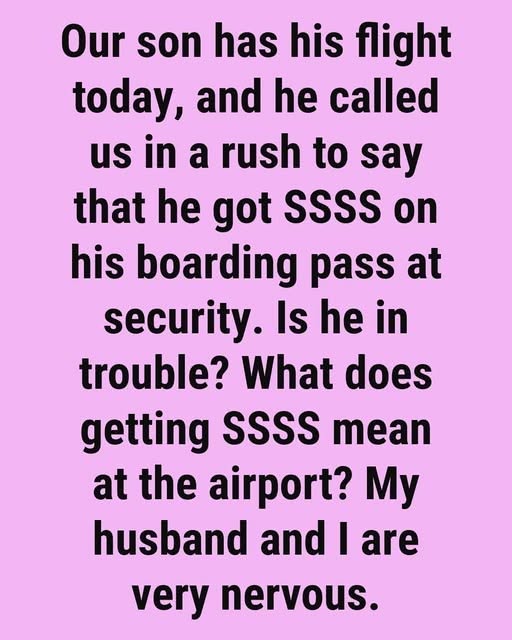
What Does ‘SSSS’ on Your Boarding Pass Mean? is one of those travel questions people often ask only after spotting four unexpected letters on a boarding pass. The abbreviation stands for Secondary Security Screening Selection, and it indicates that the traveler has been selected for additional security screening before boarding.
Seeing SSSS does not automatically mean you did something wrong, and it does not by itself prove that you appear on a government watchlist. Instead, it means airport security will apply additional screening procedures to your trip. DHS documentation specifically recognizes “Secondary Security Screening Selection (SSSS)” as a travel experience that can lead someone to seek redress if it happens repeatedly or appears to result from an error.
The practical response stays simple: allow extra time, keep your identification and boarding documents accessible, follow the security officers’ instructions, and avoid assuming the letters mean something more dramatic than the screening process itself.
I first heard about SSSS from a traveler who noticed the letters only after reaching the airport. The unfamiliar mark instantly made the trip feel more stressful because nobody had explained what it meant. Instead of knowing what to expect, the traveler imagined everything from a missed flight to being placed on a permanent list. The actual experience felt much less dramatic. Security simply took longer, officers conducted additional checks, and the traveler eventually continued to the gate. What stayed with me was how much of the anxiety came from uncertainty rather than the screening itself. Once you understand the letters and prepare for extra time, the experience becomes much easier to approach calmly.
Understanding What SSSS Actually Means
SSSS Means Additional Security Screening
What Does ‘SSSS’ on Your Boarding Pass Mean? starts with the four-word phrase behind the abbreviation: Secondary Security Screening Selection.
In practical terms, security systems have designated that boarding pass for a more thorough screening process than the traveler might otherwise receive.
The exact procedures can vary. Therefore, two travelers with SSSS may not experience every identical step.
However, additional screening can involve closer examination of carry-on items, further identity or document checks, additional physical screening, or other security procedures required before the traveler can proceed.
The important distinction involves what SSSS does and does not tell you.
SSSS tells you that additional screening applies.
It does not provide the reason on the boarding pass.
Likewise, it does not function as a public explanation of how the passenger-screening system reached the selection.
Modern airport boarding-pass scanners can determine the appropriate screening level associated with a boarding pass. DHS procurement documentation in 2026 explicitly describes scanners that read encrypted boarding-pass barcodes to determine the appropriate level of screening.
Therefore, the letters you see form only the visible part of a broader security process.
If SSSS appears, do not waste valuable airport time trying to decode the security system yourself.
Instead, focus on what you can control.
Arrive with enough time.
Keep your passport or identification handy.
Organize your carry-on so officers can inspect it without unnecessary difficulty.
Then follow instructions as they come.
That practical approach usually reduces stress much more effectively than speculating about why the selection happened.
SSSS Does Not Automatically Mean You Are on a Watchlist
One of the most common reactions to SSSS involves fear that the letters automatically prove someone appears on a federal watchlist.
That conclusion goes too far.
What Does ‘SSSS’ on Your Boarding Pass Mean? has a definite answer regarding screening, but the mark itself does not publicly identify the reason for selection.
DHS created its Traveler Redress Inquiry Program partly because travelers can encounter repeated additional screening, delayed boarding, problems printing boarding passes, or other travel difficulties that may need review. DHS describes the program as a mechanism for people who believe they have been incorrectly selected for additional screening or affected by erroneous information.
That distinction matters because screening systems can involve multiple factors, and a traveler cannot reliably diagnose the cause simply by looking at SSSS.
Additionally, one occurrence differs from a repeated pattern.
If you encounter SSSS once, the most useful response is usually to complete the screening and continue your trip.
If it happens repeatedly across multiple journeys, especially when accompanied by recurring boarding-pass problems or other security delays, then documenting those experiences can become helpful.
DHS redress materials specifically include travelers who repeatedly encounter secondary screening and travelers who receive SSSS on their boarding passes.
Therefore, do not treat one set of four letters as proof of something you cannot verify.
Instead, recognize what the letters clearly indicate: extra screening.
Then respond to the actual situation rather than the worst scenario your imagination can produce.
That mindset can make the airport experience considerably easier.
What Happens When You Have SSSS
Expect More Time at Security
What Does ‘SSSS’ on Your Boarding Pass Mean? becomes much easier to manage once you accept the most practical consequence: your security process may take longer.
Therefore, build additional time into your airport plans.
Do not plan to arrive at the last possible moment and assume screening will move at the same speed as an ordinary trip.
Instead, treat SSSS as a reason to reduce time pressure.
The extra procedures may begin at a regular checkpoint, at a dedicated area, or during another part of the boarding process depending on the airport and itinerary.
You may need to wait while an officer completes additional steps.
Your belongings may receive closer inspection.
Officers may ask you to remove items from your carry-on or present travel documents again.
Because procedures can vary, avoid assuming that one traveler’s experience online will exactly match yours.
Likewise, avoid attempting to rush officers.
Airport security personnel need to complete the procedures associated with your screening status before you continue.
The most helpful thing you can do involves making your own belongings easy to manage.
Keep travel documents accessible rather than buried at the bottom of a bag.
Avoid overstuffing carry-ons.
Organize electronics, liquids, and personal items so you can follow instructions efficiently.
Additionally, listen carefully.
You do not need to anticipate every possible step. Instead, wait for the officer to tell you what they need.
If you do not understand an instruction, ask politely for clarification.
That approach generally works better than trying to guess what comes next.
Most importantly, continue monitoring your departure time once screening ends.
If the process took longer than expected, proceed directly toward your gate rather than adding unnecessary stops.
Extra screening can be inconvenient. However, preparation can keep the inconvenience from turning into panic.
Additional Screening Can Feel Thorough Without Being a Crisis
SSSS can make travelers nervous because additional security feels more personal than ordinary checkpoint procedures.
However, increased scrutiny does not automatically turn your trip into an emergency.
What Does ‘SSSS’ on Your Boarding Pass Mean? remains fundamentally a security-screening question, not a declaration of guilt.
The easiest way to handle the process involves cooperating with lawful screening procedures while staying attentive to what happens.
If officers inspect your carry-on, allow them space to work.
If they request identification, provide it.
If they direct you to another screening area, follow their instructions.
At the same time, you can calmly ask questions when you need clarification.
You can ask where to stand, what to remove from a bag, whether you may repack an item, or what the next step involves.
Those questions help you understand the process without interfering with it.
If you take medication, carry important medical equipment, or have another circumstance that affects screening, communicate that information clearly when relevant.
Likewise, if you travel with children or someone who needs assistance, follow airport procedures while explaining any practical needs.
Avoid filming, arguing, or creating a confrontation simply because the letters surprised you.
A disagreement at the checkpoint can consume far more time than the underlying screening.
Instead, focus on completing each required step.
Once officers finish the screening and clear you to proceed, the SSSS process for that stage of travel ends.
Then continue toward your flight.
The letters may look intimidating because they arrive without explanation. However, understanding what they represent can remove much of that uncertainty.
Why SSSS Can Happen and What You Can Control
Selection Reasons Are Not Fully Explained on the Boarding Pass
Travelers naturally want to know why SSSS appeared.
Unfortunately, the boarding pass itself does not provide that explanation.
Therefore, What Does ‘SSSS’ on Your Boarding Pass Mean? is easier to answer than “Why did I personally receive it?”
You can find plenty of speculation online about ticket-buying patterns, travel routes, one-way travel, international itineraries, last-minute bookings, and random selection.
However, you should be cautious about treating internet anecdotes as definitive rules.
Security systems do not publish every factor in a way that lets travelers reconstruct individual decisions from outside the system.
That makes sense from a security perspective.
If every screening criterion worked as an easily predictable checklist, people could potentially design travel behavior specifically to avoid scrutiny.
For ordinary travelers, the more useful goal involves understanding the process rather than reverse-engineering it.
One SSSS selection may never happen again.
Another traveler may experience repeated selections.
When repeated travel difficulties suggest an ongoing issue, DHS provides a formal redress mechanism rather than expecting passengers to guess the cause.
DHS TRIP can address experiences that involve repeated secondary screening, delayed or denied boarding, inability to print boarding passes, or SSSS appearing on a boarding pass.
Therefore, separate the two situations.
For an isolated occurrence, complete screening and continue your trip.
For a recurring pattern, keep records and consider the official redress process.
That approach gives you something concrete to do without relying on rumors.
Preparation Makes the Experience Much Easier
You cannot remove SSSS from a boarding pass yourself at the airport.
However, you can control how prepared you are when you encounter it.
First, check your boarding pass before leaving for the airport whenever possible.
Look at the printed or digital document rather than discovering unfamiliar information only when you reach security.
If SSSS appears, adjust your schedule.
Leave earlier.
Second, make sure your ticket information matches your identification.
Check your name carefully, particularly if you have multiple given names, surnames, or recent changes to identifying documents.
Accurate travel information does not guarantee that you will avoid secondary screening. However, accurate documents reduce avoidable complications.
Third, pack deliberately.
Do not fill your carry-on so tightly that every security inspection becomes a major repacking project.
Keep important documents in a secure but accessible place.
Likewise, avoid carrying unnecessary prohibited or questionable items that create separate screening problems.
Fourth, keep your phone charged.
You may need access to airline information, gate updates, boarding documents, or messages if screening delays you.
Fifth, stay aware of your gate.
Airports can change gates, so check your airline information after security.
Finally, maintain realistic expectations.
You may finish screening sooner than feared, or it may take longer.
By giving yourself extra time, you prevent every additional minute from feeling like a threat to your flight.
That practical preparation cannot eliminate the screening process.
However, it can remove much of the stress surrounding it.
Repeated SSSS and What to Do Next
Consider DHS TRIP If the Problem Keeps Happening
What Does ‘SSSS’ on Your Boarding Pass Mean? becomes more important when the letters appear again and again.
Repeated secondary screening may justify a formal redress inquiry, especially when it accompanies recurring difficulties such as being unable to print boarding passes, frequent referral to extra screening, or repeated delays.
The Department of Homeland Security operates the Traveler Redress Inquiry Program, commonly called DHS TRIP.
DHS describes the program as a central mechanism for people who believe they have experienced travel-screening problems or have been incorrectly selected for additional screening.
Its documentation specifically lists receiving SSSS on a boarding pass as one of the travel experiences an applicant can report.
Therefore, if you experience a repeated pattern, document it.
Save relevant boarding passes.
Record travel dates, flight numbers, airports, and airlines.
Note whether the issue involved SSSS, inability to print a boarding pass, prolonged additional screening, or another recurring event.
Those details can help you describe the problem accurately.
Do not exaggerate the experience or try to guess its cause.
Instead, provide concrete information.
For example, “I received SSSS on four trips in six months” communicates much more useful information than “airport security always targets me.”
Likewise, keep copies of supporting documents when appropriate.
The redress process exists to review potential errors or recurring travel issues, not to provide a shortcut around legitimate airport security.
Therefore, continue complying with screening requirements during travel even while pursuing review.
Filing an inquiry does not mean an airport employee can immediately change your screening status at the checkpoint.
Treat the redress process and the current-day security process as separate matters.
That distinction keeps your travel plans more realistic.
What to Do on the Day of Your Flight
When you see SSSS on the day you travel, keep your response practical.
First, arrive earlier than you normally would.
Second, proceed through airport procedures rather than spending time trying to get the boarding pass reissued solely because of the letters.
The security requirement may remain associated with the trip even if you print another copy.
Third, keep your demeanor calm and cooperative.
The officer performing additional screening did not necessarily make the selection personally, so arguing with that person about why you received SSSS rarely helps.
Instead, complete the required process.
If you believe a repeated pattern reflects an error, deal with that issue afterward through the appropriate redress channel.
Fourth, allow yourself to feel annoyed without letting that frustration control your behavior.
Extra screening can feel inconvenient and intrusive.
However, remaining organized gives you a better chance of completing it efficiently.
Fifth, notify airline staff if a substantial security delay creates a real risk of missing your flight.
They may not be able to change the screening process, but they can advise you about the flight and any available options.
Finally, continue checking boarding information.
Do not assume that clearing additional screening means you can ignore gate changes or boarding times.
The goal is straightforward: complete security, reach the gate, and travel.
When you approach SSSS as an extra procedural step rather than a mysterious accusation, the situation often feels much more manageable.
Frequently Asked Questions
What does SSSS stand for on a boarding pass?
SSSS stands for Secondary Security Screening Selection. DHS documents use that exact phrase for the designation and recognize it as a form of additional pre-boarding screening.
Does SSSS mean I am on a government watchlist?
Not necessarily. The SSSS mark tells you that you have been selected for additional screening, but the boarding pass does not explain the specific reason. You should not assume the designation alone proves that you appear on a watchlist.
Will SSSS make me miss my flight?
Not automatically. However, additional screening can take extra time. Therefore, arrive earlier than usual and proceed directly through security. If a substantial delay threatens your flight, contact airline staff as soon as practical.
What should I do if I get SSSS every time I travel?
Document the recurring pattern, including travel dates, flight numbers, airports, and boarding passes. Then consider filing an inquiry through DHS TRIP. The program exists for travelers experiencing repeated additional screening and related travel problems.
Can an airline remove SSSS from my boarding pass?
Do not assume that simply printing another boarding pass or asking an airline agent for a replacement will remove the screening requirement. The designation forms part of the security process associated with the trip. Focus on completing screening, and use DHS TRIP for recurring problems that may require review.
Conclusion
What Does ‘SSSS’ on Your Boarding Pass Mean? has a much less mysterious answer once you know the abbreviation.
SSSS means Secondary Security Screening Selection.
In practical terms, you should expect additional airport security screening before you continue your journey.
The letters do not automatically prove that you did something wrong. Likewise, they do not provide a public explanation for why the selection happened.
Therefore, concentrate on the part you can control.
Arrive early. Keep identification and travel documents accessible. Organize your carry-on. Follow security instructions carefully. Then proceed to your gate once officers clear you.
If SSSS appears repeatedly across multiple trips, save your records and consider DHS TRIP. DHS specifically recognizes SSSS and repeated secondary screening among the kinds of travel experiences the redress system can review.
Most importantly, do not allow four letters to create more panic than the situation requires.
Additional screening can certainly be inconvenient. However, understanding the process makes it easier to handle without turning an airport delay into a much larger source of anxiety.
More Blog
- Drinking Water on an Empty Stomach — What Science Actually Supports (No Hype, Just Facts)
- Waking Up Between 3 and 5 AM? It Might Be Your Soul Trying to Talk to You
- What a “Bleach” Patch on Your Underwear Really Means — And Why It’s Actually a Good Sign
- This Drink May Weaken Your Bones From The Inside — But Everyone Drinks It Anyway