Noticing a lump on your hand can be surprisingly unsettling. You may feel a firm bump near a finger joint while washing your hands, notice a soft swelling on the back of your wrist, or discover a small nodule under the skin that you are certain was not there before. For many people, the first thought is immediate: Could this be cancer?
Fortunately, many hand and wrist lumps are benign. Ganglion cysts, for example, commonly develop near joints and tendons and are noncancerous. Other possibilities include fatty growths such as lipomas, bony prominences, cysts related to joints, and benign growths involving tendon sheaths. However, you cannot reliably identify every lump simply by looking at it or pressing on it. (my.clevelandclinic.org)
I remember how easy it was to become fixated on a tiny lump once I knew it was there. I kept touching it throughout the day, trying to decide whether it felt harder, larger, or different than it had an hour earlier. That constant checking only increased my anxiety. What helped was learning to focus on useful information instead: where the lump was located, whether it changed size, whether it hurt, and whether it affected movement, sensation, or strength. Those details provide much more value than repeatedly poking at the area.
So, noticing a lump on your hand usually does not mean something dangerous is happening. Still, a new or changing mass deserves attention, especially if it grows, causes pain, feels deep or fixed, or affects how your hand works. Here is how to think through the most common possibilities and decide when professional evaluation makes sense.
Common Benign Causes of a Lump on Your Hand
Ganglion Cysts and Other Fluid-Filled Lumps
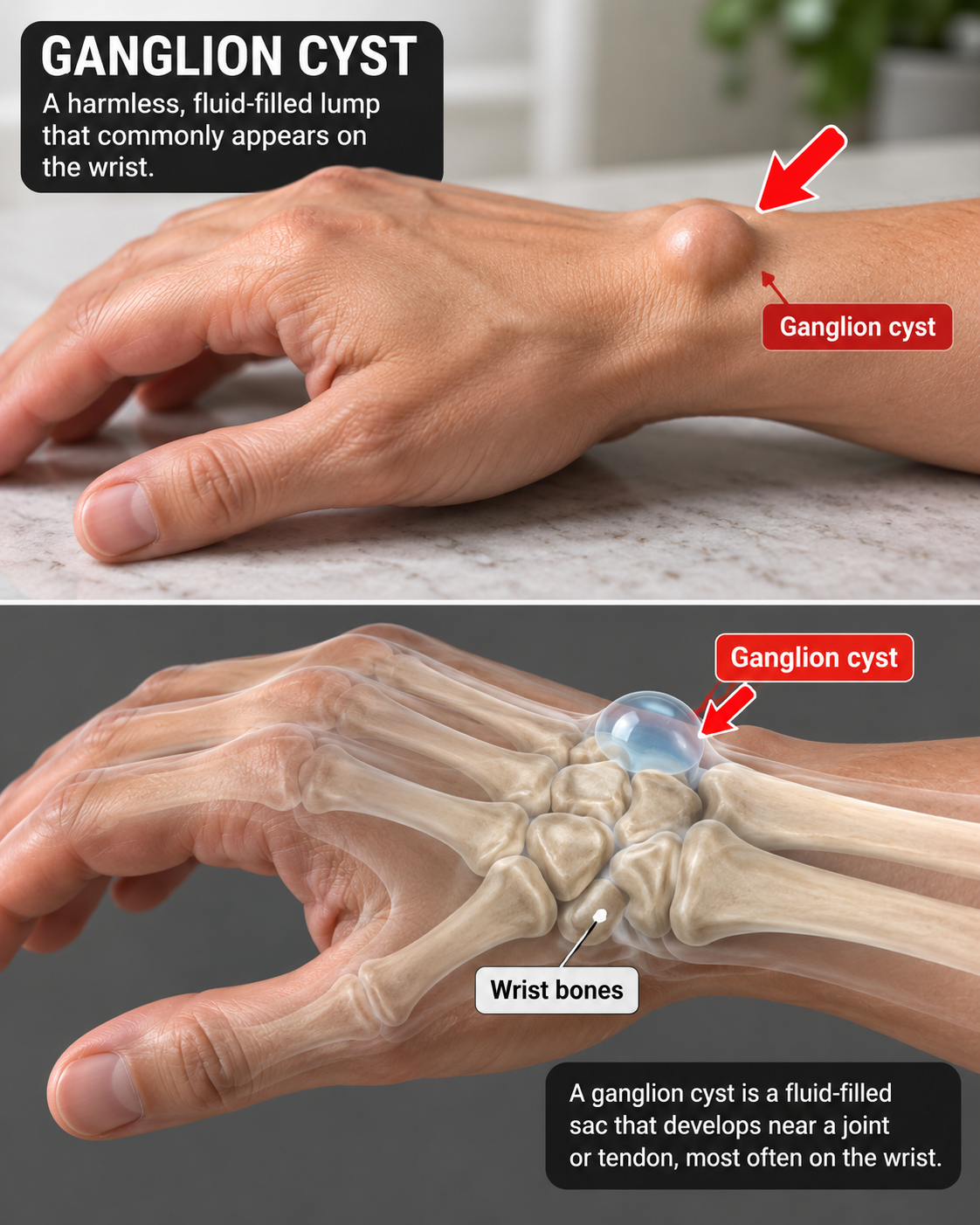
Ganglion cysts rank among the most familiar causes of lumps around the hand and wrist. They are fluid-filled growths that usually develop near a joint or tendon. They commonly appear on the front or back of the wrist and around finger joints. Cleveland Clinic describes ganglion cysts as usually harmless and notes that some disappear without treatment. (my.clevelandclinic.org)
A ganglion cyst may feel firm or somewhat soft, depending on its size and location. It may also change size over time, particularly when you use the nearby joint frequently. Some people have no discomfort at all, while others develop aching, tenderness, numbness, tingling, or restricted movement if the cyst presses on nearby tissue.
Treatment depends on symptoms. A painless ganglion cyst may simply be observed. If it causes significant discomfort or interferes with movement, a clinician may consider options such as aspiration or surgical removal. However, ganglion cysts can return even after treatment. The American Society for Surgery of the Hand notes that recurrence can occur because doctors do not fully understand why these cysts form in the first place. (assh.org)
You should not try to smash a ganglion cyst with a heavy object, despite the old nickname “Bible cyst.” That approach can injure bones, joints, nerves, and surrounding tissue. Likewise, do not puncture the lump yourself because introducing a needle through the skin can cause infection or other injury.
Lipomas and Other Benign Soft-Tissue Lumps
A lipoma forms from fatty tissue under the skin. Lipomas usually grow slowly, feel soft or doughy, and move somewhat when you press on them. They are generally painless and noncancerous. (mayoclinic.org)
Although lipomas commonly appear on areas such as the shoulders, neck, back, arms, and thighs, they can occur in many locations. Most do not require treatment unless they grow, cause discomfort, interfere with movement, or create another concern. A clinician may use imaging or a biopsy when a lump has unusual characteristics or when the diagnosis remains uncertain. (mayoclinic.org)
Another possible cause of a hand lump is an epidermoid or inclusion-type cyst. These can develop when skin cells become trapped beneath the surface, sometimes after trauma or a puncture injury. Depending on their location and size, they may feel firm and smooth.
The main lesson is that several harmless conditions can produce similar-looking bumps. Therefore, noticing a lump on your hand should lead to observation rather than immediate panic. At the same time, appearance alone cannot always distinguish a benign lump from something requiring further evaluation.
Lumps Related to Joints, Tendons, and Bones
Carpal Boss and Joint-Related Changes
Not every lump contains fluid or fat. A carpal boss is a hard, bony prominence that develops on the back of the hand or wrist, usually near where the index or middle finger meets the wrist bones. It can easily be mistaken for a ganglion cyst. Cleveland Clinic describes a carpal boss as a firm, noncancerous bump that often does not move when you press it. (my.clevelandclinic.org)
Carpal bosses may develop in association with repetitive use, previous trauma, osteoarthritis, or anatomical differences that have been present for years. Many people feel no pain. However, some experience tenderness, wrist pain, or snapping sensations as nearby tendons move across the bony prominence.
A clinician may distinguish a carpal boss from a cyst by examining the hand and ordering an X-ray, ultrasound, CT scan, or MRI when necessary. Treatment often involves observation when symptoms remain mild. Therefore, a hard lump does not automatically equal cancer.
Other joint-related lumps can occur near arthritic finger joints. Digital mucous cysts, for example, commonly form near the joint closest to a fingernail and often occur alongside osteoarthritis. These cysts are usually benign and may not need treatment unless they become painful or troublesome. (my.clevelandclinic.org)
Tendon and Nerve-Related Lumps
Some hand masses develop from tissues surrounding tendons. Benign growths involving the tendon sheath can form firm nodules, especially around the fingers. These lumps may enlarge gradually and can occasionally interfere with motion.
A mass can also cause symptoms even when the lump itself is benign. For example, a ganglion cyst or other growth near a nerve may create tingling, numbness, burning, or weakness because it compresses surrounding structures. Cleveland Clinic notes that ganglion cysts can sometimes produce numbness or tingling through this type of pressure effect. (my.clevelandclinic.org)
Because the hand contains many small nerves, tendons, joints, blood vessels, and bones packed closely together, location matters. A relatively small lump may create significant symptoms if it sits beside an important nerve or tendon.
Therefore, seek medical evaluation when noticing a lump on your hand that also causes persistent numbness, tingling, weakness, reduced grip, or difficulty moving a finger or wrist normally. The problem may still be benign, but nerve or tendon compression sometimes needs treatment before function worsens.
Warning Signs That a Hand Lump Needs Evaluation
Growth, Pain, Hardness, and Other Changes
Most lumps do not represent cancer. However, doctors take certain features more seriously because they can occur with malignant tumors as well as benign conditions.
A lump that continues getting larger deserves medical assessment. The NHS also recommends evaluation when a lump becomes painful, red, or hot; feels hard and difficult to move; or remains present for more than about two weeks. (nhs.uk)
Size and depth matter as well. Mayo Clinic advises professional evaluation for soft-tissue masses that continue growing, measure more than about 5 centimeters, or appear to sit deep beneath the skin. Importantly, sarcoma lumps may be painless, so waiting until a lump hurts is not a reliable safety strategy. (mayoclinic.org)
Redness, warmth, drainage, or rapidly increasing tenderness can suggest infection rather than a tumor. A skin abscess or infected cyst may require prompt treatment, especially if fever or spreading redness develops.
Also pay attention to function. A lump that restricts movement, causes increasing weakness, changes sensation, or creates persistent pain deserves evaluation even if it looks small.
How Concerned Should You Be About Cancer?
Cancerous tumors of the hand exist, but malignant hand tumors are uncommon compared with benign masses. A review from the American Society for Surgery of the Hand notes that the vast majority of hand tumors are benign, with ganglion cysts and other noncancerous growths representing common diagnoses. (assh.org)
That reassurance should not turn into complacency, though. You cannot reliably diagnose a soft-tissue sarcoma by touching a lump. NHS guidance notes that sarcomas can present as a solid lump deep under the skin that is difficult to move and continues growing. (nhs.uk)
The practical approach is simple: avoid assuming that every lump is cancer, but also avoid ignoring a persistent or changing lump because it does not hurt. Many serious conditions begin without dramatic symptoms.
If noticing a lump on your hand causes concern, schedule a routine medical evaluation rather than repeatedly checking it yourself. Earlier assessment provides information, and in the uncommon situation where a serious condition exists, timely diagnosis matters.
What Happens When You Get a Hand Lump Checked
Examination, Ultrasound, X-Ray, and Other Tests
Evaluation often begins with a physical examination. A clinician may ask when you first noticed the lump, whether it has grown, whether an injury occurred, and whether movement changes its size or discomfort.
They may then examine how the lump feels and moves. Is it soft or hard? Does it move beneath the skin? Does it appear attached to a joint or tendon? Does pressure produce pain, tingling, or numbness? Your answers and the physical examination may strongly suggest a common diagnosis such as a ganglion cyst.
Imaging can provide additional information when the diagnosis remains uncertain. Ultrasound can help show whether a mass contains fluid or solid tissue. X-rays can reveal bone abnormalities such as a carpal boss or arthritic changes. MRI can provide detailed images of soft tissues when a deeper or unusual mass requires further assessment.
Sometimes doctors recommend a biopsy to examine tissue under a microscope. NHS guidance notes that ultrasound, CT, MRI, and biopsy can all play roles when a soft-tissue mass requires investigation. (nhs.uk)
What You Can Do While Monitoring a Lump
Avoid repeatedly squeezing, poking, or attempting to drain the mass. Manipulation can irritate surrounding tissue, cause bruising, or introduce infection without providing a reliable diagnosis.
Instead, make a simple record. Note when you first discovered the lump, roughly how large it seems, whether movement affects it, and whether it produces pain or neurological symptoms. A photograph with a ruler beside the area can provide a useful comparison if you think the lump is changing.
If the lump remains small, painless, and stable, a healthcare professional may recommend observation after examining it. In other situations, treatment may involve aspiration, medication for inflammation, splinting, surgical removal, or referral to a hand specialist. Treatment depends entirely on the diagnosis and how much the lump affects daily function.
Ultimately, noticing a lump on your hand should lead to informed attention rather than fear. Most explanations are benign, but getting persistent or changing lumps properly assessed removes the guesswork.
Frequently Asked Questions
What is the most common cause of a lump on the wrist or hand?
Ganglion cysts are among the most common benign soft-tissue masses around the wrist and hand. They form near joints or tendons and contain fluid. Many cause no symptoms and may disappear without treatment. (my.clevelandclinic.org)
How can I tell if a hand lump is cancerous?
You generally cannot determine that with certainty at home. Features such as continued growth, deep location, increasing size, and a firm or fixed feel deserve evaluation, but benign lumps can share some of these characteristics. A clinician may use examination, imaging, or biopsy when needed.
Should I try to pop or drain a ganglion cyst myself?
No. Do not puncture, cut, or smash a suspected ganglion cyst. Home procedures can injure nearby nerves, tendons, joints, or skin and can introduce infection. A healthcare professional can discuss aspiration or surgical removal if treatment becomes necessary.
Can a benign hand lump cause numbness or tingling?
Yes. Even a noncancerous cyst or mass can press against a nearby nerve and cause tingling or numbness. Ganglion cysts can sometimes create these symptoms through pressure on surrounding structures. (my.clevelandclinic.org)
When should I see a doctor about a lump on my hand?
Arrange an evaluation if the lump continues growing, feels hard or fixed, becomes painful, red, or hot, lasts more than a couple of weeks, returns after treatment, or causes numbness, weakness, or movement problems. Seek more prompt care for rapidly worsening swelling, severe pain, spreading redness, fever, or symptoms following a significant injury. (nhs.uk)
Conclusion
Noticing a lump on your hand can immediately trigger worry, but most hand and wrist masses are not cancer. Ganglion cysts, benign fatty growths, joint-related cysts, bony prominences, and other noncancerous conditions can all create bumps that look or feel unusual.
The key is to watch the behavior of the lump instead of trying to diagnose it by touch alone. A stable, painless lump may require little more than professional confirmation and observation. In contrast, continued growth, significant pain, redness, warmth, deep location, numbness, weakness, or restricted movement makes medical evaluation more important.
Avoid popping, cutting, smashing, or repeatedly squeezing an unexplained lump. Those approaches cannot tell you what the mass is and may cause injury or infection.
Most importantly, remember that getting a lump checked does not mean your clinician expects cancer. It simply replaces uncertainty with information. A brief examination may identify a common benign problem, while imaging or additional testing can clarify anything unusual.
So if you suddenly discover a bump on your hand, you do not need to assume the worst. Notice it, document meaningful changes, protect the area from unnecessary manipulation, and seek professional evaluation when the lump persists or develops concerning features. That combination offers a sensible balance between reassurance and caution.
More Blog
- Drinking Water on an Empty Stomach — What Science Actually Supports (No Hype, Just Facts)
- Waking Up Between 3 and 5 AM? It Might Be Your Soul Trying to Talk to You
- What a “Bleach” Patch on Your Underwear Really Means — And Why It’s Actually a Good Sign
- This Drink May Weaken Your Bones From The Inside — But Everyone Drinks It Anyway