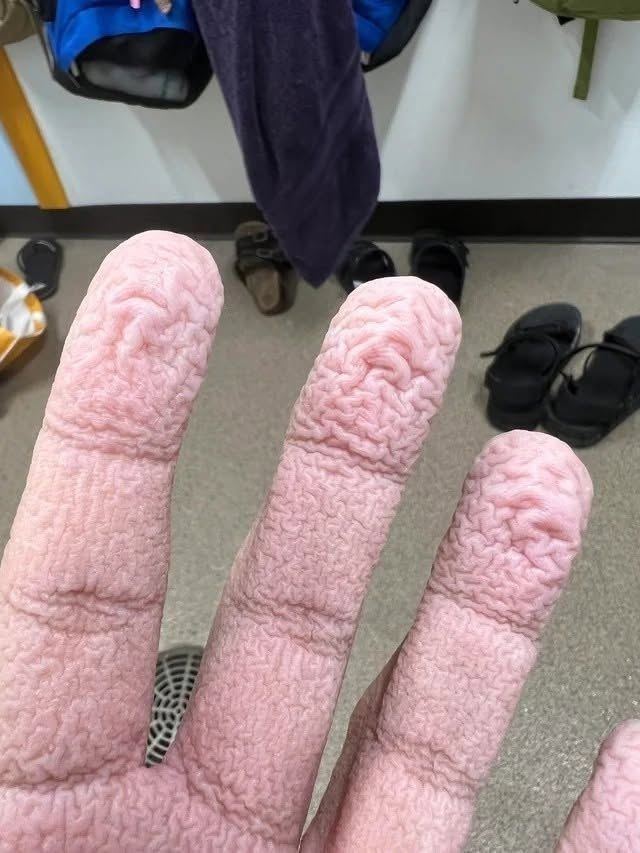
Wrinkled fingertips after a long shower, bath, swim, or session washing dishes are something almost everyone has experienced. Within minutes of leaving the water, the skin usually returns to normal.
For years, the common explanation was simple: the skin absorbs water, swells, and wrinkles. But the biology is more interesting than that. Finger wrinkling after water exposure involves an active response from the nervous system and blood vessels beneath the skin.
In most cases, it is completely normal. However, unusually rapid, prolonged, painful, or unexplained wrinkling can occasionally deserve closer attention.
Why Do Fingers Wrinkle in Water?
When the hands or feet remain submerged, changes in the outer layer of skin help trigger a response involving the autonomic nervous system—the part of the nervous system responsible for automatic processes such as heart rate, sweating, and blood-vessel regulation.
Blood vessels beneath the skin of the fingers constrict. As the volume underneath the skin decreases, the surface folds inward, producing the familiar ridges and valleys we call “pruney fingers.”
This explains an interesting medical observation: when certain nerves supplying a finger are damaged, the normal wrinkling response can be reduced or absent.
Is It Really an Evolutionary Adaptation?
One intriguing hypothesis is that wet-induced wrinkles improve our ability to manipulate objects in wet conditions.
The grooves may work somewhat like drainage channels, allowing water to move away from the points where the fingers contact an object.
Experiments have produced interesting evidence for improved handling of wet objects, although scientists have not established every aspect of the evolutionary explanation conclusively.
So it is reasonable to say that wrinkles may improve wet grip, but describing their evolutionary purpose as completely proven goes too far.
What Is Considered Normal?
Typical water-induced wrinkling:
- Appears after several minutes in water
- Primarily affects fingers, palms, toes, and soles
- Occurs on both hands relatively similarly
- Is not painful
- Gradually disappears after the skin dries
If that describes what happens to you, there is generally little reason for concern.
What If Your Fingers Wrinkle Extremely Quickly?
Some people develop pronounced wrinkling after only a very short exposure to water.
There is a recognized condition called aquagenic wrinkling of the palms, in which exposure to water can rapidly produce excessive wrinkling along with whitish bumps or plaques.
Some people also experience burning, itching, tightness, or discomfort.
The condition has been associated with several factors and is particularly known for its association with cystic fibrosis and carriers of certain CFTR gene variants. However, rapidly wrinkling hands do not automatically mean someone has cystic fibrosis.
A dermatologist can investigate persistent or unusually pronounced symptoms.
Could Dehydration Cause Wrinkled Fingers?
This is a common internet claim that needs context.
Dehydration can affect the appearance and elasticity of skin, particularly when it is significant. But ordinary finger wrinkling while swimming or bathing is not a reliable dehydration test.
Thirst, dark urine, reduced urination, dry mouth, dizziness, and fatigue can provide more useful clues when considering dehydration.
Dry Skin Can Make Wrinkling More Noticeable
Frequent handwashing, hot showers, harsh soaps, cleaning chemicals, and dry weather can damage the skin’s protective barrier.
Your fingers may consequently appear rougher, tighter, cracked, or more wrinkled.
Using lukewarm rather than very hot water, choosing gentle cleansers, and applying a fragrance-free moisturizer after washing can help protect the skin barrier.
When Wrinkled Fingers Deserve Medical Attention
Water-induced wrinkles alone are generally harmless. Consider speaking with a healthcare professional when there is a new or persistent change, particularly if the wrinkling happens without water exposure or is accompanied by other symptoms.
Examples include persistent discoloration, significant swelling, pain, numbness, weakness, sores that do not heal, marked differences between the two hands, or unusually rapid and uncomfortable wrinkling whenever the hands touch water.
These symptoms can have many explanations, and appearance alone cannot determine the cause.
What About Poor Circulation?
Wrinkling after water exposure involves blood-vessel constriction, but that does not mean normal pruney fingers are evidence of poor circulation.
Circulation problems are more likely to produce other symptoms, such as persistent coldness, unusual color changes, pain, numbness, or wounds that heal poorly.
Those symptoms deserve separate medical assessment rather than attempting to diagnose circulation problems from finger wrinkles.
Can You Prevent Water-Induced Wrinkling?
You generally don’t need to—the reaction is temporary and harmless.
If frequent water exposure is making your hands uncomfortable, reducing prolonged exposure, wearing appropriate household gloves for cleaning, avoiding excessively hot water, and moisturizing after washing can make a significant difference.
The Bottom Line
Wrinkled fingers after swimming, bathing, or washing dishes are usually a normal physiological response involving your autonomic nervous system and blood vessels—not a warning that something is wrong with your body.
What matters is the pattern.
Temporary, painless wrinkles that disappear after drying are generally normal. Wrinkling that suddenly becomes dramatically different, appears unusually quickly, persists without water exposure, or occurs alongside pain, numbness, color changes, swelling, or other symptoms is worth discussing with a healthcare professional.
Your hands can provide useful clues about your health—but ordinary “pruney fingers” are usually simply your body doing exactly what it is designed to do.
More Blog
- Drinking Water on an Empty Stomach — What Science Actually Supports (No Hype, Just Facts)
- Waking Up Between 3 and 5 AM? It Might Be Your Soul Trying to Talk to You
- What a “Bleach” Patch on Your Underwear Really Means — And Why It’s Actually a Good Sign
- This Drink May Weaken Your Bones From The Inside — But Everyone Drinks It Anyway