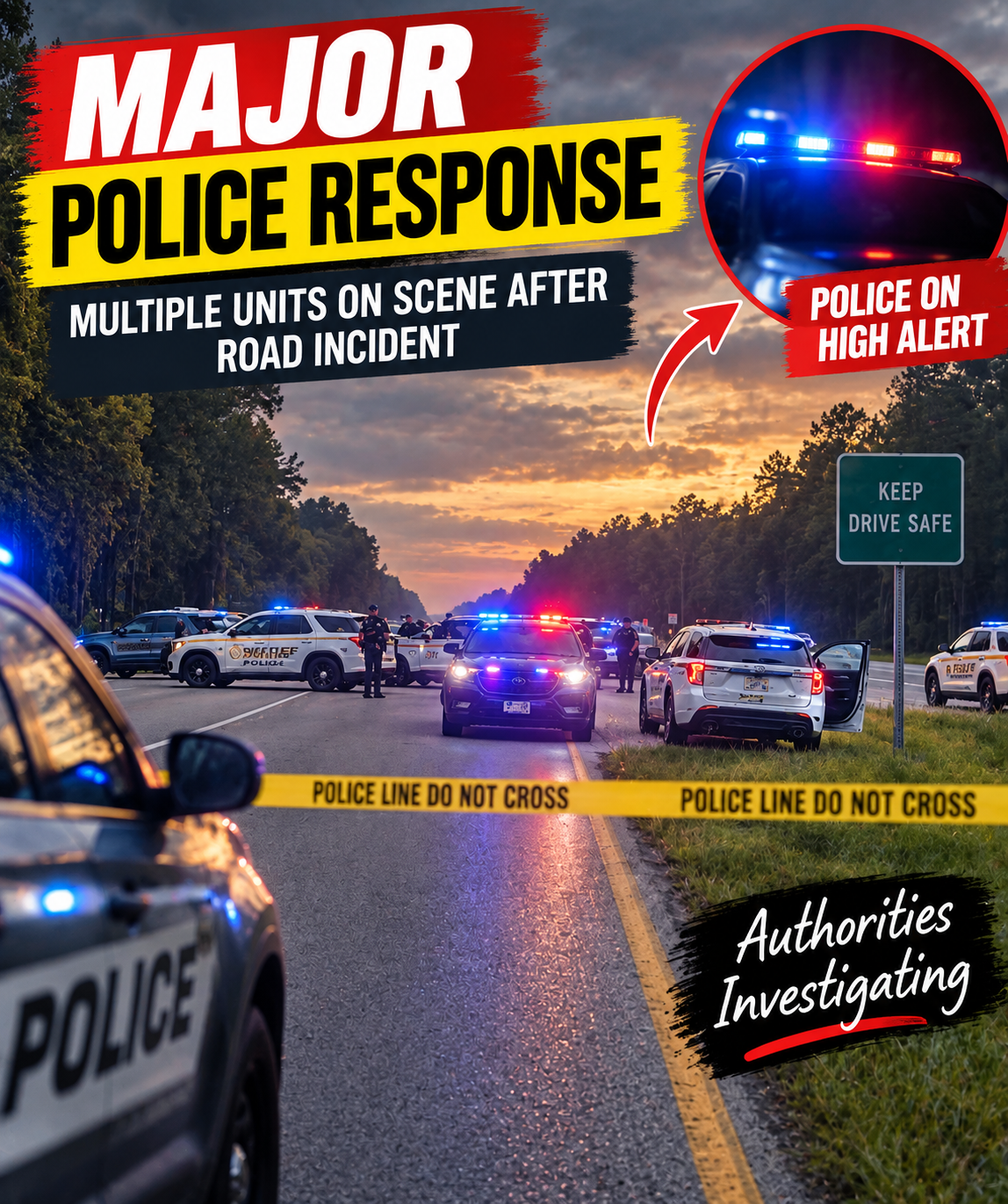
Police Barricades Are Up – Why the Exact Location Matters? becomes an urgent question whenever images of police tape, flashing emergency lights, and blocked streets begin spreading online.
A photograph can look alarming. Police vehicles may fill an intersection. Officers may prevent people from entering an area. Meanwhile, ambulances, firefighters, or other emergency crews may appear nearby.
Yet those images alone cannot tell you what happened.
A police cordon can surround a serious crime scene, but authorities also establish restricted areas after traffic collisions, fires, utility emergencies, suspicious packages, structural hazards, and many other incidents.
Therefore, location and timing matter enormously. Without them, an authentic photograph can still create a misleading impression.
I once saw a dramatic photo circulating online that showed several police vehicles blocking a familiar-looking street. The caption made the situation sound immediate, and people in the comments were asking whether they should avoid the area. However, nobody initially seemed able to identify exactly where the photograph had been taken. Once more context appeared, the confusion became obvious. That experience changed how I look at breaking-news images. Before worrying about what a dramatic photograph might mean, I now look for the location, date, responsible agency, and actual instructions. Those details often matter far more than the image itself.
Why Police Barricades Can Appear Without an Immediate Explanation
A cordon can protect people from many different hazards
Police barricades immediately communicate one thing: authorities do not want the public entering a particular area.
However, the barrier itself does not explain why.
Emergency responders establish restricted zones for many reasons.
A serious traffic collision may require investigators and paramedics to work safely without passing vehicles interfering.
Likewise, firefighters may need to keep people away from a damaged or unstable building.
A gas leak, electrical hazard, or other utility problem can also require temporary street closures.
Police may establish a cordon while investigating a suspicious object. Alternatively, they may need to preserve evidence at a crime scene or maintain space during an active search.
Dangerous debris can create another reason.
Therefore, seeing numerous police vehicles does not automatically establish that a violent threat exists.
From outside the restricted area, very different emergencies can look surprisingly similar.
You may see flashing lights.
You may see officers directing traffic.
You may see people being turned away.
However, you cannot necessarily see the hazard that prompted those actions.
That distinction becomes particularly important online.
A photograph showing a barricade provides evidence that a barricade exists. It does not automatically provide evidence for a dramatic explanation attached to the photograph.
Consequently, treat the reason as unconfirmed until a credible source provides it.
Officials may need time before releasing details
Uncertainty can feel uncomfortable during an emergency.
Residents see activity happening around them, yet officials may initially provide very little information.
That delay does not necessarily mean authorities are concealing something extraordinary.
First responders often need to establish basic safety before anything else.
Police may need to determine what happened. Firefighters may need to assess structural conditions. Specialists may need to examine an object or possible hazard.
Meanwhile, investigators may need to speak with witnesses or verify conflicting information.
Releasing an incorrect explanation too early can create additional confusion.
Therefore, officials may wait until they can confirm essential facts.
Certain information may also remain temporarily restricted because releasing it could interfere with an investigation or emergency response.
From a nearby home, however, that process can look mysterious.
People hear sirens and see flashing lights without knowing what they mean.
Naturally, questions begin.
Unfortunately, rumors can answer those questions much faster than verified information.
Someone posts a guess. Another person repeats it as fact. Soon, dozens of people may believe an explanation that nobody actually confirmed.
Waiting for reliable information can feel frustrating.
However, uncertainty remains more accurate than a confident but unsupported explanation.
Why the Exact Location and Time Change Everything
A real photograph can still create a false impression
Police Barricades Are Up – Why the Exact Location Matters? becomes especially important when photographs travel beyond the neighborhood where someone originally took them.
Imagine that a person photographs a police cordon on Monday morning.
Hours later, someone reposts the image without the date.
Then, another account shares it on Tuesday with a dramatic caption suggesting that something is happening “right now.”
The photograph remains genuine.
However, the context has become misleading.
Location can create the same problem.
A photograph from one neighborhood may circulate among people in another city. Without a recognizable landmark, readers may assume the incident happened near them.
Sometimes old images even resurface during completely unrelated emergencies.
Therefore, ask two basic questions before reacting to an alarming post:
Where did this happen?
When did it happen?
Those details transform a vague warning into information you can actually evaluate.
A useful emergency update should identify the affected area as specifically as authorities consider appropriate.
It should also provide a date or time.
Finally, it should make clear which organization supplied the information.
Without those details, readers cannot easily determine whether the warning affects them.
What you can see differs from what a caption claims
Breaking-news images encourage a common reasoning mistake.
People confuse visible evidence with the explanation attached to it.
Suppose a photograph clearly shows police officers, emergency vehicles, and barricades.
You can reasonably say that emergency personnel have restricted the area.
However, imagine the caption says authorities are responding to an explosive device.
That claim requires additional evidence.
Nothing about a generic police vehicle or strip of barricade tape proves the nature of the incident.
Likewise, an ambulance does not establish how someone became injured.
A fire truck does not necessarily mean a building is burning.
Emergency agencies respond to many types of situations.
Therefore, separate observation from interpretation.
Ask yourself what the photograph actually demonstrates.
Then, identify which parts of the caption require confirmation from another source.
This simple habit can dramatically reduce confusion.
It also helps prevent emotional reactions from replacing evidence.
Dramatic captions often use urgent language because urgency attracts attention.
However, the most alarming wording does not automatically represent the most accurate description.
During a developing emergency, a cautious statement based on confirmed facts provides far more value than an exciting explanation based on assumptions.
How to Respond Safely When an Emergency Is Happening Nearby
Respect the barricades and give responders space
Curiosity is natural when police activity appears nearby.
People want to know what happened.
Some walk closer to watch. Others begin filming. A few may even try to cross a barrier because the area appears quiet.
Avoid doing that.
Emergency barriers exist to separate the public from an area responders need to control.
A hazard may not be visible from where you stand.
For example, a damaged structure can appear stable before part of it collapses.
A utility problem may involve electricity or gas that bystanders cannot detect.
Investigators may also need to protect evidence from contamination.
Additionally, emergency vehicles need room to move quickly.
Crowds can interfere with that access.
Therefore, stay behind established barriers and follow instructions from emergency personnel.
If authorities tell residents to evacuate, take the direction seriously.
Likewise, follow shelter-in-place instructions when officials issue them.
Do not rely on a stranger’s social-media comment to overrule a direct emergency instruction from the responsible local agency.
Families should communicate calmly during these situations.
Children may find sirens and unusual activity frightening.
Instead of repeating rumors, adults can focus on practical facts.
Explain which areas are closed, what instructions authorities have provided, and what the family will do next.
Practical information reduces uncertainty more effectively than speculation.
Use official updates before social-media rumors
Social media can spread valuable emergency information quickly.
Unfortunately, it can spread false information just as quickly.
Someone near the scene may post a photograph within seconds.
However, that person may know no more about the cause than everyone else watching from nearby windows.
Therefore, prioritize information from organizations directly involved in the response.
Depending on the incident, useful sources may include local police, fire and rescue services, emergency-management authorities, transportation agencies, municipal officials, or public-health authorities.
Established news organizations can also provide useful updates when they identify their sources and clearly distinguish confirmed facts from developing information.
Be much more cautious with anonymous screenshots, copied captions, and posts that provide no identifiable source.
Before sharing an emergency claim, check whether it identifies the location and date.
Then, look for the responsible agency.
Finally, determine whether the agency has actually issued the warning being repeated.
This verification takes longer than pressing the share button.
However, inaccurate emergency information can cause unnecessary fear.
It may also send people toward the wrong location, create confusion about road closures, or distract from instructions that genuinely matter.
During an emergency, accuracy serves the community better than speed.
Staying Calm While Facts Are Still Developing
Uncertainty does not automatically mean hidden danger
When authorities provide limited information, people often imagine the worst possible explanation.
That reaction makes sense psychologically.
The brain dislikes incomplete information, particularly when flashing lights and police activity suggest something unusual is happening.
However, missing information does not prove a hidden threat.
Emergency responses develop in stages.
First responders secure the scene.
Then, specialists assess the situation.
Investigators collect information.
Officials verify what they can responsibly release.
Meanwhile, roads may remain closed even after the immediate danger has passed because investigators or cleanup crews still need access.
Therefore, a continuing cordon does not necessarily mean the threat remains active.
Likewise, helicopters, additional vehicles, or prolonged police presence do not independently establish the seriousness or nature of an incident.
Focus instead on instructions that affect you directly.
Has your street been closed?
Did officials establish an evacuation area?
Are schools changing schedules?
Has public transportation been redirected?
Did authorities tell residents to remain indoors?
These questions lead to practical decisions.
Speculation about hidden motives does not.
There is an important difference between caution and panic.
Caution means respecting barriers and responding to verified warnings.
Panic means treating every unconfirmed possibility as though it has already happened.
A calm response allows you to take genuine danger seriously without adding unnecessary fear.
Responsible sharing can prevent a second wave of confusion
Police Barricades Are Up – Why the Exact Location Matters? ultimately points to a responsibility that extends beyond people physically near the emergency.
Anyone sharing information can influence how others interpret the situation.
Before reposting a dramatic photograph, inspect the context.
Look for the original publication time.
Check the location.
Identify the agency involved.
Determine whether later updates have changed the initial understanding of the incident.
Most importantly, avoid adding conclusions the evidence does not support.
Early reports frequently change.
A suspicious object may later prove harmless.
A road closure may result from an infrastructure problem rather than a criminal threat.
Alternatively, an incident may turn out to be more serious than early reports suggested.
That uncertainty is exactly why careful wording matters.
Use phrases such as “authorities have not yet confirmed the cause” when that reflects what is known.
Do not transform possibilities into facts simply because they sound plausible.
Likewise, correct outdated information when you discover that circumstances have changed.
An evacuation order may end.
A road may reopen.
A shelter instruction may no longer apply.
People who see only an earlier post may not know that.
Responsible communication continues after the first update.
The objective is not to produce the most dramatic version of events.
The objective is to help people understand what authorities have actually confirmed and what actions, if any, they need to take.
Frequently Asked Questions
Why do police put up barricades?
Police and emergency responders can establish barricades for many reasons, including accidents, fires, hazardous conditions, suspicious objects, active investigations, searches, damaged infrastructure, or other public-safety concerns. A barricade alone does not reveal the cause.
Why does the exact location of a police cordon matter?
Location determines whether an incident actually affects you. A genuine image from another neighborhood, city, or country can become misleading when people share it without context. Exact location also helps residents understand which streets, schools, businesses, or transportation routes may be affected.
Should I cross a police barricade if the area looks safe?
No. Stay outside restricted areas and follow instructions from responders. Hazards may not be visible, and entering the scene can put you at risk or interfere with emergency operations.
Where should I check for reliable emergency information?
Look for updates from the police, fire service, emergency-management agency, local government, transportation authority, or other official organization responsible for the incident. Credible local news reporting can also help when it identifies and verifies its sources.
Does a lack of information mean authorities are hiding something?
Not necessarily. Officials may need time to secure a scene, assess hazards, interview witnesses, investigate evidence, and verify information before releasing details. Until reliable information becomes available, it is better to acknowledge uncertainty than invent an explanation.
Conclusion
Police Barricades Are Up – Why the Exact Location Matters? has a simple answer: without location, timing, and verified context, even a genuine emergency photograph can become misleading.
Police barricades tell you that authorities have restricted an area.
They do not automatically tell you why.
A cordon may surround an accident, fire, structural hazard, utility emergency, suspicious object, investigation, active search, or another public-safety incident.
Therefore, do not let a dramatic caption become your only evidence.
If you are near an actual emergency, respect the barricades. Keep roads and access points clear for responders. Follow evacuation or shelter instructions when authorities issue them.
Meanwhile, check official local updates for information that affects you directly.
If you encounter an alarming post online, look for the location, date, responsible agency, and original source before sharing it.
Most importantly, remain comfortable saying that the cause is unknown when nobody has confirmed it yet.
Uncertainty can feel frustrating.
However, an honest “we don’t know yet” causes far less harm than a frightening rumor presented as fact.
During a developing emergency, the most valuable information is not necessarily the information that arrives first.
It is the information that tells you where the incident is happening, when it happened, what authorities have confirmed, and what you should actually do.
More Blog
- Drinking Water on an Empty Stomach — What Science Actually Supports (No Hype, Just Facts)
- Waking Up Between 3 and 5 AM? It Might Be Your Soul Trying to Talk to You
- What a “Bleach” Patch on Your Underwear Really Means — And Why It’s Actually a Good Sign
- This Drink May Weaken Your Bones From The Inside — But Everyone Drinks It Anyway