Stress can show up in ways that are easy to overlook. You may notice poor sleep, a tight jaw, an upset stomach, unusual cravings, difficulty concentrating, or constant fatigue without immediately connecting those changes to stress. However, The Hidden Effects of Stress on Your Body and Mind can reach far beyond temporary worry.
A short burst of stress can help you react quickly in a demanding situation. Your body becomes more alert, your heart rate rises, and your muscles prepare for action. Once the stressful moment passes, your system should gradually return to normal.
However, problems can develop when stress continues for days, weeks, or months. In that situation, your body may spend too much time in a heightened state of alert. As a result, sleep, digestion, mood, concentration, appetite, muscles, circulation, immune function, and daily habits can all change.
I once went through a stretch when everything seemed to happen at the same time. Work felt demanding, several family responsibilities piled up, and I kept telling myself I could handle it if I just pushed harder. Before long, I started waking during the night, skipping meals, drinking more coffee, and carrying constant tension in my shoulders. At first, I treated each problem separately. Eventually, I realized they all became worse when my stress increased. Once I started protecting my sleep, taking regular walks, eating consistently, and setting clearer boundaries, I noticed gradual improvement. That experience changed how I viewed everyday stress.
How Stress Changes the Body
The Stress Response Starts Quickly
When your brain senses danger, pressure, or an important challenge, it activates a coordinated stress response. Your body releases hormones such as adrenaline and cortisol, which help you respond quickly.
Consequently, your heart may beat faster. Your breathing may become quicker. Your muscles may tighten, and your attention may narrow toward whatever feels urgent.
This reaction can help in short-term situations. For example, if another car suddenly moves into your lane, your body needs to respond immediately. Stress hormones can increase alertness and help you act faster.
However, your body also needs a recovery period afterward.
When stressful situations happen repeatedly, your system may not get enough time to settle. Therefore, tension can become your normal state rather than a temporary response.
Over time, that pattern can affect several body systems at once.
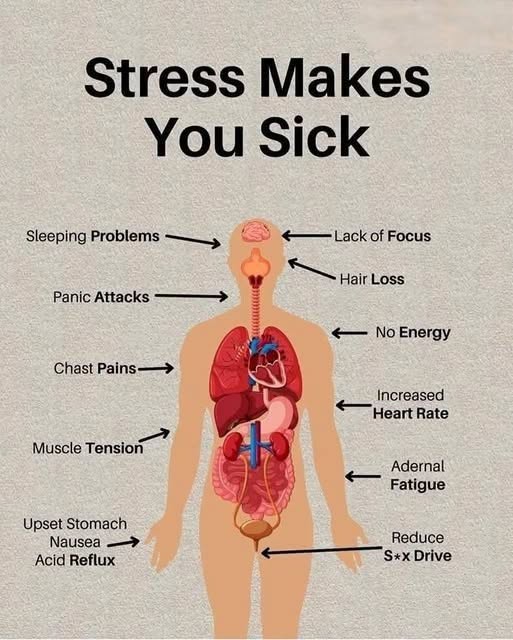
You might feel mentally overwhelmed while also experiencing headaches, poor digestion, sleep problems, or fatigue. Furthermore, one symptom can contribute to another. Poor sleep can make you more sensitive to stress, while stress can make it harder to sleep.
Because these effects often build gradually, many people do not notice them immediately.
Stress Can Interfere With Sleep and Energy
Sleep often becomes one of the first areas affected by ongoing stress.
You may feel exhausted during the day, yet your mind suddenly becomes active when you lie down. You might replay conversations, plan unfinished tasks, or imagine possible problems.
As a result, you may struggle to fall asleep.
Even after falling asleep, you may wake frequently or have difficulty returning to sleep. Consequently, you can spend enough hours in bed while still waking up tired.
This pattern can create a difficult cycle.
Stress disrupts sleep. Poor sleep then reduces patience, concentration, emotional resilience, and energy. Therefore, everyday challenges may feel more overwhelming the next day.
Some people respond by drinking more coffee or caffeinated beverages. However, caffeine consumed late in the day may make nighttime sleep harder for some people. As a result, fatigue and stress can continue reinforcing each other.
A consistent bedtime, a calmer evening routine, regular daytime activity, and less late-day caffeine may help support better sleep.
However, persistent insomnia deserves attention. If sleep problems continue for weeks or significantly affect daily life, a healthcare professional can help identify possible causes and appropriate treatment.
How Stress Affects Digestion, Appetite, and Muscles
Your Digestive System Can React Strongly
The digestive system and brain communicate constantly. Therefore, emotional stress can sometimes produce noticeable physical symptoms in the stomach and intestines.
You may have experienced this before an interview, presentation, medical appointment, or important event. Your stomach may feel unsettled even though you have not eaten anything unusual.
Stress may contribute to symptoms such as nausea, bloating, stomach discomfort, diarrhea, constipation, or changes in appetite.
Additionally, people who already experience digestive conditions may notice that symptoms become more noticeable during stressful periods.
However, stress does not explain every digestive problem.
Persistent pain, repeated vomiting, unexplained weight loss, blood in the stool, or other concerning changes require medical evaluation. Therefore, you should not automatically assume that recurring digestive symptoms come from stress.
Stress may also change eating patterns.
Some people lose interest in food when they feel overwhelmed. Others crave foods high in sugar, salt, or fat.
Furthermore, a stressful schedule can make regular meals harder. You may skip breakfast, work through lunch, and then feel extremely hungry later in the evening.
Although occasional changes may not cause problems, repeated disruptions can affect energy, nutrition, blood sugar regulation, and body weight.
Therefore, eating regular balanced meals can become an important part of stress recovery.
Muscles Can Stay Tense for Too Long
Muscle tension forms part of the body’s natural stress response.
When your brain senses danger, your muscles prepare for action. However, if the stressful situation continues, your muscles may remain partially contracted for hours.
As a result, you might notice tight shoulders, neck discomfort, back soreness, jaw clenching, or tension headaches.
Some people do not realize how much tension they carry until they consciously lower their shoulders or relax their jaw.
Regular movement can help interrupt this pattern. Walking, stretching, swimming, cycling, strength training, and other physical activities may reduce stiffness while also supporting mood and sleep.
Short movement breaks can also help if you sit for long periods.
For example, standing up every hour, rolling your shoulders, stretching your neck gently, or walking for several minutes can reduce prolonged muscle tension.
However, severe or persistent pain should not automatically be attributed to stress.
Pain can have many causes. Therefore, new, worsening, or unexplained symptoms deserve appropriate medical assessment.
Stress management works best when it supports proper healthcare rather than replacing it.
How Stress Changes Mood, Thinking, and Heart Health
Concentration and Emotions May Shift
Stress can consume a surprising amount of mental attention.
When part of your mind remains focused on unresolved problems, you have fewer resources available for other tasks. Consequently, you may struggle to concentrate, remember details, make decisions, or finish projects.
You might read the same paragraph several times without absorbing it. You may walk into a room and forget why you went there. Additionally, you may feel overwhelmed by choices that normally seem simple.
Poor sleep can make these effects even stronger.
Fortunately, stress-related concentration problems often improve when stress decreases and sleep improves. However, persistent cognitive changes should still be discussed with a healthcare professional, especially if they appear suddenly or worsen significantly.
Mood can also change.
You may become more irritable, impatient, anxious, frustrated, or emotionally exhausted. Small inconveniences can feel much larger than usual because your emotional reserves already feel depleted.
As a result, stress can affect relationships at home, work performance, and social interactions.
You may also lose motivation or withdraw from activities you normally enjoy.
Although occasional difficult days happen to everyone, persistent sadness, hopelessness, severe anxiety, panic, or loss of interest should receive professional attention.
Early support can make a meaningful difference.
Stress Can Influence the Heart and Circulation
During an acute stress response, your heart rate and blood pressure can rise temporarily.
This reaction helps your body prepare for immediate action. However, long-term stress creates a more complicated picture.
Chronic stress can influence cardiovascular health indirectly by affecting sleep, eating habits, physical activity, alcohol use, smoking, and other behaviors.
For example, someone who feels constantly overwhelmed may exercise less, sleep poorly, rely heavily on convenience food, or use unhealthy coping strategies.
Therefore, reducing stress can support heart health as part of a broader healthy lifestyle.
Regular movement, balanced meals, adequate sleep, social support, and appropriate medical care all matter.
However, stress management does not replace treatment for high blood pressure, heart disease, or other cardiovascular conditions.
Anyone receiving medical treatment should continue following their healthcare professional’s recommendations.
Additionally, chest pain, severe shortness of breath, fainting, or other concerning symptoms require prompt medical assessment rather than assumptions about anxiety or stress.
Hidden Effects That Can Change Everyday Life
Stress May Affect Immunity, Skin, and Breathing
Stress and immune function interact in complex ways.
Short-term stress can temporarily alter immune activity, while prolonged stress may influence immune regulation over time.
That does not mean stress automatically causes illness. However, chronic stress can contribute to poorer overall health, especially when it also disrupts sleep, nutrition, and physical activity.
Therefore, basic recovery habits matter.
Getting enough rest, moving regularly, eating balanced meals, and maintaining supportive relationships can help create a healthier foundation.
Skin changes may also appear during stressful periods.
Some people notice more acne, itching, sensitivity, or worsening of existing skin conditions. Stress can influence inflammation, oil production, immune responses, and behaviors such as touching or scratching the skin.
However, skin problems can have many causes. Therefore, persistent or unexplained changes should receive proper medical evaluation.
Breathing can change too.
When people feel anxious or overwhelmed, they may begin taking faster, shallower breaths. Consequently, they may experience chest tightness, lightheadedness, tingling sensations, or a feeling that they cannot take a satisfying breath.
Slow, controlled breathing can sometimes help the body settle.
However, new, severe, or unexplained breathing difficulty should never automatically be blamed on stress. Medical evaluation remains important when symptoms are significant.
Daily Habits Often Reveal the Biggest Impact
One of the most overlooked effects of chronic stress involves everyday behavior.
When people become overwhelmed, healthy routines often disappear first.
You may exercise less because you feel tired. You may skip meals because you feel busy. You may stay up late trying to catch up on unfinished work.
Furthermore, you might spend more time sitting, withdraw from friends, rely on caffeine, drink more alcohol, smoke more frequently, or delay healthcare appointments.
These changes can create long-term health consequences that extend beyond the original stressor.
Therefore, improving stress does not always require eliminating every source of pressure.
Instead, rebuilding routines can help your body recover even while life remains busy.
Start with simple habits.
Aim for consistent sleep and wake times. Eat regular meals. Move your body most days. Take short breaks during demanding tasks. Spend time with people you trust.
Additionally, consider reducing unnecessary commitments when possible.
Setting boundaries can protect your time and energy. Likewise, asking for help can prevent responsibilities from becoming unmanageable.
Small changes may seem insignificant at first. However, repeated consistently, they can support both physical and emotional recovery.
Frequently Asked Questions
Can stress actually make you feel physically sick?
Yes. Stress can produce genuine physical symptoms because the stress response affects several body systems. Some people experience nausea, headaches, muscle tension, fatigue, digestive changes, rapid heartbeat, or sleep problems during stressful periods. However, persistent or severe symptoms should receive medical evaluation because other health conditions can cause similar problems.
How do I know if my stress has become chronic?
Stress may have become chronic when it continues for weeks or months and regularly affects your sleep, mood, concentration, appetite, relationships, or daily activities. You may also feel constantly tense, restless, exhausted, or emotionally drained. Professional support can help when stress becomes difficult to manage independently.
Can stress cause memory problems?
Stress can make concentration and memory feel worse because part of your attention remains focused on perceived threats or unresolved concerns. Additionally, poor sleep may worsen forgetfulness. These changes often improve as stress and sleep improve. However, sudden, severe, or persistent memory problems should receive medical evaluation.
What is the fastest way to calm a stress response?
Simple strategies may help your body shift toward a calmer state. Slow breathing, a short walk, gentle stretching, stepping away from a stressful task, or speaking with someone you trust can help. However, different approaches work for different people, so developing several reliable coping strategies can be useful.
When should I seek professional help for stress?
Consider professional help when stress persists, significantly disrupts sleep, damages relationships, interferes with work or school, changes your appetite substantially, causes frequent panic, or makes ordinary activities difficult. Persistent hopelessness, severe anxiety, or thoughts of self-harm require urgent professional support.
Conclusion
The Hidden Effects of Stress on Your Body and Mind can appear in many different forms. Stress may disturb sleep, upset digestion, change appetite, tighten muscles, reduce concentration, affect mood, alter breathing, influence daily habits, and leave you feeling constantly tired.
Short-term stress serves a useful purpose. It helps your body respond quickly when something demands immediate attention. However, your body also needs time to recover.
When stressful experiences continue without enough recovery, small symptoms can gradually become part of everyday life.
Fortunately, you do not need an elaborate routine to begin supporting your body.
Protect your sleep. Eat regular balanced meals. Move often. Take short breaks. Reduce unnecessary caffeine when it affects sleep. Stay connected with supportive people. Set realistic limits, and make room for recovery whenever possible.
Most importantly, pay attention when stress begins interfering with normal life.
Persistent symptoms deserve care rather than dismissal. A doctor or mental health professional can help determine whether stress, anxiety, depression, burnout, a physical health condition, or another issue may be contributing.
Sometimes the healthiest response to ongoing pressure is not trying to do more. Instead, it is recognizing that your mind and body need enough time, support, and healthy routines to recover.
More Blog
- Drinking Water on an Empty Stomach — What Science Actually Supports (No Hype, Just Facts)
- Waking Up Between 3 and 5 AM? It Might Be Your Soul Trying to Talk to You
- What a “Bleach” Patch on Your Underwear Really Means — And Why It’s Actually a Good Sign
- This Drink May Weaken Your Bones From The Inside — But Everyone Drinks It Anyway