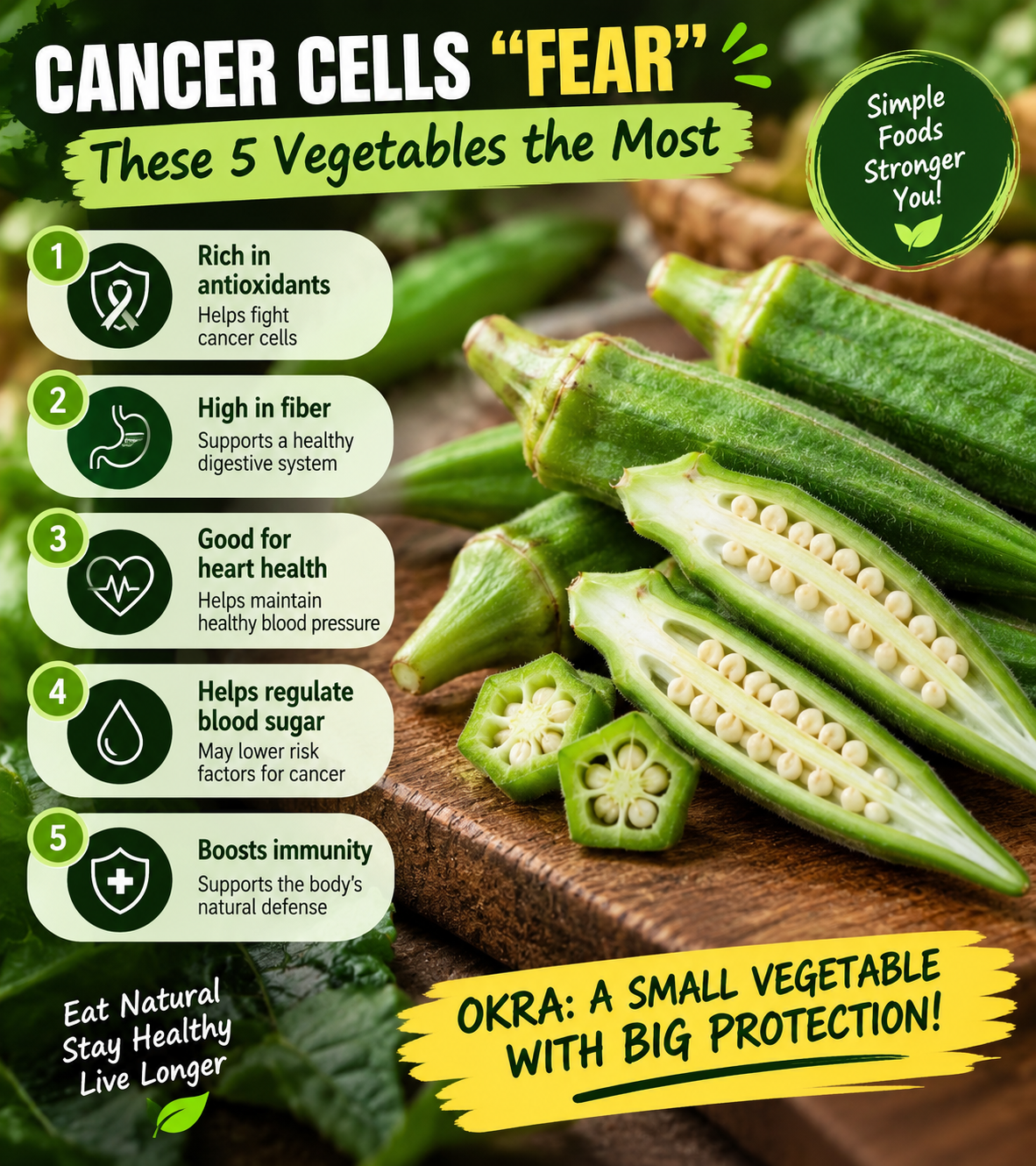
5 vegetables that may support your body’s natural defenses can absolutely deserve a regular place on your plate, but they should not be treated as foods that cancer cells somehow “fear.” Cancer is far too complex for any vegetable to prevent or cure it by itself.
Still, vegetables can contribute to a healthy eating pattern that supports normal immune function, digestion, weight management, and long-term health. Broccoli, spinach, carrots, tomatoes, and okra all provide different combinations of fiber, vitamins, minerals, carotenoids, and other plant compounds.
The real advantage comes from eating them regularly as part of a varied diet rather than relying on any one food as a miracle solution.
I used to pay more attention to dramatic food claims than I do now. Whenever a headline said one vegetable could “fight” a serious disease, it sounded convincing because the food itself was obviously healthy. Over time, though, I realized that healthy foods do not need exaggerated promises. A bowl filled with broccoli, spinach, carrots, tomatoes, and okra already offers plenty of nutritional value without turning dinner into medicine. That shift made eating well feel more practical. Instead of searching for one perfect ingredient, I started focusing on variety, consistency, and meals I could actually enjoy.
5 Vegetables That May Support Your Body’s Natural Defenses Through Nutrition
Broccoli and Spinach Offer Different Protective Nutrients
Broccoli belongs to the cruciferous vegetable family.
This group also includes cabbage, cauliflower, kale, and Brussels sprouts.
Broccoli contains vitamin C, vitamin K, folate, fiber, and naturally occurring compounds known as glucosinolates.
When the plant is chopped or chewed, some glucosinolates can form biologically active compounds, including sulforaphane.
Researchers have studied sulforaphane because it may influence antioxidant defenses, inflammation-related pathways, and other cellular processes.
However, laboratory findings do not mean eating broccoli can treat cancer.
Human disease involves many factors, and food does not work like a drug.
Broccoli still offers real value because it provides nutrients in a low-calorie whole food.
Spinach brings a different nutritional profile.
It provides folate, vitamin K, carotenoids, vitamin C, and fiber.
Carotenoids such as lutein and beta-carotene contribute to the color and nutritional value of leafy greens.
Spinach also makes it easy to add more vegetables to everyday meals.
You can mix it into soups, eggs, pasta, grain bowls, salads, and cooked dishes.
Eating both broccoli and spinach gives you more nutritional variety than relying on either one alone.
That principle matters.
Different vegetables contain different plant compounds, so rotating foods throughout the week can offer a broader range of nutrients.
Instead of asking which vegetable ranks first, focus on including several types.
Carrots, Tomatoes, and Okra Add Color and Variety
Carrots provide beta-carotene, which the body can convert into vitamin A.
Vitamin A supports normal vision, immune function, and tissue maintenance.
Carrots also provide fiber and several other plant compounds.
Their bright orange color reflects the presence of carotenoids.
Tomatoes bring lycopene into the picture.
Lycopene is another carotenoid, and researchers have studied it for its antioxidant properties.
Cooking tomatoes can increase the availability of lycopene, especially when they are eaten with a small amount of fat.
Therefore, tomato sauce, soup, and cooked tomatoes can be nutritious choices alongside fresh tomatoes.
Okra contributes fiber, folate, vitamin C, vitamin K, magnesium, and potassium.
It also contains mucilage, the gel-like substance that gives it a distinctive texture.
That soluble fiber can support digestive health as part of an overall fiber-rich diet.
Together, carrots, tomatoes, and okra provide different colors, textures, and nutrients.
That diversity makes meals more interesting and nutritionally broader.
More importantly, none of these foods needs to “destroy cancer cells” to be worth eating.
Their real strength comes from helping build meals that contain more whole plant foods and fewer heavily processed options.
Why Vegetables Matter More as a Pattern Than as a Cure
Cancer Risk Depends on Many Factors
Cancer is not one disease.
It includes many diseases that develop through different biological pathways.
Genetics can influence risk.
Age matters.
Tobacco exposure plays a major role in several cancers.
Alcohol, infections, environmental exposures, body weight, physical activity, and many other factors can also contribute.
Diet represents only one part of that picture.
A vegetable-rich eating pattern may support long-term health, but no vegetable can erase the effects of major risk factors.
For example, eating broccoli every day does not cancel the risks associated with smoking.
Likewise, eating tomatoes does not replace recommended medical screening.
This is why dramatic headlines can be misleading.
They take a complex topic and attach it to one food.
The better approach looks at the full lifestyle.
Eat plenty of vegetables and fruit.
Choose whole grains and legumes regularly.
Stay physically active.
Avoid tobacco.
Limit alcohol or avoid it.
Maintain a healthy weight when possible.
Follow screening recommendations that apply to your age and risk factors.
These habits work together.
Food can support health, but it cannot provide guaranteed protection.
That message may sound less exciting than a viral claim, but it is more useful.
Vegetables Can Help Improve Overall Dietary Quality
Vegetables offer several advantages at once.
They provide fiber, water, vitamins, minerals, and a wide range of plant compounds.
They also tend to contain fewer calories than many highly processed foods.
That makes them useful for building filling meals without relying heavily on refined snacks, sugary foods, or foods high in saturated fat.
For example, adding roasted broccoli and carrots to a meal increases volume and fiber.
Adding spinach to eggs brings in more leafy greens.
Using tomato-based sauces can increase vegetable intake.
Adding okra to soups and stews can contribute both texture and fiber.
These changes may seem small, but they add up over time.
Vegetables can also support digestive health because fiber feeds certain beneficial gut bacteria.
However, variety still matters.
A diet built around only five vegetables would miss many useful nutrients found in other foods.
Peppers, mushrooms, cabbage, green beans, squash, onions, eggplant, and leafy greens all bring something different.
Therefore, think beyond a short list.
The goal is not to identify a few “special” vegetables and eat them constantly.
The goal is to make vegetables a regular and varied part of meals.
Preparation Can Change the Benefits and Enjoyment of Vegetables
Cooking Methods Affect Texture and Nutrient Availability
Different cooking methods change vegetables in different ways.
Steaming can soften broccoli while preserving much of its texture.
Roasting can bring out sweetness in carrots.
Cooking tomatoes can increase the availability of lycopene.
Sautéing spinach reduces its volume, making it easier to eat a larger amount.
Okra can be roasted, grilled, or added to stews depending on the texture you prefer.
There is no single perfect method for every vegetable.
Some nutrients decrease with heat, while others become easier for the body to access after cooking.
That means a mix of raw and cooked vegetables often works well.
Preparation also affects whether you enjoy the food.
A vegetable you dislike when boiled may taste completely different when roasted.
That matters because consistency depends on enjoyment.
The most nutritious vegetable has little practical value if you refuse to eat it.
Seasonings can help too.
Herbs, spices, garlic, lemon, vinegar, and modest amounts of healthy oils can make vegetables much more appealing.
The goal is not to make every meal perfectly clean or plain.
It is to find preparations you can repeat comfortably.
Frying and Heavy Sauces Change the Overall Meal
Vegetables remain vegetables after frying, but preparation can dramatically change the nutritional profile of the final dish.
Deep-frying adds more fat and calories.
Heavy sauces can contribute large amounts of sodium, sugar, or saturated fat.
That does not mean those foods must disappear completely.
It simply means cooking style matters.
For example, air-fried or roasted broccoli with herbs creates a different meal from broccoli covered in a rich cheese sauce.
Okra simmered in a vegetable stew differs from heavily breaded fried okra.
Tomatoes in a simple homemade sauce differ from a processed sauce with large amounts of added sugar and sodium.
Context matters.
A balanced diet can include richer preparations occasionally while still emphasizing simpler cooking methods most of the time.
This flexible approach often works better than rigid rules.
You do not need to force yourself to eat vegetables in the blandest possible way.
You just need a pattern that makes them enjoyable without turning every serving into a highly processed dish.
These Vegetables Support Health Best as Part of a Bigger Lifestyle
They Cannot Replace Cancer Treatment or Screening
If someone has cancer, vegetables can support nutrition, but they cannot replace medical treatment.
Cancer care may involve surgery, chemotherapy, radiation therapy, immunotherapy, targeted therapy, hormone therapy, or combinations of these approaches.
Doctors choose treatment according to the cancer type, stage, molecular characteristics, and the patient’s overall health.
No vegetable can substitute for that process.
The same caution applies to juices, powders, extracts, and concentrated supplements.
A food-based compound may look promising in a laboratory, but that does not automatically make it an effective treatment in humans.
Supplements can also interact with medications.
Therefore, people undergoing cancer treatment should discuss major supplement use with their healthcare team.
Screening matters too.
Routine screening can help detect certain cancers earlier, when treatment may be more effective.
Eating well does not remove the need for mammograms, colon cancer screening, cervical screening, lung screening when appropriate, or other recommended tests.
Nutrition supports health.
It does not replace medical care.
Variety and Consistency Matter More Than Any “Top Five” List
Broccoli, spinach, carrots, tomatoes, and okra are excellent choices, but they are not the only vegetables worth eating.
Cabbage provides cruciferous compounds.
Bell peppers offer vitamin C and carotenoids.
Mushrooms contribute unique nutrients and plant compounds.
Green beans add fiber and texture.
Eggplant, squash, onions, and leafy greens all provide different combinations.
This is why variety works so well.
When you rotate vegetables, you naturally widen your nutrient intake.
You also prevent boredom.
One day you might roast broccoli and carrots.
Another day you might cook okra with tomatoes.
You can add spinach to eggs in the morning or use it in soup.
The next meal can feature cabbage, peppers, or green beans.
Consistency matters more than perfection.
Eating vegetables regularly over months and years has more value than eating enormous amounts for a few days after reading a dramatic headline.
Healthy eating works best when it becomes normal.
You do not need a miracle food.
You need a pattern you can maintain.
Frequently Asked Questions
Can these 5 vegetables prevent cancer?
No vegetable can guarantee cancer prevention. However, broccoli, spinach, carrots, tomatoes, and okra can contribute to a healthy eating pattern that supports overall health and may help reduce some disease risks when combined with other healthy habits.
Does broccoli kill cancer cells?
Laboratory studies have explored compounds in broccoli, including sulforaphane, for effects on cancer-related cellular pathways. However, eating broccoli does not act as a cancer treatment in humans.
Is cooked tomato healthier than raw tomato?
Both forms offer benefits. Cooking can increase the availability of lycopene, while raw tomatoes provide vitamin C and fresh texture. Including both can be a practical approach.
Does okra help detox the body?
Your liver and kidneys handle most detoxification processes. Okra does not “detox” the body in a special way, but its fiber and nutrients can support a healthy diet.
Should I eat these vegetables every day?
You can eat them regularly, but variety matters more than eating the same five vegetables daily. Rotate different vegetables, fruits, whole grains, legumes, and other nutrient-rich foods.
Conclusion
5 vegetables that may support your body’s natural defenses include broccoli, spinach, carrots, tomatoes, and okra.
Each offers something different.
Broccoli provides cruciferous plant compounds and fiber.
Spinach contributes folate and carotenoids.
Carrots offer beta-carotene.
Tomatoes provide lycopene.
Okra adds fiber, vitamins, and minerals.
However, none of them can guarantee cancer prevention or replace medical treatment.
Their real value comes from how they fit into a broader pattern of healthy living.
Eat a variety of vegetables and other whole foods.
Stay physically active.
Avoid tobacco.
Limit alcohol.
Follow appropriate screening recommendations.
Seek proper medical care when needed.
That approach does not rely on fear or miracle claims.
It relies on steady habits that support long-term health in a realistic and sustainable way.
More Blog
- Drinking Water on an Empty Stomach — What Science Actually Supports (No Hype, Just Facts)
- Waking Up Between 3 and 5 AM? It Might Be Your Soul Trying to Talk to You
- What a “Bleach” Patch on Your Underwear Really Means — And Why It’s Actually a Good Sign
- This Drink May Weaken Your Bones From The Inside — But Everyone Drinks It Anyway