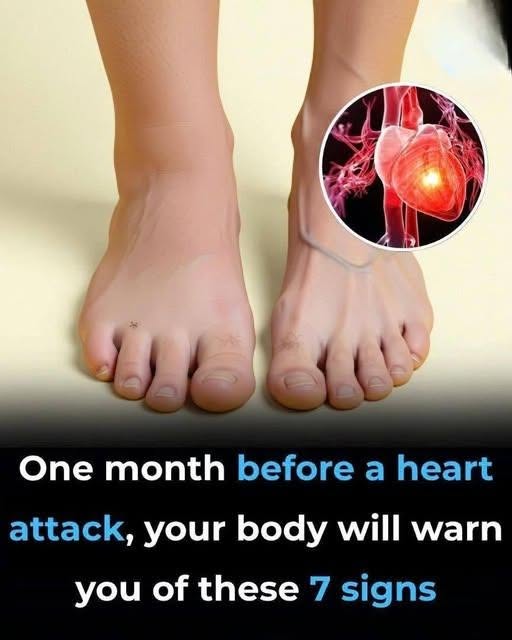
A heart attack can sometimes seem to come out of nowhere. But some people experience symptoms in the days or weeks beforehand.
There is an important distinction: there is no reliable set of symptoms that can predict a heart attack exactly one month in advance. Many of the symptoms below have much more common, less serious causes. Still, new, persistent, worsening, or unexplained symptoms deserve medical attention—especially in someone with cardiovascular risk factors.
❤️ 7 Possible Warning Signs
1. Unusual Fatigue
Feeling exhausted after a demanding day is normal. What deserves more attention is fatigue that is new, unusually intense, or disproportionate to your activity.
Some people experiencing heart problems report difficulty completing activities that previously felt easy, such as climbing stairs, walking, or carrying groceries.
2. Chest Discomfort
Not every heart attack produces dramatic chest pain.
Symptoms can include pressure, squeezing, heaviness, fullness, burning, or discomfort in the center of the chest. It may appear during activity and improve with rest, or become increasingly frequent.
New or unexplained chest pressure should never simply be assumed to be indigestion.
3. Shortness of Breath
Becoming unusually breathless during normal activities can have many causes, but cardiovascular problems are among them.
Pay particular attention when breathlessness is new, worsening, occurs with chest discomfort, or happens while resting.
4. Pain Outside the Chest
Heart-related discomfort isn’t necessarily confined to the chest.
It may be felt in the arm or shoulder, back, neck, jaw, or upper abdomen. Some people describe pressure or aching rather than sharp pain.
5. Nausea, Indigestion or Unusual Sweating
Nausea, stomach discomfort, lightheadedness, or a sudden cold sweat can occur during a cardiac event.
On their own, these symptoms commonly have other explanations. Combined with chest discomfort or shortness of breath, however, they’re considerably more concerning.
6. Dizziness or Feeling Faint
Occasional dizziness can result from dehydration, medication, low blood sugar, or many other conditions.
But sudden or unexplained dizziness, weakness, or fainting, particularly alongside chest symptoms, palpitations, or breathlessness, warrants prompt evaluation.
7. Changes in Exercise Tolerance
One particularly useful clue is a noticeable change from your own normal.
Perhaps the walk you normally complete comfortably suddenly leaves you breathless. Maybe stairs produce chest pressure that wasn’t there before.
A consistent decline in exercise tolerance shouldn’t simply be attributed to aging without considering other possible causes.
🚨 Know the Signs of an Emergency
Possible heart-attack symptoms can include chest pressure, squeezing or pain; discomfort spreading to an arm, shoulder, back, neck or jaw; shortness of breath; sweating; nausea; or lightheadedness.
Symptoms can also be less typical than people expect, particularly in women, older adults, and people with diabetes.
If symptoms suggest a heart attack—especially chest pressure or pain with breathlessness, sweating, nausea, faintness, or radiating discomfort—seek emergency medical care immediately. Don’t wait to see whether it passes.
What You Can Do Before There Is an Emergency
Prevention is much more reliable than trying to predict a heart attack from symptoms.
Regular medical care can identify major cardiovascular risks such as high blood pressure, high cholesterol and diabetes. Avoiding smoking, staying physically active as appropriate, getting adequate sleep, and following a balanced diet can also reduce cardiovascular risk.
Most importantly, don’t let a viral “one month before” checklist create either panic or false reassurance.
There isn’t a countdown clock for heart attacks.
Instead, remember this simpler rule:
New + unexplained + persistent or worsening symptoms = get evaluated.
And when symptoms could represent an active heart attack, treat them as an emergency rather than waiting for an appointment.
More Blog
- Drinking Water on an Empty Stomach — What Science Actually Supports (No Hype, Just Facts)
- Waking Up Between 3 and 5 AM? It Might Be Your Soul Trying to Talk to You
- What a “Bleach” Patch on Your Underwear Really Means — And Why It’s Actually a Good Sign
- This Drink May Weaken Your Bones From The Inside — But Everyone Drinks It Anyway