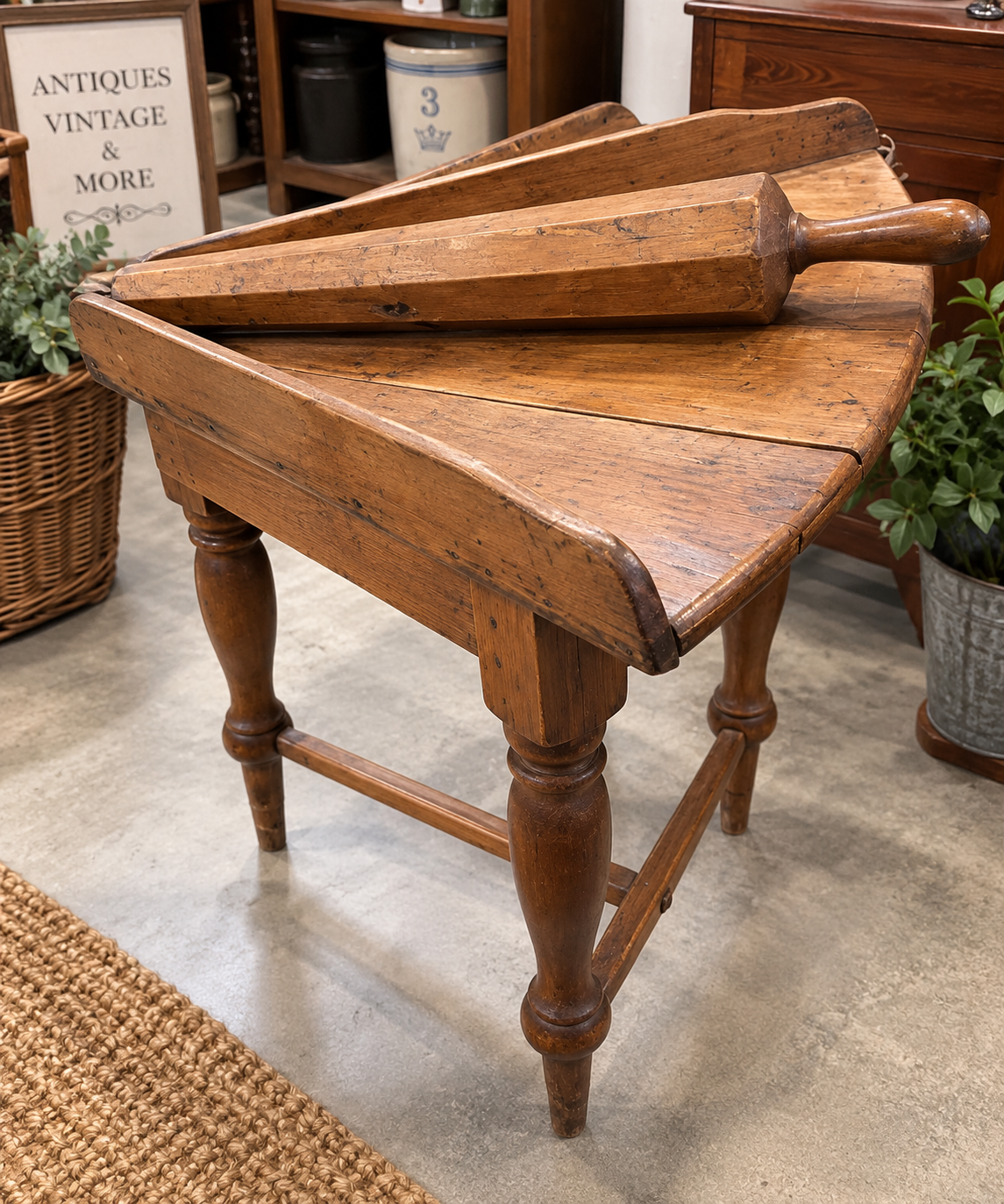
They Used This Every Day, But Can You Even Tell What It Is? At first glance, this old wooden object looks more like a forgotten farm tool than something that once belonged in a busy kitchen. Its unusual shape, ridged surface, and worn wood can leave modern viewers completely puzzled.
Yet generations ago, tools like this played an important role in everyday food preparation. The object is commonly known as a butter worker, a practical tool used after fresh cream had been churned into butter.
Before refrigerators, electric mixers, and neatly wrapped sticks of butter became everyday conveniences, families had to prepare and preserve butter carefully. Churning produced the butter, but the job did not end there. The fresh butter still contained liquid that needed to be removed before the finished product could be shaped, salted, stored, or sold.
That is where the butter worker came in.
I remember seeing old kitchen tools at flea markets and wondering how anyone could possibly identify them without hearing the stories behind them. A worn wooden board or roller can look ordinary until someone explains that a family may have used it every week for decades. Suddenly, the scratches and grooves stop looking like damage and start looking like history. That is what makes a butter worker so fascinating: it connects a simple food we still eat today with a much more hands-on way of preparing it.
What This Mysterious Old Kitchen Tool Actually Did
The Butter Worker Came After the Churn
A butter churn usually gets most of the attention when people think about traditional butter making. Cream went into the churn, and repeated agitation caused the fat globules to come together. Eventually, the cream separated into solid butterfat and liquid buttermilk.
However, freshly churned butter was not ready for long-term storage immediately.
Small pockets of buttermilk remained trapped inside the soft mass. Traditional butter makers needed to remove as much of that liquid as practical because excess moisture could affect texture, flavor, and keeping quality.
The butter worker provided a simple solution.
Depending on the design, the tool could include a grooved board, roller, paddle, or combination of surfaces. The butter maker placed the fresh butter on the work surface and pressed, rolled, or folded it repeatedly.
That motion encouraged leftover liquid to escape.
At the same time, the process distributed moisture more evenly through the butter and helped create a smoother, more consistent texture.
This step required patience because overly aggressive working could damage the butter’s texture, especially if the butter became too warm.
Traditional butter makers therefore often worked with cool butter and cool equipment.
Once enough buttermilk had been removed, the butter could be salted, shaped, packed into crocks, pressed into molds, or prepared for market.
For families that kept dairy cows, this was not a novelty project. Butter making formed part of the regular rhythm of household food preparation.
Why Those Grooves and Ridges Were So Useful
The strange-looking ridges on many butter workers were functional rather than decorative.
A smooth board could flatten butter, but grooves created pathways where expelled liquid could move away from the butter. They also gave the tool more surface contact while the butter was being pressed and folded.
Some butter workers resembled small washboards. Others used grooved rollers mounted above sloping wooden tables.
Large farms and commercial dairies needed more efficient designs because they processed greater quantities of butter.
Meanwhile, smaller households often used simple wooden paddles or hand-operated tools.
The principle remained similar: move and compress the butter without melting it, remove unwanted liquid, and develop a uniform consistency.
This is one reason antique butter equipment can vary so much in appearance.
A person may identify one vintage tool instantly while another looks completely unfamiliar, even though both served nearly the same purpose.
Wood also made sense as a traditional material. Skilled craftspeople could shape it easily, and farm families often had access to wooden kitchenware.
However, butter makers had to clean their tools carefully. Any old milk residue could affect the flavor or quality of the next batch.
Families frequently cooled or soaked wooden butter tools before use as part of their preparation routine.
Today, those marks from repeated washing, pressing, and rolling help antique examples tell their own quiet story.
What looks like a strange piece of carved wood was once part of a very practical food-preservation system.
Why Working Fresh Butter Was So Important
Removing Buttermilk Helped Improve Keeping Quality
Fresh butter contains fat, water, and small amounts of other milk components.
After churning, some buttermilk remains mixed through the butter. Traditional butter-making methods therefore included washing and working the butter to remove excess liquid.
That process mattered because moisture and milk residues could contribute to deterioration.
Butter makers wanted a product that remained pleasant for as long as possible, particularly during an era when refrigeration was limited or unavailable.
The butter worker helped squeeze out residual buttermilk while blending the remaining moisture more evenly.
Salt offered another layer of protection.
People valued salt for flavor, but historically it also helped butter keep longer. Salted butter became especially useful when families needed to store dairy products beyond the day they were made.
In some households, butter was packed tightly into containers to reduce exposure to air.
Others used molds to turn the finished butter into blocks decorated with floral, geometric, or family patterns.
For farm families, successful butter making could also have economic value.
Surplus butter could be traded or sold, so consistency mattered. A well-made batch needed to look attractive, taste fresh, and hold together properly.
The butter worker helped transform irregular lumps of newly churned fat into a finished household product.
That makes the tool much more important than its simple appearance suggests.
It did not create the butter from cream, but it helped determine what happened after churning.
Temperature and Texture Had to Be Carefully Managed
Traditional butter making required more judgment than simply following a timer.
Temperature affected nearly every stage of the process.
If the cream was too cold, churning could take longer. If the butter became too warm during working, it could turn greasy and lose the texture the maker wanted.
Therefore, experienced butter makers learned to judge the product by appearance and feel.
They could recognize when the butter had been worked enough and when continuing would cause more harm than good.
That practical knowledge often passed from one generation to the next.
A child helping in the kitchen might first learn simple jobs, then gradually understand how cream behaved in different seasons and temperatures.
Summer milk and winter milk did not always perform identically, and household conditions changed throughout the year.
Traditional cooks adapted rather than relying on an appliance to manage every variable.
This hands-on process also explains why antique food tools developed such specialized forms.
A butter worker existed because butter had very specific handling needs.
The ridges, sloped surfaces, and rollers were solutions to practical problems people encountered repeatedly.
Modern cooks rarely need these devices because commercial dairies now use controlled equipment to process butter efficiently.
However, the underlying food science remains familiar.
Butter still needs the right balance of fat and moisture. Temperature still changes its texture. Salt still affects flavor.
The antique tool may have disappeared from most kitchens, but the physical properties it helped manage have not changed.
How Butter Making Fit Into Everyday Family Life
Making Butter Was Often Part of a Larger Dairy Routine
For many rural households, butter making did not begin with a carton of cream from a supermarket.
It began with the cow.
Milk had to be collected, handled, and allowed to yield cream. Depending on the equipment and era, families separated cream using settling methods or mechanical cream separators.
That cream could then be churned.
Once butter formed, the liquid buttermilk was drained and often used elsewhere in the kitchen rather than wasted.
Fresh buttermilk could become part of breads, biscuits, cakes, or other foods.
Meanwhile, the butter itself moved to the washing and working stage.
The butter worker therefore belonged to a larger chain of household tasks in which very little went unused.
That rhythm demanded time.
Modern shoppers can buy butter in seconds. Earlier households invested labor in nearly every stage of dairy processing.
Still, the effort produced something valuable.
Butter supplied concentrated energy and flavor, and it could turn basic foods into richer meals.
Families spread it on bread, used it in baking, cooked with it, and stored it for future use.
In that context, a butter worker was not an eccentric gadget.
It was another practical kitchen tool, much like a rolling pin or mixing bowl.
The fact that it looks mysterious today simply shows how dramatically food preparation has changed.
Antique Tools Preserve Everyday History
Museums often display grand objects connected with famous events, but ordinary household tools can reveal just as much about daily life.
A butter worker tells us what people ate, how they preserved food, how much labor went into routine meals, and what skills families needed.
Its worn surface may represent thousands of repeated movements.
Someone stood over that tool again and again, pressing and folding fresh butter until it reached the desired consistency.
Perhaps the butter went onto a family dinner table.
Perhaps it was packed for winter.
Perhaps it was carried to a local market and exchanged for other household necessities.
Those possibilities make an ordinary utensil part of a much larger social history.
Antique kitchen tools also remind us that household technology constantly evolves.
A task that once required specialized equipment may later disappear from daily life completely.
That is why younger generations can look at a butter worker and have no idea what they are seeing.
The object’s usefulness depended on a system of home dairy production that fewer people practice today.
Collectors often appreciate such pieces for exactly that reason.
A butter worker represents craftsmanship, agricultural history, and traditional food preparation in a single object.
Even people who never plan to churn butter can enjoy discovering how the tool worked.
Once you know its purpose, its design suddenly becomes logical.
The grooves are no longer mysterious. The roller is not decorative. The board is not simply an old piece of wood.
Every part served the preparation of a familiar food.
What the Butter Worker Can Teach Modern Cooks
Old Tools Show the Value of Understanding Food
The butter worker offers a useful lesson beyond nostalgia.
Earlier cooks could not always rely on packaged ingredients or automated appliances, so they needed a strong practical understanding of food.
They watched texture.
They controlled temperature.
They smelled ingredients.
They learned how moisture affected storage and how salt changed preservation.
That knowledge helped them respond when conditions varied.
Modern cooking is easier in many ways, but understanding these basic principles still improves results.
For example, anyone who bakes knows that butter temperature can completely change the texture of cookies or pastry.
Cold butter behaves differently from softened butter.
Melted butter behaves differently again.
Likewise, homemade cultured butter requires attention to moisture if someone wants a clean texture and good storage quality.
The butter worker belongs to that same tradition of understanding ingredients rather than merely following instructions.
It also demonstrates how carefully designed simple tools can solve complicated problems.
No electricity was required.
The device depended on leverage, pressure, drainage, and the cook’s judgment.
Those principles made it effective for generations.
Even today, some people who make butter at home use modern paddles, wooden spoons, spatulas, or similar tools to press out excess liquid.
The equipment looks different, but the goal remains recognizable.
Why These Objects Still Capture Our Attention
Mystery-object photographs spread easily online because they invite everyone to make a guess.
A vintage butter worker works especially well because it looks vaguely familiar yet difficult to place.
Someone may think it belongs in a workshop.
Another person may guess that it processed grain, laundry, or dough.
Only when the butter-making process is explained does the shape make immediate sense.
That moment of recognition makes old household tools entertaining to explore.
However, their value goes deeper than solving a visual puzzle.
They reconnect everyday products with the labor behind them.
Butter seems completely ordinary when it arrives wrapped in paper from a grocery store.
Seeing the equipment people once needed to make it changes that perspective.
Cream had to separate.
Someone had to churn it.
The butter had to be washed, worked, salted, shaped, and stored.
Each stage required knowledge.
Therefore, the humble butter worker provides a small window into a world where households produced far more of their own food.
It reminds us that convenience has hidden many processes that earlier generations knew intimately.
There is no need to romanticize the hard labor of the past to appreciate the skill involved.
Old kitchens demanded patience, adaptability, and resourcefulness.
A mysterious wooden object can therefore become more than an antique.
It becomes evidence of how people solved everyday problems with the materials and knowledge available to them.
Frequently Asked Questions
What is the old wooden tool in the picture?
The object is a type of vintage butter worker. Butter makers used tools of this kind to press and work freshly churned butter after separating it from buttermilk. Different butter workers had different shapes, including grooved boards, rollers, and paddles.
Why did people need to work butter after churning it?
Churning caused butterfat to separate from the liquid portion of cream, but some buttermilk remained trapped inside the fresh butter. Working the butter helped remove excess liquid, distribute moisture, improve texture, and prepare the butter for salting and storage.
Did removing buttermilk help butter last longer?
Yes. Removing excess liquid and milk residues helped improve butter’s keeping quality. Salt was also commonly added for flavor and preservation, especially when reliable refrigeration was not available.
Are butter workers still used today?
Most commercial butter production uses modern industrial equipment instead of traditional hand-operated butter workers. However, people who make butter at home may still use paddles, spatulas, wooden spoons, or specialty butter-working tools for similar purposes.
Are antique butter workers valuable?
Value varies widely. Age, condition, rarity, craftsmanship, maker’s marks, size, and provenance can all influence collector interest. Some people buy butter workers as decorative farmhouse antiques, while others collect them specifically for dairy or kitchen history.
Conclusion
They Used This Every Day, But Can You Even Tell What It Is? What initially looks like an odd wooden contraption is actually a reminder of how much work once went into producing something as familiar as butter.
The vintage butter worker performed an important job after cream had been churned. By pressing and working fresh butter, families could remove remaining buttermilk, improve texture, distribute moisture, and prepare the finished butter for salting, shaping, storage, or sale.
Its ridges and rollers were not decorative details. They reflected generations of practical problem-solving.
The tool also tells a larger story about household life.
Families once handled many food-production tasks themselves, from milking cows and separating cream to churning and preserving the final product. Skills that are now largely hidden inside commercial food factories once belonged to everyday kitchen knowledge.
That is why antique objects like a butter worker continue to fascinate people.
They may appear strange because the world around them has changed, not because their design lacked purpose.
Once you understand the task, every part of the object starts to make sense.
And perhaps that is the most interesting part of discovering vintage kitchen tools. They remind us that an ordinary meal once depended on dozens of small skills, repeated patiently from one generation to another.
So the next time you see a worn wooden object in an antique shop, barn, attic, or online mystery photo, look closely before dismissing it.
It may not be scrap wood at all.
It could be a piece of everyday history that helped put food on the table.
More Blog
- Drinking Water on an Empty Stomach — What Science Actually Supports (No Hype, Just Facts)
- Waking Up Between 3 and 5 AM? It Might Be Your Soul Trying to Talk to You
- What a “Bleach” Patch on Your Underwear Really Means — And Why It’s Actually a Good Sign
- This Drink May Weaken Your Bones From The Inside — But Everyone Drinks It Anyway