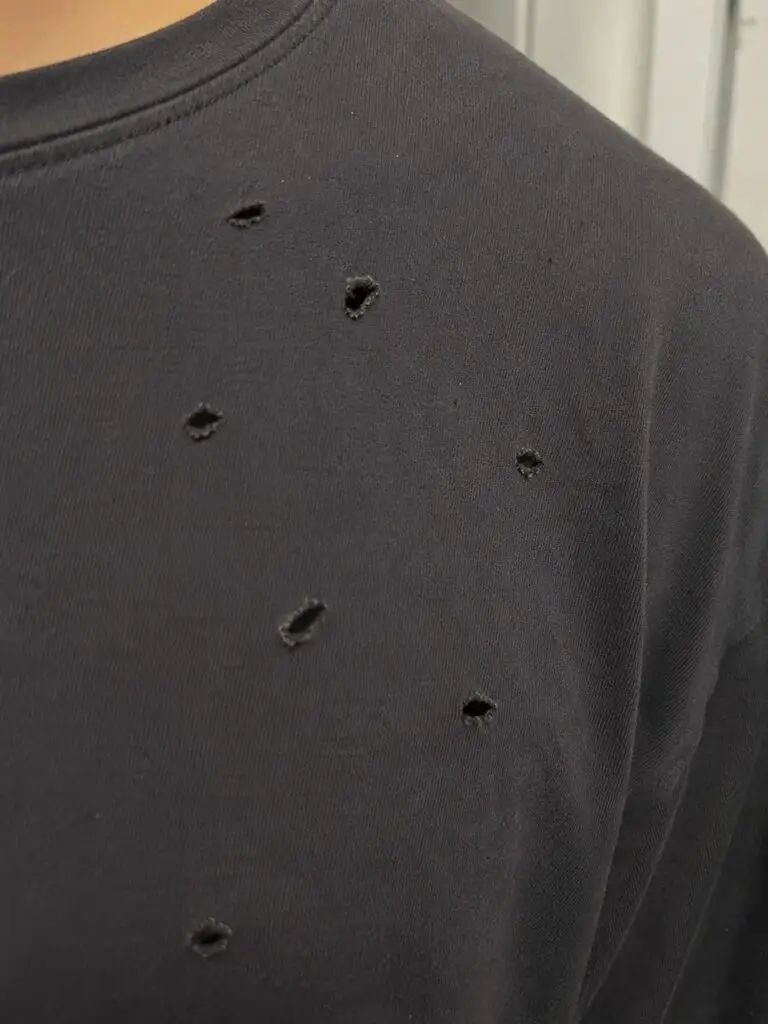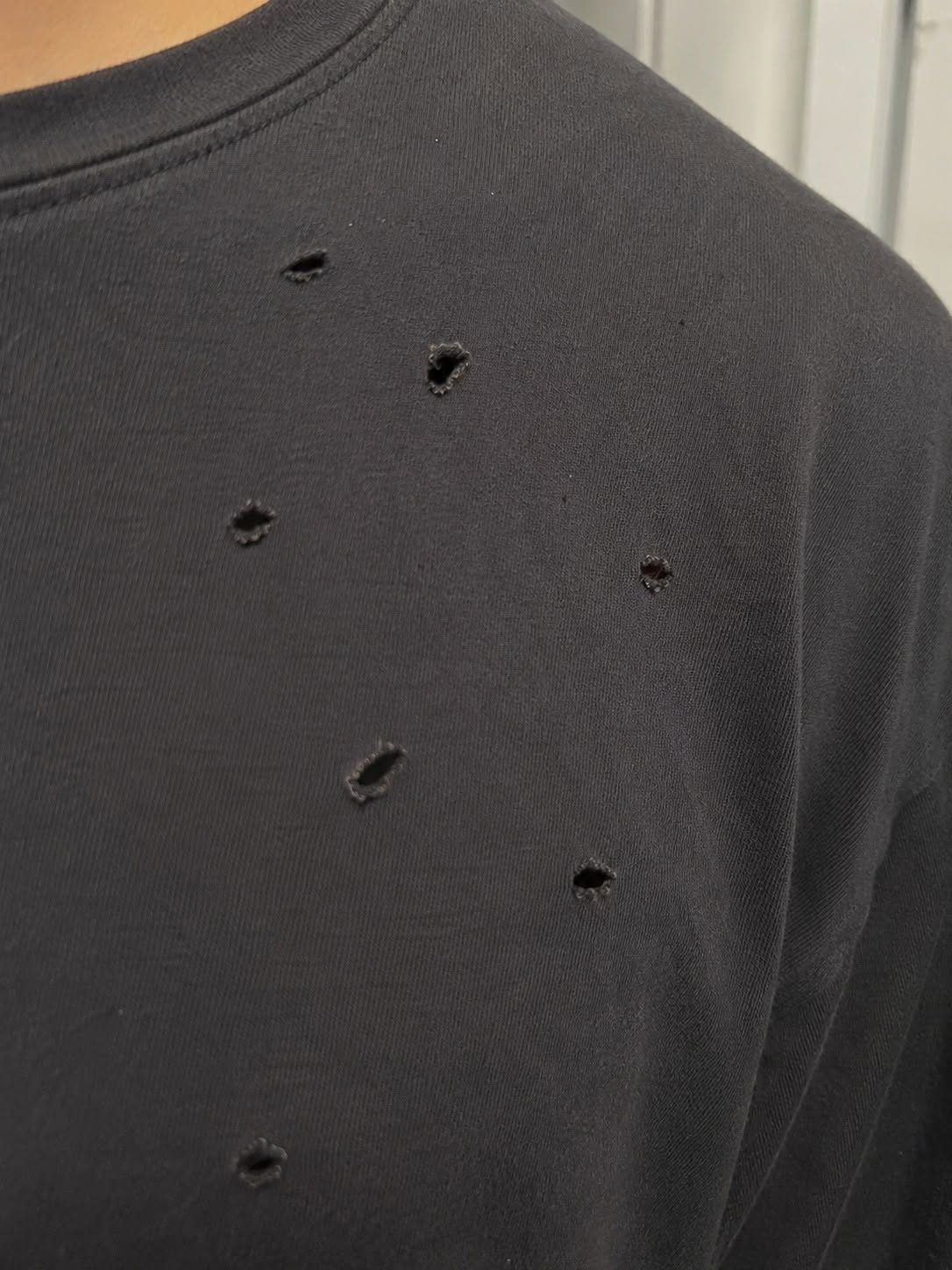
Finding tiny holes in a favorite T-shirt or sweater can be frustrating, especially when you have no idea where they came from.
Sometimes the washing machine is involved. Sometimes insects are responsible. And sometimes the damage happens long before laundry day.
The key is to look at where the holes appear, what the fabric is made of, and whether the damage follows a pattern.
1. Friction From Everyday Wear
One of the most common causes of small holes—especially near the lower front of T-shirts—is repeated rubbing.
Common sources include:
- Belt buckles
- Countertops
- Desk edges
- Seat belts
- Handbags
- Rough zippers
- Buttons from other garments
Lightweight cotton and thin knits are particularly vulnerable.
If the holes keep appearing in the same place, friction is one of the first things to suspect.
2. Zippers, Hooks, and Hardware in the Wash
Clothes can snag on other garments during washing and drying.
A sharp zipper tooth, bra hook, metal button, or exposed fastener can catch delicate fabric and create tiny tears.
Easy Fix
Zip up zippers before washing, fasten hooks, turn delicate garments inside out, and place fragile items in a mesh laundry bag.
Separating heavy denim from lightweight shirts can also reduce damage.
3. Overloading the Washing Machine
Stuffing too many clothes into the drum increases friction and compression.
Garments need enough space to move freely. When they’re packed tightly, fabric can rub aggressively against other clothing and the machine itself.
Easy Fix
Avoid filling the washer completely. Follow the manufacturer’s load guidance and wash bulky or heavy items separately when possible.
4. High Dryer Heat
Excessive heat can weaken fibers over time, particularly in:
- Cotton
- Elastic blends
- Activewear
- Rayon
- Lightweight synthetics
Heat doesn’t usually create one perfect hole by itself, but weakened fibers can tear more easily later.
Easy Fix
Use lower heat when appropriate and remove clothing once dry rather than repeatedly overdrying it.
5. Moths and Carpet Beetles
If holes appear while clothes are stored rather than after washing, insects may be responsible.
Clothes moth larvae are particularly attracted to animal-based fibers such as:
- Wool
- Cashmere
- Fur
- Feathers
- Silk
Carpet beetle larvae can also damage natural fibers and fabrics containing food, sweat, or skin residues.
Contrary to a common assumption, adult moths usually aren’t the ones eating the fabric—the larvae cause the damage.
6. Silverfish
Silverfish may damage fabrics containing starches, adhesives, or food residues.
They’re more likely to appear in humid storage areas and may affect cotton, linen, paper, and other materials.
If you also notice damaged books, wallpaper, or cardboard, silverfish become a more plausible suspect.
7. Poor Storage
Clothes can weaken when they’re stored in damp, overcrowded, or dirty conditions.
Sharp hangers, tightly packed drawers, rough shelving, and long-term folding at the same stress points can all contribute to wear.
Easy Fix
Store clothes clean and dry, avoid overcrowding, and use smooth hangers or folded storage appropriate to the fabric.
8. Sweat, Deodorant, and Body Oils
Certain areas naturally wear out faster because they repeatedly absorb moisture and body products.
Common trouble spots include:
- Underarms
- Collars
- Waistbands
- Cuffs
Sweat, oils, antiperspirant residue, and repeated friction can gradually weaken fibers.
This is why holes sometimes appear in very specific areas rather than randomly.
9. Bleach and Harsh Chemicals
Chlorine bleach and some strong cleaning products can damage fibers, especially when concentrated.
Even a tiny splash may weaken the fabric before the damage becomes visible.
Over time, the affected spot can turn into a hole.
Easy Fix
Use bleach only according to garment-care instructions, dilute it properly, and keep cleaning products away from clothing.
10. Low-Quality or Very Thin Fabric
Some garments simply wear out faster.
Very lightweight fabrics, loosely knitted materials, and lower-quality fibers may develop holes after relatively few washes.
That doesn’t mean every inexpensive garment is poorly made, but fabric density and construction do affect durability.
11. Damage Inside the Washing Machine
Sometimes the machine really is the culprit.
A rough drum edge, damaged agitator, loose metal component, or sharp object trapped inside the washer can snag clothing.
Quick Test
Run your hand carefully around the inside of the empty drum and around any agitator or seals.
If you feel a rough or sharp spot, stop using the machine for delicate clothes until it’s inspected.
Also check pockets before every wash. Coins, screws, keys, and other small objects can cause damage.
How to Tell What’s Causing the Holes
The location offers useful clues.
Small holes near the waist: Often friction from belts, counters, or jeans hardware.
Random holes after laundry: Could be zippers, hooks, overloading, or a damaged washer.
Irregular holes in stored wool: Consider clothes moths or carpet beetles.
Damage near underarms or collars: Sweat, deodorant, and repeated wear may be contributing.
Multiple fabrics damaged in storage: Inspect the area for insects and humidity.
How to Make Clothes Last Longer
A few habits can significantly reduce fabric damage:
- Turn delicate clothes inside out.
- Close zippers and fasten hooks.
- Use mesh bags for fragile garments.
- Don’t overload the washer.
- Wash heavy and delicate clothing separately.
- Use appropriate water and dryer temperatures.
- Store clothing clean and dry.
- Inspect closets periodically for insect activity.
- Repair tiny holes early before they spread.
The Bottom Line
Tiny holes in clothes aren’t always caused by one mysterious problem.
They can result from friction, laundry hardware, insects, chemical damage, storage conditions, or normal fabric wear.
The best clue is the pattern.
Once you notice where the holes appear and when they develop, the cause usually becomes much easier to identify—and a few small changes can help keep the rest of your wardrobe intact.
More Blog
- Drinking Water on an Empty Stomach — What Science Actually Supports (No Hype, Just Facts)
- Waking Up Between 3 and 5 AM? It Might Be Your Soul Trying to Talk to You
- What a “Bleach” Patch on Your Underwear Really Means — And Why It’s Actually a Good Sign
- This Drink May Weaken Your Bones From The Inside — But Everyone Drinks It Anyway