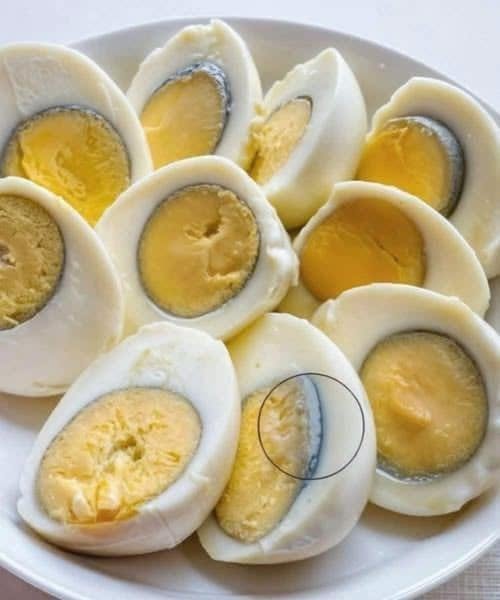
You peel a hard-boiled egg, slice it open, and immediately notice something strange: a greenish-gray ring around the yolk.
It can look unappetizing enough to make you wonder whether the egg has spoiled.
Fortunately, in most cases, that green ring is completely harmless.
It is usually the result of a simple chemical reaction caused by cooking the egg too long or at too high a temperature.
Why Does the Yolk Turn Green?
Egg whites naturally contain sulfur compounds, while egg yolks contain iron.
When eggs are exposed to prolonged heat, sulfur from the white can react with iron in the yolk.
This produces a small amount of iron sulfide near the surface of the yolk.
That reaction creates the familiar:
- Green
- Gray-green
- Olive-colored
ring around the outside of the yolk.
It is most noticeable where the yolk and white meet.
Does a Green Ring Mean the Egg Is Spoiled?
No.
A green ring caused by overcooking does not mean the egg has gone bad.
If the egg was stored, cooked, and refrigerated safely, the discoloration alone is not a reason to throw it away.
The green color is a cooking reaction rather than a sign of contamination.
That said, color isn’t the only thing that determines whether an egg is safe to eat.
Discard an egg if it has other clear signs of spoilage, such as:
- An unusually foul odor
- Slimy or abnormal texture
- Improper storage for an extended period
A typical green-gray yolk ring by itself is not a spoilage sign.
Why Does Overcooking Cause It?
The longer an egg stays hot, the more opportunity there is for sulfur compounds in the egg white to react with iron in the yolk.
That’s why the green ring is especially common when eggs are:
- Boiled aggressively for a long time
- Left sitting in very hot water too long
- Not cooled promptly after cooking
Cooking gently and stopping the cooking process quickly can greatly reduce the discoloration.
How to Prevent the Green Ring
The easiest solution is simply to avoid excessive heat.
Method 1: Gentle Boiling
Place the eggs in a saucepan and cover them with water.
Bring the water to a gentle boil.
Once boiling, reduce the heat so the eggs aren’t bouncing violently around the pot.
Cook until the yolks reach your preferred firmness.
For large eggs, a firm hard-boiled yolk often takes around 10–12 minutes, depending on the starting temperature and cooking method.
Then immediately cool them.
Method 2: Hot-Water Method
Another popular technique is to:
- Cover the eggs with water.
- Bring the water to a boil.
- Remove the pot from the heat.
- Cover it.
- Allow the eggs to sit in the hot water until cooked through.
The exact resting time depends on egg size and desired doneness, but approximately 10–15 minutes is commonly used for hard-cooked eggs.
The Ice Bath Makes a Big Difference
As soon as the eggs finish cooking, transfer them to a bowl filled with ice water.
Leave them there for around 5–10 minutes.
Rapid cooling helps stop residual heat from continuing to cook the yolk.
It can also make peeling easier in many cases.
This one simple step can help produce yolks that stay bright yellow rather than developing that green-gray outer layer.
Does the Green Ring Change the Taste?
Usually, not very much.
The bigger issue is often texture.
Overcooked eggs may develop:
- A slightly stronger sulfur smell
- A dry or chalky yolk
- A rubberier egg white
- A crumbly yolk texture
The green ring itself isn’t what causes the unpleasant texture.
Both the discoloration and the dry texture are signs that the egg has been exposed to more heat than necessary.
What Causes the “Eggy” Sulfur Smell?
That familiar hard-boiled egg smell is related to sulfur-containing compounds released during cooking.
Overcooking can intensify the aroma.
This is another reason gently cooked eggs often taste and smell better than eggs that have been boiled vigorously for a long time.
Is the Egg Still Nutritious?
Yes.
A green ring does not suddenly remove the nutritional value of the egg.
Eggs remain an excellent source of nutrients, including:
- High-quality protein
- Vitamin B12
- Choline
- Selenium
- Vitamin D
- Riboflavin
- Healthy fats
Cooking can affect some heat-sensitive nutrients to a degree, as it does with many foods, but an overcooked yolk is still nutritious.
How Long Do Hard-Boiled Eggs Last?
For food safety, hard-cooked eggs should be refrigerated promptly.
As a general guideline, refrigerated hard-boiled eggs can typically be kept for up to about one week.
Keep them at a safe refrigerator temperature and avoid leaving them at room temperature for long periods.
A useful rule for perishable foods is not to leave them out longer than about 2 hours, or around 1 hour in very hot conditions above 90°F (32°C).
Should You Peel Them Before Refrigerating?
Either option can work.
Leaving the shell on may help protect the egg from drying out and absorbing refrigerator odors.
If you peel them in advance, keep them in a sealed container in the refrigerator.
What If the Yolk Is Green All the Way Through?
A thin green-gray ring around a hard-boiled yolk is typical of overcooking.
If the egg has unusual discoloration throughout, strange odors, or other abnormal characteristics, that’s different.
When appearance and smell seem genuinely unusual rather than simply overcooked, it’s safer not to eat the egg.
Why Some Eggs Develop the Ring More Easily
The exact appearance can vary depending on:
- Cooking temperature
- Cooking time
- Egg size
- Cooling speed
- Egg composition
That’s why two eggs cooked in slightly different conditions may not look exactly the same inside.
How to Get Bright Yellow Yolks Every Time
For attractive hard-boiled eggs:
- Avoid prolonged aggressive boiling.
- Use a timer.
- Cook only until the yolk is set.
- Transfer the eggs immediately to ice water.
- Chill completely before peeling.
The result should be a firm but tender white and a yellow yolk without the dark outer ring.
Perfect for Deviled Eggs and Meal Prep
Preventing the green ring is especially useful when appearance matters.
Bright yellow yolks look much better in:
- Deviled eggs
- Egg salad
- Cobb salads
- Potato salad
- Breakfast plates
- Party platters
The same eggs would still be edible with a green ring, but careful cooking creates a much more appealing presentation.
The Bottom Line
If you cut open a hard-boiled egg and find a green or gray ring around the yolk, don’t panic and don’t automatically throw it away.
The color usually means the egg was cooked a little too long or cooled too slowly.
It happens because sulfur compounds from the egg white react with iron in the yolk during prolonged heating.
The discoloration is generally harmless.
For prettier, more tender hard-boiled eggs, simply use gentler cooking times and transfer them to an ice bath as soon as they’re done.
So the next time you see that mysterious green ring, remember:
It’s usually not spoilage—it’s just chemistry.
More Blog
- Drinking Water on an Empty Stomach — What Science Actually Supports (No Hype, Just Facts)
- Waking Up Between 3 and 5 AM? It Might Be Your Soul Trying to Talk to You
- What a “Bleach” Patch on Your Underwear Really Means — And Why It’s Actually a Good Sign
- This Drink May Weaken Your Bones From The Inside — But Everyone Drinks It Anyway