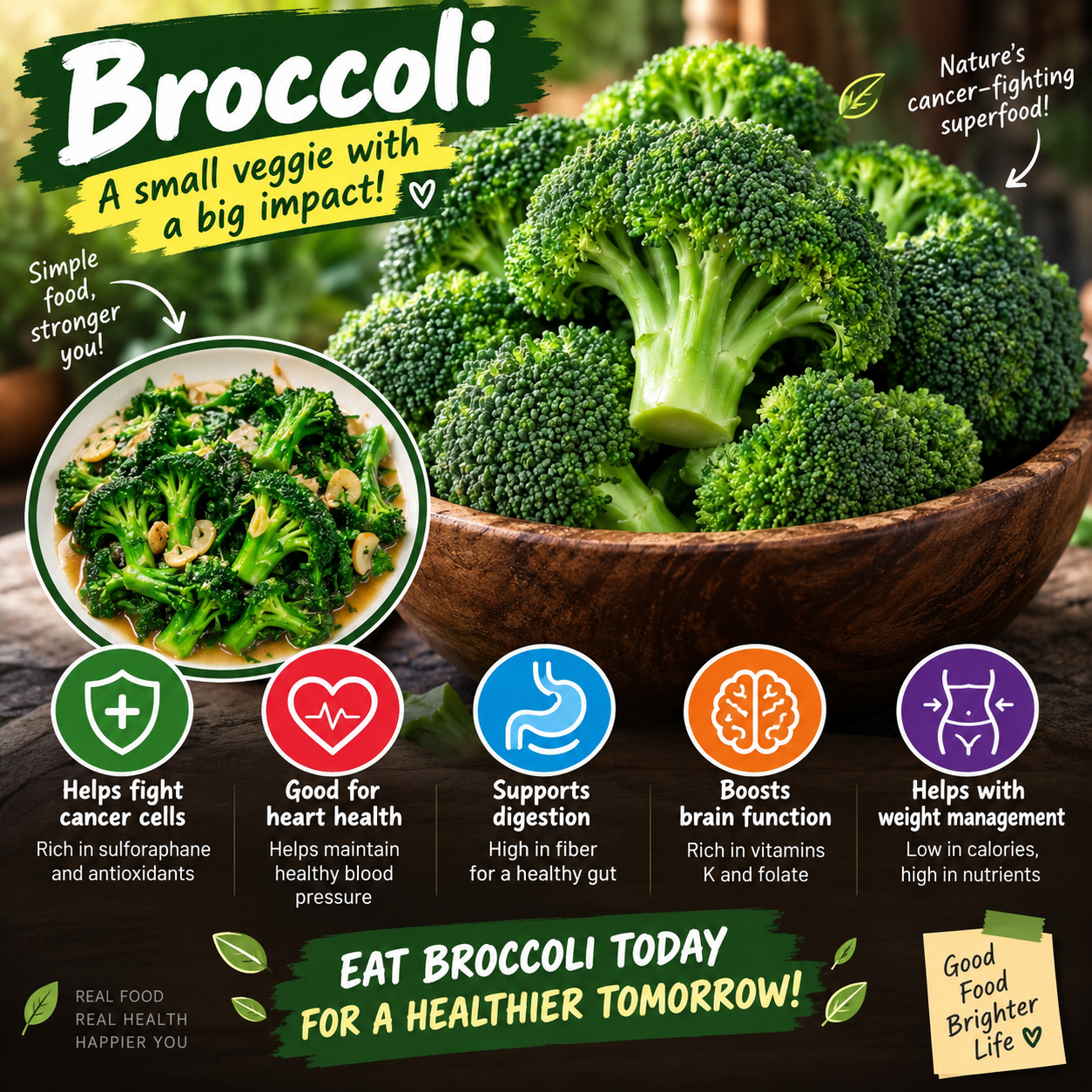
If you see this vegetable at the market, don’t forget to buy it immediately—not because broccoli is a miracle cure, but because it offers an impressive mix of fiber, vitamins, minerals, and naturally occurring plant compounds. Broccoli belongs to the cruciferous vegetable family, which also includes cauliflower, cabbage, kale, and Brussels sprouts.
Broccoli provides vitamin C, vitamin K, folate, fiber, and several antioxidants. Researchers have also studied compounds formed from glucosinolates in broccoli, including sulforaphane, because of their effects on cellular processes. However, broccoli cannot prevent or cure cancer by itself. Its real value comes from how well it fits into a varied eating pattern that supports long-term health.
I started looking at broccoli differently after realizing how often it gets described in extreme ways. Some people treat it like a miracle food, while others avoid it because they remember overcooked, mushy broccoli from childhood. Once I began roasting or lightly steaming it instead, it became completely different. The flavor tasted fresher, the texture stayed firm, and it worked with almost any meal. More importantly, I stopped thinking about broccoli as a food that needed dramatic claims to justify eating it. It already offers plenty of nutritional value on its own.
If You See This Vegetable at the Market, Its Nutrients Make It Worth Considering
Broccoli Packs Several Important Nutrients Into One Food
Broccoli provides a broad mix of nutrients while remaining relatively low in calories.
Vitamin C stands out as one of its best-known nutrients. Your body uses vitamin C for normal immune function, collagen production, wound healing, and antioxidant protection.
Broccoli also provides vitamin K.
This vitamin helps support normal blood clotting and contributes to bone health.
Folate adds another important benefit. Your body needs folate for DNA synthesis and normal cell division. This nutrient becomes especially important during periods of rapid growth.
Then there is fiber.
Dietary fiber supports digestion, helps promote regular bowel movements, and contributes to fullness after meals.
Broccoli also supplies smaller amounts of potassium and other minerals.
However, no single serving provides everything your body needs.
That is why broccoli works best alongside other vegetables, fruits, legumes, whole grains, healthy fats, and protein-rich foods.
Think of broccoli as one strong piece of a much larger nutritional puzzle.
Its advantage lies partly in versatility.
You can roast it, steam it, stir-fry it, add it to soups, or serve it alongside grains and protein.
Frozen broccoli also offers a convenient option when fresh broccoli is unavailable.
Therefore, including broccoli regularly does not require complicated meal planning.
Its nutrient profile makes it useful, but its practicality makes it easy to keep eating.
Cruciferous Vegetables Contain Unique Plant Compounds
Broccoli belongs to a group of vegetables known as cruciferous vegetables.
These vegetables contain glucosinolates, naturally occurring compounds that break down into other biologically active substances during chopping, chewing, and digestion.
One of the best-known compounds associated with broccoli is sulforaphane.
Researchers have studied sulforaphane because laboratory experiments suggest it can influence antioxidant defenses, inflammation-related pathways, and processes involved in cell growth.
Those findings attract understandable attention.
However, laboratory effects do not mean broccoli acts like a drug in the human body.
The amount of a compound used in an experiment may differ greatly from what someone gets from eating an ordinary serving of broccoli.
Human disease also involves complex interactions between genes, lifestyle, environment, and many biological systems.
Therefore, it would be inaccurate to say that broccoli destroys cancer cells simply because a compound found in broccoli affects certain cells in a laboratory.
Still, these findings help explain why cruciferous vegetables remain an important area of nutrition research.
Broccoli gives you these compounds in the context of a whole food that also provides fiber, vitamins, minerals, and water.
That combination makes it a practical addition to a balanced diet without requiring exaggerated promises.
What Research Really Says About Broccoli and Cancer Prevention
Broccoli Can Support a Healthy Pattern but Cannot Guarantee Protection
Claims that broccoli “fights cancer” often oversimplify what scientists actually know.
Broccoli contains compounds that researchers continue to study for possible roles in cancer-related biological pathways.
However, eating broccoli cannot guarantee that someone will avoid cancer.
Cancer develops through many different mechanisms.
Genetics, age, tobacco exposure, alcohol use, infections, body weight, physical activity, environmental exposures, and other factors can all influence risk.
Diet matters, but diet represents only one part of the picture.
A vegetable-rich eating pattern may support overall health and can form part of a broader cancer-prevention strategy.
Broccoli fits naturally into that kind of diet.
Its fiber and plant compounds may contribute benefits alongside those from many other vegetables and fruits.
However, focusing on one food can distract from more important habits.
For example, eating broccoli every day does not cancel the effects of smoking.
Likewise, one vegetable cannot replace appropriate medical screening or physical activity.
A healthier approach looks at patterns rather than individual ingredients.
Eat a wide variety of plant foods.
Limit heavily processed foods when possible.
Stay active.
Avoid tobacco.
Keep alcohol intake low or avoid it.
Follow recommended screening schedules.
Broccoli can contribute to that strategy, but it should never carry the entire burden.
Broccoli Is Not a Cancer Treatment
This distinction matters even more for people already diagnosed with cancer.
Broccoli can certainly form part of a nutritious diet during treatment if it fits the person’s medical and nutritional needs.
However, it cannot replace evidence-based cancer care.
Cancer treatment may involve surgery, chemotherapy, radiation therapy, targeted treatment, immunotherapy, hormone therapy, or other approaches.
Doctors select treatments according to cancer type, stage, molecular characteristics, and individual health factors.
No vegetable can substitute for that process.
Claims that broccoli juice, broccoli sprouts, or concentrated sulforaphane products can eliminate tumors can create dangerous false hope.
Food can support nutrition.
It cannot replace oncology care.
This does not make broccoli unimportant.
Nutrition still matters during illness. Eating enough protein, calories, fiber, vitamins, and minerals can help support strength and overall well-being.
However, treatment decisions require medical evidence.
Supplements deserve extra caution.
A concentrated extract differs substantially from eating broccoli as a vegetable. Supplements may provide much larger doses of certain compounds and may interact with medications or treatments.
Therefore, someone undergoing cancer treatment should discuss supplements with their healthcare team rather than assuming that “natural” means harmless.
Broccoli remains valuable precisely because it can contribute to ordinary healthy eating without needing to become a substitute for medical care.
Broccoli Can Support Digestion and Everyday Health
Fiber Helps Support the Digestive System
Broccoli provides dietary fiber, which plays several roles in digestive health.
Fiber adds bulk to stool and helps support regular bowel movements.
Some types of fiber can also be fermented by gut bacteria.
This process produces compounds that may support the environment of the colon.
However, broccoli works best as one fiber source among many.
Different plant foods provide different types of fiber.
Beans, lentils, oats, berries, whole grains, nuts, seeds, fruits, and other vegetables all contribute something different.
That diversity matters because the gut microbiome responds to a wide variety of plant compounds.
Therefore, eating broccoli alongside many other plants gives you a broader nutritional range than eating large amounts of broccoli alone.
Some people experience gas or bloating after eating cruciferous vegetables.
That reaction can happen because gut bacteria ferment certain carbohydrates and fibers.
If you rarely eat high-fiber foods, suddenly consuming a very large portion of broccoli may make the effect more noticeable.
Increase portions gradually if necessary.
Cooking broccoli can also make it easier for some people to tolerate.
Adequate fluid intake helps too.
Persistent or severe digestive symptoms, however, deserve professional evaluation rather than repeated dietary experimentation.
Broccoli can support digestion, but comfort still matters.
Broccoli Adds Volume and Nutrients Without Many Calories
Broccoli contains a significant amount of water and relatively few calories.
That makes it useful for adding volume to meals.
A plate with broccoli often looks and feels more substantial without dramatically increasing overall energy intake.
However, broccoli does not cause weight loss by itself.
Body weight depends on long-term energy balance and many individual factors, including activity, sleep, medications, health conditions, appetite, and genetics.
Still, vegetables can make balanced meals easier to build.
For example, roasted broccoli paired with beans, chicken, fish, tofu, or eggs provides more variety and volume.
Add whole grains or potatoes, and the meal becomes more complete.
Broccoli also offers texture.
That matters more than people sometimes realize.
Meals that include different textures and flavors can feel more satisfying, which can make nutritious eating easier to maintain.
How you prepare broccoli changes the final meal.
A large amount of cheese sauce or butter adds more calories and saturated fat, while herbs, spices, lemon, garlic, or a modest amount of olive oil can add flavor differently.
Neither approach needs to become a strict rule.
The broader pattern matters.
If broccoli helps you eat more vegetables consistently, that alone gives it practical value.
The Way You Prepare Broccoli Can Affect Its Nutrition and Enjoyment
Steaming, Roasting, and Quick Cooking Can All Work Well
Cooking changes broccoli’s texture, flavor, and nutrient profile.
Vitamin C and some other water-soluble nutrients can decrease with prolonged exposure to heat and water.
Therefore, boiling broccoli for a long time may reduce some nutrient content.
However, that does not mean boiled broccoli becomes nutritionally worthless.
It still provides fiber and various nutrients.
The bigger issue often involves texture.
Long cooking can make broccoli soft and strongly flavored, which causes some people to dislike it.
Shorter cooking methods can preserve both texture and color.
Steaming works well because it softens broccoli without submerging it in water.
Roasting brings out a slightly sweeter, deeper flavor.
Quick stir-frying also keeps the vegetable relatively crisp.
Raw broccoli offers another option, although some people find cooked broccoli easier to digest.
Therefore, choose the preparation method you actually enjoy.
A theoretically perfect cooking method offers little benefit if it makes you avoid the food entirely.
You can also use the stalks.
Many people throw them away, but the inner portion is edible.
Peel away the tough exterior, then slice or chop the tender center.
Use it in stir-fries, soups, slaws, or roasted vegetable dishes.
Using more of the vegetable reduces waste while adding extra food to the meal.
Broccoli Sprouts Are Interesting but Not Magical
Broccoli sprouts have attracted attention because they contain high levels of glucoraphanin, a precursor involved in forming sulforaphane.
Researchers have studied sprouts and sulforaphane-rich preparations for potential biological effects.
However, sprouts do not need to replace ordinary broccoli.
They simply offer another way to consume compounds found in cruciferous vegetables.
The same caution applies to supplements.
A capsule containing concentrated broccoli-derived compounds can differ greatly from eating fresh vegetables.
Higher concentration does not automatically mean greater benefit.
In some cases, concentrated products may also create side effects or medication interactions that ordinary food portions would not.
Therefore, food usually provides the more straightforward approach.
Add broccoli sprouts to sandwiches, salads, or bowls if you enjoy them.
Eat ordinary broccoli too.
Include cauliflower, cabbage, kale, and Brussels sprouts if you like those foods.
The broader message remains simple.
Variety matters more than chasing the highest possible dose of one plant compound.
This approach also keeps meals enjoyable.
Instead of eating broccoli because you feel obligated to consume a supposed miracle food, use it as one of many vegetables that can add flavor, texture, and nutrition to everyday meals.
Frequently Asked Questions
Can broccoli really prevent cancer?
Broccoli cannot guarantee cancer prevention. However, it contains fiber and plant compounds that researchers have studied for possible roles in biological processes related to cancer development. It can form part of a healthy eating pattern that supports overall health.
What is sulforaphane?
Sulforaphane is a compound formed from glucosinolates found in cruciferous vegetables such as broccoli. Researchers have studied it for effects on antioxidant defenses, inflammation-related pathways, and cell processes, but those findings do not make broccoli a cancer treatment.
Is raw broccoli healthier than cooked broccoli?
Not necessarily. Raw broccoli preserves some heat-sensitive nutrients, while lightly cooking it can improve texture and digestibility. Steaming, roasting, and quick sautéing all provide nutritious options.
Can I eat broccoli every day?
Most people can include broccoli regularly as part of a balanced diet. However, eating a variety of vegetables provides a broader range of nutrients and plant compounds than relying heavily on one vegetable.
Why does broccoli sometimes cause gas?
Broccoli contains fiber and fermentable carbohydrates that gut bacteria can break down. That process can produce gas. Smaller portions, gradual increases in fiber, and light cooking may improve tolerance for some people.
Conclusion
If you see this vegetable at the market, don’t forget to buy it immediately—not because broccoli holds a secret cure, but because it offers a genuinely useful combination of nutrients.
Broccoli provides vitamin C, vitamin K, folate, fiber, and naturally occurring plant compounds found in cruciferous vegetables.
Researchers continue to study sulforaphane and related compounds because of their effects on cellular pathways associated with oxidative stress, inflammation, and abnormal cell growth. However, those findings should never be turned into claims that broccoli can cure cancer or guarantee protection from the disease.
The strongest benefits come from the bigger picture.
Eat broccoli alongside many other vegetables, fruits, legumes, whole grains, healthy fats, and nutritious protein sources.
Stay active, avoid tobacco, limit alcohol, and follow appropriate medical screening recommendations.
When it comes to cooking, choose methods you enjoy. Steam it, roast it, stir-fry it, or add it to soups and bowls.
Broccoli does not need dramatic promises to earn a place on your plate.
Its real strength lies in something much simpler: it is an accessible, versatile, nutrient-rich vegetable that can help make an overall healthy diet easier to maintain.
More Blog
- Drinking Water on an Empty Stomach — What Science Actually Supports (No Hype, Just Facts)
- Waking Up Between 3 and 5 AM? It Might Be Your Soul Trying to Talk to You
- What a “Bleach” Patch on Your Underwear Really Means — And Why It’s Actually a Good Sign
- This Drink May Weaken Your Bones From The Inside — But Everyone Drinks It Anyway