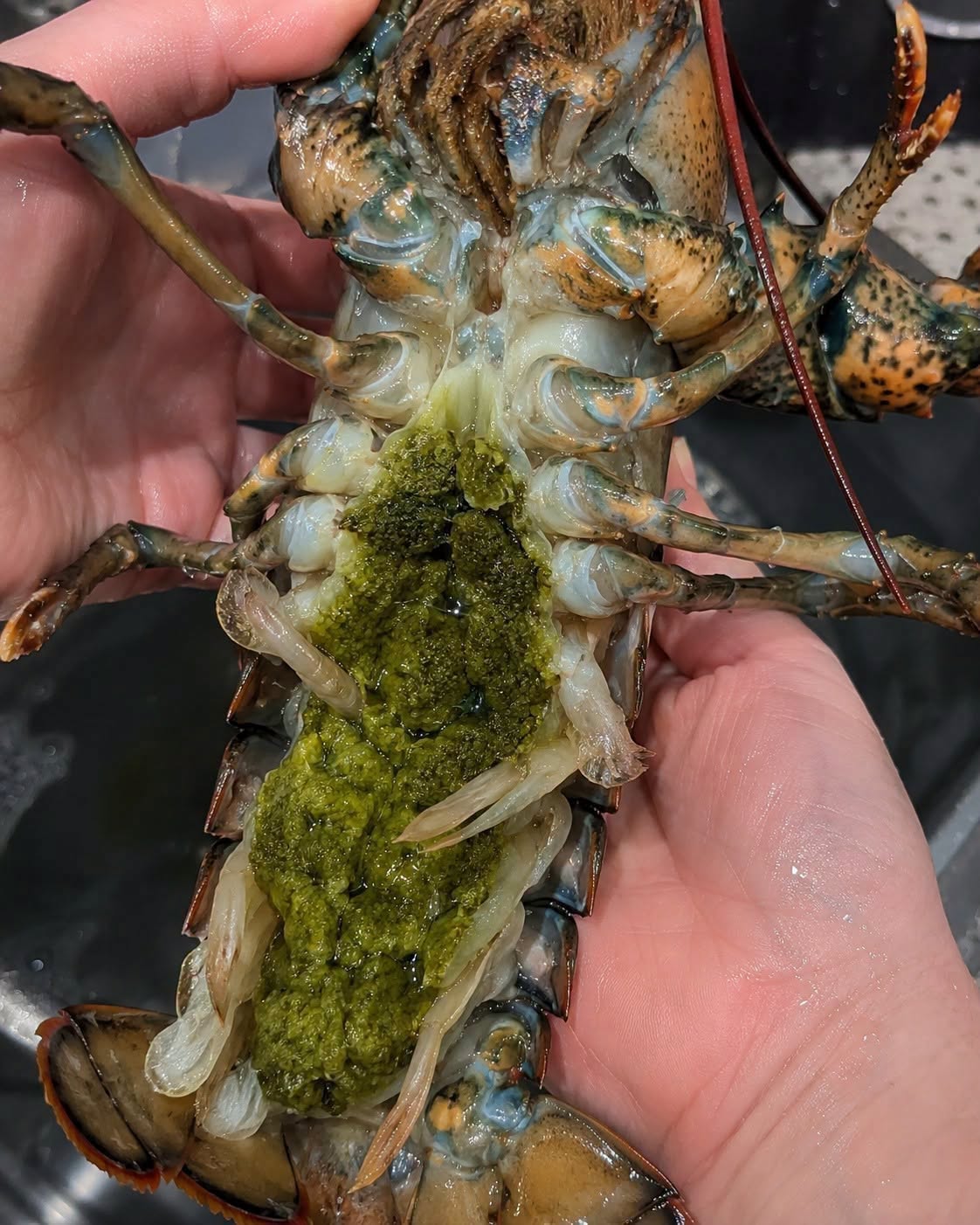
Crack open a cooked lobster and you may discover something unexpected hiding beneath the bright red shell: a soft green substance.
If you’ve never eaten a whole lobster before, your first reaction might be to wonder whether something has gone wrong.
Is the lobster spoiled? Is the green material edible? And why do some seafood lovers consider it a delicacy?
That mysterious substance is usually tomalley, a normal part of lobster anatomy. But whether you should eat it requires a little more explanation.
What Exactly Is Lobster Tomalley?
Tomalley is the lobster’s hepatopancreas, an organ that performs functions somewhat comparable to both the liver and pancreas in humans.
It helps with digestion and the processing and storage of nutrients.
Depending on the lobster and how it was prepared, tomalley can appear:
- Green
- Yellow-green
- Olive-colored
- Creamy or paste-like
So if you open a properly cooked lobster and discover green material inside the body cavity, its color alone doesn’t mean the lobster is spoiled.
What Does Tomalley Taste Like?
People who enjoy tomalley often describe it as intensely rich, savory, and briny.
Its flavor is considerably stronger than ordinary lobster meat, and its soft texture can be surprising if you’ve never tried it.
Some lobster enthusiasts eat a small amount directly, while cooks have traditionally incorporated it into sauces and other seafood preparations.
Others dislike it completely.
It’s very much a matter of personal preference.
Is Tomalley the Same as Lobster Roe?
No.
These two parts are frequently confused.
Tomalley is a digestive organ and can occur in both male and female lobsters.
Roe consists of eggs and occurs in female lobsters.
They can also look different depending on whether they’re raw or cooked.
Why Does Lobster Roe Turn Red?
Lobster roe can look dark or greenish before cooking, which can make it easy to confuse with tomalley.
Once heated, however, the roe can develop a distinctive red or coral color.
That’s why cooked lobster roe is sometimes called coral.
Its texture is generally firmer and more granular than the creamy consistency of tomalley.
Can You Eat Lobster Tomalley?
This question deserves more nuance than a simple yes.
Tomalley has traditionally been eaten as a delicacy, but health authorities have sometimes advised consumers to avoid or limit eating lobster tomalley because contaminants or naturally occurring marine toxins can concentrate in this organ.
The hepatopancreas performs digestive and filtering-related functions, which means substances from the lobster’s environment may accumulate there differently than in its muscle meat.
For that reason, eating the lobster meat and eating the tomalley aren’t necessarily equivalent from a food-safety perspective.
Why Can Tomalley Contain Marine Toxins?
Certain microscopic algae in the ocean can produce toxins.
Shellfish and other marine animals may be exposed to these compounds through the food chain.
Some toxins can become concentrated in digestive organs.
Importantly, cooking doesn’t necessarily destroy every marine toxin.
So thoroughly cooking a lobster doesn’t automatically make contaminated tomalley safe.
This is why regional seafood advisories matter.
What About Contaminants?
Environmental contaminants are another consideration.
Because tomalley is involved in digestion and nutrient processing, some contaminants can accumulate there at higher concentrations than in lobster muscle.
The actual risk varies according to where the lobster was harvested and environmental conditions in that area.
Rather than assuming that all tomalley is either perfectly safe or universally dangerous, check guidance from the relevant local food-safety or fisheries authority.
Is Lobster Meat Still Safe If You Don’t Eat the Tomalley?
An advisory against eating tomalley doesn’t automatically mean that the lobster’s muscle meat is unsafe.
Different tissues can accumulate substances differently.
That’s why some public-health recommendations specifically distinguish between lobster meat and tomalley.
Always follow any seafood advisories for the location where the lobster was harvested.
What About Lobster Roe?
Properly sourced and prepared lobster roe is also eaten in various cuisines.
However, seafood safety still applies.
Raw or undercooked seafood can carry microorganisms or other hazards, and some people are advised to avoid raw or undercooked seafood entirely.
Pregnant people, young children, older adults, and people with weakened immune systems may need additional precautions.
How Can You Tell Tomalley From Roe?
Once the lobster is cooked, the distinction can become easier.
Tomalley
Usually:
Color: Green to yellow-green
Texture: Soft, creamy, paste-like
Location: Inside the body cavity
Cooked Roe
Usually:
Color: Red to coral
Texture: Firmer and somewhat granular
Found in: Female lobsters
If you’re uncertain about something inside a lobster, there’s no requirement to eat it. The familiar white lobster meat is the portion most diners are interested in anyway.
Does Green Tomalley Mean the Lobster Has Gone Bad?
Not by itself.
Green tomalley is normal lobster anatomy.
Spoilage should instead be considered in the context of the seafood’s freshness, storage, handling, odor, and other signs of deterioration.
And remember: the absence of a bad smell doesn’t guarantee seafood is free from harmful microorganisms or toxins.
Proper sourcing and temperature control remain important.
Is Tomalley a “Nutritional Superfood”?
It’s better to be cautious with this claim.
Tomalley does contain nutrients, but calling it a nutritional powerhouse can encourage people to consume large quantities while ignoring the reason health agencies sometimes issue warnings about it.
You don’t need tomalley to obtain the nutritional benefits associated with seafood.
Lobster meat itself provides protein and several vitamins and minerals.
How to Eat Whole Lobster More Safely
When preparing lobster at home, start with seafood obtained from a reputable source.
Keep it at appropriate temperatures, avoid cross-contamination with other foods, and cook it using recognized food-safety guidance.
Before eating tomalley or other internal organs, check whether your local authorities have issued seafood advisories for lobster harvested from that region.
This is particularly important because marine conditions can change.
The Bottom Line
The mysterious green substance inside a lobster usually isn’t evidence that anything is wrong.
It’s called tomalley—the lobster’s hepatopancreas.
Some people consider its rich, concentrated flavor a delicacy, while others prefer to discard it.
Female lobsters may also contain roe, which can turn a striking coral-red when cooked.
But there’s an important distinction between something being traditionally edible and something being advisable to eat frequently. Because toxins and contaminants can sometimes accumulate in tomalley, public-health authorities may recommend avoiding or limiting it depending on where the lobster was harvested.
So if you’re curious about that green material, you now know exactly what you’re looking at.
Whether it belongs on your plate is a question best answered by local seafood-safety guidance—not simply by tradition.
More Blog
- Drinking Water on an Empty Stomach — What Science Actually Supports (No Hype, Just Facts)
- Waking Up Between 3 and 5 AM? It Might Be Your Soul Trying to Talk to You
- What a “Bleach” Patch on Your Underwear Really Means — And Why It’s Actually a Good Sign
- This Drink May Weaken Your Bones From The Inside — But Everyone Drinks It Anyway