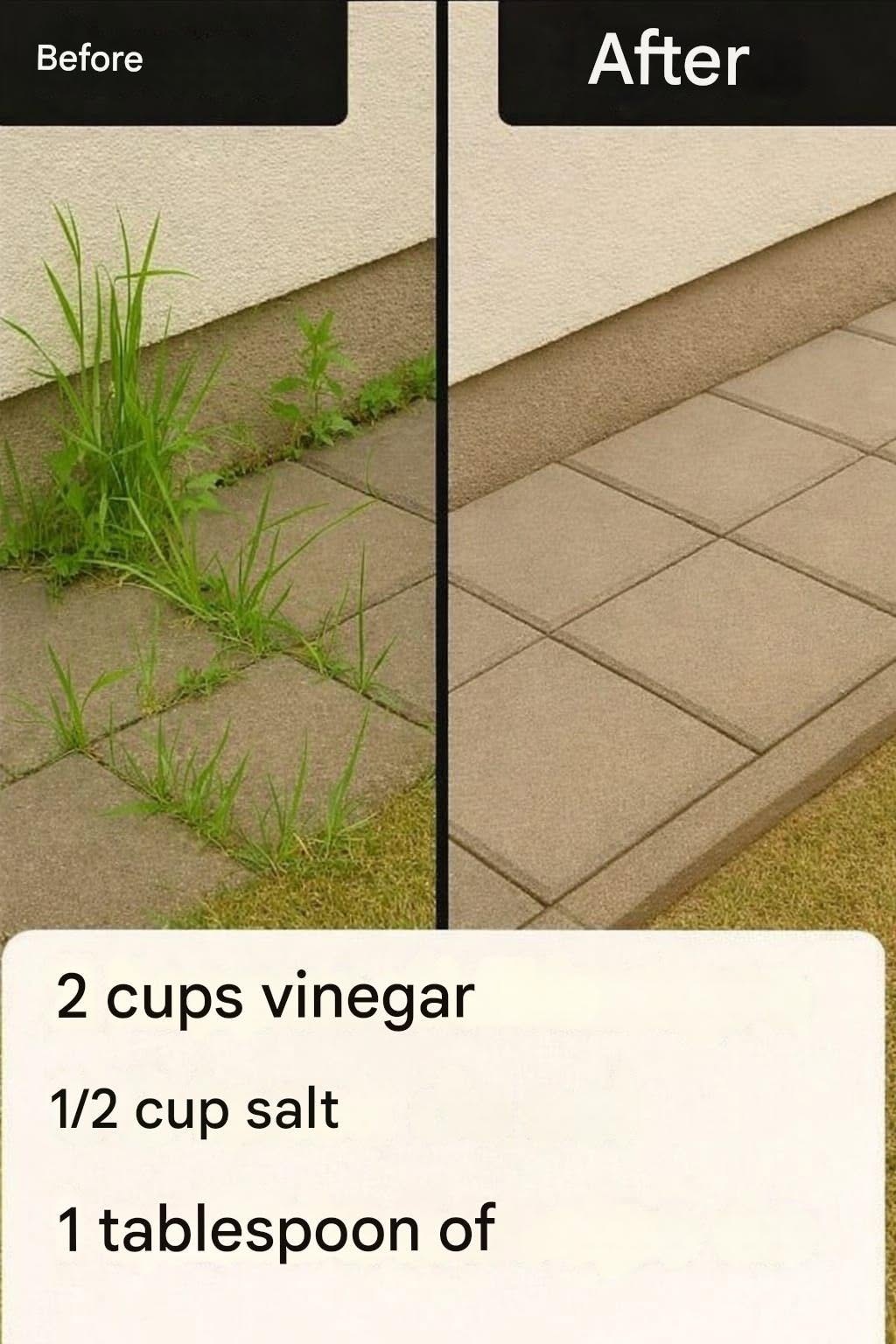
Weeds have a way of appearing exactly where they’re least welcome. They push through cracks in sidewalks, spread across gravel paths, and seem determined to reclaim every neglected corner of a yard. For many homeowners, the first instinct is to reach for a commercial weed killer. However, concerns about cost, environmental impact, and chemical exposure have encouraged many people to explore homemade alternatives.
One of the most popular DIY weed-control solutions combines three simple household ingredients: white vinegar, salt, and dish soap. It’s inexpensive, easy to prepare, and can be surprisingly effective when used correctly. However, understanding both its strengths and limitations is essential.
This guide explains how homemade herbicides work, when they are useful, and the important precautions every gardener should know before spraying.
Why People Choose Homemade Herbicides
Many commercial herbicides are designed for large-scale agricultural or landscaping use. While effective, some contain synthetic compounds that homeowners prefer to avoid around patios, walkways, pets, and children.
Homemade herbicides appeal because they are:
- Inexpensive
- Made from readily available ingredients
- Easy to prepare
- Effective on many young weeds
- Useful for hard surfaces and non-garden areas
However, natural does not automatically mean harmless. Even common kitchen ingredients can cause unintended damage when misused.
The goal should not be to eliminate every weed at any cost. Instead, it should be to manage unwanted growth responsibly while protecting soil health and surrounding plants.
Understanding the Science Behind the Mixture
The classic homemade herbicide contains three ingredients:
White Vinegar
White vinegar contains acetic acid, which acts as a desiccant.
When sprayed onto plant leaves, acetic acid damages cell membranes and rapidly removes moisture from plant tissues. This causes weeds to wilt, dry out, and eventually die back.
The effect is most noticeable on:
- Young annual weeds
- Newly sprouted weeds
- Small broadleaf plants
Household vinegar typically contains around 5% acetic acid, which is strong enough for light weed control but less effective on mature weeds.
Salt
Salt enhances the drying effect.
It draws moisture from plant cells through osmosis, making it more difficult for weeds to absorb water. Salt can also create conditions that inhibit future plant growth.
While this sounds beneficial, it comes with an important drawback: salt can remain in soil long after application.
For this reason, salt-based herbicides should never be used where future planting is desired.
Dish Soap
Dish soap serves as a surfactant.
Without soap, liquid tends to bead up and roll off waxy weed leaves. The soap helps the mixture spread evenly across the leaf surface, improving contact and increasing effectiveness.
Only a small amount is needed.
What Homemade Herbicides Do Well
When used properly, vinegar-based herbicides can provide fast results.
Many users notice:
- Visible wilting within hours
- Browning within one to three days
- Effective control of young weeds
- Reduced weed growth in pavement cracks
The mixture works particularly well on:
- Chickweed
- Crabgrass seedlings
- Purslane
- Young dandelion leaves
- Small annual broadleaf weeds
Applications are most successful on hot, sunny days when evaporation and plant stress accelerate the drying process.
What Homemade Herbicides Cannot Do
One of the biggest misconceptions is that vinegar herbicides permanently kill all weeds.
They do not.
Because the solution primarily affects foliage, deep root systems often survive.
This means stubborn weeds such as:
- Dandelions
- Thistles
- Bindweed
- Bermuda grass
- Nutsedge
may regrow after treatment.
Homemade herbicides also provide no long-term residual weed prevention.
New seeds can germinate shortly after treatment if conditions remain favorable.
The Recommended Recipe
For small-scale use on hard surfaces, many gardeners use the following formula:
Ingredients
- 2 cups white vinegar (5% acidity)
- ½ cup table salt
- 1 tablespoon dish soap
Equipment
- Spray bottle or garden sprayer
- Gloves
- Eye protection
- Long sleeves
Instructions
- Pour vinegar into a container.
- Add salt and stir until mostly dissolved.
- Mix in dish soap gently.
- Transfer the solution into a labeled spray bottle.
- Shake lightly before use.
Always label the container clearly and keep it away from children and pets.
How to Apply It Properly
Application technique can significantly affect results.
Choose the Right Weather
The ideal conditions include:
- Sunny skies
- Dry weather
- Temperatures above 75°F (24°C)
- Little or no wind
Avoid spraying before rainfall, which can wash away the solution before it works.
Target Young Weeds
Smaller weeds absorb the solution more effectively.
Young growth usually responds much better than mature plants with thick protective coatings.
Spray Thoroughly
Cover all exposed leaf surfaces until they appear wet but not dripping.
Complete coverage improves results considerably.
Avoid Overspray
This mixture is non-selective.
Any plant it touches can be damaged, including:
- Grass
- Flowers
- Shrubs
- Vegetables
- Tree seedlings
Use cardboard barriers or shields when working near desirable plants.
Safety Considerations
Although this mixture is considered relatively low-risk compared with many commercial herbicides, precautions are still important.
Protect Your Skin and Eyes
Vinegar can cause irritation.
Wear:
- Gloves
- Safety glasses
- Long sleeves
Higher-strength horticultural vinegar products are significantly more hazardous and may cause burns.
Keep Pets Away Until Dry
Allow treated areas to dry completely before allowing pets or children to return.
Never Mix with Bleach
Mixing vinegar with bleach creates toxic chlorine gas.
Always keep household chemicals separate.
Environmental Concerns
Many people assume homemade herbicides are automatically eco-friendly.
The reality is more nuanced.
Vinegar Breaks Down Quickly
Acetic acid degrades relatively fast in the environment and does not persist for long periods.
Salt Persists Much Longer
Salt can remain in soil and accumulate over time.
Repeated applications may:
- Reduce soil fertility
- Harm beneficial organisms
- Prevent future plant growth
- Damage nearby roots
For this reason, salt-based herbicides should be limited to driveways, sidewalks, and other non-growing areas.
Waterways Require Special Care
Never spray near:
- Streams
- Ponds
- Wetlands
- Storm drains
Runoff can affect aquatic ecosystems and water quality.
Better Long-Term Weed Prevention
Even effective herbicides are only part of the solution.
The most sustainable approach focuses on prevention.
Mulching
Organic mulch:
- Blocks sunlight
- Conserves moisture
- Improves soil health
- Suppresses weed seeds
Dense Planting
Healthy ground covers reduce open space where weeds can establish themselves.
Hand Removal
Pulling weeds after rainfall often removes roots more effectively than spraying.
Boiling Water
For cracks in pavement, boiling water can provide quick, chemical-free control.
Frequently Asked Questions
Will this kill weeds permanently?
Not usually. Many perennial weeds regrow because their roots remain alive.
How quickly does it work?
Visible wilting often appears within several hours, with complete browning occurring within a few days.
Can I use it in vegetable gardens?
No. Salt can damage soil and future crops.
Is more salt better?
No. Extra salt increases soil damage without dramatically improving weed control.
Can I use apple cider vinegar?
Yes, but white vinegar usually provides more consistent acidity and better results.
The Bottom Line
A homemade vinegar, salt, and dish soap herbicide can be a practical solution for controlling weeds in driveways, patios, gravel paths, and pavement cracks. It is inexpensive, easy to make, and capable of producing fast results on young weeds.
However, it is not a miracle cure. It won’t eliminate deep-rooted weeds permanently, and improper use can damage soil, nearby plants, and local ecosystems.
The most successful weed management strategy combines prevention, manual removal, mulching, and targeted treatments when necessary.
A healthy landscape is not one that never contains a weed. It’s one that remains balanced, resilient, and cared for thoughtfully over time.
Sometimes the goal isn’t to fight nature—it’s simply to guide it in the right direction.
More Blog
- Drinking Water on an Empty Stomach — What Science Actually Supports (No Hype, Just Facts)
- Waking Up Between 3 and 5 AM? It Might Be Your Soul Trying to Talk to You
- What a “Bleach” Patch on Your Underwear Really Means — And Why It’s Actually a Good Sign
- This Drink May Weaken Your Bones From The Inside — But Everyone Drinks It Anyway