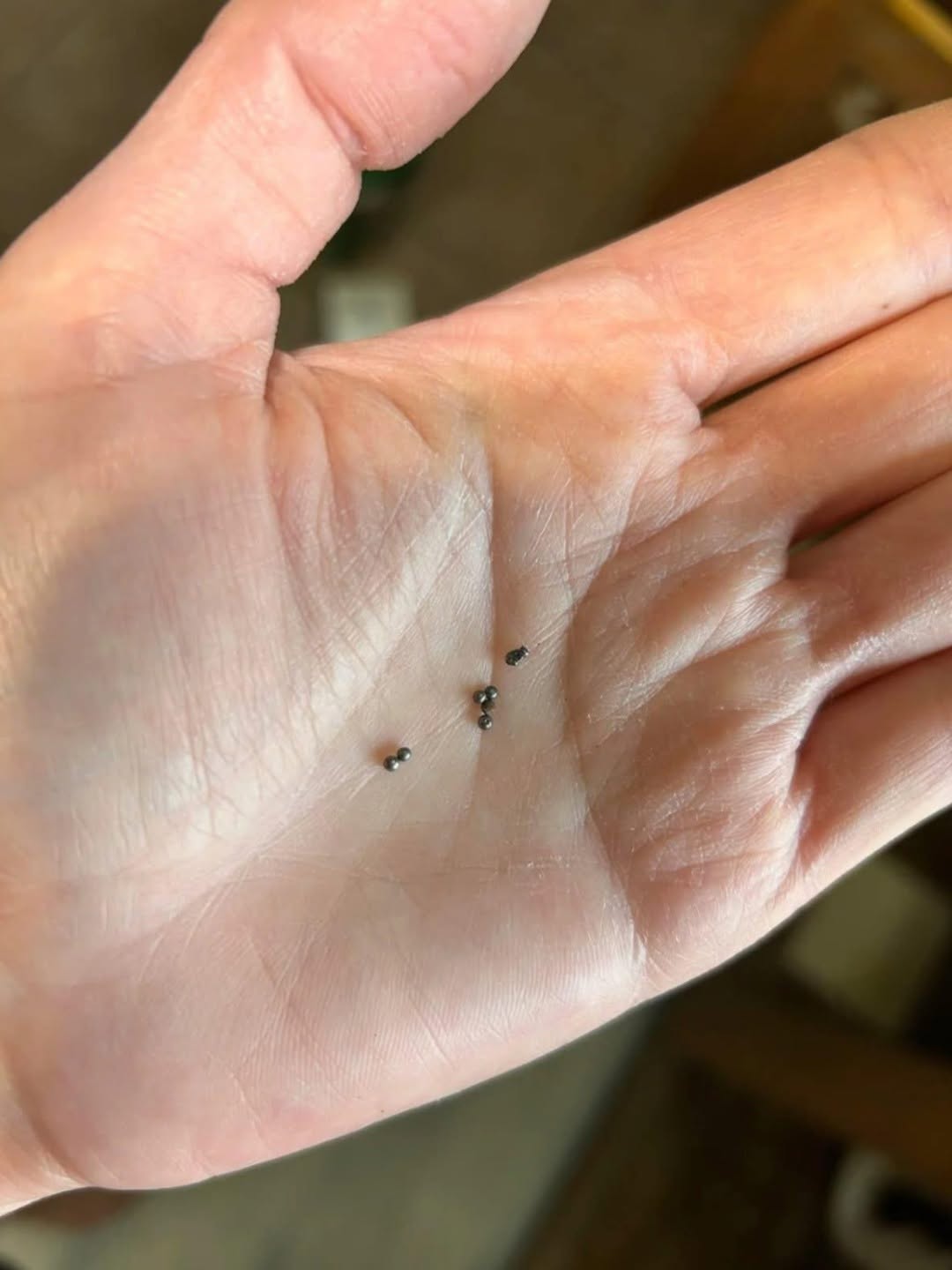
Found Metal Balls Under Your Kitchen Sink can turn an ordinary cleaning session into a surprisingly confusing home-maintenance mystery. You reach behind the drainpipe, find a handful of small steel-looking balls scattered across the cabinet floor, and immediately wonder whether something inside the plumbing has broken.
Fortunately, one common explanation is much less alarming. If your kitchen faucet has a pull-down or pull-out spray head, look closely at the retractable hose beneath the sink. These faucets commonly use a counterweight attached to the hose to help the spray head retract smoothly into the spout. Faucet manufacturers specifically install weights beneath sinks for this purpose.
If that weight has split, cracked, or otherwise failed, material from inside it may end up scattered in the cabinet. However, you should confirm the source rather than automatically assuming every metal ball came from the faucet. Once you identify the problem, replacing the damaged hose weight usually provides a much better solution than trying to refill or tape a broken component.
I once opened the cabinet beneath a kitchen sink to retrieve a bottle of cleaner and noticed several tiny metallic balls tucked behind the drainpipe. At first, I assumed someone had spilled hardware in there years earlier. Then I found more of them directly beneath the faucet hose. When I pulled the spray head out, it did not return as smoothly as usual, and that clue finally connected everything. The hose still worked, but its counterweight had clearly seen better days. After replacing the damaged weight and clearing the cabinet, the spray head retracted normally again. Since then, I always check the faucet hose first when strange hardware appears beneath a sink.
Why You Found Metal Balls Under Your Kitchen Sink
Found Metal Balls Under Your Kitchen Sink often points toward something above the cabinet floor rather than something inside the drain. Pull-down faucets include moving components beneath the counter, so a quick inspection can often reveal the source.
Check the Pull-Down Faucet Hose Weight First
Open the cabinet and look directly beneath the faucet.
If you have a faucet with a spray head that pulls out from the spout, you should see a flexible hose hanging below the sink. Somewhere along that hose, many models have a relatively heavy plastic or metal component.
That component is the hose weight or counterweight.
Its job is simple. When you pull the spray wand toward you, the flexible hose moves upward through the faucet. Once you release the spray head, gravity acting on the counterweight helps pull the hose back downward.
As a result, the wand returns toward its normal position.
Kohler describes this function directly, explaining that the pull-down spray head retracts and seats with assistance from a weight attached to the hose beneath the sink.
Installation instructions from other faucet systems also show the weight clamped around the pull-out hose beneath the countertop.
Therefore, if you Found Metal Balls Under Your Kitchen Sink and also notice a damaged object attached to the spray hose, you may have located the cause.
Inspect the weight carefully.
Look for a split seam, missing cover, cracked plastic, loose fastener, or an empty-looking cavity. Then inspect the cabinet floor directly underneath it.
However, avoid dismantling the weight until you identify the faucet model when possible. Manufacturers use different weight designs, and some replacement components snap together while others use screws or clips.
The important point is that the weight belongs on the hose. It should not sit loose on the cabinet floor.
Why the Counterweight Matters More Than It Looks
A faucet hose weight may seem like an insignificant accessory, but it contributes directly to how smoothly a pull-down faucet operates.
Kohler installation material notes that the weight can serve as a pull stop and help prevent hose kinking in certain faucet designs. It also specifies a recommended position on the hose because placement affects performance.
Other installation instructions similarly tell users to position the weight correctly so the spray head can return smoothly.
Therefore, a damaged or missing weight may cause several noticeable symptoms.
The spray head may stop retracting completely.
Alternatively, it may return only partway and leave a section of hose hanging from the faucet.
You may also notice that you need to manually push the hose back through the spout after using it.
Sometimes the hose begins catching on cleaning bottles, pipes, shutoff valves, or other objects stored under the sink.
If you Found Metal Balls Under Your Kitchen Sink at roughly the same time that the faucet started retracting poorly, the two events may be connected.
Still, do not focus exclusively on the balls.
Check whether the hose itself remains undamaged. A weight failure does not automatically mean the water line has failed, but anything rubbing against or pinching the hose deserves attention.
Move stored items away from the hose path.
Then pull the spray head out slowly and watch what happens underneath the sink.
The counterweight should travel freely without striking drainpipes, supply valves, garbage disposal components, or cabinet walls.
That simple observation can tell you whether replacing the weight alone will likely restore normal operation.
How to Confirm Where the Metal Balls Came From
Found Metal Balls Under Your Kitchen Sink does not always mean the faucet counterweight failed. Therefore, confirm the source before buying parts or taking anything apart.
Inspect the Cabinet From Top to Bottom
Start by removing stored items from beneath the sink.
Take out cleaning bottles, trash bags, dishwasher tablets, sponges, and anything else that blocks your view.
Then use a flashlight.
Look first at the pull-down faucet hose and its weight.
Next, examine the drain assembly, garbage disposal if present, water supply lines, mounting hardware, dishwasher hoses, and cabinet hinges.
Small metallic objects can occasionally come from unrelated household items that were stored beneath the sink. Someone may have dropped hardware there during an earlier repair.
Therefore, location matters.
If nearly every ball sits directly beneath a visibly cracked faucet weight, that strongly points toward the weight.
Meanwhile, if you find no hose weight at all but your faucet previously retracted normally, look carefully around the back of the cabinet. A detached weight may have fallen behind stored items.
You can also test the faucet.
Pull the spray head out several inches and release it gently.
If it hangs instead of returning toward the spout, inspect the hose movement underneath.
You may see the weight sitting too high, too low, detached, or caught against another object.
Manufacturers commonly specify a particular position for the weight because placement changes how the hose retracts. For example, one Kohler guide instructs users to place a hose weight a few inches above the lowest portion of a particular hose setup, while other models specify a measured distance from the hose end.
Consequently, do not assume any random position will work perfectly.
If you Found Metal Balls Under Your Kitchen Sink but everything else looks normal, save one or two of the pieces temporarily while you continue investigating. They may help you compare the material with the damaged component you eventually find.
Rule Out More Important Plumbing Problems
The metal balls themselves usually do not explain leaks.
Therefore, while the cabinet is empty, check for water.
Run the faucet at both hot and cold settings.
Then pull out the spray head and move it through its full range.
Watch the flexible hose connection and supply lines underneath.
Next, fill the sink partially and drain it while observing the P-trap and drain fittings.
If you see active dripping, damp cabinet material, swelling, staining, mold-like growth, or corrosion around plumbing connections, treat that as a separate issue.
A broken counterweight can affect hose retraction, but it does not normally function as a water seal.
Therefore, replacing the weight will not repair a leaking hose connection or drainpipe.
Likewise, do not confuse loose metal balls with pieces from the garbage disposal.
If unusual grinding noises, vibration, or rattling come from the disposal itself, turn it off and disconnect its power before investigating according to the manufacturer’s instructions.
Never put your hand inside a garbage disposal.
If you Found Metal Balls Under Your Kitchen Sink near a disposal but see no damaged faucet weight, investigate carefully before drawing conclusions.
Cabinet condition also provides clues.
Metal pieces showing heavy rust may have been sitting there for years.
Bright, clean pieces scattered around fresh fragments of plastic suggest a more recent break.
Photograph the area before moving everything if you may need replacement parts. Pictures of the damaged weight, hose routing, and faucet underneath can help you identify the correct component later.
Most importantly, separate the mystery of the metal balls from actual plumbing safety.
Strange debris may look dramatic, while a small unnoticed leak can cause far more expensive damage.
What to Do After Finding a Broken Faucet Weight
Once Found Metal Balls Under Your Kitchen Sink leads you to a cracked or failed hose counterweight, you have several practical options. Replacement usually provides the cleanest long-term repair.
Replace the Weight Instead of Improvising
First, identify your faucet if possible.
Look for a manufacturer name on the faucet body, spray head, installation paperwork, or labels beneath the sink.
Then search for the correct replacement hose weight for that faucet model.
Major faucet manufacturers sell replacement weight assemblies, and universal pull-down faucet weights also exist. Delta, for example, lists a dedicated hose weight assembly as a replacement component.
Do not assume every weight fits every hose.
The replacement needs to clamp securely around the hose without crushing, cutting, or excessively pinching it.
Before removing the old component, photograph its location.
You can also mark the hose lightly with removable tape beside the old weight. That mark gives you a reference point for the replacement.
Follow the instructions supplied with the replacement.
Some weights split into two halves and close around the hose. Others clip into position.
Certain designs use screws.
Do not overtighten a screw-on weight because excessive force can damage the component or hose.
After installation, pull the spray head out slowly.
Then let it retract.
Repeat the test several times.
Watch from below and make sure the new counterweight moves freely through its complete path.
If it hits a drainpipe, garbage disposal, shutoff valve, or cleaning bottle, reposition stored items and verify whether the weight itself needs adjustment according to the faucet instructions.
A properly working counterweight should help the hose move rather than creating a new obstruction.
If you Found Metal Balls Under Your Kitchen Sink because the original weight came apart, replacing the assembly also prevents additional debris from spreading throughout the cabinet.
Clean Up the Loose Metal Safely
Once you identify the damaged component, collect all loose pieces.
Do not leave small metal balls rolling around beneath the sink.
They can travel into difficult spaces, create a choking hazard for children or pets, or become lodged beneath appliances if they escape the cabinet.
Wear work gloves if any pieces appear rusty or sharp.
Use a small container or sturdy bag to collect them.
A magnet may help with some steel pieces, although not every metal responds strongly to magnets.
Next, vacuum or sweep the cabinet carefully.
Check corners, gaps around pipes, the area behind the garbage disposal, and spaces beneath shelf liners.
If rust marks remain, clean the cabinet surface with a method appropriate for its material.
Then dry everything completely.
While the cabinet is empty, take advantage of the opportunity to reorganize it.
Keep the retractable faucet hose pathway clear.
Large bottles placed directly against the hose can interfere with movement, even when the counterweight works correctly.
A clear vertical path lets the weight rise and fall without obstruction.
Then test the faucet one final time.
Pull the spray head to its normal maximum reach and release it gradually.
If the wand returns smoothly and stays seated, the repair likely worked.
If it still refuses to retract, check the replacement weight position, hose routing, and whether the hose has become twisted or kinked.
Manufacturer instructions often emphasize correct routing because distorted or obstructed hoses can interfere with spray-head return.
Found Metal Balls Under Your Kitchen Sink can therefore become a useful warning sign that the retractable faucet mechanism needs attention.
How to Prevent Future Problems Under the Sink
After you solve the immediate mystery, a few maintenance habits can prevent the same surprise from happening again.
Keep the Faucet Hose Path Clear
Pull-down faucet hoses need room to move.
Every time you extend the spray head, a section of hose travels upward. Then the counterweight helps draw it back down.
Anything placed in that travel path can interfere.
Therefore, avoid stacking cleaning supplies tightly around the hanging hose.
Pay particular attention to spray bottles with hooked triggers, plastic bags, dishwashing brushes, and tall containers. The hose or weight can catch on them.
Also check the drainpipes.
The weight should not repeatedly slam into the P-trap, disposal housing, or supply valves.
Installation instructions specifically warn against allowing the weight to interfere with nearby faucet lines in some configurations.
Once every few months, open the cabinet and operate the pull-down spray while watching the mechanism.
This takes less than a minute.
Look for rubbing, twisted hoses, loose clips, and damaged plastic.
Also watch whether the spray head returns as strongly as it used to.
A gradual change often gives you warning before a complete failure.
If you Found Metal Balls Under Your Kitchen Sink once, periodically checking the replacement weight makes sense.
You do not need to disassemble anything.
Simply confirm that the component remains closed and positioned securely on the hose.
The same inspection can reveal slow water leaks.
Run your fingers over dry plumbing connections and look for moisture on the cabinet floor.
Catching a small drip early may prevent cabinet swelling and water damage later.
Know When to Call a Plumber
Replacing a straightforward hose weight can often fall within ordinary home maintenance.
However, stop when the problem extends beyond the counterweight.
Call a qualified plumber or appropriate service professional if the pull-down hose leaks, the faucet connection beneath the sink drips, the hose casing appears torn, or you cannot determine where the metal pieces originated.
Also seek help when the cabinet contains significant water damage.
Swollen wood, recurring moisture, persistent mold-like growth, or corrosion may indicate a leak that needs more than surface cleaning.
If the faucet has an unusual proprietary retraction system, you may also need manufacturer-specific parts rather than a universal weight.
Likewise, do not force components apart when you cannot identify their purpose.
Kitchen sink cabinets can contain plumbing lines, electrical connections for disposals and dishwashers, water-filtration equipment, and other systems in a very small area.
Disconnect power to nearby electrical equipment when the manufacturer’s instructions require it before working around those components.
Found Metal Balls Under Your Kitchen Sink may ultimately turn out to be an easy fix, but a careful inspection matters more than guessing.
Start with the pull-down faucet counterweight because it provides a logical and common place to investigate.
Then confirm the evidence.
If the counterweight has clearly split and the faucet no longer retracts properly, replace it with a suitable part and restore a clear hose path.
If the weight looks intact, keep investigating rather than forcing that explanation to fit.
Frequently Asked Questions
Why did I find tiny metal balls under my kitchen sink?
If you have a pull-down or pull-out kitchen faucet, inspect its retractable hose counterweight. These faucets commonly use a weight beneath the sink to help the spray head retract. If a weight containing loose metallic material has failed, that can explain the scattered pieces. However, confirm that the weight is actually damaged before assuming it caused them.
Can I still use the faucet if the hose weight breaks?
The faucet may continue delivering water, but the pull-down hose may stop retracting correctly. Inspect the hose for damage or leaks before continuing normal use. Replace the damaged counterweight rather than relying indefinitely on a broken component.
Can I put the metal balls back inside the old weight?
Replacing a failed weight assembly usually makes more sense than trying to rebuild a cracked one. A taped or improvised repair can fail again and may interfere with hose movement. Use a compatible manufacturer replacement or an appropriate universal faucet weight.
Where should the faucet counterweight sit?
Placement depends on the faucet design. Some manufacturers specify an exact distance from the hose end, while others direct users to place the weight relative to the lowest point of the hose. Follow the instructions for your faucet or replacement weight rather than guessing.
Why won’t my pull-down faucet retract after replacing the weight?
Check whether the counterweight catches on cleaning products, pipes, valves, or the cabinet wall. Also inspect the hose for twisting and confirm that the weight sits in the correct position. Manufacturers specifically advise adjusting weight position and hose routing when the spray head does not return smoothly.
Conclusion
Found Metal Balls Under Your Kitchen Sink may look like evidence of a serious plumbing failure, but the explanation can be surprisingly straightforward.
If your kitchen faucet has a pull-down or pull-out spray head, start by inspecting the flexible hose beneath the sink.
Many of these faucets use a counterweight attached to that hose. The weight helps the spray head retract and return to its normal position. Manufacturer documentation confirms that this under-sink weight plays an important role in pull-down faucet operation.
If the weight has cracked or come apart, loose material around it may explain what you found.
However, confirm the source before making repairs.
Empty the cabinet, inspect the faucet hose, look for a damaged counterweight, test the spray-head retraction, and check separately for water leaks.
Once you identify a broken weight, replace the complete assembly with a compatible part rather than trying to hold a failing component together indefinitely.
Then keep the hose path clear.
Cleaning bottles, plastic bags, plumbing components, and other objects can interfere with the moving counterweight and prevent smooth retraction.
Finally, use the discovery as an opportunity to inspect the entire cabinet.
A strange handful of metal pieces may be harmless debris from a failed faucet component, but moisture, damaged hoses, and leaking fittings deserve immediate attention.
So, if you Found Metal Balls Under Your Kitchen Sink, you do not need to assume something mysterious happened overnight.
Look up.
Check the retractable faucet hose.
That small hanging weight may provide the answer—and replacing it may be all you need to make the spray head glide back into place the way it should.
WP Recipe Maker JSON Import
{
  "title": "Found Metal Balls Under Your Kitchen Sink? Here’s What They Mean (And What to Do Next)",
  "summary": "A practical home-maintenance guide explaining why small metal balls may appear beneath a kitchen sink, how a pull-down faucet hose counterweight works, how to inspect it, and what to do when the weight fails.",
  "notes": "Confirm the source of loose metal pieces before replacing parts. Pull-down faucet counterweight designs vary by manufacturer, so use the replacement and placement instructions for your faucet whenever possible. Address any active water leak separately and promptly.",
  "ingredients_flat": [
    {
      "amount": "1",
      "unit": "",
      "name": "compatible replacement pull-down faucet hose weight"
    },
    {
      "amount": "1",
      "unit": "",
      "name": "small container or bag for loose metal pieces"
    },
    {
      "amount": "1",
      "unit": "",
      "name": "clean cloth for cabinet cleanup"
    }
  ],
  "instructions_flat": [
    {
      "name": "Step 1",
      "text": "Remove stored items from beneath the kitchen sink so you can clearly inspect the faucet hose, drainpipes, supply lines, and cabinet floor.",
      "summary": "",
      "image_url": ""
    },
    {
      "name": "Step 2",
      "text": "Locate the flexible pull-down or pull-out faucet hose and inspect the counterweight attached to it for cracks, missing pieces, loose fasteners, or separation.",
      "summary": "",
      "image_url": ""
    },
    {
      "name": "Step 3",
      "text": "Pull the faucet spray head out slowly and watch the hose and counterweight move beneath the sink. Confirm whether the spray head retracts normally.",
      "summary": "",
      "image_url": ""
    },
    {
      "name": "Step 4",
      "text": "Inspect the faucet hose, plumbing connections, drain assembly, and cabinet floor for leaks or damage before assuming the counterweight is the only problem.",
      "summary": "",
      "image_url": ""
    },
    {
      "name": "Step 5",
      "text": "If the hose counterweight is clearly damaged, identify the faucet model and obtain a compatible replacement weight assembly.",
      "summary": "",
      "image_url": ""
    },
    {
      "name": "Step 6",
      "text": "Photograph or mark the original weight position, remove the damaged component, and install the replacement according to the manufacturer's instructions.",
      "summary": "",
      "image_url": ""
    },
    {
      "name": "Step 7",
      "text": "Collect all loose metal pieces, clean the cabinet thoroughly, and remove objects that could obstruct the retractable hose or replacement weight.",
      "summary": "",
      "image_url": ""
    },
    {
      "name": "Step 8",
      "text": "Test the spray head several times and confirm that the hose retracts smoothly without the counterweight hitting pipes, valves, stored supplies, or cabinet walls.",
      "summary": "",
      "image_url": ""
    }
  ],
  "equipment": [
    {
      "name": "Flashlight",
      "notes": ""
    },
    {
      "name": "Work gloves",
      "notes": ""
    },
    {
      "name": "Screwdriver if required by replacement weight",
      "notes": ""
    },
    {
      "name": "Vacuum or hand broom",
      "notes": ""
    },
    {
      "name": "Phone camera for reference photos",
      "notes": ""
    }
  ],
  "nutrition": {
    "calories": "0",
    "carbohydrates": "0g",
    "protein": "0g",
    "fat": "0g",
    "saturated_fat": "0g",
    "polyunsaturated_fat": "0g",
    "monounsaturated_fat": "0g",
    "trans_fat": "0g",
    "cholesterol": "0mg",
    "sodium": "0mg",
    "potassium": "0mg",
    "fiber": "0g",
    "sugar": "0g",
    "vitamin_a": "0IU",
    "vitamin_c": "0mg",
    "calcium": "0mg",
    "iron": "0mg"
  },
  "tags": {
    "course": ["Home Maintenance Guide"],
    "cuisine": ["Home Care"],
    "keyword": ["Found Metal Balls Under Your Kitchen Sink", "kitchen faucet counterweight", "pull-down faucet hose weight", "metal balls under sink", "faucet hose repair"]
  }
}
SEO Output
Focus Keyword
Found Metal Balls Under Your Kitchen Sink
SEO Title
Found Metal Balls Under Your Kitchen Sink? Here’s What They Mean
Meta Description
Found Metal Balls Under Your Kitchen Sink? Check your pull-down faucet hose weight and learn what failed, what to inspect, and how to fix it.
Expert SEO Title
Found Metal Balls Under Your Kitchen Sink: 5 Crucial Checks
Midjourney Prompt
Realistic home maintenance photography inside an open kitchen sink cabinet, several tiny silver steel balls scattered on the clean cabinet floor beneath plumbing, clearly visible pull-down kitchen faucet hose with a cracked black counterweight attached to it, P-trap and water supply lines in background, hand holding a flashlight near the damaged faucet weight, realistic modern kitchen cabinet, clean organized setting, detailed plumbing components, no dramatic damage, practical homeowner troubleshooting scene, natural indoor light, vertical composition, clean background, generous negative space at the top for text overlay suitable for Pinterest pins –v 6 –ar 2:3
More Blog
- Drinking Water on an Empty Stomach — What Science Actually Supports (No Hype, Just Facts)
- Waking Up Between 3 and 5 AM? It Might Be Your Soul Trying to Talk to You
- What a “Bleach” Patch on Your Underwear Really Means — And Why It’s Actually a Good Sign
- This Drink May Weaken Your Bones From The Inside — But Everyone Drinks It Anyway