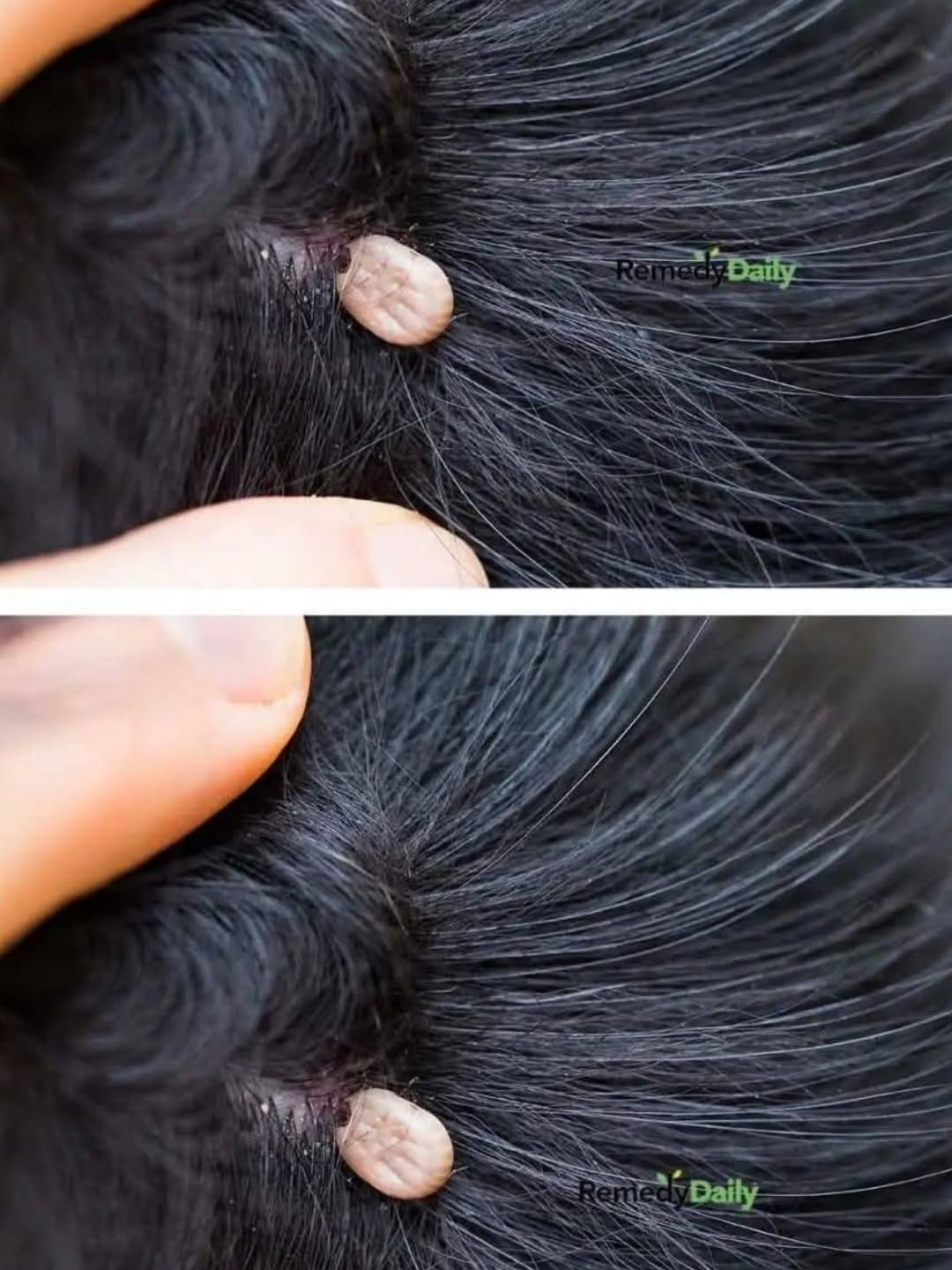
Just Discovered This in My Son’s Hair is the kind of discovery that can turn an ordinary morning into an instant investigation. You part your child’s hair and notice a tiny white speck stuck to a strand. Maybe you see several. Perhaps one appears to move. Naturally, head lice may be the first possibility that comes to mind.
However, not every white object in a child’s hair is a louse or a lice egg. Dandruff, dried hair products, skin flakes, scabs, hair casts, lint, and other harmless debris can resemble nits. In fact, the American Academy of Pediatrics notes that many objects mistaken for lice or nits turn out to be dandruff, dirt, hairspray droplets, scabs, or other debris.
The most useful first step involves identifying what you actually see before applying a lice treatment.
I remember finding a tiny pale speck attached to a child’s hair while helping with morning brushing. My first thought immediately went to lice, especially because the speck did not fall away when I touched the hair. I brought the child closer to a window, checked behind both ears and along the neckline, and used a fine comb through damp hair. After several careful passes, I found no moving insects and realized most of the specks slid away easily. They were flakes rather than lice eggs. That experience taught me something useful: careful identification saves a lot of unnecessary worry, laundry, and treatment.
How to Tell Head Lice From Dandruff and Other Hair Debris
Look for Movement and Check Where the Specks Sit
If you have just discovered something unusual in your son’s hair, start with good lighting. A bright window, strong lamp, or handheld light can make inspection much easier.
Adult head lice remain very small. The American Academy of Pediatrics describes an adult louse as approximately 2 to 3 millimeters long, roughly the size of a sesame seed. Lice usually appear tan to grayish-white, have six legs, and crawl quickly through the hair. They do not fly or jump.
Finding a live crawling louse provides the clearest evidence of an active infestation.
However, live lice can be surprisingly difficult to spot because they move quickly and avoid light. A typical affected scalp may contain fewer than 10 live lice. Therefore, a quick glance at the top of the head may miss them entirely.
Check the warm areas that lice often favor. In particular, inspect behind the ears and along the hairline at the back of the neck.
Nits look different from moving lice.
Female lice attach their eggs firmly to individual hair shafts. Fresh eggs usually sit close to the scalp because they need warmth to develop. The American Academy of Pediatrics notes that nits found more than about 1 centimeter from the scalp are unlikely to remain viable in most circumstances.
Therefore, location gives you an important clue.
A white speck sitting several inches down a long hair may represent an old empty egg casing, dandruff, product residue, or another form of debris rather than a developing egg.
Try the Gentle Slide Test
One of the simplest ways to distinguish dandruff from lice eggs involves seeing how easily the object moves.
Dandruff and dry skin flakes usually sit loosely on the scalp or hair. Therefore, you can often brush, flick, or slide them away with little effort.
True nits behave differently.
Lice attach their eggs tightly to the hair shaft with a glue-like substance. Consequently, a nit usually does not simply shake off when you touch the strand.
The American Academy of Pediatrics specifically warns that caregivers frequently confuse nits with dandruff, hair casts, and other debris. True nits remain firmly attached, while many look-alikes move more easily.
Hair casts provide another common source of confusion. These thin, cylindrical pieces of material can surround a strand of hair and resemble nits. However, they often slide along the strand more easily than a genuine nit.
Hair products can also create small pale deposits. Dry shampoo, styling sprays, gels, and conditioner residue may leave particles that resemble eggs under bright light.
Scalp conditions can create additional clues.
Dandruff often appears alongside widespread flaking. Seborrheic dermatitis may cause greasy scales, redness, and itching. Meanwhile, eczema can produce dry or irritated patches.
Lice usually cause itching as well, although itching may not appear immediately. Therefore, absence of itching does not completely rule out lice.
Instead of relying on one sign, combine several observations. Look at whether anything moves, whether specks remain firmly attached, how close they sit to the scalp, and whether you can find similar objects behind the ears or along the neckline.
Most importantly, avoid applying lice medication solely because you found one unidentified white speck.
The American Academy of Pediatrics recommends treating only when active lice infestation is strongly suspected or confirmed because misidentification can lead to unnecessary exposure to medications.
How to Check Your Child’s Hair Properly at Home
Use a Fine-Toothed Lice Comb
Just Discovered This in My Son’s Hair may sound alarming at first, but a careful combing session can provide much more information than repeatedly inspecting dry hair with your fingers.
The American Academy of Pediatrics reports that using a lice comb can identify infestations more efficiently than ordinary visual inspection.
Start with damp hair.
Some experts recommend adding conditioner because moisture can slow lice and make combing easier. Then divide the hair into small sections.
Place the fine teeth of the lice comb as close to the scalp as comfortably possible. Pull the comb slowly toward the end of the hair.
After each pass, wipe the comb onto a white paper towel or rinse it in a bowl of clear water. The light background makes small insects or debris easier to see.
Pay particular attention to the nape of the neck and areas behind the ears.
Work systematically across the entire scalp rather than repeatedly checking only the place where you first noticed a speck.
If you find a small insect, examine whether it crawls and resembles the sesame-seed-sized description associated with head lice.
If you only find white particles, test how firmly they attach to individual hairs.
You can also use a magnifying glass or your phone’s camera zoom to inspect suspicious objects more closely. However, avoid diagnosing lice from a blurry photograph alone.
Parents often become more anxious after looking at highly enlarged images because ordinary flakes can appear unfamiliar when magnified.
Instead, focus on the physical characteristics that matter most: movement, attachment, shape, and location.
Mayo Clinic also advises contacting a healthcare professional when you cannot confidently determine whether your child has lice.
Check Other Family Members Without Panicking
If you confirm live lice, inspect people who share the household, especially anyone who has frequent head-to-head contact with the affected child.
Head lice spread primarily through direct hair-to-hair contact.
Children often acquire them while playing closely together, hugging, sharing sleeping areas, or putting their heads together during activities.
However, lice do not indicate poor hygiene.
The American Academy of Pediatrics emphasizes that head lice do not represent a health hazard, do not reflect cleanliness, and do not transmit disease.
Therefore, avoid treating the discovery as something shameful.
Additionally, pets do not spread human head lice. The lice that infest human scalps depend on humans and do not transfer back and forth between children and dogs or cats.
You also do not need to turn the entire house upside down.
Lice survive best close to the human scalp, where they can feed and maintain the temperature they need. The American Academy of Pediatrics notes that lice rarely leave a healthy head unless an infestation is heavy.
Focus most of your effort on the child’s hair and on items that recently touched the head.
Wash or appropriately clean pillowcases, bedding, hats, hair accessories, and similar items that had recent direct contact.
Meanwhile, avoid spraying furniture, bedrooms, or the entire house with insecticides. Such aggressive environmental treatment usually adds unnecessary chemical exposure without addressing the main source of infestation.
The scalp—not the couch—deserves the most attention.
What to Do If You Confirm Head Lice
Choose an Age-Appropriate Treatment and Follow Directions Exactly
Once you confirm live head lice, several effective treatment options exist.
The best choice depends on the child’s age, medical history, local resistance patterns, previous treatment attempts, and the products available where you live.
Current American Academy of Pediatrics guidance continues to include permethrin and pyrethrin-based products among commonly used first-line options for active infestations when resistance has not made them ineffective locally. Other prescription options include topical ivermectin, spinosad, and other treatments for appropriate age groups.
Follow the package or clinician instructions exactly.
Using more product than directed does not make treatment more effective and may increase irritation or other unwanted effects.
Likewise, combining multiple lice treatments at the same time can create unnecessary risk.
Many products do not reliably kill every egg. Therefore, some treatments require a second application at a specific interval after newly hatched lice emerge but before they mature enough to reproduce.
The exact timing depends on the treatment.
Consequently, always follow the directions for the specific product rather than assuming every lice medication uses the same schedule.
Fine-comb removal can also help.
Comb through damp hair carefully and remove visible lice and nits as directed. Mechanical removal takes patience, but it can help you monitor whether live lice remain.
Avoid relying on unproven household remedies simply because they sound natural.
Products such as gasoline, kerosene, pesticides intended for the home, or highly concentrated essential oils can cause harm and should never substitute for evidence-based treatment.
If an appropriate over-the-counter treatment fails despite correct use, contact a pediatrician or pharmacist rather than repeatedly applying the same product.
Treatment failure can result from misdiagnosis, incorrect application, reinfestation, or resistance. The American Academy of Pediatrics recommends considering another treatment class when properly administered therapy fails and live lice remain.
Your Child Usually Does Not Need to Miss School
Head lice create far more social stress than medical danger.
The American Academy of Pediatrics advises against excluding otherwise healthy children from school merely because they have lice or remaining nits. It also discourages “no-nit” policies that prevent children from returning until every egg has disappeared.
That recommendation may surprise parents.
However, by the time itching develops and someone notices lice, the infestation may already have existed for weeks. Sending a child home immediately therefore does little to reverse earlier exposure.
Schools may have their own procedures, so notify the school according to local policy.
Still, avoid framing lice as a personal failure.
Teach children to minimize direct head-to-head contact while treatment is underway. Additionally, avoid sharing combs, brushes, hats, hair accessories, and similar items.
Children can feel embarrassed when adults respond dramatically to lice. Therefore, keep conversations matter-of-fact.
You can explain that lice are small insects that sometimes spread between people who spend time close together. Then explain that you will treat them just as you would treat any other common childhood problem.
This calm approach protects a child’s dignity while still addressing the infestation promptly.
If treatment works, continue checking the scalp over the following weeks so you can catch any surviving or newly hatched lice.
The American Academy of Pediatrics recommends close follow-up after treatment because the lice life cycle lasts several weeks.
When the Hair or Scalp Problem May Need a Doctor
Contact a Clinician When You Cannot Identify What You See
Just Discovered This in My Son’s Hair does not automatically mean you need an urgent doctor visit.
Most straightforward cases of confirmed head lice do not require emergency medical care. Mayo Clinic notes that many people with lice do not need to see a healthcare professional. However, it recommends professional evaluation when you are unsure whether what you see actually represents lice.
That advice can prevent unnecessary treatment.
Consider contacting your child’s pediatrician, family doctor, pharmacist, or another qualified healthcare professional if repeated careful checks still leave you uncertain.
Professional help also makes sense when properly used treatment fails repeatedly.
Likewise, seek advice before selecting a product for a very young child, a child with significant skin conditions, or a child with medical circumstances that could affect which treatment is appropriate.
The scalp itself can also provide warning signs.
Repeated scratching may break the skin and occasionally lead to bacterial infection. Contact a healthcare professional if you notice increasing redness, warmth, swelling, drainage, pus, significant tenderness, or spreading sores.
Mayo Clinic notes that scratching associated with lice can create scalp sores that may become infected.
Also contact a clinician if your child develops significant swelling, fever, severe pain, or another symptom that seems inconsistent with ordinary head lice.
These signs do not necessarily indicate something serious, but they deserve a closer look.
Finally, remember that lice represent only one possible explanation for an unusual scalp finding.
Some Scalp Conditions Can Look Similar to Lice
White specks and scalp irritation can accompany several conditions besides lice.
Dandruff remains one of the most common alternatives. It usually causes loose white or yellowish flakes that move away from the hair more easily than nits.
Seborrheic dermatitis can produce flaking together with oily or irritated patches.
Eczema can cause dryness, itching, redness, or scaling.
Psoriasis can create thicker, well-defined areas of scale.
Hair casts may form thin sleeves around individual hairs and can strongly resemble lice eggs at first glance.
Scabs from scratching, insect bites, or minor scalp injuries can also cling near the roots.
In some cases, a fungal scalp infection can cause scaling and hair changes that deserve medical evaluation.
Therefore, pay attention to more than the white material itself.
Look for circular areas of hair loss, broken hairs, significant scaling, painful spots, swelling, or persistent inflammation. Those findings do not fit the classic appearance of a simple lice infestation and can justify an examination by a clinician.
A healthcare professional can also examine the scalp when repeated lice treatments fail.
That step matters because continuing to use lice medication on a child who actually has dandruff, eczema, or another scalp disorder can irritate the skin and delay appropriate care.
Ultimately, identifying a live louse remains far more useful than treating every suspicious speck as proof of infestation.
Frequently Asked Questions
How can I tell if a white speck is a lice egg or dandruff?
Dandruff usually moves or flakes away relatively easily. A nit generally remains firmly attached to one side of a hair shaft. Fresh nits often sit very close to the scalp, especially behind the ears and along the neckline.
What does a live head louse look like?
An adult head louse measures roughly 2 to 3 millimeters long, about the size of a sesame seed. It usually looks tan to grayish-white and crawls quickly. Lice have six legs and cannot jump or fly.
Should I treat my child if I only see nits?
Avoid automatically treating unidentified specks. Diagnosis becomes much more reliable when you find a live louse or convincing evidence of an active infestation. Older nits located farther from the scalp may already be empty or nonviable.
Does my child need to stay home from school?
The American Academy of Pediatrics recommends that otherwise healthy children should not miss school solely because of head lice or nits, and it discourages “no-nit” return policies. Follow your school’s notification procedures while treating the infestation promptly.
When should we see a doctor?
Seek professional help if you cannot determine whether the finding is lice, if treatment repeatedly fails despite correct use, or if the scalp develops significant redness, swelling, drainage, pain, or sores that suggest infection. Mayo Clinic specifically recommends professional confirmation when you are uncertain about the diagnosis.
Conclusion
Just Discovered This in My Son’s Hair can trigger an immediate fear of lice, but many white specks found in children’s hair have much simpler explanations.
Start by looking carefully.
Live lice crawl. They are tiny, roughly sesame-seed sized, and often hide close to the scalp behind the ears or at the back of the neck. Nits remain firmly attached to hair shafts, while dandruff and many forms of debris usually move more easily.
Next, use a fine-toothed lice comb on damp hair and inspect the entire scalp systematically. The American Academy of Pediatrics considers combing an effective way to improve detection because live lice can be difficult to see during an ordinary visual check.
If you confirm lice, use an appropriate treatment according to its directions and check close household contacts. However, avoid unnecessary pesticide use throughout the house and do not treat every white flake as lice.
Head lice are common, they do not indicate poor hygiene, and they do not transmit disease.
If you cannot confidently identify the finding, contact a healthcare professional before repeatedly treating the scalp. Likewise, seek medical advice when the skin becomes infected, the diagnosis remains unclear, or properly used treatments continue to fail.
A careful inspection usually provides much more useful information than panic. In many cases, the mysterious little speck turns out to be something ordinary. When it really is lice, effective treatments and practical steps can usually bring the problem under control.
More Blog
- Drinking Water on an Empty Stomach — What Science Actually Supports (No Hype, Just Facts)
- Waking Up Between 3 and 5 AM? It Might Be Your Soul Trying to Talk to You
- What a “Bleach” Patch on Your Underwear Really Means — And Why It’s Actually a Good Sign
- This Drink May Weaken Your Bones From The Inside — But Everyone Drinks It Anyway