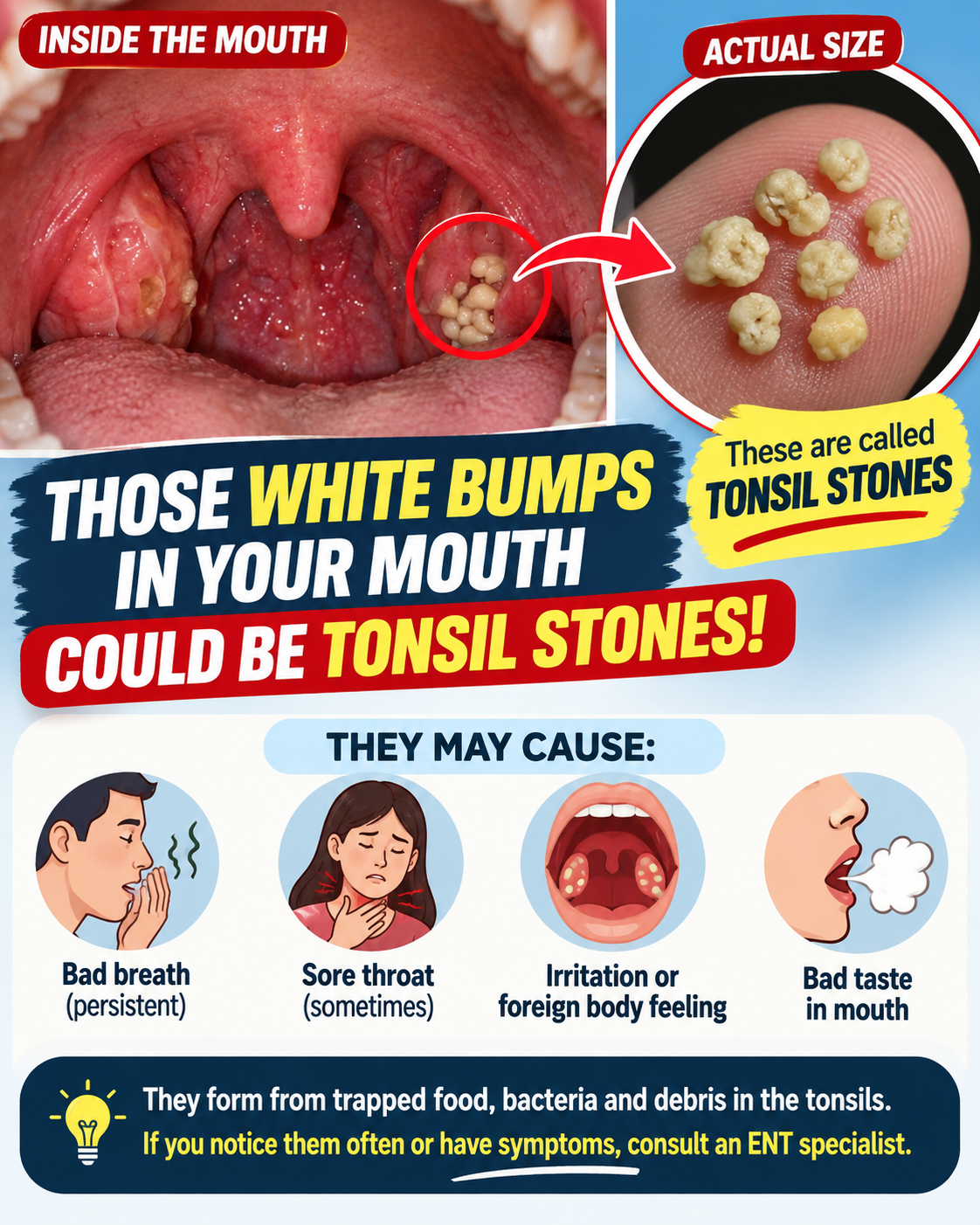
Tonsil stones can be surprisingly alarming the first time you notice them. You may see a small white or yellow lump sitting in the back of your throat and wonder whether you have an infection. In other cases, you may notice persistent bad breath, throat irritation, or the sensation that something is stuck near your tonsils before you ever see a stone.
Fortunately, tonsil stones are usually harmless. Doctors call them tonsilloliths. They form when debris becomes trapped inside small folds and pits in the tonsils. Over time, that material can harden into tiny pebble-like deposits. Tonsil stones may contain food particles, bacteria, dead cells, mucus, and hardened minerals such as calcium.
I remember hearing someone describe a tiny white lump that seemed to appear in the back of their throat overnight. At first, they assumed it was leftover food. However, it stayed in place and came with unpleasant breath that brushing did not fully solve. Once the little deposit finally came loose, the mystery became easier to understand. It was a tonsil stone. That experience shows why these small formations can create so much concern. They look unusual, and they occur in an area that can be difficult to inspect. Thankfully, understanding why they form makes dealing with them much less intimidating.
Most tonsil stones do not require aggressive treatment. However, recurring or painful stones deserve more attention. Good oral care, hydration, gentle gargling, and professional evaluation when necessary can make a major difference.
What Tonsil Stones Are and Why They Form
How Material Gets Trapped in the Tonsils
Your tonsils sit toward the back of your throat. Their surfaces are not completely smooth. Instead, they contain natural folds, pits, and crevices called tonsillar crypts.
These crypts can trap small particles.
Food debris may settle inside them. Bacteria can collect there as well. Mucus, dead cells, and other organic material may also become trapped. Eventually, this material can become compacted and calcified.
The result is a tonsil stone.
Tonsil stones often look white, cream-colored, or pale yellow. Some are so small that you barely notice them. Others become large enough to see clearly when you open your mouth and look at your tonsils.
People with deeper or enlarged tonsillar crypts may develop tonsil stones more easily. Repeated tonsil infections can also make the crypts more prominent, which may increase the likelihood that debris becomes trapped. Cleveland Clinic also lists dehydration among factors associated with a greater chance of developing them.
Importantly, a tonsil stone is not the same thing as pus from an acute throat infection.
The appearance may sometimes look similar. Therefore, other symptoms matter. Fever, severe throat pain, marked swelling, or rapidly worsening symptoms may point to another throat problem that needs medical evaluation.
Tonsil stones can occur even when you otherwise feel healthy.
In fact, some people discover them accidentally while brushing their teeth or looking into their throat. Others only become aware of them because of persistent bad breath.
Why Some People Get Them Repeatedly
Not everyone develops tonsil stones at the same rate.
Anatomy plays an important role. If your tonsils have deep crypts, debris has more places to collect. Likewise, people who experience repeated tonsil infections may develop larger or deeper folds over time.
As a result, one person may rarely experience a tonsil stone while another deals with them regularly.
Oral conditions matter too.
Bacteria naturally live throughout the mouth. Food particles, mucus, and shed cells also accumulate throughout the day. Therefore, poor oral hygiene can leave more material available to collect around the tonsils.
Hydration may also matter because adequate fluid intake helps support normal saliva production and keeps the mouth and throat from becoming excessively dry.
However, excellent brushing does not guarantee that tonsil stones will never appear.
Some people simply have tonsils that trap material easily. Consequently, recurrence does not automatically mean someone has neglected oral hygiene.
Smoking may also make matters worse, and quitting forms part of standard prevention advice for people who regularly develop stones.
Repeated tonsil stones can become frustrating because removing one does not change the underlying shape of your tonsils.
Another deposit may form in the same crypt later.
That distinction explains why home care often manages tonsil stones rather than permanently preventing every future stone. If recurrence becomes frequent or particularly troublesome, a healthcare professional can discuss additional options.
Common Signs and Symptoms of Tonsil Stones
Bad Breath and the Feeling of Something in Your Throat
Bad breath is one of the most recognizable symptoms associated with tonsil stones.
Bacteria can accumulate on and around the trapped material. These bacteria can contribute to unpleasant odors that ordinary brushing may not completely eliminate. Mayo Clinic specifically identifies tonsil stones as one potential cause of bad breath because bacteria can coat the stones.
Therefore, persistent bad breath may sometimes provide the first clue.
You may brush carefully, floss, and use mouth rinse but still notice an unpleasant smell. In that situation, checking the tonsils may reveal a small white or yellow deposit.
Another common symptom is a foreign-body sensation.
It can feel as though a crumb or tiny object remains stuck in the back of your throat even though you have not recently eaten.
Some people also develop a mild sore throat or discomfort when swallowing.
In addition, tonsil stones can cause coughing, an unpleasant taste in the mouth, and occasionally earache. The ear itself may be perfectly healthy. Nevertheless, shared nerve pathways can allow discomfort originating near the tonsils to feel as though it comes from the ear.
Cleveland Clinic lists bad breath, sore throat, cough, earache, difficulty swallowing, and the sensation of something being stuck in the throat among possible symptoms.
However, some tonsil stones cause no symptoms at all.
A tiny stone may remain hidden within a tonsillar crypt until it loosens naturally.
When Symptoms Deserve Medical Attention
Most tonsil stones remain a minor nuisance.
Still, not every white spot or painful lump near a tonsil is necessarily a tonsil stone.
Persistent or severe symptoms deserve professional evaluation, particularly when the area becomes very red, painful, swollen, or prone to bleeding.
Difficulty swallowing can also require attention, especially if it becomes significant.
Large or chronic tonsil stones can sometimes cause swelling and swallowing problems. Meanwhile, repeated symptoms may also indicate tonsillitis or another condition affecting the throat.
Seek prompt medical care for breathing difficulty, rapidly increasing swelling, or severe trouble swallowing.
Those symptoms can indicate something more serious than a routine tonsil stone. For example, infections around the tonsils can occasionally cause complications that need prompt treatment.
You should also contact a healthcare provider if home methods fail repeatedly or if tonsil stones keep returning and significantly affect your comfort or quality of life.
A doctor or ear, nose, and throat specialist can inspect the tonsils directly.
Sometimes the diagnosis requires little more than a physical examination. However, a clinician may use imaging when a suspected stone sits too deeply to see easily.
Persistent one-sided symptoms also deserve attention rather than repeated self-treatment.
The goal is not to become frightened by every tiny tonsil stone. Instead, pay attention when the overall pattern changes or symptoms become more severe than usual.
How to Remove Tonsil Stones Safely
Gentle Home Methods That May Help
Small tonsil stones often loosen naturally.
Therefore, you may not need to remove one if it causes no discomfort.
When a tonsil stone bothers you, warm saltwater gargling offers a simple first step. Gargling can help loosen debris and may soothe irritation around the tonsils.
Coughing can sometimes dislodge a stone as well.
Another method involves gently flushing the crypt with a low-pressure oral irrigator. The word “low-pressure” matters. Tonsil tissue is delicate, so a strong jet of water can cause pain, bleeding, or injury.
Some medical sources also describe very gentle removal with a cotton swab.
If you try this method, use minimal pressure.
Never dig deeply into the tonsil, and stop if you experience significant pain or bleeding. Sharp tools do not belong near the tonsils.
Likewise, avoid aggressively scraping the throat with fingernails, metal instruments, or pointed objects.
It can be tempting to squeeze repeatedly when you can see a stubborn tonsil stone. However, forceful manipulation can injure the surrounding tissue.
Sometimes the safest approach involves leaving the stone alone and allowing it to loosen over time.
You may even swallow a small tonsil stone without realizing it. That typically causes no harm.
Home methods work best for small, easily accessible stones.
A large, deeply embedded, painful, or repeatedly bleeding area deserves professional attention instead.
When a Doctor May Need to Remove Them
A healthcare professional can remove troublesome tonsil stones when home care fails.
Office removal may provide relief without requiring major treatment.
For example, some clinicians can dislodge a stone directly, while symptomatic stones that resist self-care may occasionally be removed under local anesthesia in an outpatient setting.
Recurring tonsil stones create a different challenge.
Removing one deposit solves the immediate problem, but it does not necessarily stop another one from forming in the same tonsillar crypt.
Therefore, people with frequent symptoms may discuss longer-term options with an ear, nose, and throat specialist.
Tonsillectomy removes the tonsils entirely. As a result, it also removes the tonsillar crypts where the stones form.
However, tonsillectomy is surgery, not a casual home remedy.
It carries risks such as bleeding and complications associated with anesthesia. Recovery can also involve substantial throat pain. Consequently, doctors generally consider the overall symptom burden and medical circumstances before recommending surgery.
Severe bad breath linked to tonsil stones can be one reason a tonsillectomy may be considered in selected cases.
Still, most people with occasional tonsil stones never need surgery.
Home care and prevention may provide enough relief.
The best choice depends on how often the stones occur, how severe the symptoms become, and whether conservative measures work.
How to Reduce the Chance of Tonsil Stones Returning
Build a Consistent Oral Care Routine
Good oral hygiene cannot change the natural shape of your tonsils, but it can reduce the amount of debris and bacteria available to collect in the crypts.
Start with regular brushing.
Clean your teeth thoroughly and remember your tongue. Bacteria and debris can accumulate across the tongue’s surface, so tongue cleaning forms a useful part of overall oral hygiene.
Floss regularly as well.
Flossing removes particles between teeth that brushing may miss. As a result, less food debris remains in the mouth.
Gargling after meals can also help.
Warm saltwater provides a simple option. Some people prefer an appropriate mouth rinse. Either way, the goal is to help clear material from the back of the mouth and throat before it settles into the tonsillar crypts.
Cleveland Clinic recommends regular brushing and flossing, cleaning the tongue, staying hydrated, gargling with salt water after eating, and quitting smoking as practical ways to reduce the likelihood of tonsil stones.
Consistency matters more than aggressive cleaning.
You do not need to repeatedly poke or scrape your tonsils in an attempt to keep every crypt completely empty.
In fact, aggressive manipulation can create unnecessary irritation.
Instead, maintain everyday oral hygiene and monitor the areas where tonsil stones commonly form.
When you spot a small stone early, gentle gargling may help it loosen before it grows larger.
Hydration and Long-Term Prevention
Staying hydrated supports the normal moisture balance in the mouth and throat.
That makes water an easy addition to a prevention routine.
Sip water throughout the day rather than waiting until you feel extremely thirsty. Additionally, consider rinsing or gargling after eating when food particles tend to linger in your mouth.
If you smoke, quitting may help reduce the risk of recurring tonsil stones while offering many other health benefits.
However, remember that prevention has limits.
If you naturally have deep tonsillar crypts, even excellent habits may not stop every stone from appearing.
Therefore, do not assume that a recurrence automatically means your prevention routine failed.
Instead, look for patterns.
Do stones appear occasionally and cause no significant symptoms? If so, simple self-care may remain adequate.
Do they appear constantly, cause persistent bad breath, make swallowing uncomfortable, or require frequent removal?
In that situation, discussing the problem with a healthcare professional makes sense.
There is no universal promise that a home remedy can get rid of tonsil stones forever.
For people prone to them, recurrence can happen because the underlying tonsillar crypts remain present. Tonsil removal offers a more definitive anatomical solution, but surgery comes with its own risks and should involve professional evaluation.
The most practical goal for many people involves reducing buildup, limiting symptoms, and managing occasional stones safely.
Frequently Asked Questions
Can tonsil stones go away on their own?
Yes. Small tonsil stones can loosen and fall out naturally. You may cough one out, notice it after gargling, or even swallow it without realizing it. If a stone causes no symptoms, you may not need to remove it.
Do tonsil stones cause bad breath?
Yes, they can. Bacteria collect around tonsil stones and may produce unpleasant odors. Therefore, persistent bad breath that does not improve much with normal brushing and flossing can sometimes accompany tonsil stones.
Are tonsil stones contagious?
No. Tonsil stones themselves are not contagious. You cannot pass a tonsil stone to another person through normal contact. However, infections that affect the throat can sometimes spread independently of the stones.
Can I push a tonsil stone out with a cotton swab?
A small, visible stone may sometimes come loose with very gentle pressure from a cotton swab. However, tonsil tissue can bleed easily. Never dig deeply or use sharp objects, and stop if removal causes significant pain or bleeding. A healthcare professional can handle difficult stones more safely.
Can tonsil stones be prevented forever?
Not always. Oral hygiene, hydration, gargling, and avoiding smoking may reduce recurrence, but people with deep tonsillar crypts can continue developing stones. If frequent tonsil stones create significant symptoms, an ear, nose, and throat specialist can discuss additional options, including whether surgery is appropriate.
Conclusion
Tonsil stones may look concerning, but they are usually harmless deposits that form when food debris, bacteria, dead cells, mucus, and minerals collect inside the natural crypts of the tonsils.
For many people, the biggest problems involve bad breath, throat irritation, an unpleasant taste, or the feeling that something remains stuck in the throat.
Fortunately, small tonsil stones often fall out naturally. Warm saltwater gargles and other gentle methods may also help dislodge them. Meanwhile, consistent brushing, flossing, tongue cleaning, hydration, and regular gargling can reduce the material available to collect in the tonsillar crypts.
Avoid forceful digging or sharp instruments. Tonsils contain delicate tissue, so aggressive removal can cause injury and bleeding.
Most importantly, pay attention to recurring or unusual symptoms. Frequent stones, significant swallowing difficulty, persistent pain, bleeding, or worsening swelling deserve professional evaluation.
Although no home method can guarantee that tonsil stones will disappear forever, understanding why they form gives you practical ways to manage them safely and reduce how often they return.
More Blog
- Drinking Water on an Empty Stomach — What Science Actually Supports (No Hype, Just Facts)
- Waking Up Between 3 and 5 AM? It Might Be Your Soul Trying to Talk to You
- What a “Bleach” Patch on Your Underwear Really Means — And Why It’s Actually a Good Sign
- This Drink May Weaken Your Bones From The Inside — But Everyone Drinks It Anyway