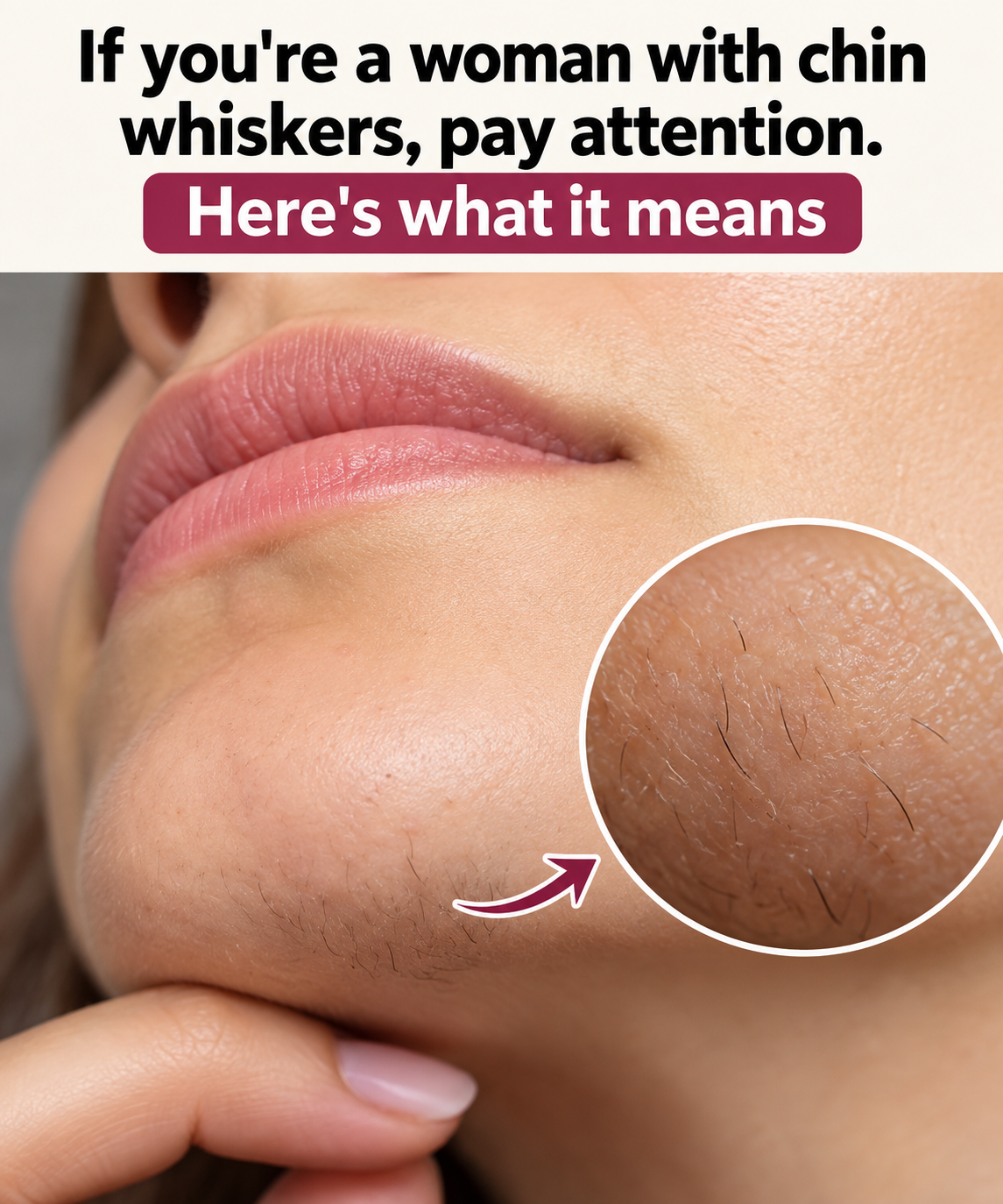
Chin whiskers in women can feel surprisingly noticeable, especially when one coarse, dark hair seems to appear overnight. You may pluck it, examine the area again, and immediately wonder whether the hair means something has changed with your hormones.
In many cases, a few facial hairs do not signal a health problem. Women naturally produce androgens, and individual hair follicles respond differently to these hormones. Genetics, age, medications, and hormonal changes can all influence how facial hair grows. However, doctors use the term hirsutism when women develop excessive coarse or dark hair in androgen-sensitive areas such as the face, chest, abdomen, thighs, or back. (Mayo Clinic)
I remember noticing how much attention one tiny chin hair could demand once I knew it was there. Suddenly, every mirror seemed to highlight it, even though nobody else appeared to notice. What helped was understanding that hair growth exists on a spectrum and that one or several coarse hairs do not automatically equal a hormonal disorder. Instead of treating facial hair as something embarrassing, it makes more sense to watch for meaningful changes. How quickly the hair appears and whether other symptoms develop usually provide more useful information than one stubborn whisker.
Most importantly, chin whiskers in women say nothing about cleanliness, attractiveness, or femininity. You can remove them, leave them alone, or discuss them with a healthcare professional. The right choice depends on your preferences and, when other symptoms occur, your health.
Why Chin Whiskers in Women Develop
Hormones and Hair Follicles Work Together
Women normally produce androgens, including testosterone. These hormones influence hair follicles, but hormone concentration represents only part of the picture. Follicles also differ in how they respond to hormonal signals, which helps explain why hair-growth patterns vary widely.
Therefore, discovering a few dark chin hairs does not prove that you have “too much testosterone.” Some women with noticeable facial hair have no identifiable underlying cause. Meanwhile, clinically significant hirsutism can occur with excess androgen activity or conditions that affect hormone production. (Mayo Clinic)
Doctors consequently look at the overall pattern rather than diagnosing a hormone disorder from one hair. They may consider how much coarse hair has developed, where it grows, when it started, whether it appeared gradually or rapidly, menstrual patterns, medications, and additional symptoms. When necessary, blood tests can measure hormones such as testosterone. (Mayo Clinic)
Genetics and Age Can Change Facial Hair
Family background can strongly influence hair characteristics. Hair color, thickness, density, and follicle sensitivity all vary among individuals. Mayo Clinic notes that women of Mediterranean, Middle Eastern, and South Asian ancestry may have more body hair without an identifiable medical cause. (Mayo Clinic)
Age can also change what you see in the mirror. Hormonal changes around perimenopause and menopause can affect hair patterns, and some women notice more prominent facial hair during these years. At the same time, scalp hair may behave differently from facial hair.
Therefore, chin whiskers in women should always be considered in context. A couple of slowly appearing hairs over many years create a different clinical picture from a sudden increase in coarse facial and body hair over several months. The speed and pattern of change matter.
When Chin Hair May Point to a Hormonal Condition
PCOS and Other Possible Causes
When facial hair becomes excessive, doctors call the pattern hirsutism. Polycystic ovary syndrome, historically abbreviated PCOS and now also referred to by Mayo Clinic as polyendocrine metabolic ovarian syndrome (PMOS), can cause increased androgen effects. Possible symptoms include facial or body hair growth, irregular menstrual cycles, acne, and scalp hair thinning. (Mayo Clinic)
However, chin hair alone cannot diagnose this condition. Some women naturally grow coarse facial hair without menstrual problems or other signs of androgen excess. Conversely, someone with a hormonal disorder may have several symptoms rather than dramatic facial hair.
Other, less common causes of hirsutism include congenital adrenal hyperplasia and Cushing syndrome. Rarely, an androgen-producing ovarian or adrenal tumor can cause excessive hair growth. Certain medicines and supplements can also contribute, including testosterone, DHEA, danazol, and minoxidil. (Mayo Clinic)
Changes That Deserve Medical Attention
The most important clue is often a significant change from your usual pattern. Mayo Clinic recommends medical assessment when severe or rapid facial or body hair growth develops over several months or when signs of virilization occur. (Mayo Clinic)
Those additional signs can include a deepening voice, new or severe acne, scalp hair loss, increased muscle mass, reduced breast size, or enlargement of the clitoris. Irregular or absent periods can also provide an important clue, particularly when they occur alongside increasing facial hair. (Mayo Clinic)
That does not mean these symptoms automatically indicate a serious disease. Several conditions can produce overlapping symptoms, so a healthcare professional needs to consider the complete history. Still, rapid changes deserve evaluation rather than repeated cosmetic treatment without investigating the cause.
Safe Ways to Manage Chin Whiskers
Plucking, Shaving, and Other At-Home Options
If chin whiskers in women bother you cosmetically, removing them remains a personal choice. Tweezers work well for a handful of isolated hairs. Clean the tweezers and skin, remove the hair gently, and avoid repeatedly digging into the skin when a hair becomes difficult to grasp.
Shaving also provides a straightforward option. Contrary to a persistent myth, shaving does not change the follicle so that hair suddenly grows back thicker. Cutting a hair leaves a blunt tip, however, which can temporarily make the regrowth feel coarser.
Waxing and depilatory creams can treat larger areas, although both can irritate sensitive facial skin. Mayo Clinic lists plucking, shaving, waxing, depilatory products, and bleaching among self-care approaches for unwanted hair. If you use a chemical hair-removal product, follow its instructions carefully and test it as directed because irritation can occur. (Mayo Clinic)
Longer-Term Hair Reduction and Medical Treatment
People who want longer-lasting reduction can discuss professional treatments such as laser hair removal or electrolysis with an appropriately qualified provider. Results vary according to hair characteristics, skin characteristics, treatment method, and individual response.
When an underlying hormonal condition causes hirsutism, treating only the visible hair may not address the reason new hairs continue developing. Depending on the diagnosis and individual circumstances, clinicians may consider hormonal treatments. Mayo Clinic notes that some patients receive combined oral contraceptives or anti-androgen medicines such as spironolactone. (Mayo Clinic)
These medications require professional guidance and are not appropriate for everyone. Some anti-androgen treatments pose pregnancy-related risks, so pregnancy plans and contraception can affect treatment decisions. Additionally, medical treatment takes time; Mayo Clinic notes that medicines for hirsutism often require six months or longer to produce noticeable changes. (Mayo Clinic)
How to Approach Facial Hair Without Shame
Separate Health Questions From Beauty Standards
One of the most useful distinctions involves separating two questions: “Do I have a medical problem?” and “Do I personally want this hair removed?” They are not the same question.
A healthy woman can dislike her facial hair and choose to remove it. Likewise, she can have visible facial hair and feel completely comfortable leaving it alone. Neither decision determines whether the hair has medical significance.
Healthcare professionals focus instead on patterns, associated symptoms, medications, and changes over time. Hirsutism itself does not necessarily cause physical complications, although an underlying hormonal condition may require attention. Mayo Clinic also recognizes that unwanted hair can cause substantial emotional distress for some women. (Mayo Clinic)
Know What Information to Track
If your chin whiskers in women have recently changed, tracking a few details can make a medical appointment more useful. Note approximately when you first noticed the increase, whether growth happened gradually or quickly, and whether coarse hair has appeared on other areas of your body.
Also consider changes in menstrual cycles, acne, scalp hair, medications, supplements, and weight. A clinician may ask about these factors and your family history before deciding whether hormone testing makes sense. Blood testing may include testosterone and other hormones when the clinical picture suggests hirsutism. (Mayo Clinic)
You do not need to diagnose yourself before making an appointment. Instead, describe what changed and when. That information gives a healthcare professional a much clearer starting point than trying to decide from internet photographs whether your hair looks “normal.”
Frequently Asked Questions
Is it normal for a woman to have a few chin whiskers?
A few chin hairs can occur without an underlying medical disorder. Hair growth varies substantially between individuals because of genetics, age, hormones, and follicle characteristics. Clinicians become more concerned about a broader hirsutism pattern or a significant, rapid change rather than one isolated hair. (Mayo Clinic)
Does chin hair automatically mean I have high testosterone?
No. Chin hair by itself does not establish that testosterone levels are elevated. Hirsutism can involve excess androgen activity, but some women with facial hair have no identifiable hormonal cause. Doctors may order hormone tests when the overall symptoms and history make them appropriate. (Mayo Clinic)
Does plucking chin hair make more hairs grow?
Plucking removes an individual hair from its follicle; it does not magically create additional follicles around it. However, hormonal and age-related changes may cause new hairs to become noticeable over time, which can create the impression that plucking caused them.
When should I see a doctor about chin whiskers?
Consider an evaluation if coarse facial or body hair increases substantially, particularly when the change happens rapidly over several months. Also seek medical advice when increased hair accompanies irregular periods, significant acne, scalp hair loss, voice changes, or other symptoms of androgen excess. (Mayo Clinic)
Can PCOS cause chin hair?
Yes. Increased facial or body hair can occur with PCOS/PMOS because of increased androgen effects. However, chin hair alone does not establish the diagnosis. Menstrual irregularities, acne, fertility concerns, metabolic factors, and other findings can contribute to the overall clinical picture. (Mayo Clinic)
Conclusion
Chin whiskers in women exist on a broad spectrum. A few coarse hairs can occur as part of normal variation, and their presence does not automatically mean your testosterone is abnormal or that you have PCOS. Genetics, follicle sensitivity, aging, medications, and hormonal changes can all influence facial hair.
What deserves more attention is a clear change in your usual pattern. Rapidly increasing coarse facial or body hair, irregular periods, severe acne, scalp hair loss, voice deepening, or other significant changes warrant a conversation with a healthcare professional. An evaluation can determine whether testing makes sense and whether an underlying condition needs treatment.
For everyone else, facial hair management remains a personal decision rather than an obligation. You can tweeze it, shave it, pursue longer-term reduction, or leave it exactly as it is. Facial hair is a biological characteristic, not a measure of femininity, hygiene, or personal worth.
More Blog
- Drinking Water on an Empty Stomach — What Science Actually Supports (No Hype, Just Facts)
- Waking Up Between 3 and 5 AM? It Might Be Your Soul Trying to Talk to You
- What a “Bleach” Patch on Your Underwear Really Means — And Why It’s Actually a Good Sign
- This Drink May Weaken Your Bones From The Inside — But Everyone Drinks It Anyway