A Moment of Humanity can reveal a side of presidential leadership that policy speeches and official ceremonies rarely capture. During Barack Obama’s eight years as president, he addressed Americans after mass shootings, natural disasters, acts of terrorism, and other painful events. Some of those appearances became memorable because he allowed visible emotion to accompany the formal responsibilities of his office.
His responses after the Sandy Hook Elementary School shooting in 2012 and the Emanuel African Methodist Episcopal Church massacre in Charleston in 2015 became especially significant. In those moments, Obama spoke not simply about events, statistics, or political debates. Instead, he focused on children, parents, families, congregations, and communities experiencing devastating loss.
However, emotional memories can become exaggerated as people repeatedly share them online. A Moment of Humanity deserves careful examination because the verified events remain powerful without embellishment.
I remember watching coverage after one national tragedy and noticing how differently the speech felt from ordinary political remarks. The pauses carried almost as much meaning as the words. For a few minutes, arguments about parties and policies seemed secondary to the families behind the headlines. I realized then that public leadership includes more than proposing solutions. A leader sometimes needs to acknowledge pain that cannot immediately be solved. That memory stayed with me because it made national tragedy feel personal rather than distant. No speech could reverse the loss, but compassionate words could recognize that every number represented a person whose absence would permanently change a family.
A Moment of Humanity During the Sandy Hook Tragedy
The December 2012 Address That Americans Remember
A Moment of Humanity became particularly visible on December 14, 2012. A gunman killed 20 children and six adult staff members at Sandy Hook Elementary School in Newtown, Connecticut.
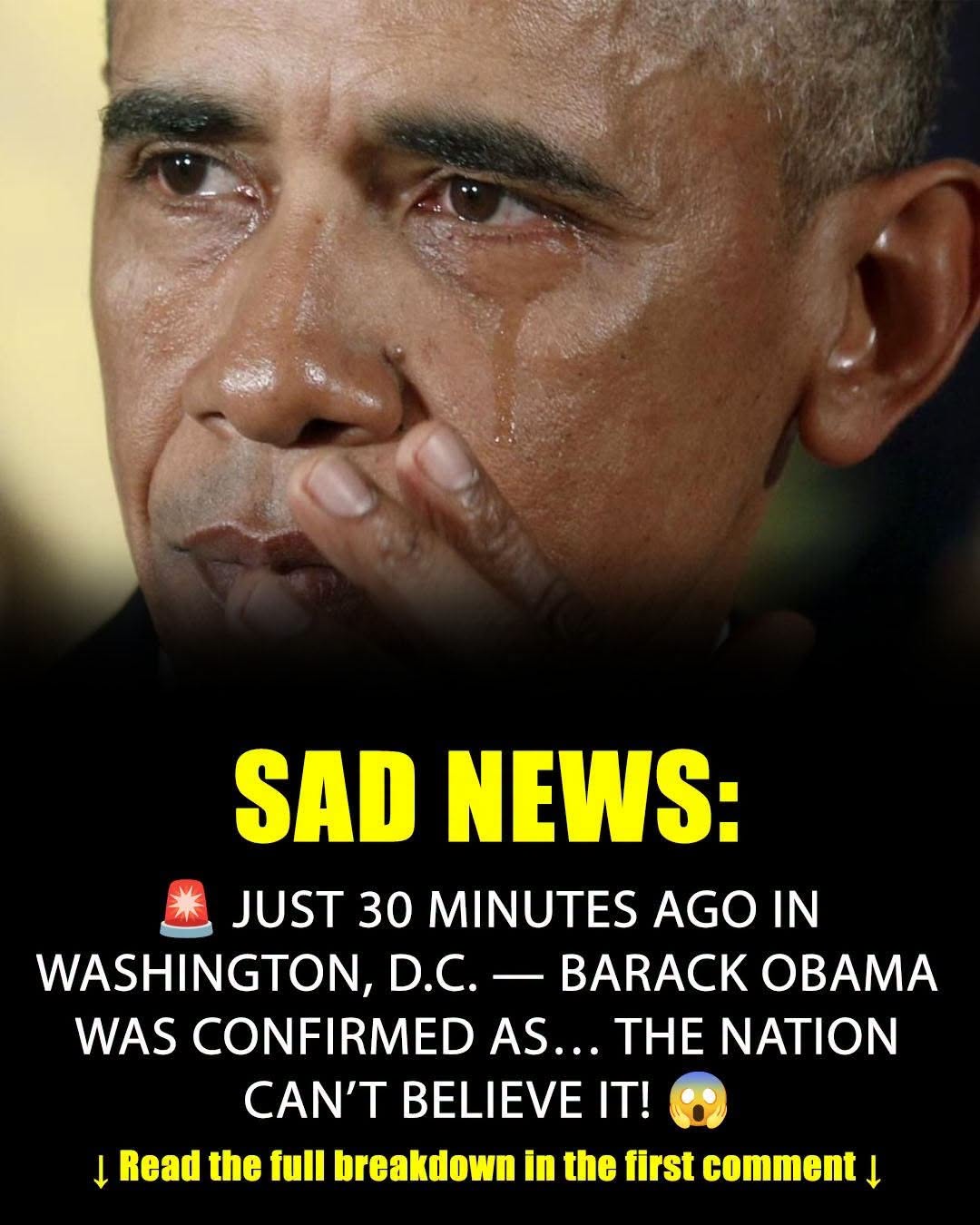
Obama addressed the nation from the White House that afternoon. While discussing the children and their families, he visibly struggled with emotion and wiped his eyes. The response became one of the most widely remembered images of his presidency.
The moment mattered partly because presidents usually speak from positions of authority. Americans expect them to appear composed during emergencies. However, Sandy Hook presented a tragedy in which the victims included 20 young children.
Obama did not attempt to hide the human dimension behind formal presidential language. Instead, he spoke about the victims as children who had futures ahead of them and families who expected them to return home.
That distinction gave the address its emotional weight.
Nevertheless, A Moment of Humanity should not become a substitute for examining what followed. Obama called for political action on gun violence, while Americans continued to disagree intensely about gun rights, public safety, federal authority, and potential restrictions.
Those debates remain important.
However, political disagreement does not erase the human tragedy that preceded them.
The emotional address demonstrated one role that presidents perform during national emergencies. They do not serve only as policymakers or administrators. They also become national voices during moments when communities struggle to describe their grief.
Therefore, the Sandy Hook response became memorable not because tears answered difficult political questions. They did not.
Instead, the moment showed that the enormity of the loss could reach even the person occupying the nation’s highest office.
Newtown Showed the Limits and Importance of Presidential Words
Two days after the shooting, Obama traveled to Newtown for an interfaith prayer vigil.
A Moment of Humanity took a quieter form there.
He spoke before families, community members, religious leaders, and others mourning the victims. Importantly, he did not suggest that presidential words could remove their suffering.
That restraint matters.
After catastrophic loss, leaders often face an impossible communication problem. People expect them to say something meaningful, yet no sentence can restore the lives that disappeared.
Therefore, effective leadership sometimes begins by acknowledging that limitation.
Obama focused on the children and educators who died. He also emphasized the responsibility adults carry toward children and communities.
At the same time, the tragedy quickly became connected to national debates about gun laws.
Obama subsequently pursued stronger gun-control measures. Supporters believed those proposals could reduce violence, while opponents raised concerns involving constitutional rights, effectiveness, enforcement, and government authority.
A Moment of Humanity did not resolve those disagreements.
Nor should emotional leadership shield political decisions from criticism.
Instead, the Newtown vigil demonstrated how empathy and political responsibility can occupy the same moment without becoming identical.
A president can comfort families while later advocating legislation.
Citizens can appreciate compassionate words while rejecting the president’s proposed policies.
Likewise, political opponents can criticize policy without dismissing genuine grief.
That separation encourages more thoughtful public discussion.
Years later, Obama continued to describe Sandy Hook as one of the most painful experiences of his presidency. Consequently, the event remained connected to his understanding of both presidential responsibility and political frustration.
A Moment of Humanity endured because Americans saw something recognizable beneath the office: a parent and public leader responding to the deaths of children.
A Moment of Humanity in Charleston and the Gun Debate
“Amazing Grace” Turned a Eulogy Into a Shared Experience
A Moment of Humanity appeared differently in Charleston, South Carolina, in June 2015.
A white supremacist murdered nine Black worshippers during Bible study at Emanuel African Methodist Episcopal Church. Among those killed was Reverend Clementa Pinckney, who also served as a South Carolina state senator.
Obama traveled to Charleston to deliver Pinckney’s eulogy.
The speech addressed grief, race, faith, forgiveness, justice, and what Obama described as grace. Yet one moment ultimately became more famous than almost any individual sentence.
Near the conclusion, Obama paused.
Then he began singing “Amazing Grace.”
Members of the congregation joined him.
The scene became one of the defining public moments of his presidency because it moved beyond the normal structure of a political speech. A president stood before a grieving congregation, began a familiar hymn, and allowed the room to carry it with him.
A Moment of Humanity became communal.
However, the speech also contained significant political content. Obama discussed racism and gun violence while connecting the Charleston murders to larger questions about American society.
Consequently, reactions varied.
Supporters praised the address as an unusually powerful presidential eulogy. Critics disagreed with parts of its political message or questioned whether such issues belonged in that setting.
Those disagreements deserve recognition.
Yet they do not change what occurred inside the church.
A hymn transformed a formal presidential appearance into a shared act of mourning.
The moment demonstrates why some presidential speeches survive in public memory while others disappear. People rarely remember every argument or statistic from an address. However, they often remember an unexpected gesture that expresses the emotional meaning of the event.
Therefore, A Moment of Humanity in Charleston became larger than a single line in a transcript.
It became an image of collective grief.
Visible Emotion Returned to the National Gun Debate
A Moment of Humanity again entered national discussion in January 2016 when Obama announced executive actions related to gun violence.
During his remarks, he recalled the children killed at Sandy Hook.
His voice tightened, and he wiped away tears.
By then, more than three years had passed since the Newtown shooting. However, the emotional reaction suggested that the event remained deeply connected to his presidency.
The scene immediately produced competing political interpretations.
Supporters viewed the emotion as evidence that Obama remained personally affected by gun violence.
Critics continued challenging his policy proposals. Some also questioned the presentation of the event or expressed skepticism toward the emotional display.
Those reactions reveal an important difficulty surrounding A Moment of Humanity in politics.
Visible emotion can create connection, but it cannot prove that a policy will succeed.
Tears do not establish whether a law is constitutional.
They do not demonstrate whether a regulation will reduce crime.
Likewise, emotional restraint does not prove that someone lacks compassion.
Therefore, citizens should evaluate policy through evidence while evaluating emotional moments within their appropriate context.
Still, presidential communication matters.
After mass violence, communities frequently want leaders to recognize that the victims represented more than numbers.
The people who died had names, relationships, plans, routines, and families.
When Obama became emotional while recalling Sandy Hook, the moment returned attention to those human consequences.
A Moment of Humanity therefore worked alongside the political argument rather than replacing it.
That distinction remains useful whenever emotion enters public debate.
Compassion can shape leadership.
Evidence must still shape policy.
Both ideas can remain true at the same time.
What A Moment of Humanity Reveals About Presidential Leadership
Empathy Can Strengthen Connection Without Settling Political Arguments
A Moment of Humanity raises a broader question about leadership: how much emotion should a president show?
Different Americans answer that question differently.
Some prefer leaders who remain visibly calm during emergencies. They associate composure with stability, confidence, and strength.
Others appreciate visible emotion because it can demonstrate empathy and shared concern.
Neither preference provides a complete measure of leadership.
A president who cries can still make ineffective decisions. Likewise, a president who maintains complete composure can still care deeply about victims.
Therefore, emotion alone should never determine how people judge political leadership.
However, presidents perform symbolic responsibilities alongside constitutional and administrative ones.
They oversee executive agencies, conduct foreign policy, sign or veto legislation, make appointments, and respond to emergencies.
Yet they also speak at memorial services.
They meet survivors.
They visit devastated communities.
They address the country after attacks and disasters.
Those responsibilities require communication that recognizes human experience.
A Moment of Humanity becomes important in this context because people often need acknowledgment before political debate begins.
When tragedy occurs, statistics can quickly dominate the discussion.
How many people died?
How many suffered injuries?
How many laws might change?
How much will recovery cost?
Those questions matter. However, numbers can create emotional distance.
Effective public communication can restore the people behind them.
Obama frequently used family-centered language after tragedy. He spoke about parents, children, spouses, congregations, and communities rather than discussing victims only as totals.
That approach helped humanize events that otherwise risked becoming another news cycle.
Nevertheless, empathy should remain the beginning of leadership rather than its final test.
A Moment of Humanity matters most when compassion accompanies responsible action, accountability, and respect for facts.
Vulnerability Does Not Automatically Conflict With Strength
Political culture has traditionally rewarded leaders who project confidence.
Therefore, visible vulnerability can appear unusual in presidential settings.
However, strength and emotion do not necessarily oppose each other.
A leader may remain calm enough to manage a crisis while still expressing sadness. Likewise, someone can comfort survivors without pretending to possess solutions for every problem.
A Moment of Humanity illustrates this balance.
Obama’s emotional appearances generally occurred while he continued performing formal presidential duties. He delivered addresses, participated in memorials, met families, and advocated policies even when emotion entered his public presentation.
That combination challenges a narrow definition of strength.
However, audiences should also avoid romanticizing every emotional display.
Modern politics operates in an environment filled with cameras, communications advisers, prepared speeches, strategic appearances, and carefully selected imagery.
Consequently, viewers cannot reliably determine another person’s inner feelings from a photograph alone.
That uncertainty requires balance.
People should not automatically assume that visible emotion represents political theater.
Yet they also should not treat tears as unquestionable proof of character.
Instead, examine what can actually be evaluated.
What did the leader say?
Did the statement accurately describe events?
Did the leader treat victims respectfully?
What actions followed?
Did those actions match the values expressed?
Those questions place A Moment of Humanity inside a broader assessment of leadership.
Vulnerability may contribute to empathy.
However, character emerges across repeated choices rather than one photograph.
This approach also reduces partisan double standards. People often interpret emotion differently depending on whether they already support the politician displaying it.
A stronger standard applies the same principles regardless of party.
Human emotion deserves recognition.
Political decisions deserve scrutiny.
Neither requirement cancels the other.
Remembering A Moment of Humanity Accurately
Powerful Stories Do Not Need Exaggeration
A Moment of Humanity becomes less meaningful when inaccurate details enter the story.
Online posts frequently simplify historical events into emotional captions. Over time, repetition can transform a partially accurate memory into an exaggerated claim.
For example, Obama demonstrably showed emotion after Sandy Hook. He also sang part of “Amazing Grace” during Reverend Clementa Pinckney’s Charleston eulogy.
Those events have strong public documentation.
However, claims that he openly wept during every tragedy he addressed require more caution.
After the Pulse nightclub shooting in Orlando in June 2016, Obama and Vice President Joe Biden met privately with victims’ families.
Obama later described listening to relatives speak through their grief and tears.
That meeting clearly carried emotional significance.
However, available public documentation does not justify confidently claiming that Obama himself openly wept during those private meetings.
The distinction may seem small.
Yet accuracy matters.
A Moment of Humanity does not become more meaningful when writers add unsupported details. Instead, exaggeration creates opportunities for readers to distrust the entire account.
The verified facts already carry considerable emotional weight.
Obama met grieving families.
He listened to their stories.
He publicly acknowledged their pain.
None of those actions require invented tears to become significant.
This principle extends beyond Obama.
Whenever emotional political stories circulate online, readers should distinguish documented events from interpretations.
Photographs need context.
Video clips need dates.
Quotations need sources.
Private events require especially careful descriptions when reliable documentation remains limited.
Historical storytelling becomes stronger when it respects those boundaries.
Facts do not weaken meaningful stories.
They protect them.
Why These Images Remain Part of Obama’s Legacy
A Moment of Humanity continues to resonate because emotional memory works differently from political memory.
Many people cannot recall the details of every gun-control proposal Obama supported.
Fewer can quote entire speeches from Sandy Hook or Charleston.
However, millions remember particular images.
They remember a president wiping his eyes.
They remember a pause before a hymn.
They remember a congregation joining the president in song.
Those images condense complicated historical moments into experiences people can immediately understand.
However, memory also simplifies.
That makes context essential.
Obama left the presidency in January 2017 after serving two terms. His years in office now form part of the historical record, even as he remains a public figure through speeches, civic initiatives, media projects, and other post-presidential activities.
Consequently, old images regularly return to social media.
Sometimes they appear with accurate context.
At other times, users attach new captions that distort when, where, or why a photograph was taken.
A Moment of Humanity should therefore encourage both empathy and media literacy.
People can appreciate emotional leadership while checking whether a viral caption accurately describes the event.
They can admire a speech without agreeing with every policy associated with it.
Likewise, they can criticize a president without denying well-documented moments of compassion.
That approach creates room for more mature historical judgment.
Political figures rarely fit neatly into simple categories.
Their legacies contain achievements, failures, controversies, decisions, speeches, relationships, and symbolic moments.
Obama’s responses to national grief represent one part of that larger legacy.
They remain memorable because, for a brief moment, the distance between presidential office and ordinary human emotion appeared smaller.
Frequently Asked Questions
Did Barack Obama cry after the Sandy Hook shooting?
Yes. Barack Obama visibly showed emotion during his December 14, 2012, remarks after the Sandy Hook Elementary School shooting. The moment became one of the most widely remembered examples of A Moment of Humanity during his presidency.
Did Barack Obama really sing “Amazing Grace” in Charleston?
Yes. Obama began singing “Amazing Grace” during his June 2015 eulogy for Reverend Clementa Pinckney after the Emanuel AME Church massacre. The congregation joined him, creating one of the most memorable moments of his presidency.
Why did Obama’s emotional responses attract so much attention?
Presidents usually appear in highly controlled public settings, so visible emotion can stand out. Moreover, Obama displayed emotion while addressing tragedies involving children, families, and communities. Consequently, those moments became powerful visual memories associated with his leadership.
Does emotional leadership prove that a president has good policies?
No. A Moment of Humanity can demonstrate empathy or create public connection, but emotion cannot prove that a policy works. Citizens should evaluate political decisions through evidence, outcomes, constitutional principles, and accountability.
Why is accuracy important when discussing Obama’s emotional moments?
Accuracy protects the credibility of historical accounts. Obama’s documented responses to tragedies already provide powerful examples of emotional leadership. Therefore, writers and readers do not need unsupported claims or exaggerated details to make those events meaningful.
Conclusion
A Moment of Humanity can reveal something about leadership that formal authority cannot express on its own.
Barack Obama faced numerous national tragedies during his presidency. Among them, Sandy Hook and the Charleston church massacre produced public responses that became inseparable from his political legacy.
After Sandy Hook, Americans saw a president visibly affected by the deaths of children and educators.
During the Newtown prayer vigil, they heard him acknowledge that words could not erase a family’s grief.
In Charleston, A Moment of Humanity emerged through “Amazing Grace,” when a presidential eulogy became a shared hymn inside a mourning church.
Those moments did not settle America’s political arguments.
They did not determine whether a particular policy was effective.
Nor did they prove that Obama possessed every quality people should demand from a president.
Instead, they demonstrated another dimension of public leadership.
National tragedies happen to individual people before they become historical events.
Behind every statistic stands a family that expected someone to come home.
Behind every memorial stands an empty chair, an interrupted future, and people learning to live with absence.
A president cannot repair that loss.
However, a leader can acknowledge it.
That is why A Moment of Humanity remains meaningful years after individual speeches disappear from daily political conversation.
At its best, emotional leadership reminds citizens that government decisions ultimately affect human lives.
At the same time, history deserves accuracy. Documented moments need no exaggeration, and emotional memories should not become excuses for unsupported claims.
Obama’s most memorable responses to national grief remain powerful precisely because the verified events speak for themselves.
Leadership requires judgment, competence, accountability, and action.
Yet during the country’s darkest moments, it sometimes requires something simpler as well: recognizing suffering, naming loss, and allowing the people behind the statistics to be seen.
{
  "title": "A Moment of Humanity: Barack Obama’s Emotional Leadership in Times of National Grief",
  "summary": "An examination of Barack Obama’s memorable responses to national tragedy and what moments of visible emotion can reveal about empathy, vulnerability, and presidential leadership.",
  "notes": "This educational article examines documented public moments from Barack Obama’s presidency and emphasizes accurate historical context when discussing emotional political events.",
  "ingredients_flat": [
    {
      "amount": "1",
      "unit": "",
      "name": "documented historical context"
    },
    {
      "amount": "1",
      "unit": "",
      "name": "understanding of presidential leadership"
    },
    {
      "amount": "1",
      "unit": "",
      "name": "careful examination of public statements"
    },
    {
      "amount": "1",
      "unit": "",
      "name": "respect for victims and grieving families"
    },
    {
      "amount": "1",
      "unit": "",
      "name": "commitment to factual accuracy"
    }
  ],
  "instructions_flat": [
    {
      "name": "Step 1",
      "text": "Examine documented moments when Barack Obama addressed Americans following national tragedies.",
      "summary": "",
      "image_url": ""
    },
    {
      "name": "Step 2",
      "text": "Consider how the Sandy Hook response combined presidential responsibility with visible personal emotion.",
      "summary": "",
      "image_url": ""
    },
    {
      "name": "Step 3",
      "text": "Review the Charleston eulogy and the significance of the communal Amazing Grace moment.",
      "summary": "",
      "image_url": ""
    },
    {
      "name": "Step 4",
      "text": "Separate emotional communication from evaluations of political policies and outcomes.",
      "summary": "",
      "image_url": ""
    },
    {
      "name": "Step 5",
      "text": "Distinguish documented events from exaggerated or unsupported claims that circulate online.",
      "summary": "",
      "image_url": ""
    },
    {
      "name": "Step 6",
      "text": "Consider how empathy, vulnerability, accuracy, and accountability contribute to assessments of political leadership.",
      "summary": "",
      "image_url": ""
    }
  ],
  "equipment": [
    {
      "name": "Historical records",
      "notes": ""
    },
    {
      "name": "Public speeches and transcripts",
      "notes": ""
    },
    {
      "name": "Reliable reporting",
      "notes": ""
    },
    {
      "name": "Critical thinking",
      "notes": ""
    }
  ],
  "nutrition": {
    "calories": "0",
    "carbohydrates": "0 g",
    "protein": "0 g",
    "fat": "0 g",
    "saturated_fat": "0 g",
    "polyunsaturated_fat": "0 g",
    "monounsaturated_fat": "0 g",
    "trans_fat": "0 g",
    "cholesterol": "0 mg",
    "sodium": "0 mg",
    "potassium": "0 mg",
    "fiber": "0 g",
    "sugar": "0 g",
    "vitamin_a": "0%",
    "vitamin_c": "0%",
    "calcium": "0%",
    "iron": "0%"
  },
  "tags": {
    "course": ["Educational Article"],
    "cuisine": ["American History"],
    "keyword": ["A Moment of Humanity", "Barack Obama", "presidential leadership", "Sandy Hook", "Charleston", "national grief"]
  }
}
SEO Output
Focus Keyword: A Moment of Humanity
SEO Title: A Moment of Humanity: Barack Obama’s Emotional Leadership
Meta Description: A Moment of Humanity explores Barack Obama’s emotional responses to national tragedy and what they reveal about presidential leadership.
Expert SEO Title: A Moment of Humanity: 7 Powerful Lessons From Obama
Midjourney Prompt: A Moment of Humanity, respectful editorial documentary photograph inspired by a U.S. president delivering an emotional national address after tragedy, dignified middle-aged Black statesman at a presidential podium with solemn compassionate expression, subtle tearful emotion, softly blurred American flags in background, restrained memorial atmosphere, realistic photojournalism, natural facial detail, cinematic soft lighting, clean uncluttered background, respectful nonpartisan mood, vertical composition, generous negative space for headline text overlay suitable for Pinterest pins –v 6 –ar 2:3
More Blog
- Drinking Water on an Empty Stomach — What Science Actually Supports (No Hype, Just Facts)
- Waking Up Between 3 and 5 AM? It Might Be Your Soul Trying to Talk to You
- What a “Bleach” Patch on Your Underwear Really Means — And Why It’s Actually a Good Sign
- This Drink May Weaken Your Bones From The Inside — But Everyone Drinks It Anyway