Long before electric mixers, food processors, and neatly wrapped sticks of butter appeared in supermarkets, home kitchens relied on simple tools that performed remarkably specific jobs.
One such object can leave people completely puzzled today. It may look like a small wooden paddle, board, roller, or strangely grooved kitchen implement.
But generations ago, it had an important job.
It was a butter worker.
What Exactly Is a Butter Worker?
A butter worker is a traditional tool used during the final stages of homemade butter production.
After cream was churned and the butterfat separated from the liquid buttermilk, the butter still contained considerable moisture. The fresh butter needed to be washed and repeatedly pressed or “worked” to remove as much remaining liquid as practical.
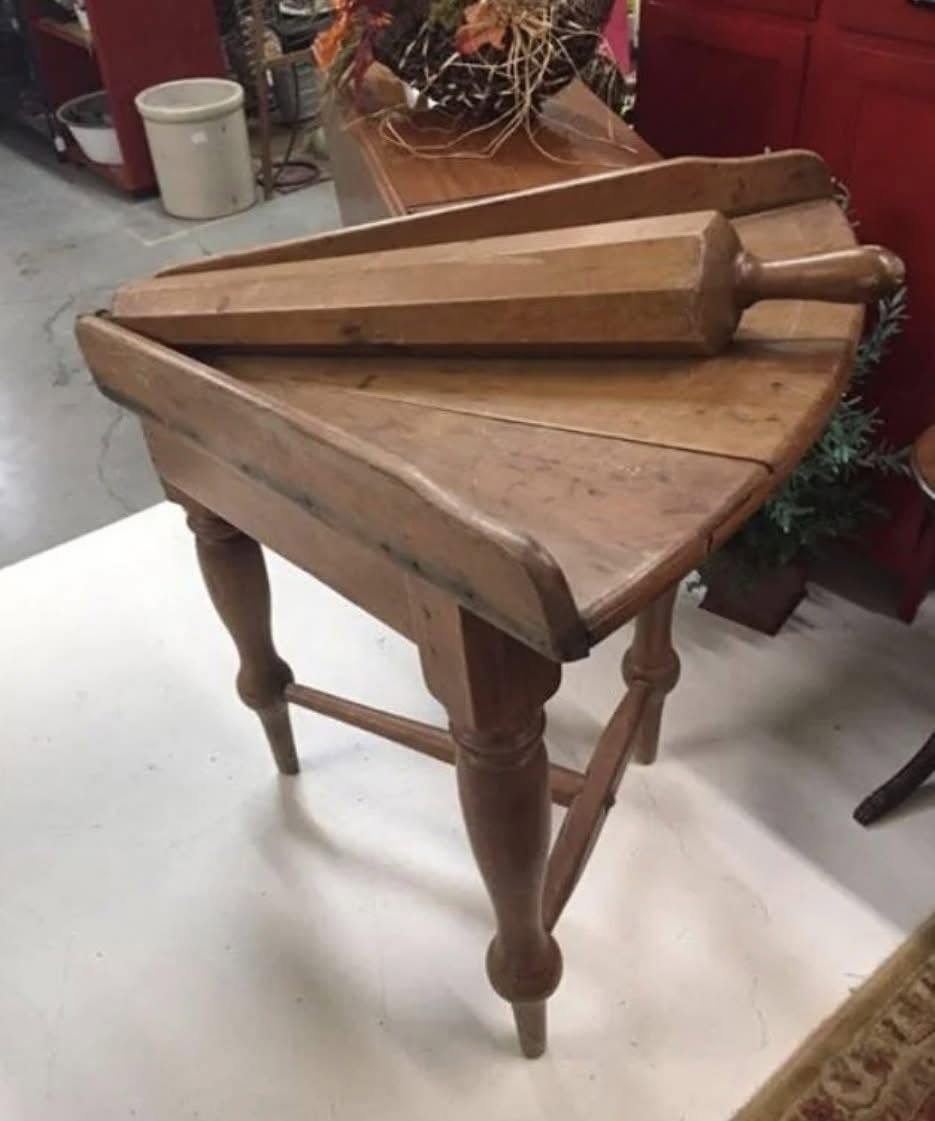
Depending on the period and region, butter workers came in several designs. Some resembled wooden paddles, while larger versions consisted of a grooved wooden table or tray fitted with a roller.
Despite their different appearances, their basic purpose was similar: press, shape, and finish freshly churned butter.
Why Was Removing Buttermilk So Important?
Freshly churned butter isn’t immediately identical to the butter found in today’s refrigerated dairy aisle.
Tiny droplets of buttermilk and water remain trapped throughout the butter after churning.
Working and washing the butter helped remove residual buttermilk and distribute the remaining moisture more evenly. This improved its consistency and helped its keeping quality.
Before modern refrigeration became widespread, preservation mattered enormously. Families couldn’t simply leave improperly prepared dairy products in a refrigerator for weeks.
Producing good butter was therefore both a culinary skill and an important part of household food preservation.
How Was It Used?
The traditional process required considerably more work than opening a package from the supermarket.
First, cream was churned until the fat globules joined together and separated from the buttermilk.
The liquid was drained away, and the butter could then be washed with cool water.
Next came the butter worker.
The butter was placed onto the wooden working surface and repeatedly pressed, folded, or rolled. Liquid escaping from the butter could drain through grooves in the equipment.
Salt could then be incorporated and distributed through the finished butter.
Finally, the butter was shaped into blocks, balls, rolls, or decorative molds for storage, sale, or serving.
Why Did Butter Workers Have Grooves?
Those grooves weren’t simply decorative.
As pressure was applied to the butter, liquid needed somewhere to escape. Channels in the wooden surface helped direct that moisture away rather than allowing the butter to sit in it.
The texture of some paddles also made it easier to manipulate the butter without relying entirely on warm hands, which could soften or melt it.
It was an impressively practical design created without motors, electricity, or complicated machinery.
What About Those Wooden Butter Paddles?
Not every mysterious wooden butter-making tool is technically the same thing.
Smaller handheld implements are commonly known as butter paddles, butter hands, Scotch hands, or butter pats. They were used to work and shape smaller quantities of butter.
Larger butter workers were better suited to processing greater amounts and could incorporate a board, trough, lever, or roller.
That’s why two authentic antique butter-making tools can look completely different while performing closely related jobs.
The Science Behind Churning Butter
Butter making is essentially an exercise in manipulating an emulsion.
Cream contains microscopic droplets of fat dispersed throughout a water-based liquid. Churning physically disrupts the membranes surrounding those fat globules.
Eventually, the fat begins sticking together.
Continue churning and you’ll suddenly see yellowish clumps of butter separating from a thin liquid—the buttermilk.
But the process isn’t finished there.
Working the butter helps manage its moisture distribution and texture, producing a more uniform finished product.
Was Salt Just Added for Flavor?
Salt certainly makes butter taste better, but historically it served another important function.
Salted butter generally kept better than unsalted butter under traditional storage conditions. That was particularly valuable when refrigeration was limited or nonexistent.
The amount of salt used could vary considerably depending on how quickly the butter would be eaten and how it was intended to be stored.
A Tool That Was Once Completely Ordinary
Perhaps the most fascinating thing about a butter worker isn’t the object itself.
It’s how quickly everyday technology can disappear.
There was a time when churning, washing, working, salting, and shaping butter were familiar household tasks. Someone seeing a butter worker would have immediately understood its purpose.
Today, the same object can sit in an antique store while dozens of people walk past wondering:
“What on earth is that thing?”
Are Antique Butter Workers Valuable Today?
Some certainly can be.
Age, craftsmanship, manufacturer, condition, rarity, size, and provenance can all affect an antique butter worker’s value. Examples retaining their original rollers, handles, markings, or other components may be particularly interesting to collectors of agricultural and kitchen antiques.
However, an object’s age or unusual appearance alone doesn’t guarantee that it is valuable.
If you inherit one, avoid aggressive sanding, refinishing, painting, or chemical cleaning before determining what you have. Altering an antique can sometimes reduce its historical and collectible value.
The Bottom Line
That strange wooden object your grandparents or great-grandparents may have used wasn’t an obscure decoration.
It was a practical piece of butter-making equipment.
The butter worker helped press and manipulate freshly churned butter, remove residual liquid, distribute moisture and salt, and prepare the butter for storage or serving.
It’s a reminder of an era when producing something as ordinary as a pat of butter required time, skill, and a surprisingly clever collection of tools.
And while most of us will never need a butter worker in our kitchens today, these old implements preserve a fascinating piece of everyday food history.
More Blog
- Drinking Water on an Empty Stomach — What Science Actually Supports (No Hype, Just Facts)
- Waking Up Between 3 and 5 AM? It Might Be Your Soul Trying to Talk to You
- What a “Bleach” Patch on Your Underwear Really Means — And Why It’s Actually a Good Sign
- This Drink May Weaken Your Bones From The Inside — But Everyone Drinks It Anyway