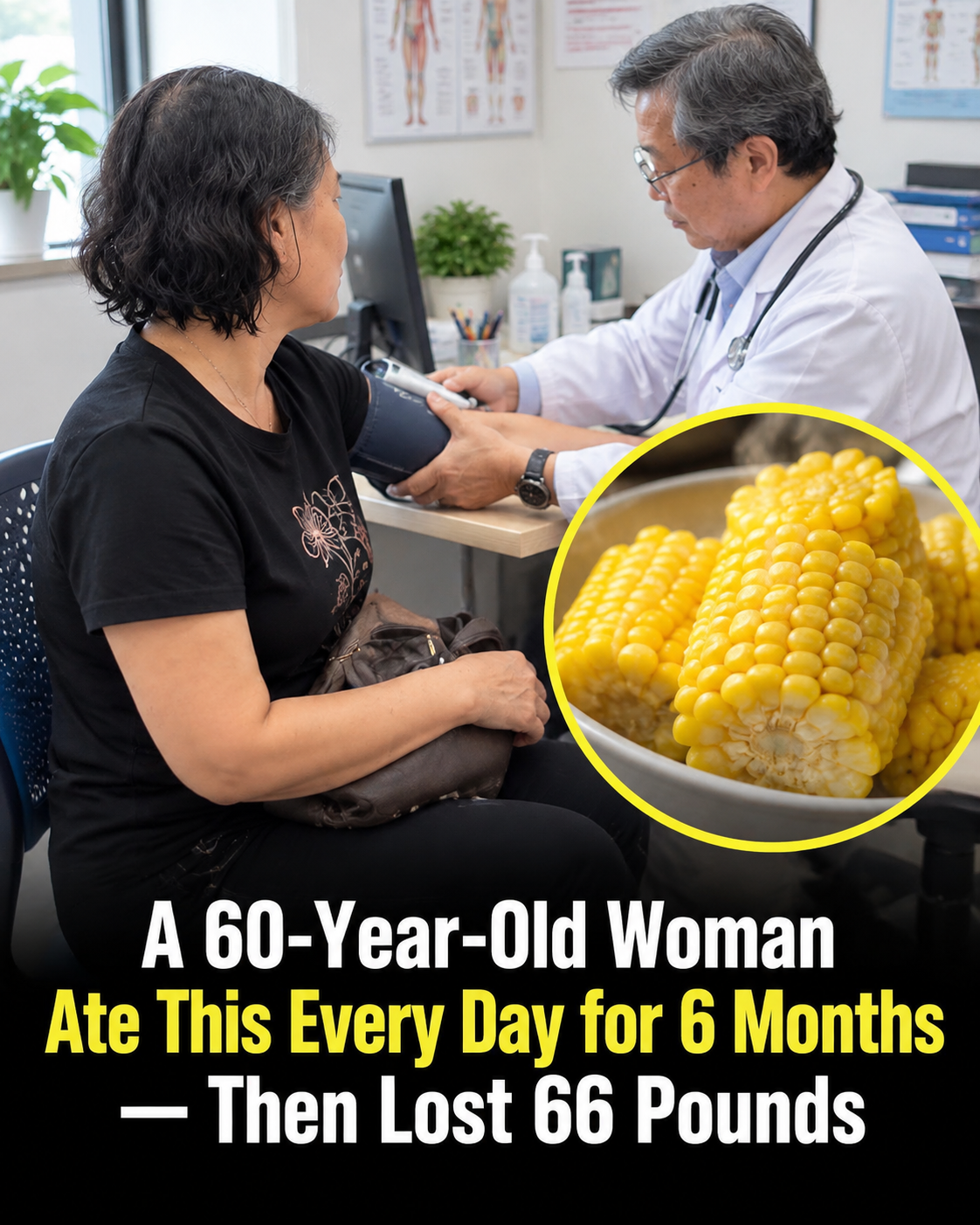
A 60-Year-Old Woman Ate This Every Day for Six Months and reportedly experienced dramatic weight loss after making corn a regular part of her meals. Stories like this attract attention because they suggest that one simple food can completely change a person’s health.
However, weight loss rarely happens because of one ingredient alone.
Corn can absolutely fit into a healthy eating pattern. Whole corn provides carbohydrates, fiber, vitamins, minerals, and naturally occurring plant compounds. It can also make meals more satisfying when it replaces heavily processed foods or oversized portions of refined carbohydrates. Still, eating corn by itself cannot guarantee a specific amount of weight loss.
The more useful lesson involves what happens when one simple food choice leads to a healthier overall routine.
I remember becoming more interested in whole corn after using it in place of some of the refined side dishes I normally ate. A bowl with corn, beans, vegetables, and grilled protein felt surprisingly filling, yet it did not leave me feeling weighed down. I also noticed that I stopped looking for another snack shortly afterward. The experience did not convince me that corn had some special fat-burning power. Instead, it showed me how changing the structure of a meal can make healthier portions easier to maintain. That difference matters far more than promising dramatic results from one food.
So, what can really happen when someone makes whole corn a regular part of their diet for months? The answer becomes much clearer when we separate the nutritional benefits from the dramatic claims.
Why Corn Can Fit Into a Healthy Weight-Loss Diet
Whole Corn Provides Carbohydrates Plus Fiber
Corn sometimes gets a bad reputation because people classify it only as a starchy food.
However, carbohydrates are not automatically unhealthy.
Your body uses carbohydrates as an important energy source. The quality of those carbohydrates matters more than simply avoiding them altogether. Minimally processed whole grains, vegetables, fruits, and beans provide nutrients and fiber along with carbohydrates.
Whole corn fits into that broader picture.
When you eat corn kernels relatively close to their natural form, you get more than starch. Corn provides dietary fiber as well as several vitamins, minerals, and plant compounds.
Fiber matters because your body does not digest it in the same way that it digests starch and sugar. Instead, fiber moves through the digestive system and can help support regular bowel movements and normal digestive health.
Fiber also contributes to meal satisfaction.
Therefore, replacing a portion of a highly refined food with whole corn may make a meal feel more substantial. That change can help some people manage portions without feeling as deprived.
However, the serving size still matters.
Eating enormous bowls of corn will still add a significant amount of energy to your diet. Therefore, corn works best as one component of a balanced plate rather than an unlimited food.
For example, you might combine corn with beans, leafy greens, tomatoes, peppers, avocado, and grilled chicken or tofu.
That meal includes carbohydrates, fiber, protein, vegetables, and healthy fats.
In contrast, eating corn chips or heavily buttered corn does not provide the same nutritional experience.
Processing and preparation change the final food.
So when A 60-Year-Old Woman Ate This Every Day for Six Months, the important question is not simply whether she ate corn.
The bigger question involves what the corn replaced and how the rest of her eating habits changed.
Corn May Help Make Meals More Satisfying
A successful weight-management plan needs to feel sustainable.
Constant hunger makes that difficult.
Foods that contain fiber, protein, water, or substantial volume can make meals more satisfying. Although corn does not provide as much fiber as beans or some whole grains, it still contributes fiber to the diet.
Harvard’s Nutrition Source notes that dietary fiber can help regulate the body’s use of sugars while also helping keep hunger in check.
That does not mean corn suppresses appetite like a medication.
Instead, whole corn can become one useful part of a meal that keeps you satisfied.
Imagine replacing a large portion of refined white bread or a highly processed snack with corn, vegetables, and a protein source.
The new meal may contain more fiber and greater volume.
As a result, you may find it easier to wait until your next planned meal instead of continually snacking.
However, adding corn on top of everything you already eat will not necessarily help with weight loss.
Weight change ultimately reflects a complicated interaction between energy intake, physical activity, sleep, medical conditions, medications, age, genetics, hormones, and other factors.
The CDC emphasizes that healthy weight management involves nutrition, physical activity, adequate sleep, and stress management rather than relying on one food.
Therefore, when A 60-Year-Old Woman Ate This Every Day for Six Months, any reported weight change would need to be understood in the context of her entire lifestyle.
Perhaps she reduced portions.
Perhaps corn replaced higher-calorie foods.
Perhaps she became more active.
Perhaps several habits changed at once.
Without reliable documentation, no one can attribute a dramatic transformation to corn alone.
Still, the underlying idea remains useful.
Choosing filling, minimally processed foods can make a calorie-conscious eating pattern easier to maintain.
What Corn Actually Provides Your Body
Corn Contains Fiber, Vitamins, Minerals, and Plant Compounds
Corn offers more nutritional value than its reputation as “just a carb” suggests.
Whole corn contains fiber and several micronutrients. Depending on the type and preparation, it can contribute B vitamins, magnesium, potassium, and other nutrients.
Corn also contains carotenoids, including lutein and zeaxanthin.
These compounds occur naturally in several yellow and green plant foods. Researchers have studied lutein and zeaxanthin because they concentrate in parts of the eye.
However, corn should not become your only source of vegetables or plant nutrients.
A varied diet offers a much broader range.
Leafy greens, berries, beans, tomatoes, carrots, peppers, cruciferous vegetables, nuts, seeds, and whole grains each provide different combinations of nutrients and plant compounds.
Therefore, if A 60-Year-Old Woman Ate This Every Day for Six Months, the healthiest version of that routine would still include many other foods.
Corn can contribute to a nutritious meal, but it cannot supply everything the body needs.
Protein remains particularly important.
Corn contains some protein, but most people will benefit from combining it with richer protein sources such as beans, lentils, eggs, yogurt, fish, chicken, tofu, or other foods.
Healthy fats matter too.
Avocado, nuts, seeds, olive oil, and fatty fish can help round out meals.
Then add other vegetables or fruit for more fiber, vitamins, and variety.
This approach turns corn into part of a complete meal rather than treating it as a special diet.
That distinction matters because restrictive eating plans often become difficult to maintain.
Eating one food repeatedly may also crowd out nutrients from other sources.
Instead, use corn for what it does well.
It adds sweetness, texture, carbohydrates, fiber, and versatility.
Then let the rest of the plate provide the nutritional balance.
Whole Corn Is Different From Highly Processed Corn Foods
Not every food containing corn offers the same benefits.
Fresh corn on the cob, frozen corn kernels, and plain cooked corn remain relatively close to the whole food.
However, corn can also become chips, sugary cereals, snack foods, refined corn products, and heavily processed side dishes.
Those foods can contain very different amounts of sodium, fat, sugar, and fiber.
Therefore, saying “corn is healthy” without considering the form can become misleading.
Harvard includes corn among whole grains when consumed in its whole form and emphasizes that minimally processed whole grains provide benefits that refined grain products may not offer.
Preparation matters too.
A plain ear of corn and an ear covered with a large amount of butter, mayonnaise, cheese, and salt do not create the same meal.
Likewise, a cup of corn mixed with beans and vegetables differs nutritionally from a large serving of fried corn chips.
Neither example means you must never enjoy richer preparations.
Instead, frequency and portion size matter.
If you plan to eat corn regularly, simple cooking methods make the habit easier to fit into a balanced diet.
Try steaming, boiling, roasting, or grilling corn.
Frozen corn also works well because you can add it quickly to soups, salads, grain bowls, and vegetable dishes.
Canned corn can work too. However, checking the sodium level or choosing a lower-sodium option can help if you watch your salt intake.
You can also rinse canned corn before using it.
When A 60-Year-Old Woman Ate This Every Day for Six Months, the difference between eating plain whole corn and highly processed corn products would have been significant.
The health value comes primarily from the overall food pattern.
Whole foods usually make it easier to control added sugar, sodium, and fats while preserving more of the original food’s structure.
Can Eating Corn Every Day Really Lead to Major Weight Loss?
Weight Loss Comes From the Overall Pattern, Not One Food
A claim that someone lost around 60 pounds in six months simply by eating corn needs context.
Losing that amount averages roughly 10 pounds per month.
That rate may occur for some people, particularly those starting at a higher body weight or receiving professional treatment. However, it exceeds the gradual pace commonly recommended for many adults trying to lose weight independently.
The CDC notes that people who lose weight gradually, around one to two pounds per week, tend to have a better chance of keeping it off than people who lose weight much faster.
Therefore, dramatic before-and-after stories should not become personal targets.
A person’s starting weight, health conditions, medication use, activity level, and medical supervision can completely change what represents an appropriate pace.
Corn cannot override those factors.
Instead, weight loss generally occurs when a person’s long-term energy intake becomes lower than the energy the body uses.
However, simply counting calories does not tell the whole story.
Food quality can affect hunger, satisfaction, nutrition, and how easy a plan feels to maintain.
Harvard nutrition guidance emphasizes both appropriate portions and the quality of the foods people choose when managing weight.
That is where corn may help.
Suppose someone regularly eats a large bowl of refined noodles, fried foods, or processed snacks.
If that person begins replacing part of those foods with a moderate serving of corn, vegetables, beans, and lean protein, total calorie intake could decrease while meal quality improves.
Over many months, that pattern could contribute to weight loss.
However, the corn itself did not “burn” the fat.
The complete dietary change created the difference.
So, the headline A 60-Year-Old Woman Ate This Every Day for Six Months may capture attention, but the practical lesson involves consistency rather than one magical ingredient.
Dramatic Results Should Never Become a Universal Expectation
Two people can follow the same eating plan and experience different results.
One person may lose weight quickly at first. Another may lose slowly. Someone else may maintain the same weight despite making healthier choices.
Age also affects the picture.
As people grow older, changes in muscle mass, activity, hormones, medications, sleep, and health conditions can influence body weight.
That makes individualized advice especially valuable for older adults.
A 60-year-old person who wants to lose a large amount of weight may benefit from discussing the plan with a doctor or registered dietitian.
This becomes even more important when diabetes, cardiovascular disease, kidney disease, digestive disorders, or medications enter the picture.
Rapid weight loss can sometimes involve loss of muscle as well as fat.
Maintaining muscle becomes increasingly important with age because muscle supports mobility, strength, balance, and everyday independence.
Therefore, an appropriate weight-loss plan should include adequate protein and, when medically appropriate, physical activity that helps preserve strength.
Eating corn every day does not address those needs by itself.
Additionally, cutting calories too aggressively can lead to fatigue, nutritional deficiencies, intense hunger, and difficulty maintaining the plan.
A healthier strategy usually focuses on sustainable habits.
That might include gradually adjusting portions, eating more minimally processed foods, increasing vegetables and fiber, choosing adequate protein, reducing sugary drinks, staying active, and getting enough sleep.
These habits may seem less exciting than a dramatic transformation story.
However, they give people a much more realistic foundation.
If A 60-Year-Old Woman Ate This Every Day for Six Months and successfully changed her health, corn may have helped structure her meals.
But the real success would almost certainly involve a broader pattern of consistent choices.
How to Include Corn in a Balanced Daily Diet
Pair Corn With Protein, Vegetables, and Healthy Fats
If you enjoy corn, you do not need to avoid it simply because it contains carbohydrates.
Instead, build a balanced meal around it.
Start with a reasonable serving of corn.
Then add a meaningful source of protein.
Beans create an especially useful pairing because they add protein and substantially more fiber. You can also use chicken, fish, eggs, tofu, lean meat, yogurt, or lentils.
Next, add vegetables.
Tomatoes, peppers, spinach, cabbage, broccoli, cucumber, onions, or leafy greens can increase volume and nutritional variety.
Finally, include some healthy fat when appropriate.
Avocado, nuts, seeds, or a small amount of olive oil can add flavor and make the meal more satisfying.
This combination creates a much stronger meal than corn alone.
For breakfast, you might add corn to scrambled eggs with peppers and spinach.
At lunch, mix corn with black beans, tomatoes, greens, and avocado.
For dinner, serve grilled corn alongside fish and roasted vegetables.
You can also add corn to soups or grain bowls.
The goal does not involve forcing yourself to eat it every day.
Instead, use it when it helps you create a meal you enjoy and can maintain.
If A 60-Year-Old Woman Ate This Every Day for Six Months, consistency probably mattered more than the ingredient itself.
Repeatedly choosing a balanced meal can gradually change overall intake.
That principle applies whether the staple food is corn, oats, brown rice, beans, potatoes, or another minimally processed food.
The best option remains the one that fits your nutritional needs, preferences, budget, and health goals.
Portion Size and Preparation Still Matter
Corn offers useful nutrients, but portion size still deserves attention.
Because corn contains more starch than many non-starchy vegetables, a very large portion can add considerably more carbohydrates and calories than a small side serving.
That does not make corn unhealthy.
It simply means that balance matters.
Someone with diabetes may also need to consider the carbohydrate content when planning meals, especially if they use insulin or medications that affect blood sugar.
Pairing corn with protein, healthy fats, and fiber-rich foods can create a more balanced meal.
However, individual blood sugar responses vary.
Preparation can make an equally large difference.
Boiled, steamed, roasted, or grilled corn can fit easily into nutritious meals.
Meanwhile, adding large amounts of butter, creamy sauce, cheese, or salt increases calories, saturated fat, or sodium.
Again, you do not need to make every meal completely plain.
Flavor helps healthy habits last.
Fresh herbs, lime juice, chili, paprika, pepper, garlic, cilantro, or modest amounts of olive oil can add plenty of flavor.
Most importantly, avoid turning a successful weight-loss story into an extreme experiment.
You do not need to replace nearly everything you eat with corn.
You do not need to skip protein.
You do not need to eliminate all other carbohydrates.
And you certainly do not need to chase a 60-pound target simply because a headline suggests another person achieved it.
If A 60-Year-Old Woman Ate This Every Day for Six Months, the most valuable takeaway involves sustained habits.
A healthier food choice repeated consistently can matter.
However, the best results usually come when that habit joins several others.
Frequently Asked Questions
Can eating corn every day help you lose weight?
Corn can fit into a weight-loss diet, especially when whole corn replaces more calorie-dense or highly processed foods. Its fiber can contribute to satisfaction. However, corn does not directly burn body fat. Weight loss depends on overall calorie intake, food quality, physical activity, sleep, health conditions, and other factors.
Is corn too high in carbohydrates for weight loss?
Not necessarily. Carbohydrates can be part of a healthy diet. Whole corn provides carbohydrates along with fiber and nutrients. The amount you eat and what you pair with it matter more than simply labeling corn as a high-carbohydrate food.
Is it safe to eat corn every day?
Most healthy people can include corn regularly as part of a varied diet. However, eating the same food daily should not crowd out other vegetables, whole grains, proteins, fruits, and healthy fats. People with medical conditions that affect their dietary needs should follow personalized guidance.
Does corn raise blood sugar?
Corn contains carbohydrates, so it can raise blood glucose after eating. However, the size of the response depends on the portion, preparation, other foods in the meal, and the individual. People with diabetes should consider corn as part of their total carbohydrate intake and follow the plan recommended by their healthcare team.
Can someone really lose 60 pounds in six months by eating corn?
A person could potentially lose a significant amount of weight over six months, but corn alone would not explain the result. Major weight loss usually reflects changes in total calorie intake, food choices, physical activity, and other lifestyle or medical factors. Rapid or substantial weight loss should ideally occur with appropriate professional guidance.
Conclusion
A 60-Year-Old Woman Ate This Every Day for Six Months makes an attention-grabbing headline, but the useful lesson is not that corn causes dramatic weight loss.
Corn can be a nutritious food.
Whole corn provides carbohydrates, fiber, vitamins, minerals, and beneficial plant compounds. It can make meals more satisfying and may help someone reduce reliance on heavily processed foods when used thoughtfully.
However, no single ingredient produces sustainable weight loss for everyone.
If someone loses a large amount of weight after making corn a regular staple, the result probably reflects broader changes. Portions may have become smaller. Highly processed foods may have decreased. Fiber intake may have increased. Physical activity, sleep, or other habits may also have changed.
That larger picture matters.
Healthy weight management comes from patterns that you can repeat for months and years, not from chasing one dramatic food trend.
Therefore, enjoy corn if you like it.
Choose whole or minimally processed forms most often. Pair corn with protein, vegetables, and healthy fats. Keep portions appropriate for your individual needs. Continue eating a wide variety of nutritious foods.
Most importantly, do not use another person’s reported weight loss as a requirement for your own body.
A slower, sustainable change can still produce meaningful improvements in health.
In the end, A 60-Year-Old Woman Ate This Every Day for Six Months offers a better lesson when we look beyond the headline: simple foods can support meaningful progress, but lasting results come from the complete pattern of choices you repeat every day.
More Blog
- Drinking Water on an Empty Stomach — What Science Actually Supports (No Hype, Just Facts)
- Waking Up Between 3 and 5 AM? It Might Be Your Soul Trying to Talk to You
- What a “Bleach” Patch on Your Underwear Really Means — And Why It’s Actually a Good Sign
- This Drink May Weaken Your Bones From The Inside — But Everyone Drinks It Anyway