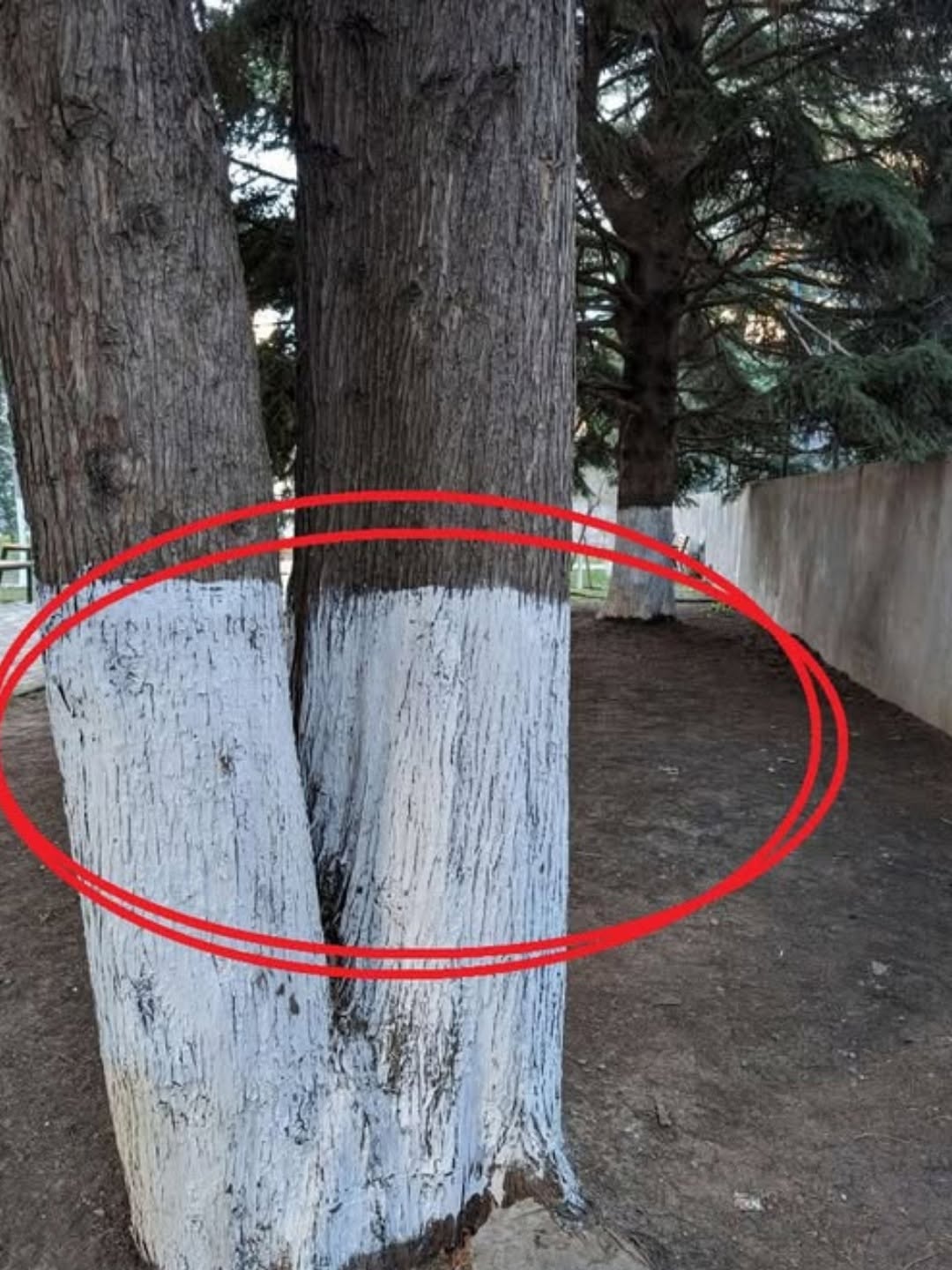
Why Are Some Trees Painted White? The Surprising Winter Secret That Protects Them becomes much easier to understand once you know what winter sunlight can do to bark. Those bright white trunks that stand out in orchards, gardens, and along roadsides are usually not decorative. Instead, the coating often helps reflect sunlight and reduce temperature swings on the bark.
During winter, especially on clear sunny days, the south- and southwest-facing sides of tree trunks can warm considerably. Then temperatures may drop quickly after sunset. That rapid change can damage living tissue beneath the bark, particularly on young trees and thin-barked species.
Painting the lower trunk with a properly diluted white latex paint or using a commercial tree-trunk coating can help reflect sunlight and keep bark temperatures more stable. However, technique matters. Using the wrong paint, coating the wrong trees, or covering damaged bark without understanding the underlying problem can create more harm than good.
Why Are Some Trees Painted White? The Surprising Winter Secret That Protects Them is ultimately a story about simple plant protection. A thin reflective layer can help reduce winter sunscald, while good watering, pruning, mulching, and overall tree care provide the broader support trees need.
I first paid attention to white-painted tree trunks after driving past an orchard where nearly every young tree had been coated from the ground to the lower branches. At first, I assumed the white paint marked rows or helped workers identify certain trees. Later, I learned that the pale coating served a far more practical purpose. It reflected winter sunlight and helped protect tender bark from sudden temperature changes. That explanation immediately made sense because the trees with the thinnest bark looked the most carefully protected. Since then, I notice those white trunks everywhere, and I appreciate how such a simple technique can solve a surprisingly complicated seasonal problem.
Why Are Some Trees Painted White? The Surprising Winter Secret That Protects Them From Sunscald
Winter can seem like a quiet season for trees, but bark can experience dramatic environmental stress even when branches remain dormant. Bright sunlight, cold nights, wind, and frozen soil can create harsh conditions.
How Winter Sunscald Damages Tree Bark
Sunscald happens when winter sunlight warms bark enough to activate or soften living tissues beneath the surface, followed by a sudden temperature drop that injures those cells.
The problem often affects the south or southwest side of the trunk because that area receives stronger afternoon sunlight.
During a sunny winter day, dark bark absorbs solar energy. Consequently, the surface temperature can rise well above the surrounding air temperature.
Then the sun sets.
The bark cools rapidly, and the tissues underneath can suffer from that sudden change. Over time, injured areas may become discolored, sunken, cracked, or loose.
Young trees face particular risk because their bark has not yet thickened enough to provide the same insulation as mature bark. Fruit trees also commonly receive protection because many have smooth, relatively thin bark.
Why Are Some Trees Painted White? The Surprising Winter Secret That Protects Them makes sense because white surfaces reflect more sunlight than dark bark.
By reducing solar heating, a white coating can limit the difference between daytime and nighttime bark temperatures.
This protection does not make the tree warmer. Instead, it helps prevent excessive warming during the day.
That distinction matters.
The goal is temperature stability rather than insulation alone.
Trees may also experience frost cracks, mechanical injury, or disease for other reasons. Therefore, not every bark split indicates sunscald.
However, when damage repeatedly appears on the sunniest side of young trunks, winter sun injury becomes an important possibility.
Why White Works Better Than Dark Colors
Color strongly influences how surfaces absorb and reflect solar radiation.
Dark colors absorb more energy, while white surfaces reflect a larger portion of incoming light.
Therefore, a white coating can keep exposed bark cooler on bright winter afternoons.
That is why tree protection products typically use white or very light colors rather than brown, green, or black.
A dark paint might look more natural, but it could actually increase heating.
Why Are Some Trees Painted White? The Surprising Winter Secret That Protects Them depends on reflectivity, so the pale color performs a functional job.
The coating usually covers the lower trunk from near ground level to the first major branches.
Some growers extend the coating slightly higher on particularly vulnerable trees.
However, the goal is not to paint the entire canopy.
The trunk receives the strongest benefit because it contains the living cambium and vascular tissues that can suffer serious damage when bark temperatures fluctuate sharply.
Commercial orchards sometimes coat many trees at once because consistent protection across a young planting can reduce losses.
Home gardeners can use the same principle on vulnerable individual trees.
Nevertheless, you should first identify whether your species actually benefits from this treatment.
Mature trees with thick, rough bark may not need it.
Meanwhile, young fruit trees, newly planted trees, and smooth-barked species may gain more protection.
Why Are Some Trees Painted White? The Surprising Winter Secret That Protects Them in Orchards and Gardens
White-painted trunks appear in many regions because growers use the technique for more than one reason. Although sunscald prevention remains one of the main purposes, orchard management sometimes adds other practical benefits.
Young Fruit Trees Often Need Extra Protection
Apple, peach, pear, plum, cherry, and other fruit trees often have relatively smooth bark when young.
That bark can remain vulnerable during the first several years after planting.
Because commercial growers invest heavily in young trees, preventing trunk injury becomes especially important.
A damaged trunk can restrict water and nutrient movement between roots and branches.
If injury circles a large portion of the trunk, the tree can decline severely.
Why Are Some Trees Painted White? The Surprising Winter Secret That Protects Them therefore represents a preventive step rather than a cosmetic one.
Growers may apply a reflective coating before winter arrives.
The timing usually allows the coating to dry thoroughly before repeated freezes.
In sunny climates with cold winter nights, protection can become especially valuable.
However, white trunk coatings may also appear in warmer regions.
There, growers sometimes use reflective white material to reduce heat stress and sunburn during periods of intense sun.
Fruit trunks and branches exposed after heavy pruning can suddenly receive more direct sunlight than before.
Consequently, bark that developed in shade can burn when exposed abruptly.
A reflective coating may reduce that risk.
The basic principle remains the same: reduce excessive heating from strong sun.
For home gardeners, newly planted trees deserve particular attention.
A tree that grew in a nursery may have experienced different light conditions. After planting, one side of the trunk can suddenly receive intense afternoon sun.
Therefore, orienting and protecting the trunk thoughtfully can help the tree adapt.
Whitewash Has a Long Agricultural History
Before modern commercial tree coatings became common, growers often used traditional whitewash.
Historical whitewash formulas commonly contained lime mixed with water. Some recipes included additional ingredients intended to improve adhesion.
Farmers applied whitewash to barns, walls, fences, and sometimes tree trunks.
The bright coating reflected sunlight and also created a clean, uniform appearance.
However, traditional lime-based mixtures require care because strong concentrations can irritate plant tissue.
Modern gardeners should not assume that every old whitewash recipe works safely on living bark.
Why Are Some Trees Painted White? The Surprising Winter Secret That Protects Them does not depend on copying a harsh historical formula.
Instead, many tree-care recommendations use properly diluted water-based interior latex paint or products specifically manufactured for tree trunks.
Avoid oil-based paints.
Oil-based products can interfere with bark function and may contain solvents that injure living tissue.
Likewise, avoid exterior paints that contain additives you have not confirmed as suitable for trees.
Commercial trunk paint or tree-safe whitewash offers the simplest option when you want a product designed specifically for that purpose.
The goal is a thin, breathable, reflective coating rather than a heavy sealed layer.
If you use a latex-based method, follow established horticultural recommendations for dilution and application.
A thick coat provides no meaningful advantage if it harms the bark underneath.
Why Are Some Trees Painted White? The Surprising Winter Secret That Protects Them Only Works When Done Correctly
Tree painting sounds simple, but good results depend on the right materials, the right trees, and proper timing.
Which Paint or Coating Should You Use?
Never grab a random can of leftover paint from the garage.
Instead, use a product that horticultural guidance recognizes as appropriate for tree trunks.
A common recommendation involves white, water-based interior latex paint diluted with water.
The dilution helps create a lighter coating that covers the bark without forming an excessively thick layer.
Commercial tree-trunk paints and orchard coatings also exist.
These products may offer more predictable application and adhesion.
Avoid oil-based paint because it can damage bark.
Also avoid dark-colored paint because dark colors absorb more heat and defeat the reflective purpose.
Why Are Some Trees Painted White? The Surprising Winter Secret That Protects Them depends largely on reducing solar heating, so white remains the most practical choice.
Before application, inspect the trunk.
Do not paint over fresh wounds, active decay, loose bark, or obvious disease without first understanding what caused the problem.
If the trunk shows serious damage, consult a qualified arborist.
Painting cannot repair structural injury.
It also cannot cure fungal infections, insect infestations, girdling roots, or poor planting depth.
Think of white trunk coating as one preventive tool.
It works best alongside proper planting, adequate irrigation, mulch placed away from the trunk, good pruning, and protection from mechanical injury.
Use a soft brush for application and avoid scraping delicate bark.
Cover the lower trunk evenly rather than creating thick drips.
When Should You Paint the Trunk?
Timing depends on climate and the type of protection you want.
For winter sunscald prevention, apply the coating before the coldest part of winter.
Late fall often works well because temperatures remain mild enough for the coating to dry.
However, do not apply paint to wet, frozen, or rain-soaked bark.
The surface should be dry and clean.
Why Are Some Trees Painted White? The Surprising Winter Secret That Protects Them can also matter during summer in regions with intense sunlight.
For example, growers may protect newly exposed trunks after pruning or canopy loss.
However, the same white coating does not need constant reapplication if the existing layer remains effective.
Inspect the trunk periodically.
Rain, growth, and weathering eventually wear the coating away.
Young trees expand rapidly, so cracks and gaps can develop in older coatings.
Reapply only when necessary.
Also remember that winter trunk guards or tree wraps offer alternative protection.
These materials can reflect sunlight while protecting bark from some physical damage.
However, wraps require proper installation and seasonal removal.
If left on too long, they may trap moisture, hide pests, or constrict a growing trunk.
Therefore, no single protection method works perfectly in every situation.
Choose the option that best matches your tree species, climate, and maintenance routine.
Why Are Some Trees Painted White? The Surprising Winter Secret That Protects Them Is Only Part of Good Tree Care
White-painted trunks attract attention because the treatment is highly visible. However, healthy trees depend on many less noticeable care practices.
Water, Mulch, and Planting Depth Matter Just as Much
A properly planted tree handles seasonal stress far better than one already struggling with root problems.
Start with planting depth.
The root flare should remain visible near the soil surface rather than buried deeply.
Trees planted too deep may develop poor root function, stem problems, and long-term decline.
Next, water newly planted trees consistently.
Even during cool weather, roots can dry out when rainfall remains limited.
However, avoid keeping soil constantly saturated.
Roots need oxygen as well as moisture.
Mulch also helps moderate soil temperatures and reduce moisture loss.
Spread mulch in a broad layer around the tree, but keep it away from direct contact with the trunk.
Piling mulch against bark can trap moisture and create favorable conditions for decay or pests.
Why Are Some Trees Painted White? The Surprising Winter Secret That Protects Them works best when the tree already receives sound basic care.
Likewise, avoid damaging trunks with lawn mowers and string trimmers.
Mechanical injuries near the base of the tree can become far more serious than superficial sunscald.
Install a mulched zone around young trees so lawn equipment never needs to approach the bark closely.
Finally, inspect stakes and ties.
Remove them once the tree develops enough stability.
Tight ties can girdle trunks as they grow.
These simple practices protect the same vital tissue that white trunk coating aims to preserve.
White Paint Cannot Fix Every Bark Problem
One of the biggest mistakes involves assuming that white paint acts like medicine.
It does not.
A reflective coating may reduce temperature extremes, but it cannot restore dead bark.
If you notice deep cracks, oozing areas, mushrooms, sawdust, holes, large patches of missing bark, or rapidly expanding discoloration, investigate further.
Insects, cankers, fungal diseases, animal damage, mechanical injury, and environmental stress can all affect bark.
Why Are Some Trees Painted White? The Surprising Winter Secret That Protects Them should not distract from proper diagnosis.
For example, rodents can chew bark near ground level in winter.
Deer may rub antlers against young trunks.
Lawn equipment can slice into bark.
Borers can create tunnels under damaged tissue.
Each problem requires a different response.
White paint cannot solve those issues.
If a tree has significant trunk damage, contact a certified arborist or local horticultural extension service.
Professional evaluation becomes especially important when the tree stands near a house, walkway, driveway, or other area where failure could create a safety hazard.
Prevention remains easier than repair.
Protect young bark from sun, keep roots healthy, water appropriately, and inspect the tree several times each year.
Frequently Asked Questions
Why Are Some Trees Painted White? The Surprising Winter Secret That Protects Them from cold?
The white coating does not warm the tree like insulation. Instead, it reflects sunlight and reduces dramatic daytime heating of the bark. By limiting temperature swings between sunny afternoons and cold nights, the coating can help reduce the risk of winter sunscald and related bark injury.
Can I use regular household paint on a tree trunk?
Only use an appropriate water-based product recommended for living trees. Never use oil-based paint. Many horticultural recommendations use diluted white interior latex paint or a commercial tree-trunk coating. Avoid paints with questionable additives, and follow appropriate dilution and application guidance.
Do all trees need their trunks painted white?
No. Many mature trees with thick bark do not need this treatment. Young trees, fruit trees, newly planted trees, and smooth-barked species often face greater risk from winter sunscald. Local climate also matters. If you are unsure, seek region-specific advice from a horticultural professional.
How high should I paint a tree trunk?
Most applications cover the lower trunk from near ground level to the first major scaffold branches. The exact height depends on the tree and its exposure. The goal is to protect the trunk area most likely to receive intense winter sunlight, not to paint the entire tree.
Is white paint the same as traditional tree whitewash?
Not exactly. Traditional whitewash often contained lime, while modern trunk coatings may use diluted water-based latex paint or specialized horticultural products. Strong lime mixtures can injure living bark if prepared incorrectly, so modern gardeners should use tree-safe products or established horticultural formulas.
Conclusion
Why Are Some Trees Painted White? The Surprising Winter Secret That Protects Them comes down to one practical idea: reflecting sunlight can help protect vulnerable bark from damaging temperature swings.
Winter sunscald often develops when bright sunlight warms the trunk during the day and temperatures drop rapidly after sunset.
Young trees and smooth-barked fruit trees can face the greatest risk.
A properly applied white, reflective coating reduces solar heating and keeps bark temperatures more stable.
That is why orchards sometimes show row after row of trees with bright white lower trunks.
However, the treatment only works well when you use appropriate materials.
Avoid oil-based paints, dark colors, and overly thick coatings.
Use a water-based product recommended for living trees, or choose a commercial trunk coating designed for orchard and landscape use.
Furthermore, remember that white paint does not replace proper tree care.
Healthy roots, correct planting depth, adequate water, sensible mulching, good pruning, and protection from equipment damage all matter just as much.
Inspect trunks regularly and look for cracks, wounds, insects, decay, or other signs that require attention.
When significant damage appears, seek professional guidance rather than simply covering it.
Why Are Some Trees Painted White? The Surprising Winter Secret That Protects Them is a reminder that effective gardening solutions do not always need to be complicated.
Sometimes a thin reflective layer can solve a very specific environmental problem.
When applied correctly, that simple white coating can help vulnerable trees make it through winter with healthier bark and a stronger start when spring returns.
More Blog
- Drinking Water on an Empty Stomach — What Science Actually Supports (No Hype, Just Facts)
- Waking Up Between 3 and 5 AM? It Might Be Your Soul Trying to Talk to You
- What a “Bleach” Patch on Your Underwear Really Means — And Why It’s Actually a Good Sign
- This Drink May Weaken Your Bones From The Inside — But Everyone Drinks It Anyway