The “Monster” Under the Bed: A Gentle, Science-Backed Reflection on Fear, Laughter, and the Human Brain explores why an ordinary object can suddenly look frightening when we see it in poor light or when someone suggests a scary explanation.
A curved shadow can become a snake. A coat on a chair can look like a person. A harmless object beneath the bed can briefly resemble a creature. Then you switch on a light, look from another angle, and realize that nothing dangerous was there at all.
The object did not change. Your interpretation did.
That simple experience reveals something fascinating about perception. The brain does not passively record the world like a camera. Instead, it combines sensory information with memory, context, expectation, and emotion. Consequently, what you expect to see can influence what you think you see.
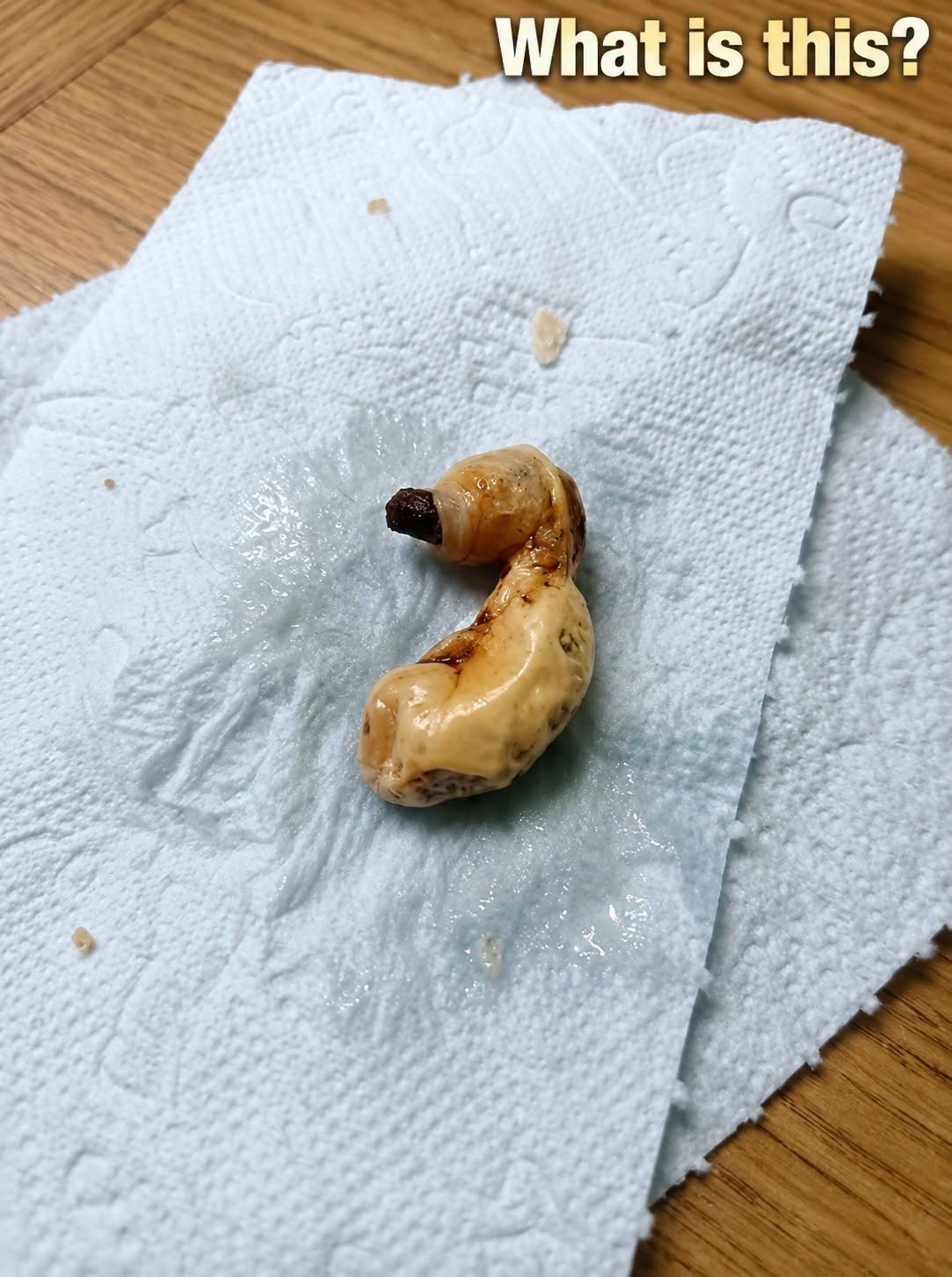
I once spotted a dark, curved object beneath a bed while cleaning and stopped immediately. In the dim light, the shape looked oddly lifelike. Someone nearby joked that it resembled a tiny creature, and suddenly every bump and shadow seemed to support that idea. Instead of reaching underneath, we used a flashlight and looked carefully from a distance. The “creature” turned out to be an old pistachio shell covered with dust. We started laughing almost immediately. That moment stayed with me because the object never changed. Only the information available to our brains changed, and with it, the entire experience shifted from uncertainty to relief.
Why the Brain Can Turn Ordinary Objects Into “Monsters”
The “Monster” Under the Bed: A Gentle, Science-Backed Reflection on Fear, Laughter, and the Human Brain begins with one of the most important facts about vision: seeing and interpreting are not the same thing.
Your eyes gather information, but your brain decides what that information probably means.
Top-Down Processing Changes Perception
When you look at something, your visual system receives information about brightness, shape, edges, color, depth, and movement.
However, sensory information often remains incomplete.
Poor lighting may hide details. Distance may blur edges. An object may be partly covered. Therefore, the brain fills in missing information using previous knowledge and expectations.
Psychologists often describe this influence as top-down processing.
Suppose you see a long, curved shape in the corner of a dark room.
If someone says, “That looks like a snake,” your attention may immediately search for a head, tail, scales, or movement.
However, if another person says, “That looks like a belt,” your brain begins searching for a buckle, stitching, or folds.
The sensory information remains nearly identical. Yet the expectation changes.
This process helps people function efficiently.
For example, you can recognize a friend from a partially hidden face. Likewise, you can read a familiar word even when several letters are unclear.
However, the same system can create harmless mistakes.
When the evidence is weak, the brain sometimes selects the wrong interpretation.
That is why a dusty shell beneath a bed can briefly resemble something alive.
Pareidolia Makes Random Shapes Look Familiar
Pareidolia describes the tendency to perceive meaningful forms in ambiguous or random visual patterns.
The classic example involves faces.
People see faces in clouds, electrical outlets, tree trunks, buildings, food, and even the front of cars.
You may also see animals in rocks or human figures in shadows.
This happens because the brain strongly prioritizes certain patterns, particularly faces and living things.
Recognizing faces quickly has enormous social importance. Likewise, detecting animals or possible threats quickly can be useful.
Consequently, the brain sometimes becomes so eager to detect meaningful forms that it finds them where none actually exist.
The “Monster” Under the Bed: A Gentle, Science-Backed Reflection on Fear, Laughter, and the Human Brain becomes easier to understand through this lens.
The brain is not malfunctioning when it briefly turns a random object into a creature.
Instead, it is performing its ordinary pattern-recognition job under uncertain conditions.
Once better information appears, perception usually updates quickly.
Why Darkness and Suggestion Make Fear Stronger
An uncertain shape does not always frighten us. However, low visibility combined with a threatening interpretation can make ordinary objects feel much more alarming.
Darkness Removes Useful Visual Information
Low light makes visual identification harder.
Colors fade.
Fine details disappear.
Edges become less distinct.
Textures become difficult to see.
As a result, the brain receives fewer reliable clues.
When sensory information weakens, expectation can influence interpretation more strongly.
That explains why a coat hanging over a chair may look completely harmless during the day but oddly human at night.
Children experience this strongly, which helps explain the familiar fear of “monsters” in bedrooms.
However, adults experience the same basic perceptual effect.
Imagine waking during the night and seeing a dark shape near the bedroom door.
For one second, it may look like a person.
Then you switch on the lamp and recognize a laundry basket.
Nothing supernatural happened.
Your brain simply made a rapid prediction from limited information.
Therefore, improving the quality of information usually provides the easiest solution.
Turn on a light.
Use a flashlight.
Move slightly to change perspective.
Look for movement.
Once visual detail improves, the brain can compare its first interpretation with stronger evidence.
Fear Directs Attention Toward Possible Threats
Human attention responds quickly to potential danger.
When something unexpected appears, you may stop what you are doing and focus intensely on it.
This response can help you identify real hazards.
However, it can also make ambiguous details seem more significant.
Once you suspect a threat, you may begin searching for evidence that supports it.
A small bump looks like a head.
A crack looks like an eye.
A shadow resembles a leg.
Consequently, the original interpretation can strengthen even though no new objective evidence has appeared.
This does not mean people should ignore instinct.
If you genuinely suspect an animal, electrical hazard, sharp object, or another dangerous situation, keep a safe distance.
However, many everyday visual mysteries benefit from simple verification.
The “Monster” Under the Bed: A Gentle, Science-Backed Reflection on Fear, Laughter, and the Human Brain encourages cautious curiosity rather than either panic or careless dismissal.
Why Relief So Often Turns Into Laughter
The funniest part of a harmless scare often arrives when the “danger” disappears.
One moment, everyone feels uncertain.
The next, the frightening object reveals itself as something completely ordinary.
Humor Often Depends on Unexpected Reinterpretation
Many jokes work by establishing one expectation and then replacing it with another.
You think the story is heading in one direction.
Then the ending suddenly changes the meaning.
A harmless visual scare can follow the same pattern.
At first, the brain interprets an object as threatening.
Then new information arrives.
The “snake” is a belt.
The “person” is a coat.
The “creature” is a pistachio shell.
Suddenly, the original interpretation looks exaggerated.
That mismatch between expectation and reality can produce humor.
Psychologists have often connected humor with incongruity, or the collision between what we expect and what actually occurs.
The more dramatic the mistaken interpretation, the funnier the harmless explanation may seem afterward.
Therefore, The “Monster” Under the Bed: A Gentle, Science-Backed Reflection on Fear, Laughter, and the Human Brain also becomes a story about how quickly meaning can change.
Laughter Can Signal That the Situation Is Safe
Laughter also has a social role.
After a harmless scare, laughing together can communicate that everyone now understands the threat has disappeared.
The group moves from uncertainty to shared relief.
This is one reason families often remember silly scares for years.
Someone tells the story of “the giant spider” that turned out to be a hair clip.
Another person remembers “the burglar” that was actually a jacket hanging by the window.
Those stories become funny because everyone already knows the safe ending.
The brain remembers the emotional contrast.
First came uncertainty.
Then came recognition.
Finally came relief.
The emotional swing makes the memory more vivid than the ordinary object itself.
That dusty pistachio shell might otherwise have been completely forgettable.
Instead, it becomes the star of a family story.
A Calm Curiosity Approach to Strange Objects
The “Monster” Under the Bed: A Gentle, Science-Backed Reflection on Fear, Laughter, and the Human Brain offers a practical method for dealing with ambiguous sights.
You do not need to suppress your first reaction. Instead, treat it as a hypothesis rather than a fact.
Gather Better Evidence Before Deciding
Start by improving the lighting.
A flashlight often changes the entire situation immediately.
Next, look from a second angle.
Perspective can dramatically change the apparent shape of an object.
Then ask whether it moves on its own.
Observe texture, size, color, edges, and surrounding objects.
If the mystery object sits beneath furniture, avoid reaching blindly into the darkness.
Instead, use a light first.
For clearly harmless objects that you simply do not want to touch, a grabber tool or long tongs can provide extra distance.
However, if you suspect a wild animal, electrical hazard, sharp object, unknown chemical, or another genuine danger, do not approach simply to satisfy curiosity.
Safety comes first.
The goal is not reckless investigation.
It is better information.
Once the brain receives clearer evidence, it can update its interpretation.
Consider More Than One Explanation
Another useful habit involves creating alternative explanations deliberately.
Suppose you see something dark beneath a bed.
Your first thought might be “bug.”
Before accepting that explanation, consider others.
Could it be a shell?
A toy piece?
A leaf?
A cable?
A piece of fabric?
A dried food scrap?
Generating several possibilities prevents one frightening idea from dominating too quickly.
This simple mental habit also works outside the bedroom.
A blurry photograph can look alarming until you consider perspective.
A strange sound can seem mysterious until you identify the appliance making it.
An online headline can sound shocking until you read the full context.
The principle remains the same.
First impressions provide useful clues, but they are not always final answers.
Frequently Asked Questions
What is top-down processing?
Top-down processing describes how existing knowledge, memories, expectations, and context influence the interpretation of incoming sensory information. For example, telling someone that a blurry shape looks like an animal can make animal-like details seem easier to notice.
What is pareidolia?
Pareidolia is the tendency to perceive familiar patterns in random or ambiguous sensory information. Common examples include seeing faces in clouds, animals in rocks, or human expressions in everyday objects.
Why do normal objects look scarier at night?
Darkness reduces visual detail. Therefore, the brain receives less reliable information and depends more heavily on prediction and expectation. If you already feel nervous, ambiguous shapes may seem more threatening than they would in bright light.
Why do people laugh after a harmless scare?
Once a suspected threat turns out to be something ordinary, the contrast between the frightening expectation and harmless reality can feel funny. Laughter may also communicate relief and reinforce the shared understanding that the situation is safe.
Is seeing faces or animals in random objects normal?
Yes. Ordinary pareidolia is extremely common. However, vivid perceptions that occur without ambiguous external stimuli, repeatedly disrupt daily life, or cause significant distress differ from everyday pattern recognition and may deserve professional evaluation.
Conclusion
The “Monster” Under the Bed: A Gentle, Science-Backed Reflection on Fear, Laughter, and the Human Brain reveals how much interpretation contributes to everyday perception.
A shadow can briefly become a person.
A curved object can resemble a snake.
A dusty shell can look strangely alive.
These moments happen because the brain continuously combines sensory information with expectations, memory, and context.
When the available information remains incomplete, the brain makes its best prediction.
Sometimes it guesses incorrectly.
Fortunately, better evidence usually corrects the mistake quickly.
Turn on the light.
Look from another angle.
Consider several explanations.
Keep a safe distance when genuine hazards remain possible.
Then let the evidence replace assumption.
Sometimes the monster under the bed is frightening only until the flashlight reveals what has been there all along.
More Blog
- Drinking Water on an Empty Stomach — What Science Actually Supports (No Hype, Just Facts)
- Waking Up Between 3 and 5 AM? It Might Be Your Soul Trying to Talk to You
- What a “Bleach” Patch on Your Underwear Really Means — And Why It’s Actually a Good Sign
- This Drink May Weaken Your Bones From The Inside — But Everyone Drinks It Anyway