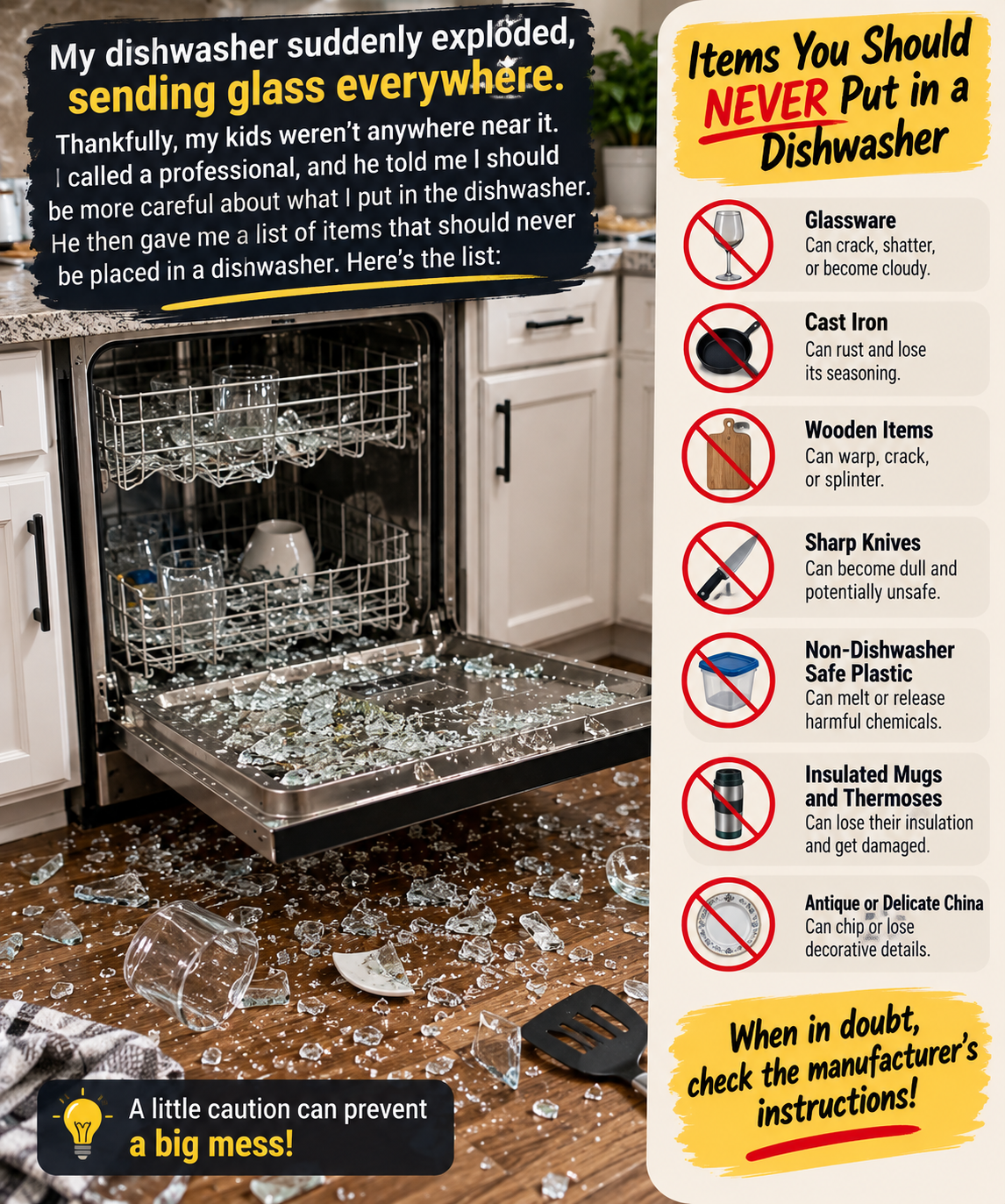
The 8 Things You Absolutely Should Not Put in a Dishwasher include some of the most expensive and frequently used items in a kitchen. Dishwashers make cleanup faster, but their combination of hot water, strong detergent, long wash cycles, and forceful spray can damage materials that respond poorly to heat or moisture.
A dishwasher can dull a good knife, strip seasoning from cast iron, warp wooden utensils, discolor copper, and gradually damage certain nonstick coatings. Other items may survive a few cycles but deteriorate much faster than they would with gentle hand washing.
I learned this lesson after putting a favorite wooden-handled knife through the dishwasher several times. At first, nothing seemed wrong. Then the handle began to look dry, the blade needed sharpening more often, and a small gap appeared where the handle met the metal. Since then, I have treated dishwasher labels much more seriously. Hand washing takes a few extra minutes, but replacing a damaged pan, knife, mug, or heirloom plate costs far more time and money.
The simplest rule is to check the manufacturer’s care instructions whenever you are unsure. Modern materials vary considerably, so an item that looks delicate may actually be dishwasher-safe while another seemingly sturdy object may require hand washing. Still, several categories consistently deserve extra caution.
Knives, Wood, and Cast Iron Need Gentle Cleaning
Sharp Knives and Wooden Kitchen Tools
Sharp kitchen knives belong near the top of the 8 Things You Absolutely Should Not Put in a Dishwasher. High heat, detergent, and contact with racks or other utensils can gradually dull a fine cutting edge. Knives may also shift during a wash cycle and damage nearby items.
Handles create another concern. Wooden handles can absorb water, swell, dry unevenly, and eventually crack. Even some composite or decorative handles may loosen after repeated exposure to high heat and harsh detergent.
Hand washing gives you better control. Use warm water, mild dish soap, and a soft sponge, then dry the knife immediately. Avoid leaving sharp knives submerged in a sink where someone could accidentally reach into the water and cut themselves.
Wooden spoons, cutting boards, rolling pins, and salad utensils also benefit from hand washing. Wood naturally expands when it absorbs moisture and contracts as it dries. Repeated dishwasher cycles can accelerate this movement and cause warping, splitting, rough surfaces, or loose glued joints.
Wash wooden items quickly rather than soaking them. Dry them upright or on a rack with good airflow. Some unfinished wooden tools also benefit from occasional treatment with a food-safe mineral oil to help prevent excessive drying.
Cast Iron and Carbon Steel Cookware
Cast iron depends on a thin layer of polymerized oil called seasoning. That seasoning helps protect the pan from rust and creates the smooth cooking surface people value in well-maintained cast iron.
Dishwasher detergent can strip away that protective layer. Meanwhile, the extended exposure to water can leave bare iron vulnerable to rust. Even one dishwasher cycle may leave a previously seasoned skillet looking dull or orange.
Instead, wash cast iron by hand with warm water and a brush or sponge. A small amount of mild dish soap is generally fine on modern, well-seasoned cast iron, despite the old rule that soap must never touch it. The more important step is drying the pan thoroughly afterward.
Place the cleaned pan over low heat briefly if needed to remove remaining moisture. Then wipe on a very thin layer of cooking oil before storing it. This routine protects the surface and helps maintain the seasoning.
Carbon steel pans require similar care. Although lighter than cast iron, they also rely on seasoning and can rust when exposed to prolonged moisture. Keeping both materials out of the dishwasher preserves their cooking performance and extends their lifespan.
Delicate Finishes Can Fade, Cloud, or Peel
Fine China, Crystal, and Decorated Dishes
Fine china and crystal can be beautiful enough to last for generations, but the dishwasher may shorten that lifespan. Strong detergents, high heat, and vibration can contribute to faded decoration, surface etching, cracks, or chips.
Gold, silver, and hand-painted details deserve particular caution. Decorative finishes may slowly wear away even when the ceramic underneath remains intact. Older pieces may also have glazes or adhesives that were never designed for modern dishwasher cycles.
Crystal can become cloudy over time. In some cases, mineral buildup causes the haze and can be removed. However, permanent etching can also occur when detergent and heat alter the glass surface itself.
For valuable, sentimental, or antique dishes, hand washing remains the safer option. Line the bottom of the sink with a towel if you are worried about breakage, and wash one or two pieces at a time.
Use mild dish soap and lukewarm water rather than extreme temperatures. Then dry delicate pieces carefully with a soft, lint-free towel rather than stacking them while wet.
Copper, Aluminum, and Decorative Metals
Copper cookware develops its distinctive appearance partly because the metal reacts with air and other substances around it. Dishwasher detergents can accelerate discoloration and leave the surface dull or spotted.
Some people enjoy the darker patina that develops naturally on copper, while others prefer a bright polished finish. Either way, harsh dishwasher conditions can produce uneven changes that are harder to control.
Hand washing allows you to clean copper gently and polish it only when necessary. Use products specifically recommended for copper rather than abrasive scrubbers that can scratch the surface.
Uncoated aluminum can also react poorly in a dishwasher. Strong alkaline detergents may cause darkening, spotting, or a chalky appearance. Lightweight aluminum pieces can sometimes move around during the cycle as well.
Other decorative metals deserve similar caution. Pewter, brass, bronze, and plated pieces may tarnish or lose their finish. Unless the manufacturer specifically labels the item dishwasher-safe, hand washing is usually the better choice.
Coatings, Seals, and Adhesives Can Fail in the Dishwasher
Nonstick Cookware and Insulated Drinkware
Nonstick cookware has improved considerably, and some manufacturers now label certain pans dishwasher-safe. Still, repeated exposure to strong detergent and high heat may shorten the useful life of some coatings.
This makes nonstick cookware one of the categories where the manufacturer’s instructions matter most. If the pan specifically says it is dishwasher-safe, occasional machine washing may be acceptable. However, gentle hand washing often preserves the coating longer.
Use a soft sponge and avoid abrasive cleaners. Metal scrubbers and sharp utensils can scratch the surface, while stacking heavy pans directly on top of nonstick cookware can also damage it.
Vacuum-insulated mugs and bottles present a different concern. Their performance depends on the integrity of the sealed space between inner and outer walls. Some modern insulated drinkware is dishwasher-safe, while other products require hand washing.
Heat and water can also affect painted finishes, adhesives, rubber seals, and lid mechanisms. Therefore, always check the care instructions for both the bottle and its lid rather than assuming they follow the same cleaning rules.
If hand washing is required, clean the inside with a bottle brush and mild detergent. Remove silicone gaskets when possible so trapped moisture and residue do not collect beneath them.
Containers With Paper Labels or Adhesive Stickers
Jars and containers with adhesive labels may seem harmless in a dishwasher, but they can create a mess. Hot water can loosen paper and glue, allowing pieces to circulate through the appliance.
Loose label fragments may collect in the filter, spray arms, or drain area. Sticky adhesive residue can also transfer onto other dishes or remain on the container in a gummy layer.
Remove labels before putting reusable jars into the dishwasher. Soaking the container in warm soapy water often loosens the paper. For stubborn adhesive, a small amount of cooking oil or an appropriate adhesive remover can help.
Rinse away any oily residue before washing the container. This gives the dishwasher a clean surface to work with and reduces the chance of label debris entering the machine.
The same caution applies to price stickers, shipping labels, craft decals, and temporary adhesive decorations. If you want an item to remain dishwasher-safe over time, avoid decorative stickers unless the manufacturer specifically designed them for repeated washing.
Choosing What Belongs in the Dishwasher
Follow Manufacturer Labels Before General Rules
One of the most important lessons behind the 8 Things You Absolutely Should Not Put in a Dishwasher is that broad rules have exceptions. Manufacturing methods change, and products that once required hand washing may now use materials designed for dishwasher cleaning.
For example, some nonstick pans are dishwasher-safe. Some insulated bottles can go on the top rack. Certain high-quality kitchen knives may technically tolerate machine washing, although hand washing may still preserve the edge better.
That is why the manufacturer’s care label should take priority over general advice. Look for symbols on the product, packaging, or care booklet. If necessary, check the manufacturer’s website using the exact model.
“Dishwasher-safe” also does not always mean “indestructible.” Repeated dishwasher exposure may still accelerate cosmetic wear. If an item is expensive, sentimental, or difficult to replace, hand washing can remain the more conservative choice.
Likewise, “top rack only” should be taken seriously. The upper rack generally exposes items to less intense heat than the lower area near the dishwasher’s heating components.
How to Protect Both Your Dishes and Dishwasher
Proper loading protects more than the individual item. It also keeps your dishwasher working efficiently. Avoid blocking spray arms with oversized cutting boards, baking sheets, or pan handles.
Secure lightweight items so they do not flip over and fill with dirty water. Small pieces can also fall through the rack and interfere with moving components.
Keep sharp objects positioned safely. Even ordinary dishwasher-safe utensils should not create a cutting hazard when unloading. Place blades where hands will not accidentally grab them.
Clean the dishwasher filter regularly according to the manufacturer’s instructions. Food debris, paper labels, glass fragments, and other material can reduce drainage and cleaning performance if they accumulate.
Finally, remember that the dishwasher works best when you give it appropriate items. Trying to machine-wash everything in the kitchen may save a few minutes today but create damaged cookware, faded dishes, dull blades, or appliance problems later.
Frequently Asked Questions
Can sharp kitchen knives go in the dishwasher?
Some manufacturers may label their knives dishwasher-safe, but hand washing generally protects the edge and handle better. Dishwasher movement can also cause knives to strike racks or other utensils, which may dull the blade.
Is it ever safe to wash wood in a dishwasher?
Most wooden spoons, cutting boards, and utensils should be hand washed. Long exposure to heat and water can cause wood to swell, warp, crack, or lose its finish. Always follow the manufacturer’s instructions for specialty wooden products.
Can I put a nonstick pan in the dishwasher?
Check the label. Some modern nonstick pans are dishwasher-safe, while others are not. Even when machine washing is allowed, gentle hand washing may help the coating last longer.
Why should cast iron never go in the dishwasher?
Dishwasher detergent and prolonged moisture can remove cast iron’s seasoning and promote rust. Hand wash the pan, dry it thoroughly, and apply a very thin layer of oil when needed.
Are insulated mugs dishwasher-safe?
Some are and some are not. Modern designs vary widely, so check the manufacturer’s care instructions. Heat and water can damage certain vacuum seals, finishes, gaskets, or lids even when the stainless-steel interior itself seems durable.
Conclusion
The 8 Things You Absolutely Should Not Put in a Dishwasher include sharp knives, wooden kitchen tools, cast iron, delicate china and crystal, certain metals, some nonstick cookware, specific insulated drinkware, and containers covered in adhesive labels.
The reasons vary. Some materials can warp or crack, while others may lose seasoning, become cloudy, tarnish, dull, or suffer damage to coatings and seals. Labels can even create problems inside the dishwasher itself when paper and adhesive break loose.
However, modern products continue to change, so the care label remains your best guide. If a manufacturer specifically marks an item dishwasher-safe, follow those instructions. If the item is sentimental, expensive, unusually delicate, or marked “hand wash only,” taking a few extra minutes at the sink is usually worthwhile.
A dishwasher saves plenty of time when you use it for the right things. Protecting the items that do not belong inside helps your cookware, knives, dishes, and drinkware last longer while also keeping the appliance itself in better condition.
More Blog
- Drinking Water on an Empty Stomach — What Science Actually Supports (No Hype, Just Facts)
- Waking Up Between 3 and 5 AM? It Might Be Your Soul Trying to Talk to You
- What a “Bleach” Patch on Your Underwear Really Means — And Why It’s Actually a Good Sign
- This Drink May Weaken Your Bones From The Inside — But Everyone Drinks It Anyway