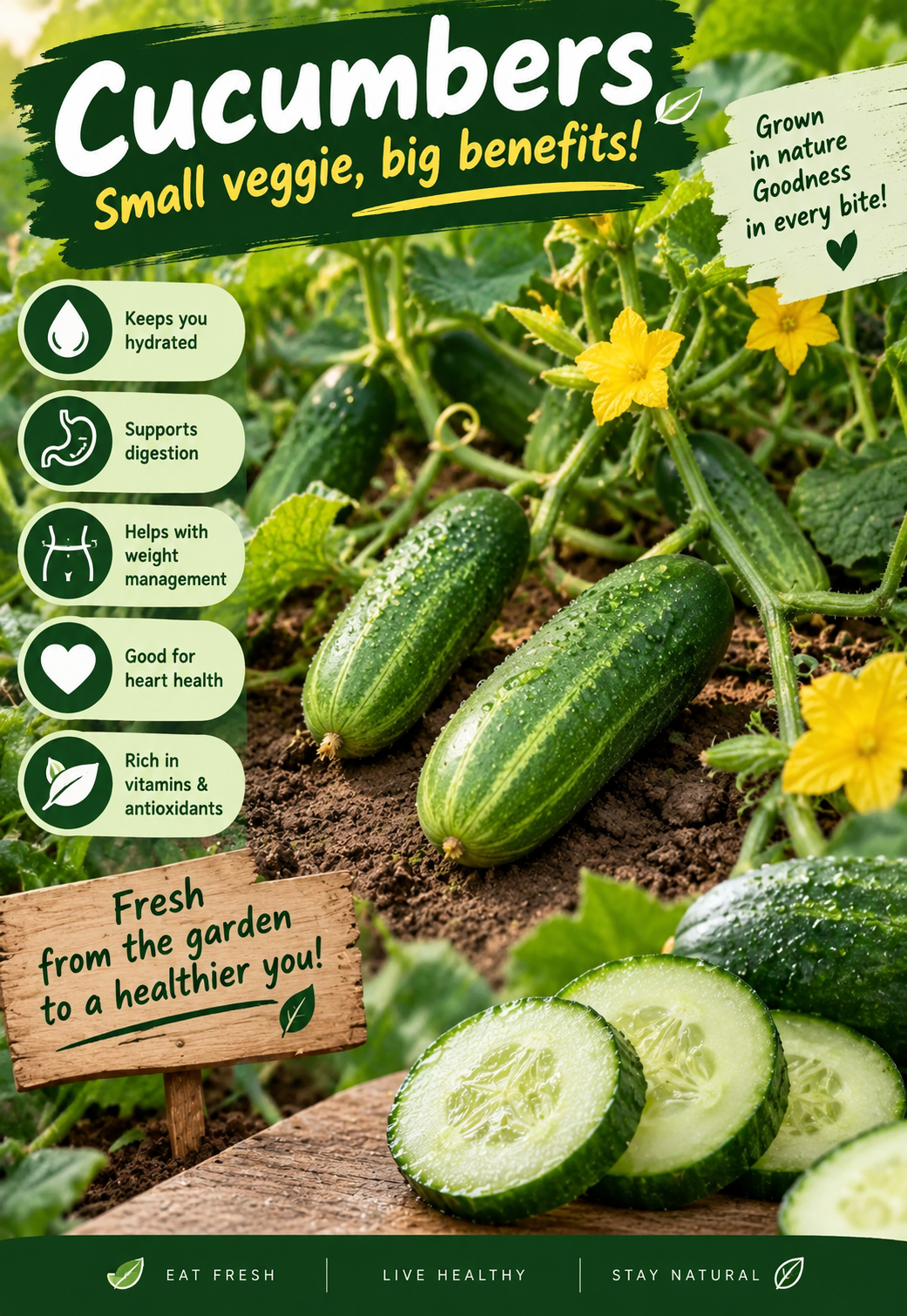
Cucumber in your daily salad can do more than add crunch and freshness. Cucumbers contain a large amount of water, along with fiber, vitamin K, potassium, and small amounts of several other nutrients. Because they are light, refreshing, and easy to combine with other foods, they can make a useful addition to a balanced diet.
However, cucumbers are not a miracle food. They will not detox your body, melt fat, or transform your health by themselves. Their real value comes from how easily they fit into meals that include other vegetables, whole grains, healthy fats, and protein-rich foods.
I started paying more attention to cucumbers after noticing how often they made simple meals feel more satisfying. A plain sandwich felt fresher with a few crisp slices. A salad seemed larger and more filling without becoming heavy. I also liked that cucumber could add texture without overwhelming the other ingredients. Over time, that made me realize something useful: healthy eating often becomes easier when simple foods make meals more enjoyable. Cucumber fits that role well. It may not look especially powerful, but its water, fiber, and nutrients can contribute to everyday nutrition in practical ways.
Cucumber in Your Daily Salad Can Support Hydration
Cucumbers Contain a Large Amount of Water
Cucumbers contain mostly water, which explains their crisp texture and refreshing taste.
That water contributes to your overall fluid intake.
Drinking fluids remains the main way to stay hydrated, but water-rich foods can also help. Fruits and vegetables such as cucumber, watermelon, lettuce, oranges, and strawberries all contribute fluid through food.
This can be especially useful for people who do not naturally drink much water during the day.
However, eating cucumber does not replace drinking enough fluids.
Your hydration needs depend on several factors, including activity level, temperature, illness, pregnancy, medications, and body size. Hot weather and exercise can increase fluid needs significantly.
Still, adding cucumber to meals gives you another source of water without requiring much effort.
For example, a salad with cucumber, tomato, leafy greens, and peppers contains considerably more water than a meal built only around dry foods.
This can make the meal feel lighter and more refreshing.
Hydration also supports several normal body functions. Your body needs water for circulation, temperature regulation, digestion, and waste removal.
Therefore, foods with high water content can contribute to an overall hydration strategy.
Just remember that cucumber works best as one small part of that picture.
High-Water Foods May Make Meals Feel More Filling
Water-rich foods often provide a lot of volume for relatively few calories.
Cucumber fits that description well.
A large portion can take up significant space on the plate without adding many calories. This can help meals feel more substantial.
However, cucumber alone will not keep most people full for very long because it contains relatively little protein and fat.
That is why pairing matters.
Combine cucumber with protein-rich foods such as eggs, beans, chicken, fish, tofu, yogurt, or cheese. Add healthy fats from nuts, seeds, olive oil, or avocado. Include whole grains or other fiber-rich carbohydrates when appropriate.
Together, these foods create a more satisfying meal.
For example, a cucumber salad with chickpeas, tomatoes, olive oil, and whole-grain pita offers much more staying power than cucumber by itself.
This approach can also support weight-management goals.
Low-calorie, high-volume foods may help some people feel satisfied while keeping overall energy intake reasonable. However, no single food causes weight loss.
Long-term changes depend on your entire eating pattern, physical activity, sleep, medications, stress, and individual biology.
Therefore, cucumber can help build a balanced plate, but it should not carry the whole meal.
Cucumber May Support Digestion and Regularity
The Peel Adds Helpful Fiber
Cucumber contains dietary fiber, especially when you eat the peel.
Fiber supports normal digestion by adding bulk to stool and helping food move through the digestive system.
However, cucumber does not provide a huge amount of fiber compared with foods such as beans, oats, lentils, berries, or whole grains.
That means it should contribute to your total intake rather than serve as your main source.
The peel matters because much of the fiber sits near the outer portion.
Therefore, eating cucumber with the skin can increase fiber intake slightly.
Wash the cucumber thoroughly before eating it, especially if you plan to keep the peel.
Some people prefer peeling cucumbers because of texture, bitterness, or digestive sensitivity. That is fine too. You still receive water and nutrients from the flesh.
For better digestive support, combine cucumber with other fiber-rich foods.
For example, a salad with cucumber, beans, leafy greens, seeds, and whole grains offers a broader mix of fiber sources.
This variety matters because different plant foods contain different types of fiber.
Those fibers can support stool regularity and feed beneficial gut bacteria in different ways.
Therefore, cucumber can help, but overall plant variety matters much more than one ingredient.
Water and Fiber Work Together
Fiber and water complement each other.
Fiber adds bulk, while water helps keep digestive contents soft enough to move comfortably through the intestines.
Because cucumber contains both, it can contribute to meals that support regularity.
However, eating large amounts will not automatically solve constipation.
Persistent constipation can have many causes, including low fiber intake, low fluid intake, medications, inactivity, stress, and medical conditions.
Therefore, do not rely on cucumber alone if digestive problems continue.
A better approach includes enough fluids, regular physical activity, and a variety of fiber-rich foods.
Cucumber can fit nicely within that routine.
Some people may also notice bloating after eating raw vegetables, including cucumber. The skin and seeds can sometimes feel harder to digest, depending on the person.
If that happens, smaller portions may feel better.
You can also try peeling the cucumber or removing some seeds.
Individual tolerance matters.
A food can be nutritious and still feel uncomfortable for someone in a certain form or portion.
Therefore, pay attention to how your body responds rather than assuming that more cucumber always means better digestion.
Cucumbers Provide Useful Nutrients Without Many Calories
Vitamin K Supports Normal Blood Clotting and Bone Health
Cucumbers provide vitamin K, especially when eaten with the peel.
Vitamin K helps the body make proteins involved in normal blood clotting. It also plays a role in bone health.
Although cucumber is not the richest source of vitamin K, it contributes alongside other foods.
Leafy greens such as kale, spinach, and collards generally contain much more.
Still, small contributions add up throughout the day.
Cucumbers also provide modest amounts of potassium, magnesium, and vitamin C.
These amounts do not make cucumber a nutritional powerhouse by itself, but they add value to an otherwise simple food.
This becomes especially helpful when cucumber replaces more processed side dishes.
For example, adding cucumber slices to a sandwich instead of eating a salty snack can change the nutritional quality of the meal.
However, context matters.
A salad full of cucumber and vegetables can become much more calorie-dense if you add large amounts of creamy dressing, cheese, fried toppings, or sugary sauces.
That does not make those ingredients forbidden.
It simply shows why the full plate matters more than any one vegetable.
Cucumber contributes freshness and nutrients, but the rest of the meal determines the overall balance.
Potassium Fits Into a Heart-Friendly Eating Pattern
Cucumber provides some potassium.
Potassium supports normal muscle and nerve function and helps regulate fluid balance in the body.
Diets that include plenty of potassium-rich plant foods can also support healthy blood pressure.
However, cucumber alone does not provide enough potassium to make a dramatic difference.
Foods such as potatoes, beans, bananas, leafy greens, yogurt, and avocado generally contain more.
Still, cucumber contributes to a larger pattern.
A heart-friendly diet usually includes plenty of vegetables, fruit, whole grains, legumes, nuts, seeds, and other minimally processed foods.
Cucumber can easily fit into that kind of eating pattern.
It also contains very little sodium naturally.
That can be useful because many processed foods contain large amounts of sodium.
However, cucumber dishes can become salty depending on preparation.
Pickles, salted cucumber salads, and heavily seasoned dressings may contain much more sodium than fresh cucumber.
Therefore, if you monitor sodium intake, pay attention to what you add.
Fresh cucumber itself remains a light, versatile option.
Use it in salads, sandwiches, grain bowls, yogurt-based dips, or simple side dishes.
Its mild flavor makes it easy to combine with many other foods.
Cucumber Can Support Skin-Friendly Habits, but Balance Matters
Hydration and Nutrients Contribute to Normal Skin Function
Cucumber often appears in discussions about skin because of its water content.
Eating water-rich foods can contribute to overall hydration, and adequate hydration supports normal skin function.
Cucumber also contains small amounts of vitamin C and other plant compounds.
Vitamin C contributes to collagen production, which supports the structure of skin and connective tissue.
However, eating cucumber will not erase wrinkles or replace skincare.
Skin appearance depends on many factors, including genetics, sun exposure, sleep, smoking, stress, age, hydration, and overall nutrition.
Therefore, cucumber should be viewed as one useful food rather than a beauty treatment.
The same applies to putting cucumber slices on the skin.
Cool cucumber may feel soothing, but topical use does not provide the same effects as a medical treatment.
For long-term skin health, sunscreen, a balanced diet, hydration, and appropriate skincare matter much more.
Still, cucumber can support the nutrition side of that picture.
Its high water content and ease of use make it a practical addition to meals.
When healthy foods feel enjoyable, people often find it easier to eat them consistently.
That may be one of cucumber’s biggest advantages.
Too Much Cucumber Can Crowd Out Other Foods
Cucumber is healthy, but relying on it too heavily can reduce dietary variety.
Because it contains so much water, it provides fewer calories and less protein than many other foods.
Therefore, a very large cucumber-based meal may leave you hungry if it lacks protein, healthy fat, and more substantial sources of carbohydrates.
Variety solves that problem.
Add tomatoes, carrots, leafy greens, beans, eggs, fish, chicken, tofu, nuts, seeds, or whole grains.
Each food contributes something different.
For example, beans add protein and fiber. Nuts add healthy fat. Leafy greens contribute folate and carotenoids. Whole grains provide additional fiber and minerals.
This creates a more complete meal.
Cucumber can also cause digestive discomfort in some people when eaten in large amounts, especially raw.
If you notice bloating, burping, or stomach discomfort, reduce the portion and see whether symptoms improve.
People taking certain blood-thinning medications may also need to keep vitamin K intake consistent, although cucumber contains less than many leafy greens.
As always, individual health conditions may require personalized guidance.
For most people, though, cucumber fits easily into a varied diet without special restrictions.
Frequently Asked Questions
Is it healthy to eat cucumber every day?
Yes, cucumber can fit into a healthy daily diet for most people. It provides water, fiber, vitamin K, and small amounts of several other nutrients. However, it works best alongside a wide variety of other foods.
Does cucumber really help with hydration?
Cucumber contains a large amount of water, so it contributes to daily fluid intake. However, it should supplement rather than replace drinking enough fluids.
Should I peel cucumber before eating it?
You do not need to peel cucumber unless you prefer the texture or digest it better that way. The peel provides additional fiber and some nutrients, so eating it can be beneficial after thorough washing.
Can cucumber help with weight loss?
Cucumber contains few calories and plenty of water, so it can add volume to meals. However, it does not directly cause weight loss. Overall energy balance and long-term eating habits matter much more.
Can eating too much cucumber cause problems?
Large amounts may cause bloating or digestive discomfort in some people. In addition, eating too much of any one food can reduce dietary variety. Most people do well with moderate portions as part of balanced meals.
Conclusion
Cucumber in your daily salad can be a simple way to add water, crunch, fiber, vitamin K, and a few additional nutrients to your meals.
Its high water content can contribute to hydration, while its low calorie density can help salads feel larger and more refreshing. The peel adds fiber, and the vegetable can fit comfortably into heart-friendly and digestion-supportive eating patterns.
However, cucumber works best as one part of a varied meal.
Pair it with protein, healthy fats, whole grains, and other vegetables to create better balance and longer-lasting fullness.
It also helps to keep expectations realistic. Cucumber will not transform your health by itself, but it can make nutritious meals easier to enjoy consistently.
For most people, that simple role is more than enough reason to keep adding it to the salad bowl.
More Blog
- Drinking Water on an Empty Stomach — What Science Actually Supports (No Hype, Just Facts)
- Waking Up Between 3 and 5 AM? It Might Be Your Soul Trying to Talk to You
- What a “Bleach” Patch on Your Underwear Really Means — And Why It’s Actually a Good Sign
- This Drink May Weaken Your Bones From The Inside — But Everyone Drinks It Anyway