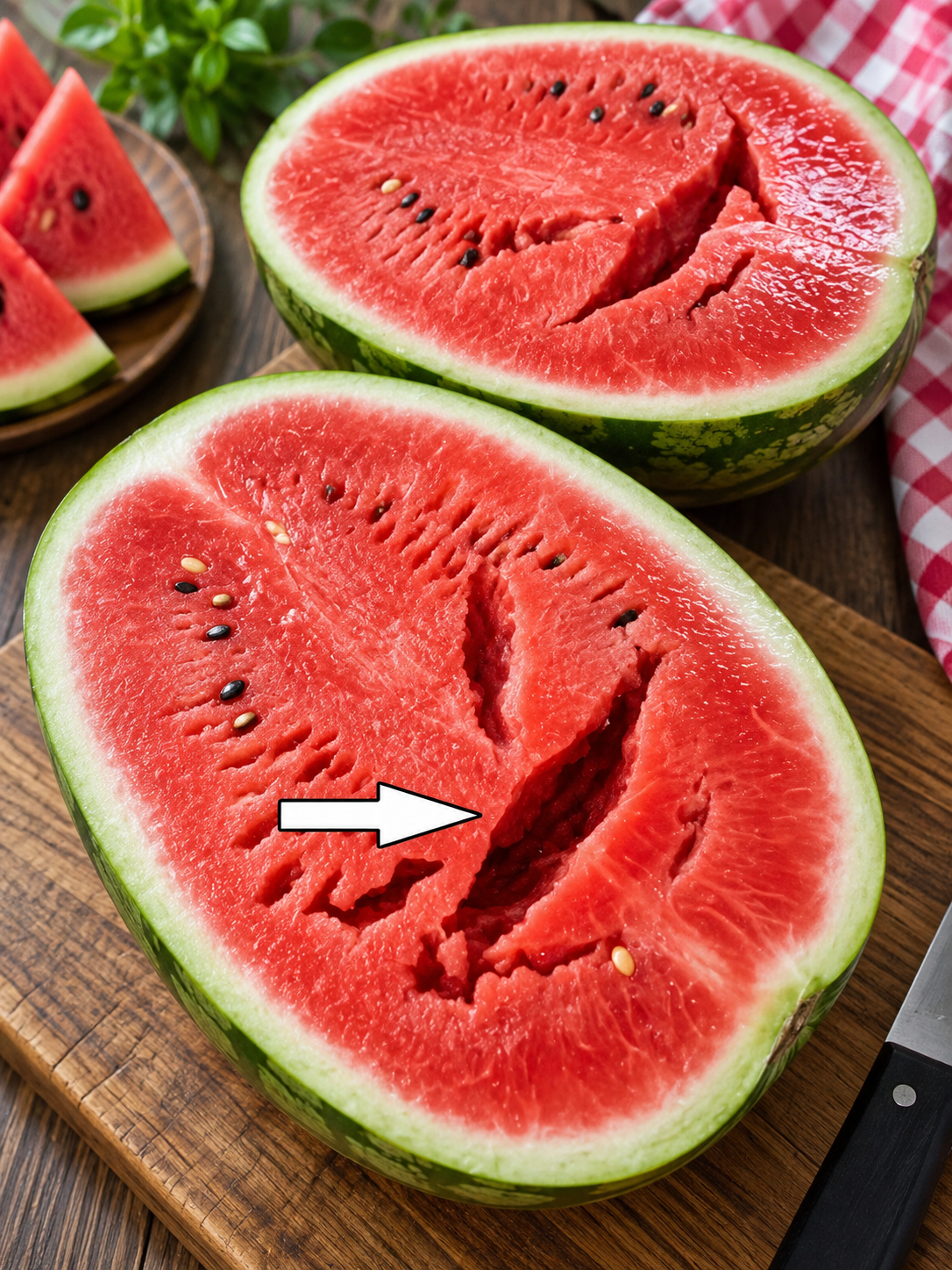
You cut open a watermelon and found cracks running through the bright red flesh. At first glance, those empty spaces can look alarming. You may wonder whether the watermelon spoiled, grew unnaturally, or became unsafe to eat. Fortunately, internal cracking often has a simple agricultural explanation. Growers commonly call this condition “hollow heart,” and several natural factors during fruit development can cause it.
Still, cracks alone cannot tell you everything about a watermelon’s condition. You should also check its smell, color, firmness, rind, and overall freshness. Those clues provide much more useful information when deciding whether to eat or discard the fruit.
I remember cutting into a watermelon that looked nearly perfect from the outside. It felt heavy, had a creamy field spot, and sounded pleasantly hollow when tapped. However, the first slice revealed a wide gap through the center. My immediate reaction was to assume something had gone wrong with the fruit. Yet the flesh still smelled fresh, looked bright red, and felt crisp. That experience made me realize how easily an unusual appearance can create unnecessary concern. Once you understand why these cracks develop, you can judge the whole watermelon instead of relying on one surprising feature.
Why You Cut Open a Watermelon and Found Cracks
Hollow Heart Can Create Internal Gaps
When you cut open a watermelon and found cracks, you may be seeing a condition known as hollow heart. Despite its dramatic appearance, hollow heart does not describe a disease or an actual crack caused by someone damaging the fruit.
Instead, parts of the watermelon flesh separate internally as the fruit develops. The separation can create a small gap, a star-shaped opening, or a much larger hollow area near the center.
The exact appearance varies considerably. Some watermelons develop a narrow split that looks almost like a seam. Others contain several cavities surrounded by otherwise normal-looking flesh. In more pronounced cases, a large section of the center can appear empty.
Hollow heart primarily affects appearance and sometimes texture. Therefore, a watermelon with this condition may look less appealing after you slice it. The flesh near the cavity may also feel slightly different from the dense, crisp flesh elsewhere in the melon.
However, appearance alone does not establish whether the fruit has spoiled.
That distinction matters because people often associate cracks with contamination or chemicals. Yet an internal cavity can form while the watermelon grows and develops normally enough to remain usable.
So, examine the entire fruit rather than making your decision from the crack alone.
Growing Conditions Can Affect the Fruit
Several factors during watermelon development can contribute to internal cracking.
Pollination plays an especially important role in proper fruit formation. When pollination occurs unevenly, different areas of the developing watermelon may grow at slightly different rates. As a result, internal tissue can separate.
Environmental conditions may also influence development. For example, rapid temperature changes can affect plant growth. Likewise, inconsistent water availability may cause periods of slower and faster development.
Fast fruit expansion can contribute as well. The outside and inside of the watermelon do not always develop at exactly the same rate. Consequently, internal spaces can form even though the rind remains intact.
These conditions help explain why you cannot diagnose the cause simply by looking at a sliced watermelon.
More importantly, hollow heart does not automatically equal spoilage.
Spoilage usually produces additional warning signs. Therefore, your next step should involve checking the watermelon carefully for changes in smell, texture, and color.
How to Tell Whether a Cracked Watermelon Is Still Good
Check Smell, Color, and Texture
Your senses provide useful clues when evaluating cut watermelon.
First, smell the freshly exposed flesh. Fresh watermelon should have a mild, clean, slightly sweet aroma. A strong sour, alcoholic, yeasty, or fermented odor suggests deterioration. If the smell immediately seems wrong, discarding the watermelon offers the safer choice.
Next, examine the flesh around the crack.
Normal watermelon can range from pinkish red to deep red, depending on the variety and ripeness. Yellow and orange watermelon varieties naturally have different colors. Therefore, consider the expected color of the variety you purchased.
However, unexpected darkened areas, widespread brown patches, visible mold, or obviously decomposing tissue deserve attention.
Texture matters too.
Fresh watermelon should generally feel juicy and reasonably firm. Very soft, mushy, unusually slippery, or slimy flesh can indicate that the fruit has deteriorated.
Meanwhile, an internal cavity surrounded by firm, normally colored flesh tells a different story. The cavity itself may reflect developmental conditions rather than spoilage.
Therefore, combine several observations instead of judging the watermelon from one characteristic.
Look Beyond the Internal Crack
The rind can reveal additional information.
Before cutting a watermelon, inspect it for deep damage, leaking areas, large soft spots, or obvious decay. Minor surface marks can occur during harvesting and transportation. However, substantial damage may give microorganisms an easier route into the fruit.
After cutting, examine both sides carefully. Sometimes one area looks normal while another shows deterioration.
Also, pay attention to liquid collecting around damaged or unusually soft sections. Watermelon naturally contains plenty of juice, so moisture itself does not indicate spoilage. Nevertheless, leaking from a deteriorated area combined with a bad smell or abnormal texture provides more reason for concern.
Visible mold provides a clearer warning. If you find mold growing on the watermelon flesh, discard the affected fruit rather than trying to judge the internal crack separately.
Additionally, consider how the watermelon was stored after cutting. Once you expose the flesh, proper refrigeration becomes important because microorganisms can multiply more readily on cut produce.
Ultimately, the crack should form only one part of your assessment. Smell, visible deterioration, texture, mold, storage, and rind condition provide much stronger context.
Does a Cracked Watermelon Mean Chemicals Were Used?
Cracks Do Not Prove Growth Regulator Use
Claims about unusually shaped fruits spread quickly online. In particular, some posts suggest that cracks inside watermelon prove growers used excessive plant growth regulators or other chemicals.
The appearance alone cannot support that conclusion.
Agricultural practices vary by location, crop, and producer. Furthermore, growers may use approved agricultural products under applicable regulations. However, a consumer cannot identify a specific agricultural treatment simply by examining an internal cavity.
Natural developmental conditions already provide plausible explanations for hollow heart.
For example, pollination problems can influence how evenly fruit develops. Temperature fluctuations can affect growth. Changes in water availability can also influence the plant. Therefore, several factors can produce unusual internal structures without leaving a simple visual signature of their exact cause.
This principle applies beyond watermelon. Fruits and vegetables frequently develop cosmetic abnormalities because living plants respond to weather, soil conditions, pollination, water, and countless other variables.
Consequently, avoid treating a dramatic-looking crack as proof of a particular chemical exposure.
Instead, focus on characteristics you can actually observe.
Check whether the fruit smells fresh. Examine the flesh for mold or decay. Feel its texture. Consider whether you stored the cut fruit correctly. These practical checks give you more useful information about its present condition.
When Discarding the Watermelon Makes Sense
Sometimes the safest decision is simple.
Discard a watermelon when it shows clear signs of significant spoilage. A strong sour or fermented smell provides an important warning. Likewise, visible mold, extensive rotting, or an unusually slimy texture gives you good reason to avoid eating it.
You should also use extra caution when you do not know how long cut watermelon remained unrefrigerated.
However, you do not need to treat every unusual internal shape as evidence of danger. Watermelons grow under changing natural conditions, so their interiors will not always look identical.
A crack accompanied by normal color, a fresh smell, and firm flesh presents a very different situation from a crack surrounded by brown, slimy, foul-smelling tissue.
When several warning signs appear together, discard the fruit.
Additionally, avoid tasting questionable watermelon simply to determine whether it has spoiled. Visual and odor clues may already give you enough reason to throw it away.
When uncertainty remains substantial, replacing one watermelon is preferable to taking an unnecessary food-safety risk.
How to Choose and Store Better Watermelons
What to Look for Before Buying
Although you cannot guarantee a perfectly solid interior, careful shopping can improve your chances of bringing home a good watermelon.
Start by examining the rind. Choose a watermelon without deep cuts, major cracks, leaking areas, or obvious soft spots. Surface scratches may occur during handling, but substantial damage deserves more caution.
Next, lift the fruit. A good watermelon often feels surprisingly heavy for its size because watermelon contains a large amount of water.
Then look for the field spot. This area marks where the watermelon rested against the ground while growing. A creamy yellow field spot commonly accompanies a mature watermelon. However, no single exterior feature guarantees sweetness or predicts whether hollow heart developed inside.
Some shoppers also tap watermelons and listen for a resonant sound. You can use this method as one clue, but do not depend on tapping alone.
Instead, combine several characteristics.
Look for an intact rind, substantial weight, a mature-looking field spot, and no obvious evidence of deterioration.
Even then, you may occasionally cut open a watermelon and find cracks. Because hollow heart develops internally, the outside can look completely normal.
Fortunately, an imperfect interior does not automatically ruin the fruit.
Handle Cut Watermelon Safely
Proper handling becomes particularly important after you slice the watermelon.
First, wash the outside before cutting. Your knife passes through the rind and into the edible flesh, so cleaning the exterior helps reduce the chance of transferring dirt and microorganisms from the surface.
Use a clean knife and cutting board as well.
After cutting, refrigerate watermelon promptly rather than leaving it sitting at room temperature for extended periods. Place pieces in a clean covered container or wrap larger cut sections securely.
Additionally, keep cut watermelon away from raw meat, poultry, seafood, and other potential sources of cross-contamination inside the refrigerator.
Before eating leftovers, inspect them again. Refrigeration slows microbial growth, but it does not keep cut fruit fresh indefinitely.
If the watermelon develops a sour smell, slimy surface, mold, or obvious decay during storage, throw it away.
These habits matter regardless of whether the watermelon contains hollow heart. In fact, safe handling and storage provide much more practical protection than worrying about a harmless-looking internal cavity.
Frequently Asked Questions
Is watermelon with cracks inside safe to eat?
Internal cracks alone do not necessarily mean a watermelon has spoiled. Hollow heart can develop because of conditions during fruit growth. However, inspect the watermelon for mold, unpleasant odors, sliminess, discoloration, and other signs of deterioration before eating it.
What causes hollow heart in watermelon?
Hollow heart involves separation of internal tissue during fruit development. Pollination and growing conditions can influence its formation. Rapid developmental changes and environmental stresses may also contribute.
Do cracks inside watermelon mean farmers used chemicals?
No. You cannot determine whether growers used a particular agricultural chemical simply by looking at internal cracks. Several developmental and environmental factors can produce hollow spaces. Therefore, the crack alone does not prove chemical use.
What does spoiled watermelon smell like?
Fresh watermelon normally has a mild, clean, sweet smell. Spoiled fruit may develop noticeably sour, fermented, alcoholic, or otherwise unpleasant odors. If the watermelon smells clearly abnormal and also shows deterioration, discard it.
Should I throw away watermelon with hollow heart?
Not necessarily. First, evaluate its overall condition. If the flesh looks normal, smells fresh, and maintains an appropriate texture, the hollow area may simply represent a developmental defect. However, discard watermelon that shows mold, extensive decay, a bad smell, or a slimy texture.
Conclusion
If you cut open a watermelon and found cracks, the unusual appearance does not automatically mean something dangerous happened to the fruit. Internal separation, commonly called hollow heart, can develop because of factors that affect the watermelon while it grows.
Therefore, judge the entire fruit rather than the crack alone. Check its smell, color, texture, rind condition, and storage history. A normal-looking cavity surrounded by fresh, firm flesh differs substantially from moldy, slimy, discolored, or foul-smelling watermelon.
Finally, handle cut watermelon carefully. Wash the rind before slicing, use clean utensils, refrigerate cut pieces promptly, and discard fruit that develops clear signs of spoilage. With these simple checks, you can make a more informed decision instead of assuming that every internal crack signals a problem.
More Blog
- Drinking Water on an Empty Stomach — What Science Actually Supports (No Hype, Just Facts)
- Waking Up Between 3 and 5 AM? It Might Be Your Soul Trying to Talk to You
- What a “Bleach” Patch on Your Underwear Really Means — And Why It’s Actually a Good Sign
- This Drink May Weaken Your Bones From The Inside — But Everyone Drinks It Anyway