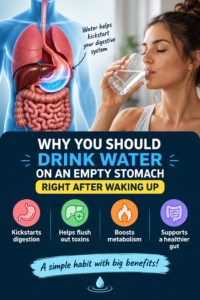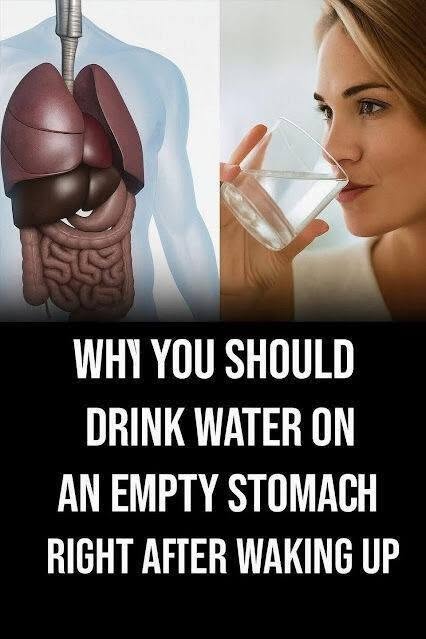
For many people, reaching for a glass of water immediately after waking is almost automatic.
After spending several hours asleep without drinking, it makes sense to replenish fluids. But online, this simple habit is often surrounded by much bigger claims: that water on an empty stomach “detoxes” the body, melts fat, cleans the intestines, or dramatically boosts metabolism.
The reality is simpler—and still worthwhile.
💧 1. It Helps Restore Hydration
While you sleep, your body continues losing water through breathing, perspiration and urine.
Drinking water after waking helps replace some of that fluid and contributes to your overall daily hydration.
You don’t necessarily wake up significantly dehydrated every morning, however. How much fluid you’ve lost depends on factors such as temperature, activity, alcohol consumption, illness and how well hydrated you were before bed.
🚽 2. It May Help Get Your Bowels Moving
For some people, drinking water in the morning seems to encourage a bowel movement.
Adequate hydration helps keep stools softer and supports normal digestive function, making it particularly important for people prone to constipation.
But there’s nothing uniquely cleansing about drinking water before breakfast.
Your digestive system doesn’t need to be “flushed” every morning.
🧠 3. Hydration Supports Normal Brain Function
Even mild dehydration can affect concentration, alertness and mood.
So if you wake up thirsty or haven’t consumed fluids for many hours, a glass of water can simply help you feel refreshed.
Coffee and tea also contribute to daily fluid intake, despite the common misconception that caffeinated drinks automatically dehydrate you.
🔥 4. Does Morning Water Boost Metabolism?
Drinking water can temporarily affect energy expenditure under certain circumstances, but claims that a morning glass dramatically “activates your metabolism” are exaggerated.
More importantly, there’s no convincing reason to believe that drinking the same water at 7 a.m. on an empty stomach produces meaningful fat-loss benefits compared with drinking it later.
Water can nevertheless support weight management indirectly when it replaces sugary, calorie-dense beverages.
🧹 5. Does It “Flush Toxins”?
Not in the way wellness advertisements often suggest.
Your liver and kidneys continuously process and eliminate waste products. Adequate hydration helps the kidneys perform their normal functions, but water doesn’t suddenly trigger a special detoxification process because your stomach happens to be empty.
Your body already has its own sophisticated waste-removal systems.
🌡️ Cold, Warm or Room-Temperature Water?
Whichever you prefer.
Warm water may feel soothing first thing in the morning, while cold water may feel more refreshing. For ordinary hydration, the temperature makes little meaningful difference.
And adding lemon isn’t necessary either.
Lemon can provide flavor and a little vitamin C, but it doesn’t transform water into a detox drink.
🥛 How Much Should You Drink After Waking?
There’s no universal requirement to drink a huge bottle immediately.
For many people, one normal glass—roughly 250–500 mL—is perfectly reasonable, followed by fluids throughout the day according to thirst, meals, activity and climate.
Forcing excessive amounts of water isn’t healthier. Drinking extremely large quantities rapidly can even be dangerous because it can dilute sodium levels in the blood.
🌅 The Bottom Line
Drinking water on an empty stomach isn’t a miracle treatment.
It won’t magically detox your liver, burn belly fat or cure disease.
But it’s still an excellent habit for a much simpler reason:
It helps you start the day hydrated.
And sometimes the healthiest habits don’t need extraordinary promises to be worth doing.
More Blog
- Drinking Water on an Empty Stomach — What Science Actually Supports (No Hype, Just Facts)
- Waking Up Between 3 and 5 AM? It Might Be Your Soul Trying to Talk to You
- What a “Bleach” Patch on Your Underwear Really Means — And Why It’s Actually a Good Sign
- This Drink May Weaken Your Bones From The Inside — But Everyone Drinks It Anyway