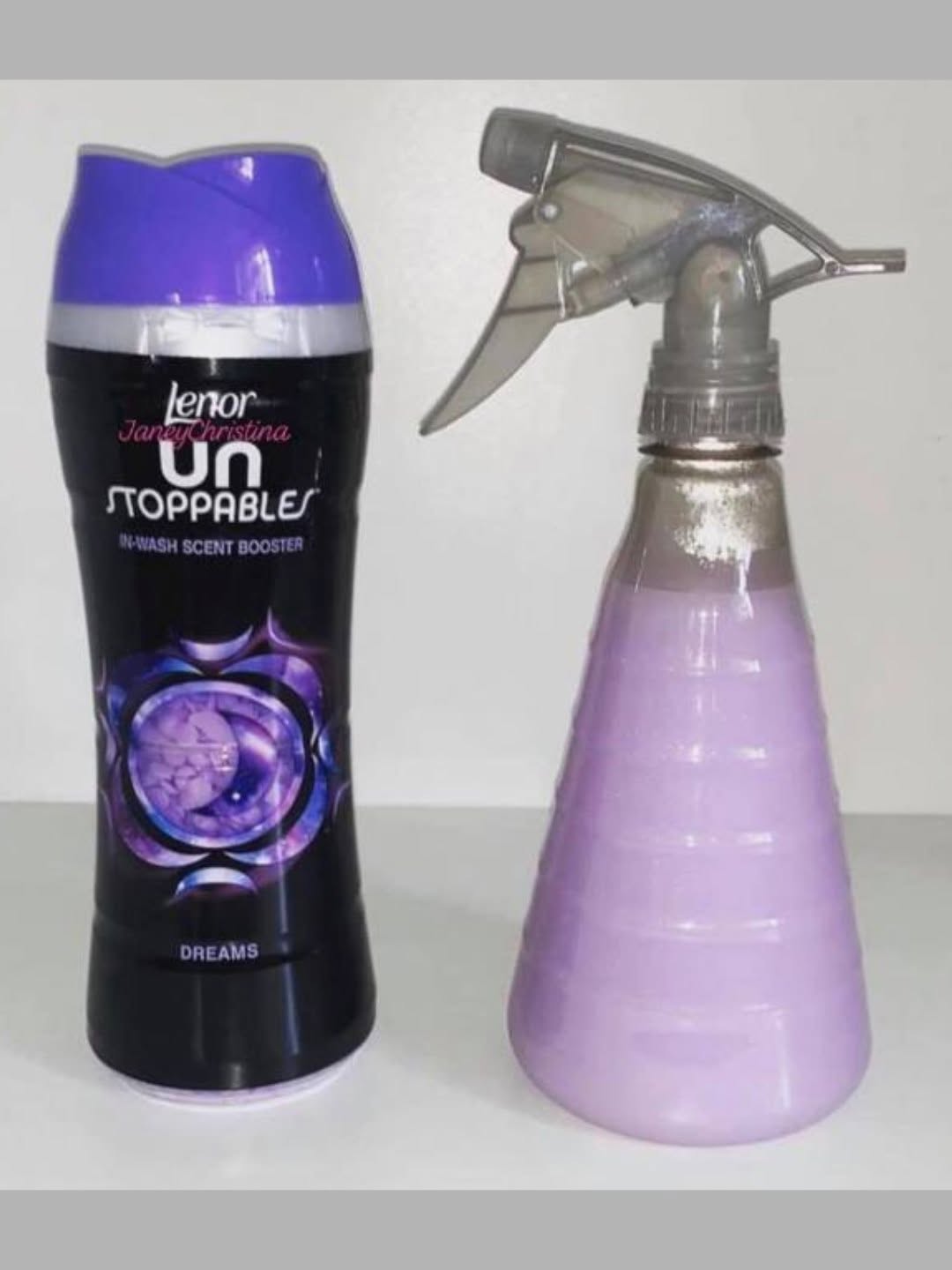
2-Ingredient DIY Fabric Freshening Spray gives curtains, washable upholstery, bedding, and other compatible fabrics a light fragrance without turning an in-wash laundry product into something it was never designed to be.
The viral version of this idea often dissolves laundry scent booster beads in hot water and pours the mixture into a spray bottle. However, manufacturers direct in-wash scent beads to be placed in the washing-machine drum before the clothes go in. Their published directions do not instruct consumers to dissolve the beads and spray the mixture around the home.
Therefore, this version takes a more practical route. It uses distilled water and a water-soluble fabric fragrance concentrate specifically labeled for spray applications. That approach still gives you the quick, two-ingredient convenience people love about homemade fabric sprays, while keeping the fragrance product within its intended type of use.
I first became interested in homemade fabric spray after seeing an incredibly simple two-ingredient trick passed around between friends. The idea sounded perfect: dissolve scented laundry beads in water, shake, and spray everything from curtains to pillows. However, I hesitated before misting a laundry additive all over fabrics that would never pass through a rinse cycle. Instead, I started looking for a fragrance ingredient actually made to go into water-based fabric sprays. The finished mixture took no longer to prepare, yet I felt much better about how I used it. Now I make small batches whenever curtains, guest-room linens, or washable upholstery need a quick refresh.
Why a Simple Fabric Freshening Spray Works
Start With Products Intended for the Job
2-Ingredient DIY Fabric Freshening Spray works best when both ingredients suit the way you plan to use them.
The first ingredient is distilled water. Unlike heavily mineralized tap water, distilled water contains very little dissolved material. Therefore, it provides a cleaner base for a homemade spray and reduces the chance of leaving mineral spotting behind.
The second ingredient should be a water-soluble fragrance concentrate specifically labeled as appropriate for fabric, linen, room, or water-based spray applications.
That detail matters.
Laundry scent booster beads may smell wonderful after a wash cycle, but their directions tell users to place them directly into the washer drum. Manufacturers describe them as in-wash products intended to fragrance fabrics during laundering.
Likewise, scent beads commonly contain fragrance together with a dispersing base designed around laundry use.
A spray creates a different kind of exposure. Instead of going through a wash and rinse cycle, the product remains where you mist it. Additionally, tiny droplets can enter the surrounding air.
For that reason, choosing an ingredient labeled for spray use makes more sense than improvising with a laundry additive.
You can still choose the scent personality you enjoy. Fresh linen, lavender, soft floral, citrus, cotton, vanilla, and other familiar fragrance profiles all work well if the concentrate manufacturer specifically permits the intended application.
Most importantly, follow its dilution directions.
Some concentrates require only a tiny amount. Others arrive pre-diluted.
Therefore, never assume that more fragrance will make a better spray. A lighter concentration usually produces a cleaner, more pleasant result.
Why Small Batches Make More Sense
Homemade water-based sprays do not automatically gain a long shelf life just because the water looks clear.
Consequently, 2-Ingredient DIY Fabric Freshening Spray works particularly well when you prepare a small bottle rather than enough for several months.
For an 8-ounce spray bottle, start with approximately 1 cup of distilled water, allowing room for the amount of water-soluble fragrance concentrate recommended by its label.
For example, if the concentrate calls for a 1% dilution, you would use approximately 2.4 milliliters of fragrance concentrate in 240 milliliters of finished spray. However, always follow the directions that accompany the specific concentrate you choose.
Do not invent a stronger concentration.
Likewise, do not assume that rubbing alcohol automatically turns a homemade mixture into a preserved product. Adding a teaspoon of alcohol to a cup of water does not provide a dependable preservation system.
Instead, make only what you expect to use reasonably soon.
Use a freshly cleaned spray bottle, keep the bottle away from direct sunlight, and discard the mixture if its smell, appearance, or consistency changes.
Additionally, label the bottle clearly.
A simple label such as “Fabric Freshening Spray — Not for Skin” prevents someone from mistaking it for body spray, cleaner, or plain water.
Keeping the batch small also lets you switch fragrances easily.
You might prefer a light floral scent during spring, a clean cotton fragrance for bedrooms, or a warm vanilla-style aroma during colder weather.
Since preparation requires only a minute or two, you lose very little by making fresh batches instead of trying to preserve a large bottle indefinitely.
How to Make 2-Ingredient DIY Fabric Freshening Spray
Mix the Spray Correctly
2-Ingredient DIY Fabric Freshening Spray requires almost no preparation.
First, clean an 8-ounce spray bottle thoroughly.
Rinse it well so no soap, cleaner, or previous product remains inside. Then allow the bottle to dry.
Next, check the directions on your water-soluble fabric fragrance concentrate.
This step determines how much concentrate belongs in the bottle. Because formulas vary, one universal measurement cannot safely apply to every product.
Measure the required amount carefully.
Then add distilled water until the bottle reaches approximately 8 fluid ounces, leaving a small amount of headspace at the top.
Close the bottle securely.
Shake according to the fragrance concentrate manufacturer’s directions. Some water-soluble formulas mix readily, while others may require gentle shaking before every use.
Label the bottle immediately.
Include the contents and, if helpful, the preparation date.
Before misting an entire curtain, sofa cushion, duvet cover, or rug, choose an inconspicuous area.
Spray one light mist, then allow it to dry completely.
Check for discoloration, spotting, texture changes, or staining.
Only continue if the fabric responds well.
Additionally, read the fabric’s care instructions. A fragrance concentrate labeled for fabric use does not automatically make every material suitable for spraying.
Silk, suede, leather, specialty finishes, antique fabrics, and delicate upholstery deserve extra caution.
When in doubt, skip the homemade spray.
The goal is simply to add a little fragrance, not create another cleaning problem.
Use a Light Mist Instead of Saturating Fabric
A fabric freshening spray should never leave bedding, curtains, or upholstery noticeably wet.
Instead, hold the bottle several inches away and apply a light, even mist.
Then allow the material to dry completely.
This technique works particularly well with washable curtains, fabric-covered headboards, decorative throws, and other materials whose care instructions permit light misting.
For bedding, spray lightly and let everything dry before getting into bed.
Likewise, avoid spraying directly onto pillows immediately before placing your face against them.
When refreshing upholstered furniture, test first and use very little product.
Do not soak sofa cushions. Excess moisture can penetrate foam and padding, where it dries much more slowly than the surface.
Rugs also require restraint.
A very light mist on compatible washable material may add fragrance. However, spraying heavily can create unnecessary moisture and residue.
Most importantly, remember that 2-Ingredient DIY Fabric Freshening Spray adds scent. It does not clean dirty fabric.
If a sofa smells because of food, body oils, pet accidents, smoke, mildew, or another underlying source, fragrance simply covers the odor temporarily.
Clean the source first according to the manufacturer’s care directions.
After the material becomes clean and completely dry, you can use a compatible fabric spray for a finishing touch.
That order produces a fresher home than repeatedly adding more perfume over an unresolved odor.
Where to Use Fabric Freshening Spray
Good Places for a Light Refresh
2-Ingredient DIY Fabric Freshening Spray works best on large textile surfaces that naturally hold fragrance.
Curtains provide an obvious example. Their large surface area lets a very light mist distribute fragrance throughout a room without requiring you to spray every object.
However, always confirm that the curtain fabric can tolerate water-based misting.
Washable throw blankets also make good candidates.
Mist lightly, allow the blanket to dry, and then fold it over the sofa or bed.
Bedding can benefit from the same approach. A very small amount on the outer duvet or bedspread can create a fresh aroma when you enter the room.
Again, let everything dry completely before use.
Fabric-covered decorative cushions can also hold scent effectively. However, test the back or underside before spraying the visible surface.
Closets offer another option.
Rather than misting every garment directly, you can lightly spray a compatible washable fabric item kept in the closet and allow it to dry. That creates a subtle scent without coating an entire wardrobe.
Car interiors require more caution. Avoid steering wheels, pedals, screens, leather, electronics, seat controls, and any surface where moisture could create problems.
If you choose to use a fabric-compatible spray on a cloth car seat, test an inconspicuous area first and use minimal product.
The same principle applies everywhere else.
Target appropriate textiles rather than misting the air indiscriminately.
Although the fragrance smells pleasant, spraying excessive amounts into the air increases fragrance exposure without improving the fabric itself.
A few light sprays usually accomplish more than saturating a room.
Surfaces and Situations to Avoid
Not everything in the home should receive 2-Ingredient DIY Fabric Freshening Spray.
Avoid untreated or unfinished wood. Water can affect the surface, while fragrance ingredients may leave marks.
Do not spray polished floors, tile walkways, or other surfaces that could become slippery.
Keep the spray away from electronics.
Likewise, do not mist televisions, speakers, lamps, electrical outlets, computers, or appliance controls.
Avoid leather and suede unless a product specifically says it suits those materials.
You should also avoid delicate fabrics such as silk unless the textile manufacturer allows a compatible spray.
Antique and heirloom textiles deserve especially careful handling. A little fragrance is not worth creating permanent staining or damage.
Never use a fabric spray as body spray.
Do not mist it onto your skin, hair, face, or clothing while you are wearing the clothing.
Additionally, avoid spraying near food preparation areas, dishes, or uncovered food.
Keep the bottle away from children and pets.
Even when a spray uses an ingredient intended for fabrics, fragrance sensitivity varies from person to person. Therefore, use less when someone in the household finds scented products irritating.
Ventilation helps as well.
A light application in a normal ventilated room generally makes more sense than heavily fragrancing a closed space.
If anyone develops irritation after using a fragrance product, stop using it and air out the area.
The simplest rule is useful: fabric spray should remain a light finishing product, not something you apply heavily to every surface in the house.
Getting Better Results Without Overdoing the Fragrance
Make the House Smell Clean Before Adding Scent
2-Ingredient DIY Fabric Freshening Spray works much better in a genuinely clean room.
Fragrance cannot remove the source of stale odors.
Therefore, start with basic housekeeping.
Open windows when weather permits. Wash bedding regularly. Launder removable cushion covers according to their labels. Vacuum upholstered furniture and rugs. Empty trash cans. Clean pet areas. Address food odors and damp towels promptly.
Once you remove the odor source, a little fragrance becomes much more noticeable.
Curtains deserve particular attention because they can collect cooking odors, dust, and general household smells over time.
If the label permits washing, laundering them may refresh the room more effectively than any spray.
Likewise, vacuum sofas and upholstered chairs before adding fragrance.
For carpets, deal with dirt and spills first. If a carpet needs professional cleaning, perfume will not replace it.
This approach also prevents “scent layering,” where several fragrances compete with one another.
A room containing strongly scented detergent, candles, diffusers, plug-ins, sprays, and cleaning products can quickly become overwhelming.
Instead, choose one fragrance direction and use it lightly.
Perhaps your laundry already has a clean linen fragrance. In that case, choose a subtle complementary fabric spray rather than an entirely different floral perfume.
Or you might keep laundry unscented and reserve a single light fragrance for curtains.
The goal should be a home that smells pleasantly clean when you walk inside, not a room where fragrance becomes the first thing you physically notice.
Why the Viral Scent-Bead Hack Is Better Left in the Laundry Room
The original hack sounds appealing because laundry scent beads dissolve during washing.
However, their published directions specifically place them in the washing machine. Users measure the beads and toss them into the drum before starting the load.
The manufacturer also describes them as products intended to add fragrance to fabrics during laundering rather than as household cleaning sprays.
Therefore, dissolving them in a spray bottle creates a use that the normal directions do not describe.
That does not mean every person who has ever tried the trick will experience an immediate problem. It simply means you lose the benefit of following the product’s intended application.
Instead, use in-wash fragrance beads where their directions specify: in the washer.
Then choose a fabric fragrance ingredient specifically labeled for water-based sprays if you want a homemade mist.
That separation makes the routine easier to understand.
Laundry products stay with laundry.
Spray products stay in spray applications.
Additionally, you can avoid questionable internet advice such as adding random amounts of rubbing alcohol or essential oils and assuming the mixture becomes stable.
Essential oils also do not simply dissolve in water on their own. Without appropriate formulation, they can float on the surface and create concentrated droplets.
Therefore, skip unnecessary additions.
A properly labeled water-soluble concentrate and distilled water provide a much cleaner two-ingredient formula.
Frequently Asked Questions
Can I dissolve laundry scent booster beads in water and use them as fabric spray?
The beads may dissolve, but in-wash scent booster manufacturers direct users to add them to the washing-machine drum before laundering. Their published instructions do not describe a spray-bottle application. A fragrance concentrate specifically labeled for fabric spray use provides a better choice.
Why should I use distilled water?
Distilled water contains very little dissolved mineral content, so it provides a simple base for a homemade spray. It can also reduce the mineral residue that some tap water may leave behind. However, distilled water does not automatically preserve a homemade product indefinitely, so prepare small batches.
Can I add rubbing alcohol to make the spray last longer?
A small spoonful of rubbing alcohol should not be treated as a dependable preservation system. If you want a long-storage product, use a professionally formulated product or follow the preservation instructions provided by the maker of your fragrance concentrate.
Can I spray it directly on bedding?
Only spray materials whose care instructions allow water-based fabric misting, and always test an inconspicuous area first. Apply a very light mist and let bedding dry completely before use. Avoid heavy spraying on pillows or anything that sits directly against the face.
Can I use essential oils instead of water-soluble fabric fragrance?
Not as a direct one-for-one replacement. Essential oils do not dissolve evenly in plain water. They require suitable formulation and may stain certain fabrics. For the simplest recipe, use a water-soluble fragrance ingredient specifically labeled for the intended fabric-spray application.
Conclusion
2-Ingredient DIY Fabric Freshening Spray proves that a simple home fragrance routine does not need a complicated collection of ingredients.
The key is choosing the right ingredients for the job.
Distilled water creates the base, while a water-soluble fragrance concentrate specifically labeled for fabric or linen spray provides the scent. Measure that concentrate according to its own directions rather than guessing at a stronger mixture.
Meanwhile, keep in-wash scent booster beads in the washing machine. Current manufacturer instructions tell consumers to put those beads into the washer drum before clothes and use them during the laundry process.
Once you make your spray, test every fabric before broader use. Mist lightly rather than soaking surfaces, and let textiles dry completely.
Most importantly, use fragrance after cleaning rather than using fragrance instead of cleaning.
Fresh bedding, vacuumed upholstery, clean curtains, good ventilation, and a lightly scented finishing spray create a much more pleasant result than coating stale odors with heavy perfume.
With a small bottle, careful application, and a fragrance made for the intended use, 2-Ingredient DIY Fabric Freshening Spray can become an easy finishing touch for a clean, comfortable home.
More Blog
- Drinking Water on an Empty Stomach — What Science Actually Supports (No Hype, Just Facts)
- Waking Up Between 3 and 5 AM? It Might Be Your Soul Trying to Talk to You
- What a “Bleach” Patch on Your Underwear Really Means — And Why It’s Actually a Good Sign
- This Drink May Weaken Your Bones From The Inside — But Everyone Drinks It Anyway