Workplace Violence in Healthcare: What We Know About the Corewell Health Troy Hospital Shooting centers on a targeted shooting that happened at Corewell Health Beaumont Troy Hospital in Troy, Michigan, on March 20, 2025. The incident began shortly after 7 a.m. in a hospital parking garage and initially triggered fears of an active shooter on the medical campus.
According to Troy Police, dispatchers received the first call at 7:08 a.m. Hospital security reported what appeared to be an active-shooter situation in the parking structure. Police later determined that the violence involved two hospital employees and was targeted rather than a random attack on patients, visitors, or staff.
The victim, a 25-year-old Troy man, suffered two gunshot wounds to the arm and was able to receive treatment inside the hospital. The suspected shooter fled after the attack, prompting a major police search and widespread precautions around the hospital and nearby community. He was arrested later that morning without further violence.
Events like this are especially disturbing because hospitals are supposed to represent safety. They remain open around the clock, and the people inside may include critically ill patients, newborns, elderly visitors, emergency workers, and employees moving between long shifts. A shooting in that environment creates consequences far beyond the people directly involved.
I remember reading the first reports and noticing how quickly the story changed. Early alerts described a possible active shooter, which understandably created fear across the hospital and surrounding area. Later information showed that police considered the shooting targeted between people who knew each other. That distinction mattered, but it did not erase what hundreds of patients, employees, families, and nearby residents experienced during those uncertain first hours. The incident showed how quickly a personal conflict can become a community-wide emergency when violence happens at a hospital.
The case also did not end with the arrest. Nearly a year later, Robert Paljusevic pleaded no contest to criminal charges connected with the shooting. In March 2026, a judge sentenced him to more than a decade in prison, bringing a major legal chapter of the case to a close.
What Happened at Corewell Health Beaumont Troy Hospital
The Shooting and Immediate Lockdown
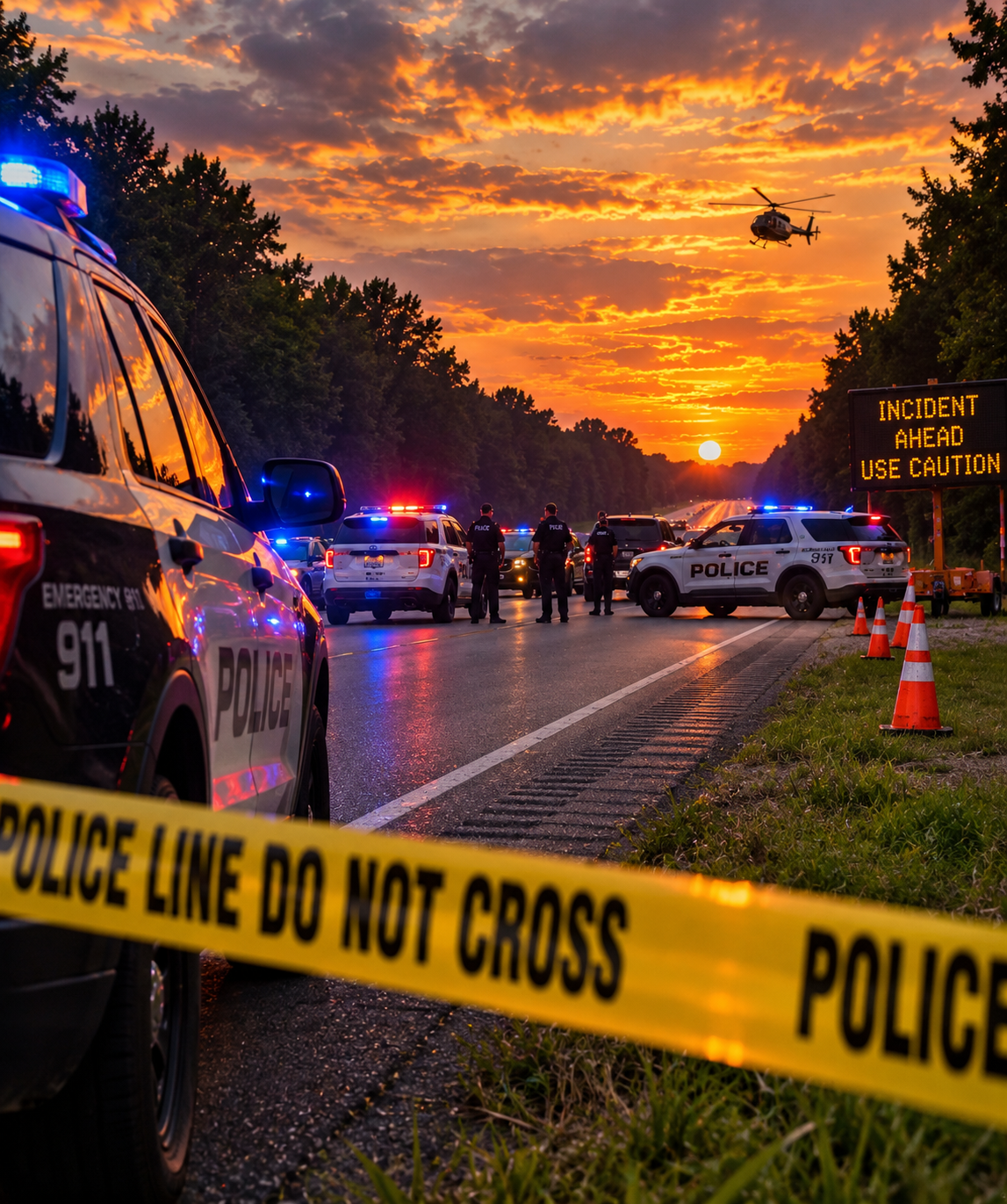
Troy Police said hospital security called dispatch at 7:08 a.m. on March 20, 2025, after gunfire was reported in the parking garage. The first information described an active shooter, so officers responded under the assumption that a larger threat might still exist on the hospital campus.
The hospital went into lockdown almost immediately. Nearby schools and day care centers also received warnings and took precautionary measures. Multiple law-enforcement agencies responded because officers did not yet know whether the shooter had entered the hospital or whether additional people were in danger.
Police searched the hospital and surrounding grounds while staff sheltered patients and restricted movement. More than 100 officers from several agencies ultimately took part in the response, according to local reporting. Authorities used resources that included drones, K9 units, and aerial support while trying to locate the suspect.
As investigators gathered more information, they learned that the victim knew the suspected shooter and could identify him. Police then determined that the shooting appeared to be a targeted confrontation rather than an indiscriminate attack on the hospital population.
That distinction allowed authorities to focus the search more precisely, although the hospital remained under precautions while the suspect was still at large. The early active-shooter response was therefore not an overreaction. At the time of the first call, police had to prepare for the most dangerous plausible situation until they could establish otherwise.
The Victim, Suspect, and Arrest
Police said the victim was a 25-year-old hospital employee from Troy. Investigators reported that he entered the parking garage before the other employee arrived. The suspect then fired several rounds, striking the victim twice in the arm and also hitting his vehicle.
Early reports said at least five shots were fired. Later charging information from the Oakland County Prosecutor’s Office alleged that Robert Paljusevic fired seven shots. Differences between early police estimates and later prosecutorial allegations are common as investigators examine physical evidence, witness accounts, and surveillance footage.
The injured employee managed to get into the hospital and receive treatment. Officials reported that he was in stable condition. No additional shooting victims were identified.
The suspect left the hospital area after the attack. Police traced him to a residence in Macomb Township, where he surrendered without further incident after authorities contacted him. Officials reported that he was taken into custody around 9:45 a.m., roughly two and a half hours after the initial emergency call.
By late morning, Corewell Health announced that normal hospital operations were resuming. The immediate threat had ended, but the criminal investigation and legal proceedings were only beginning.
Why Authorities Called the Shooting a Targeted Attack
Investigators Said the Men Knew Each Other
Police emphasized that the shooting did not appear random. Investigators said the victim and suspect were hospital coworkers who had previously been friends. According to Troy Police Chief Josh Jones, the relationship had deteriorated before the shooting.
That information changed how the public understood the event. An active shooter usually implies an individual attempting to attack multiple people in a populated location, while a targeted attack involves a specific intended victim. The initial police response had to treat the situation as potentially broader until officers knew which scenario they faced.
Later court testimony provided additional context about the dispute. Investigators said the relationship between Paljusevic and the victim had deteriorated after Paljusevic was not invited to a private family viewing following the death of the victim’s father. Court reporting later described additional hostile interactions between the two men before the shooting.
Those later details came from investigators and court proceedings, not from the first hours of the incident. That timeline matters because early breaking-news reports often contain incomplete information. Responsible reporting should distinguish facts known immediately from information established during later investigation.
Nothing about a personal dispute makes workplace violence less serious. In fact, targeted violence presents its own security challenges because the person committing the attack may know the workplace, the victim’s routine, parking patterns, entrances, and shift schedule.
Why a Targeted Shooting Still Affected the Entire Hospital
Once police determined that one employee had apparently targeted another, the risk of a random mass attack decreased. However, the consequences had already spread far beyond the two people directly involved.
Hospital patients experienced a lockdown while receiving medical care. Staff members had to secure units, manage frightened patients, and continue essential treatment while they waited for information. Families could not move freely through the campus, and people with scheduled appointments were initially told not to come to the hospital.
Nearby schools and day care facilities also took precautions because the suspect had fled and his location remained unknown. Emergency alerts reached residents in the area, creating understandable concern throughout Troy and neighboring communities.
The incident also drew resources from numerous law-enforcement agencies. Officers who normally handle other public-safety duties became part of the search, hospital clearing operation, perimeter control, or arrest effort.
That wider disruption shows why workplace violence rarely stays contained to the individuals involved. When a firearm is used in a large public institution, uncertainty itself becomes part of the emergency.
The hospital response also illustrates why organizations must prepare for situations that later turn out to be narrower than initially feared. During the first minutes, staff and law enforcement cannot safely assume that a shooter has only one target.
The Criminal Case and What Happened Afterward
Charges, Plea, and Court Proceedings
On March 23, 2025, the Oakland County Prosecutor’s Office charged Robert Paljusevic with assault with intent to murder, felony firearm, and carrying a concealed weapon. He was arraigned and initially held without bond. Prosecutors stressed that the charges were accusations and that the defendant remained legally presumed innocent unless and until the case was resolved.
The case continued through the court system for nearly a year. In February 2026, Paljusevic entered a no-contest plea to the charges. A no-contest plea allows a court to enter a conviction without the defendant formally admitting the factual allegations in the same way as a guilty plea.
The plea avoided a full criminal trial and moved the case toward sentencing. Court reports continued to describe the shooting as arising from the breakdown of a friendship between the two employees.
The victim also remained part of the legal process. Later reporting said he continued recovering physically and emotionally from the attack. His experience illustrates how even nonfatal workplace shootings can create effects that last far beyond the initial injuries.
The legal process also provided more detailed information than investigators could release during the emergency itself. Over time, court testimony, charging documents, and sentencing proceedings filled in portions of the timeline and alleged motive.
The 2026 Prison Sentence
On March 17, 2026, Paljusevic received a lengthy prison sentence. Court reporting states that he received 11 years and three months to 50 years for assault with intent to murder, with an additional two-year felony-firearm sentence to be served consecutively.
That structure produces a minimum period of more than 13 years before accounting for the precise treatment of concurrent and consecutive counts. Some reports summarized the sentence as approximately 13.25 years, while others described a minimum closer to 15 years by including another weapons count differently. The underlying court terms provide the clearest way to understand the sentence.
Local reporting also stated that Paljusevic was ordered to pay restitution. The sentencing closed one major phase of the case nearly one year after the shooting.
Oakland County Prosecutor Karen McDonald described the attack as an attempt to kill a former friend over what prosecutors characterized as a perceived personal slight. She also emphasized the broader effects on the hospital, schools, and community.
The sentence cannot reverse the harm experienced by the victim or the fear created throughout the hospital. However, it establishes the criminal consequences of the attack and provides a clearer end point to a case that began with considerable uncertainty.
What the Incident Shows About Workplace Violence in Healthcare
Hospitals Face Unique Safety Challenges
Healthcare facilities are unusually complicated workplaces. They remain accessible to the public, often operate continuously, and contain large numbers of employees, patients, family members, contractors, and visitors.
Hospitals also deal with emotionally intense situations every day. People receive devastating diagnoses, cope with pain, face financial stress, grieve loved ones, and sometimes experience behavioral or psychiatric crises. Healthcare employees therefore work in environments where interpersonal tension may already be high.
However, the Corewell Health Troy shooting reminds us that workplace violence does not always originate from a patient or visitor. In this case, authorities said both the victim and attacker were hospital employees who knew each other.
That reality complicates prevention. Security systems designed mainly to screen outsiders cannot eliminate conflicts involving employees who already have legitimate access to a facility.
Hospitals therefore need layered approaches to safety. Those can include reporting mechanisms for threats, workplace conduct policies, security staffing, emergency communication systems, access controls, training, and cooperation with local law enforcement.
No single policy can guarantee that violence will never occur. However, preparation can influence how quickly an organization recognizes a threat, protects vulnerable people, and returns to normal operations afterward.
Why Emergency Preparedness Matters Even in Targeted Incidents
The Troy hospital response demonstrates why emergency plans must work before authorities know exactly what is happening. The first call described an active shooter, and police could not safely assume otherwise.
Hospital employees reportedly received instructions consistent with active-shooter protocols while police searched the campus. Lockdowns prevented unnecessary movement and helped officers determine whether the attacker remained inside the medical complex.
Communication also became essential. Patients with scheduled services needed to know not to travel to the hospital during the active response. Schools and day care centers nearby needed enough information to decide whether precautionary lockdowns were appropriate.
After police arrested the suspect and cleared the danger, hospital administrators then faced another challenge: returning a major medical center to normal operation. Hospitals cannot simply close for the remainder of the day when people need emergency care, procedures, medications, and continuous inpatient treatment.
The event therefore provides a clear example of why drills and emergency planning matter. Employees cannot predict whether a future threat will involve a stranger, patient, visitor, or coworker. They can only prepare for the actions that protect people while reliable information develops.
Workplace safety also continues after the police leave. Employees who experience lockdowns, shootings, or other violent incidents may need psychological support, time to process what happened, and confidence that organizational leaders will examine what can be improved.
Frequently Asked Questions
When did the Corewell Health Troy Hospital shooting happen?
The shooting occurred on March 20, 2025, at Corewell Health Beaumont Troy Hospital in Troy, Michigan. Troy Police said dispatchers received the initial report from hospital security at 7:08 a.m.
Was it an active-shooter attack inside the hospital?
The incident was initially reported as an active shooter, which triggered a large emergency response and hospital lockdown. Police later determined that the shooting happened in the parking garage and appeared to be a targeted attack between two hospital employees.
Was anyone killed?
No. The 25-year-old victim was shot twice in the arm and was reported in stable condition. He received treatment at the hospital. No additional shooting victims were reported.
What happened to the shooter?
Robert Paljusevic was arrested later that morning at a residence in Macomb Township. He later pleaded no contest to criminal charges and was sentenced in March 2026 to a lengthy prison term that included 11 years and three months to 50 years for assault with intent to murder, plus a consecutive two-year felony-firearm term.
Why is this case important to the broader discussion about workplace violence?
The incident shows how a personal conflict between employees can affect an entire healthcare facility. The shooting prompted a hospital lockdown, school precautions, a large police deployment, emergency alerts, and disruptions to patient services. It demonstrates why healthcare workplace-safety planning must account for threats from both outside and inside an organization.
Conclusion
Workplace Violence in Healthcare: What We Know About the Corewell Health Troy Hospital Shooting is ultimately the story of a targeted conflict that quickly became a much larger public-safety emergency.
On March 20, 2025, a hospital employee shot a coworker in the parking garage at Corewell Health Beaumont Troy Hospital. The victim survived, while the suspect fled and was arrested later that morning. Because authorities initially did not know the scope of the threat, the hospital went into lockdown and nearby schools and day care centers also took precautions.
Investigators later described the incident as targeted and connected to a breakdown in the relationship between two coworkers. The criminal case continued into 2026, when Robert Paljusevic pleaded no contest and received a prison sentence exceeding a decade.
The fact that the shooting was not random does not make its impact small. Patients, healthcare workers, families, students, first responders, and surrounding residents all experienced the consequences of the uncertainty created that morning.
Hospitals cannot eliminate every risk, but they can prepare for how they respond. Clear emergency procedures, rapid communication, threat reporting, law-enforcement coordination, and support for employees after violent incidents all matter.
The Corewell Health Troy Hospital shooting serves as a reminder that workplace violence can begin as a conflict between two people and still affect an entire community. The strongest lesson is not fear, but preparedness: healthcare environments need systems that protect patients and workers even before anyone fully understands the nature of the threat.
More Blog
- Drinking Water on an Empty Stomach — What Science Actually Supports (No Hype, Just Facts)
- Waking Up Between 3 and 5 AM? It Might Be Your Soul Trying to Talk to You
- What a “Bleach” Patch on Your Underwear Really Means — And Why It’s Actually a Good Sign
- This Drink May Weaken Your Bones From The Inside — But Everyone Drinks It Anyway