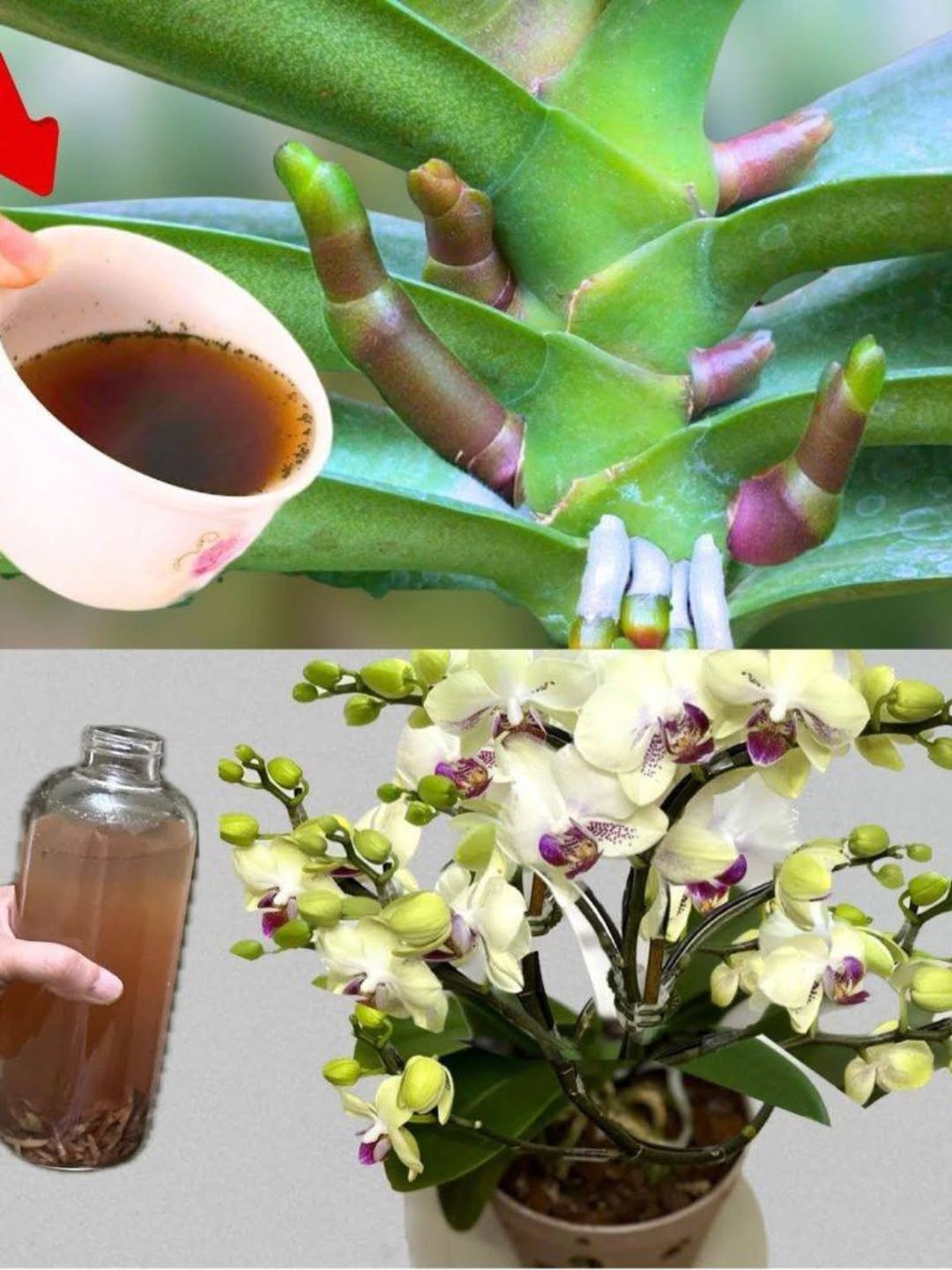
A Very Leafy Orchid can look wonderfully healthy while still refusing to flower. Thick green leaves often show that the plant has enough energy to grow foliage, yet blooming depends on much more than leaf production alone. Light levels, temperature changes, watering habits, root health, fertilizer balance, and the orchid’s natural growth cycle all influence whether flower spikes appear.
One popular suggestion involves diluted Epsom salt, which supplies magnesium sulfate. Magnesium plays an important role in chlorophyll production, while sulfur supports several plant processes. However, Epsom salt is not a guaranteed bloom booster, and adding too much can create mineral buildup around sensitive orchid roots.
Therefore, the safest approach treats Epsom salt as an occasional supplement rather than a miracle treatment. If your orchid already receives a complete orchid fertilizer that contains magnesium, you may not need extra supplementation at all.
I once had a Very Leafy Orchid that seemed almost too healthy. It produced one glossy leaf after another, yet months passed without a single flower spike. I kept adjusting the watering schedule, but nothing changed. Eventually, I looked more closely at the light and feeding routine rather than focusing only on water. I moved the plant to brighter filtered light, allowed a slightly cooler nighttime period, and used a very weak magnesium supplement only occasionally. Several weeks later, a new spike finally appeared near the base. That experience reminded me that orchids usually bloom because several growing conditions come together, not because of one dramatic trick.
Why a Very Leafy Orchid May Refuse to Bloom
A Very Leafy Orchid usually does not lack health simply because it has no flowers. In many cases, the plant has directed its energy toward leaves and roots instead of reproductive growth.
This situation often happens when conditions support vegetative growth but do not provide the cues that encourage flowering. Therefore, understanding the plant’s environment matters more than adding stronger fertilizer.
Healthy Leaves Do Not Always Mean Flowering Conditions
Phalaenopsis orchids, which make up many common household orchids, often produce leaves during active growth and flower after they receive the right environmental signals.
Bright but indirect light matters enormously.
If an orchid sits in a location that remains too dim, it may survive and even produce dark green foliage. However, it may not receive enough energy to create a strong flower spike.
Very dark green leaves can sometimes suggest that the orchid receives less light than ideal. Meanwhile, medium green leaves often indicate a brighter growing position.
However, avoid moving a Very Leafy Orchid directly into intense afternoon sun. Strong direct sun can scorch leaves quickly.
Instead, provide bright filtered light near an east-facing window or a bright location with sheer curtains.
Temperature also affects blooming.
Many Phalaenopsis orchids respond well to a modest difference between daytime and nighttime temperatures. A slightly cooler nighttime period can help encourage spike formation once the plant reaches maturity.
Therefore, a plant kept at exactly the same warm temperature day and night may continue producing leaves without receiving a strong flowering cue.
Patience matters as well.
A recently repotted orchid, young plant, or plant recovering from stress may naturally delay blooming while it rebuilds roots and foliage.
Root Health and Watering Matter More Than Frequent Feeding
A Very Leafy Orchid still depends on healthy roots.
Orchid roots need moisture, but they also need air. Therefore, traditional potting soil usually causes problems because it stays too dense and wet.
Most common epiphytic orchids grow best in a loose bark-based medium that drains rapidly.
When roots remain wet for too long, they can rot. As a result, the plant may stop blooming even while older leaves still look healthy.
Before watering, check the potting medium.
If the bark still feels damp, wait.
If the medium feels mostly dry and visible roots look silvery rather than green, watering may be appropriate.
Then water thoroughly and let excess moisture drain completely.
Avoid allowing water to remain around the crown where the leaves meet because trapped moisture can encourage rot.
You should also avoid watering by calendar alone.
A fixed weekly schedule sounds convenient, but orchids dry at different rates depending on humidity, temperature, pot size, airflow, and potting medium.
Therefore, check the plant rather than simply counting days.
This approach gives a Very Leafy Orchid the balance it needs: enough moisture for growth without suffocating the roots.
How Epsom Salt Can Affect a Very Leafy Orchid
Epsom salt contains magnesium sulfate.
Plants need magnesium because it forms an essential part of chlorophyll, the green pigment involved in photosynthesis. Sulfur also supports plant metabolism and protein formation.
However, Epsom salt does not provide nitrogen, phosphorus, potassium, or the full range of micronutrients that orchids require.
Therefore, it cannot replace a balanced orchid fertilizer.
When Magnesium Supplementation May Help
A Very Leafy Orchid may benefit from magnesium only when the plant lacks enough magnesium in its growing conditions.
Possible deficiency symptoms can include yellowing between leaf veins while the veins stay greener, although many problems can produce similar symptoms.
Therefore, leaf color alone does not prove magnesium deficiency.
Hard water, root damage, overfertilization, nutrient imbalance, natural leaf aging, and improper pH can all influence nutrient uptake.
If you already use a complete orchid fertilizer that includes magnesium, adding Epsom salt regularly may provide little benefit.
However, if your fertilizer contains no magnesium and your water source provides very little, an occasional diluted application can serve as a supplemental source.
The key word is occasional.
More magnesium does not automatically create more flowers.
In fact, excessive salts can accumulate in bark and around roots. Orchid roots remain especially sensitive to fertilizer buildup, so concentrated solutions can damage them.
Therefore, a mild solution makes far more sense than the strong mixtures sometimes promoted online.
For home care, you can dissolve about 1/4 teaspoon of plain unscented Epsom salt in 1 gallon of water and use it occasionally rather than at every watering.
This concentration stays intentionally weak.
Epsom Salt Does Not Directly Force Blooms
It helps to separate plant nutrition from flower induction.
Magnesium supports healthy plant function, but it does not operate like a switch that tells a Very Leafy Orchid to bloom.
Flower production usually depends on several factors working together.
The orchid needs enough light, mature growth, healthy roots, suitable temperatures, and balanced nutrition.
If one of those conditions remains poor, Epsom salt will not solve the problem by itself.
For example, a dark room can keep an orchid from blooming even if the plant receives plenty of magnesium.
Likewise, a root system damaged by constant moisture cannot take full advantage of extra nutrients.
Too much nitrogen can also encourage leafy growth at the expense of flowering.
Therefore, use a balanced orchid fertilizer according to label directions rather than feeding heavily in hopes of producing faster blooms.
Then focus on light and temperature cues.
A Very Leafy Orchid that receives brighter filtered light and a modest nighttime temperature drop often has a better chance of forming a spike than one that receives stronger fertilizer alone.
Think of Epsom salt as a potential micronutrient supplement, not a bloom stimulant.
How to Care for a Very Leafy Orchid for Better Blooming
The best way to encourage a Very Leafy Orchid to flower involves adjusting the whole growing environment.
You do not need complicated equipment.
Instead, focus on light, temperature, watering, roots, and gentle feeding.
Create the Right Light and Temperature Conditions
Start with light.
Move the orchid to a bright location with filtered sun.
An east-facing window often works well because it provides gentle morning light. A south-facing window can also work if you diffuse intense sunlight with a sheer curtain.
Watch the leaves after moving the plant.
If they become yellowish very quickly or develop pale scorched patches, the light may be too intense.
On the other hand, extremely dark green foliage and weak growth may suggest that the orchid still needs more brightness.
Next, consider temperature.
A Very Leafy Orchid that never experiences any difference between day and night may remain in leaf-production mode.
For many Phalaenopsis orchids, slightly cooler nights can help encourage spike formation.
You do not need extreme cold.
Instead, aim for a modest nighttime temperature drop while keeping the plant away from freezing drafts.
Keep the orchid away from heating vents, hot appliances, and sudden temperature swings.
Air movement also matters.
Gentle circulation helps the potting medium dry appropriately and reduces stagnant moisture around the leaves.
However, avoid strong fans blowing directly onto the plant all day.
Feed Lightly and Watch the Roots
Balanced nutrition works better than aggressive feeding.
Use a fertilizer formulated for orchids and dilute it according to the product directions.
Many growers prefer weaker applications more frequently rather than occasional heavy doses.
However, periodically flush the potting medium with plain water to reduce accumulated fertilizer salts.
This practice becomes especially important if you use Epsom salt or hard tap water.
A Very Leafy Orchid can develop root tip damage when minerals accumulate excessively.
Healthy roots usually appear firm.
When hydrated, many Phalaenopsis roots look green. As they dry, they often become silver or gray-green.
Brown, mushy roots usually indicate damage.
If most roots look unhealthy, repotting may help more than adding fertilizer.
Trim only clearly dead or rotting roots with clean cutting tools, then place the orchid in fresh bark-based medium.
Avoid choosing a pot that feels excessively large.
Orchid roots generally perform better when the container fits the root system closely and offers generous drainage.
Once roots recover, the plant can direct more energy toward future growth and flowering.
Safe Epsom Salt Use for a Very Leafy Orchid
If you decide to try magnesium supplementation, keep the method conservative.
Orchids do not need strong homemade tonics.
A weak solution used occasionally provides a much lower risk of salt buildup than concentrated mixtures.
Simple Diluted Epsom Salt Solution
Use plain Epsom salt with no fragrance, essential oils, or added bath products.
Dissolve 1/4 teaspoon in 1 gallon of room-temperature water.
Stir until completely dissolved.
Then use the solution in place of one normal watering.
Pour it through the potting medium thoroughly and allow all excess water to drain.
Do not allow the orchid pot to sit in the solution afterward.
Most importantly, do not pour concentrated Epsom salt directly onto orchid roots.
Do not sprinkle dry crystals into the pot either.
A Very Leafy Orchid has delicate roots, and concentrated salts can cause dehydration or root damage.
Use this solution only occasionally, such as once every four to six weeks, and only if you have a reason to supplement magnesium.
If your complete fertilizer already contains magnesium, skip the Epsom salt.
Likewise, stop using it if leaf tips burn, roots deteriorate, or white mineral crusts build up around the pot.
Flush the pot thoroughly with plain water if you notice salt accumulation.
What to Do Before Blaming Nutrition
Before adding anything to the water, examine the growing conditions.
Check whether the plant receives enough bright filtered light.
Look at the roots.
Check whether the potting medium remains wet for many days.
Think about whether nighttime temperatures change at all.
Consider the plant’s age.
Finally, review the fertilizer label.
A mature Very Leafy Orchid with good roots but no blooms often needs an environmental adjustment more than another nutrient.
For example, simply moving the plant to a brighter position can make a major difference.
Likewise, allowing a natural day-to-night temperature difference can encourage flowering in some orchids.
If the plant continues producing new leaves and roots, that growth still represents progress.
Orchids follow their own cycles, and flower spikes may appear only after the newest leaf matures.
Therefore, avoid making several dramatic changes at once.
Adjust one or two factors, observe the orchid for several weeks, and give it time to respond.
Frequently Asked Questions
Can Epsom salt make a Very Leafy Orchid bloom faster?
Not reliably. Epsom salt supplies magnesium and sulfur, but it does not directly trigger flowering. Light, temperature, maturity, root health, and balanced nutrition play larger roles in bloom development.
How much Epsom salt should I use for orchids?
A conservative mixture uses about 1/4 teaspoon of plain Epsom salt per gallon of water. Use it only occasionally and avoid it completely if your regular orchid fertilizer already provides magnesium.
Why does my orchid grow leaves but no flowers?
Insufficient light, warm temperatures that remain constant day and night, immature growth, excessive nitrogen, root problems, or the plant’s natural growth cycle can all delay flowering.
Should I water my orchid every week?
Not automatically. Check the potting medium and roots first. Water when the bark has mostly dried and the roots begin looking silvery. Humidity, temperature, pot size, and airflow can change how quickly an orchid dries.
Can too much Epsom salt hurt an orchid?
Yes. Excess magnesium sulfate can contribute to salt buildup and root damage. Orchid roots are sensitive, so always use highly diluted solutions and flush the pot with plain water periodically.
Conclusion
A Very Leafy Orchid without flowers usually needs a closer look at its growing conditions rather than a stronger homemade treatment.
Epsom salt can provide magnesium and sulfur, and those nutrients support normal plant function. However, it cannot replace complete fertilizer, healthy roots, sufficient light, proper watering, or appropriate temperature cues.
If you choose to use Epsom salt, keep the solution weak. About 1/4 teaspoon per gallon of water used occasionally provides a cautious approach.
More importantly, inspect the orchid before supplementing.
Check the light, root condition, potting medium, fertilizer routine, and day-to-night temperature changes.
A Very Leafy Orchid that receives too little light may continue producing dark green leaves without blooming. Likewise, an orchid with constantly wet roots may struggle even when its foliage initially looks healthy.
Balanced care creates the best foundation for flowers.
Give the plant bright filtered light, water only when the medium approaches dryness, use a complete orchid fertilizer lightly, maintain good airflow, and allow a modest difference between daytime and nighttime temperatures.
Then give the orchid time.
Healthy leaves and roots mean the plant has already built valuable resources. Once the conditions line up with its natural flowering cycle, that leafy plant may finally produce the spike you have been waiting to see.
More Blog
- Drinking Water on an Empty Stomach — What Science Actually Supports (No Hype, Just Facts)
- Waking Up Between 3 and 5 AM? It Might Be Your Soul Trying to Talk to You
- What a “Bleach” Patch on Your Underwear Really Means — And Why It’s Actually a Good Sign
- This Drink May Weaken Your Bones From The Inside — But Everyone Drinks It Anyway