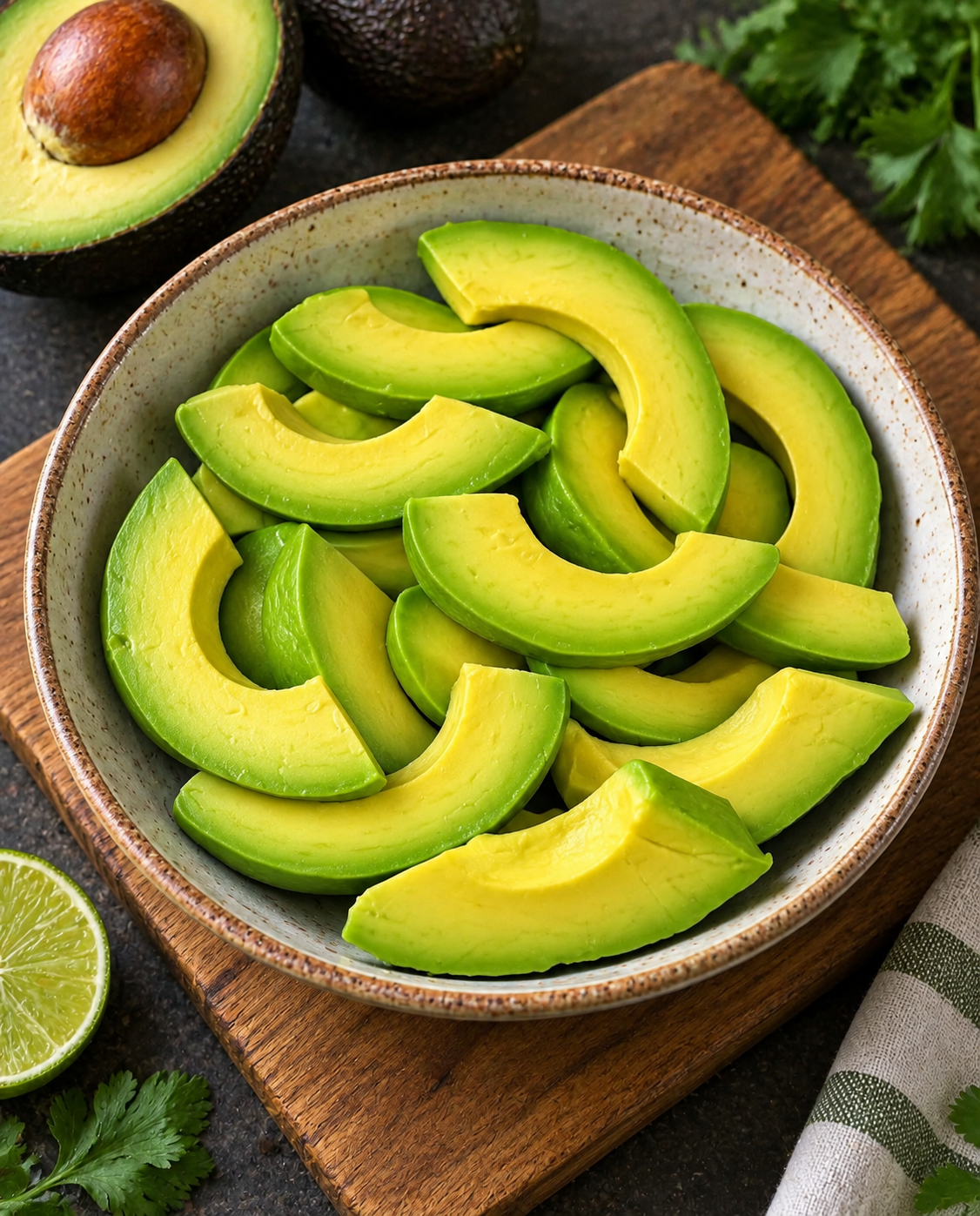
Too much avocado isn’t always better, even though avocado deserves its reputation as a nutrient-rich food. It provides monounsaturated fat, fiber, potassium, folate, vitamin E, vitamin K, and several other nutrients that support normal body functions. It can fit easily into breakfast, salads, sandwiches, bowls, and snacks.
However, eating large amounts every day can create a few practical problems. Avocado contains more calories than many fruits and vegetables, and its fiber can cause digestive discomfort if you suddenly eat a lot of it. Certain people also need to think carefully about potassium, vitamin K, or food allergies.
I used to think of avocado as one of those foods you could eat without thinking much about portion size. It appeared on toast, in salads, beside eggs, and in bowls, so adding more always seemed like a healthy choice. Eventually, though, I noticed how quickly one avocado could turn into two when several meals included it. That made me look more closely at the difference between nutritious and unlimited. Avocado absolutely can support a balanced diet, but its benefits do not increase endlessly with portion size. Like most foods, it works best when it complements variety rather than replacing it.
Too Much Avocado Isn’t Always Better for Calorie Balance
Avocado Is Nutritious but Energy-Dense
Avocado differs from many fruits because much of its energy comes from fat.
Most of that fat is monounsaturated fat, which can fit comfortably into a heart-conscious eating pattern. However, fat contains more calories per gram than protein or carbohydrate.
As a result, avocado packs a substantial amount of energy into a relatively small serving.
That does not make avocado unhealthy. In fact, calorie density and nutritional quality describe two different things.
A food can provide valuable nutrients while also contributing significant calories.
The practical issue appears when portions become much larger than expected. For example, adding half an avocado to breakfast and another half to lunch can quickly bring you to one full avocado for the day. Add guacamole or another avocado-based snack later, and your total intake increases further.
If those calories fit your overall needs, this may not create any problem.
However, consistently eating more energy than your body uses can contribute to weight gain over time.
Therefore, the best approach involves context.
Ask what the avocado replaces.
If it replaces a less nutritious source of fat or helps make vegetables and whole grains more satisfying, it may improve the meal. If it simply adds extra calories on top of an already adequate meal, the effect differs.
Portion Size Matters More Than a Strict Daily Rule
You may hear simple recommendations such as eating half an avocado or one avocado per day.
Those amounts can work for many people, but they do not represent a universal rule.
Individual energy needs vary widely.
A highly active adult may comfortably include more avocado than someone with much lower energy needs. Likewise, a small portion may feel satisfying in one meal while another meal may benefit from a larger serving.
The rest of your diet matters too.
If avocado provides your main source of added fat, a larger portion may fit naturally. However, if the meal already includes nuts, seeds, cheese, oil, and other calorie-dense foods, a smaller portion may create better balance.
That is why portion awareness works better than labeling a specific quantity as “too much” for everyone.
A useful approach involves looking at the entire plate.
Avocado can provide fat and fiber. Then add a protein source, vegetables, fruit, whole grains, or other foods according to the meal.
This approach also protects dietary variety.
Instead of relying on avocado for every meal, rotate among olive oil, nuts, seeds, fish, and other nutrient-rich sources of fat.
Variety helps you obtain a broader mix of nutrients while keeping meals interesting.
Eating a Lot of Avocado Can Affect Digestion
Fiber Can Be Helpful Until You Increase It Too Quickly
Avocado provides dietary fiber, which supports normal digestive function.
Fiber helps add bulk to stool and contributes to regularity. It can also support fullness and feed certain beneficial gut bacteria.
However, increasing fiber too quickly can cause discomfort.
Some people experience bloating, gas, cramping, or a feeling of fullness when they suddenly eat much more fiber than usual.
Avocado can contribute to that effect, especially if you already eat plenty of beans, vegetables, fruit, whole grains, nuts, and seeds.
The problem does not mean fiber is harmful.
Instead, your digestive system may need time to adjust to a higher intake.
Fluid intake matters as well.
Fiber works best when you also drink enough fluids. Therefore, increasing fiber while drinking very little can make digestion feel less comfortable for some people.
If you notice symptoms after eating large portions of avocado, try reducing the serving and observing how your body responds.
You can also spread fiber-rich foods across the day rather than consuming a large amount in one sitting.
That approach often feels easier on digestion.
Still, persistent abdominal pain, severe bloating, or major changes in bowel habits deserve medical attention rather than repeated experimentation with diet alone.
Some People May Be More Sensitive Than Others
Digestive tolerance varies substantially from person to person.
One person may eat an entire avocado without difficulty. Another may feel uncomfortably full after a much smaller amount.
People with certain digestive conditions may react more strongly to larger servings.
Avocado contains carbohydrates that can be difficult for some people to absorb, particularly in larger portions. Consequently, people who follow a medically guided low-FODMAP approach may need to pay closer attention to serving size.
However, you should not assume you have an intolerance simply because avocado occasionally causes discomfort.
The entire meal matters.
For example, guacamole often contains onion, garlic, lime, chili, and other ingredients that can also affect digestion.
Likewise, avocado toast may include large amounts of bread, cheese, eggs, or spicy toppings. Therefore, avocado may not always be the only factor.
Keeping meals simple can make patterns easier to identify.
If a small amount feels comfortable but a large amount causes bloating, portion size may explain the difference.
Most importantly, do not force yourself to eat large amounts because a food has a healthy reputation.
Nutrition should support both health and comfort.
A moderate serving that you digest well provides more practical value than an oversized portion that leaves you feeling uncomfortable.
Avocado Can Interact With Individual Health Needs
Vitamin K Matters for Some Blood-Thinning Medicines
Avocado provides vitamin K, a nutrient that plays an important role in normal blood clotting and bone health.
For most people, vitamin K from food presents no problem.
However, people who take certain anticoagulant medications may receive instructions to keep vitamin K intake relatively consistent.
The key word is consistency.
This does not automatically mean avoiding avocado.
Instead, large and sudden changes in vitamin K intake may matter for people using medications whose effects depend partly on vitamin K balance.
For example, someone who rarely eats avocado and suddenly begins eating several servings every day could change their overall vitamin K intake.
Anyone taking medication that requires dietary monitoring should follow guidance from a doctor, pharmacist, or registered dietitian.
Medication management always deserves individualized advice.
Do not stop eating nutrient-rich foods or change medication doses based only on general nutrition information.
Consistency across the week often matters more than avoiding a single food entirely.
This principle applies to leafy greens as well, which can contain much larger amounts of vitamin K than avocado.
Therefore, think of avocado as one part of your total dietary pattern.
If you already follow a stable eating routine, adding a moderate amount may fit easily. If you plan a major dietary change, discuss it with the professional managing your medication.
Potassium Requires More Attention With Some Kidney Conditions
Avocado provides a meaningful amount of potassium.
For healthy people, potassium supports normal nerve signaling, muscle function, and fluid balance. Diets rich in potassium-containing foods can also support healthy blood pressure patterns.
However, some people with kidney disease need to limit potassium.
Healthy kidneys help remove excess potassium from the blood. When kidney function becomes significantly impaired, potassium can accumulate to unsafe levels.
In that situation, foods that normally support good health may require closer portion control.
Avocado can become relevant because it contains more potassium than many people realize.
That does not mean people with kidney concerns should automatically avoid it. Individual recommendations depend on kidney function, blood test results, medications, and the rest of the diet.
Therefore, personalized guidance matters.
The same principle applies to other potassium-rich foods such as bananas, potatoes, beans, and certain dairy products.
Someone with normal kidney function generally does not need to fear potassium from avocado.
Someone following a medically prescribed low-potassium diet, however, should not assume that unlimited avocado remains appropriate just because it is considered healthy.
Avocado Allergies and Dietary Variety Also Matter
Allergic Reactions Can Occur in Some People
Avocado allergy remains uncommon, but it can happen.
Some people experience itching or tingling in the mouth after eating avocado. Others may develop swelling, hives, digestive symptoms, or more serious allergic reactions.
Avocado also has a known connection with latex-fruit syndrome.
Some people who react to natural rubber latex also react to certain fruits because the proteins can share structural similarities.
Foods often discussed in this context include avocado, banana, kiwi, and chestnut.
However, sensitivity patterns vary.
Having a latex allergy does not automatically mean you will react to avocado, and reacting to avocado does not automatically confirm a latex allergy.
If avocado repeatedly causes itching, swelling, hives, or other unusual symptoms, medical evaluation can help identify the cause.
Severe symptoms require immediate attention.
Difficulty breathing, throat swelling, faintness, or widespread allergic reactions should never be treated as a simple food sensitivity.
For people without allergy symptoms, avocado generally remains a safe and nutritious food.
Still, this example shows why no food deserves a universal recommendation for every person.
Individual biology matters.
Relying Too Heavily on One Healthy Food Can Reduce Variety
One overlooked downside of eating avocado constantly involves opportunity cost.
Every time one food dominates your meals, it can push other nutritious foods aside.
Avocado provides healthy fat, fiber, potassium, folate, and several vitamins. However, it does not provide everything your body needs.
Other foods offer nutrients in different proportions.
Berries provide different plant compounds. Leafy greens contribute folate, vitamin K, carotenoids, and minerals. Beans offer fiber and protein. Nuts and seeds provide different fats, minerals, and textures.
Therefore, eating avocado every day can fit a healthy diet, but eating it at nearly every meal may reduce variety.
Dietary variety helps broaden nutrient intake.
It also makes meals more enjoyable and sustainable.
Instead of thinking of avocado as a food you need constantly, think of it as one option among many.
Use it on toast one morning, choose nuts the next day, and use olive oil or seeds in another meal.
That rotation gives you a broader mix of nutrients without giving up the foods you enjoy.
Healthy eating rarely depends on maximizing one ingredient.
It works much better when many nutritious foods share the plate.
Frequently Asked Questions
Is it unhealthy to eat avocado every day?
For most people, eating avocado every day can fit into a balanced diet. However, portion size, total calorie intake, digestion, medical conditions, and dietary variety all matter.
Can too much avocado cause weight gain?
Avocado contains more calories than many fruits and vegetables because it contains substantial fat. Eating large amounts can contribute to excess calorie intake if those calories exceed your needs over time.
Can avocado cause bloating?
Yes, larger servings can cause bloating, gas, or digestive discomfort in some people because avocado contains fiber and certain fermentable carbohydrates. Smaller portions may feel more comfortable.
Should people on blood thinners avoid avocado?
Not necessarily. Some blood-thinning medications require relatively consistent vitamin K intake. Anyone taking such medication should follow individualized advice rather than completely avoiding avocado without medical guidance.
How much avocado is reasonable to eat?
There is no perfect amount for everyone. Many people can comfortably include roughly half to one avocado within a day, depending on calorie needs, the rest of the diet, and personal tolerance. Smaller or larger servings may suit different individuals.
Conclusion
Too much avocado isn’t always better, even though avocado remains one of the most nutrient-dense foods you can add to a balanced diet.
Its monounsaturated fat, fiber, potassium, folate, and vitamins can support good nutrition. However, larger portions also provide substantial calories, and sudden increases in fiber may cause digestive discomfort.
Individual health needs matter as well. People taking certain blood-thinning medications may need to keep vitamin K intake consistent, while some people with kidney disease must monitor potassium. Rare allergic reactions can also occur.
For most people, the solution is not to avoid avocado.
Instead, enjoy it in a portion that fits your overall eating pattern and leaves room for other nutritious foods.
Moderation protects variety, and variety helps build a stronger diet. Avocado can absolutely remain part of that pattern. It simply does not need to appear at every meal to provide benefits.
More Blog
- Drinking Water on an Empty Stomach — What Science Actually Supports (No Hype, Just Facts)
- Waking Up Between 3 and 5 AM? It Might Be Your Soul Trying to Talk to You
- What a “Bleach” Patch on Your Underwear Really Means — And Why It’s Actually a Good Sign
- This Drink May Weaken Your Bones From The Inside — But Everyone Drinks It Anyway