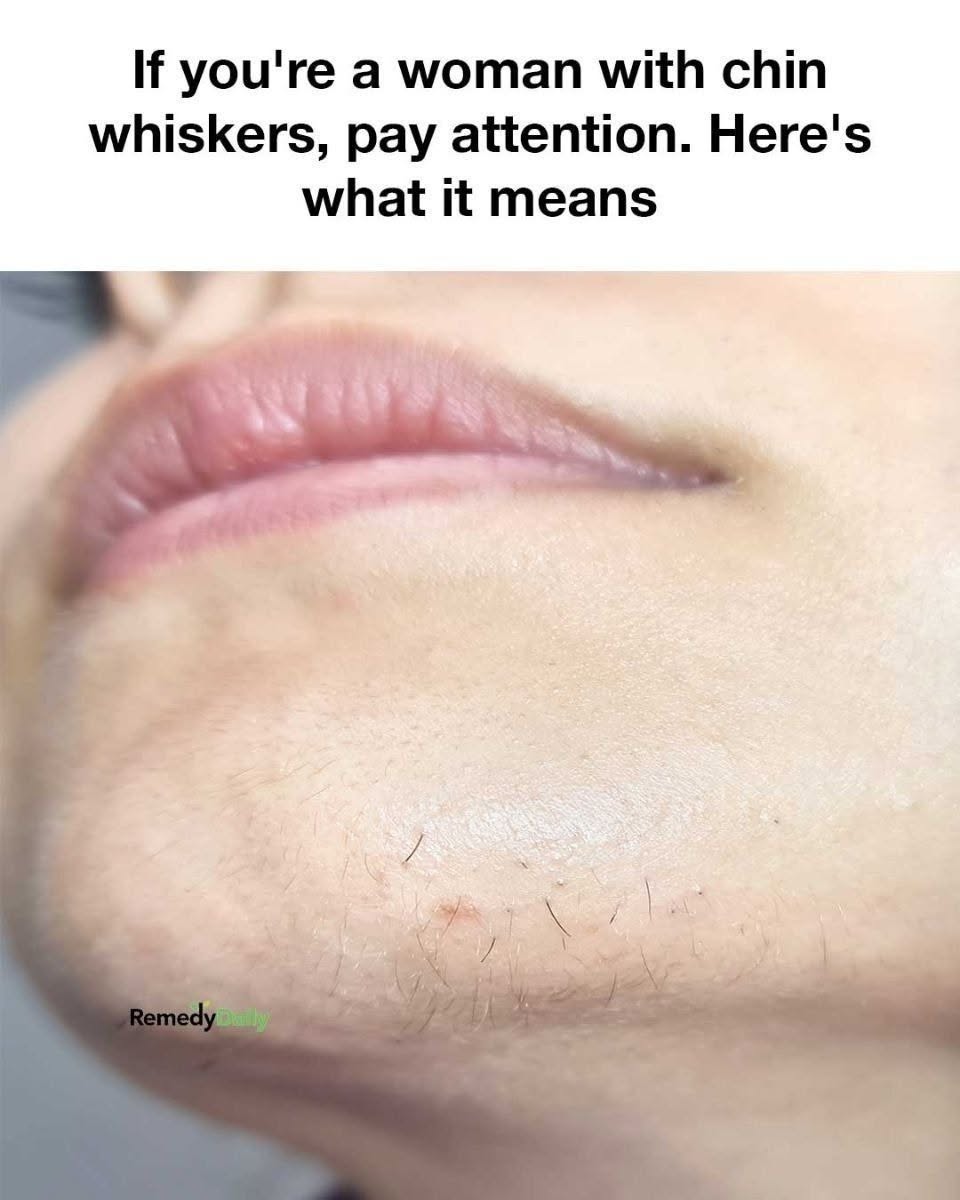
You look in the mirror and suddenly notice it: one stubborn, dark hair growing from your chin.
You pluck it, forget about it—and a few weeks later, another one appears.
For many women, this is completely normal. Facial hair varies enormously from person to person and can change with age and hormonal shifts.
But sometimes, a sudden increase in coarse facial hair can provide useful information about what’s happening hormonally.
🔬 Why Do Women Get Chin Hair?
Women naturally produce androgens, including testosterone. You don’t need abnormally high testosterone levels to develop a few coarse chin hairs.
Hair follicles differ in their sensitivity to these hormones, which helps explain why one woman may have almost invisible facial hair while another naturally develops darker hairs.
Several factors influence this.
1. Genetics
Facial and body-hair patterns often run in families.
If close female relatives tend to develop noticeable facial hair, you may simply have inherited follicles that respond more strongly to androgens.
2. Normal Hormonal Changes
Hormones fluctuate throughout life.
Changes associated with puberty, pregnancy, certain medications and menopause can alter hair growth.
After menopause, declining estrogen levels can make androgen effects relatively more noticeable, which is one reason coarse chin hairs often become more common with age.
3. PCOS
One important cause of excessive facial hair is polycystic ovary syndrome (PCOS).
PCOS can cause increased androgen activity and may produce coarse hair on areas such as the chin, upper lip, chest or abdomen.
Facial hair alone doesn’t mean someone has PCOS. Other possible signs include irregular or absent periods, acne, scalp-hair thinning and difficulty becoming pregnant.
4. Certain Medications and Medical Conditions
Some medications can increase hair growth.
Less commonly, disorders involving the ovaries or adrenal glands can cause excessive androgen production.
These conditions are particularly important to consider when hair growth appears rapidly rather than developing gradually over years.
🚩 When Should You Talk to a Doctor?
A couple of occasional chin hairs generally aren’t concerning.
Medical evaluation becomes more important when coarse facial or body hair suddenly increases over several months, particularly when accompanied by other changes such as:
- Irregular or absent menstrual periods
- New severe acne
- Significant scalp-hair loss
- A noticeably deeper voice
- Rapidly increasing muscle mass
- New coarse hair appearing extensively on the chest or abdomen
Rapid development of several of these changes deserves prompt medical assessment.
✂️ Does Plucking Make Hair Grow Back Thicker?
No.
Plucking doesn’t change the number of hair follicles beneath your skin and doesn’t transform a fine hair into a permanently thicker one.
Shaving also doesn’t make hair biologically thicker. Because shaving cuts the hair bluntly at the surface, however, regrowth can temporarily look or feel coarser.
Removing Chin Hair Safely
If you simply don’t like the appearance, removal is a cosmetic choice—not a medical necessity.
Tweezing works well for occasional hairs. Shaving, threading and waxing are other temporary options.
For longer-term reduction, laser hair removal can work particularly well when there is strong contrast between dark hair and skin pigment, while electrolysis can permanently treat individual follicles and works across a broader range of hair colors.
The Bottom Line
Finding a few chin hairs is usually a normal part of human hair growth.
What matters more than the presence of a hair is a significant change in your usual pattern.
One stubborn whisker appearing occasionally? Usually nothing unusual.
Dozens of new coarse hairs appearing quickly alongside menstrual or other hormonal changes? That’s worth discussing with a healthcare professional.
More Blog
- Drinking Water on an Empty Stomach — What Science Actually Supports (No Hype, Just Facts)
- Waking Up Between 3 and 5 AM? It Might Be Your Soul Trying to Talk to You
- What a “Bleach” Patch on Your Underwear Really Means — And Why It’s Actually a Good Sign
- This Drink May Weaken Your Bones From The Inside — But Everyone Drinks It Anyway