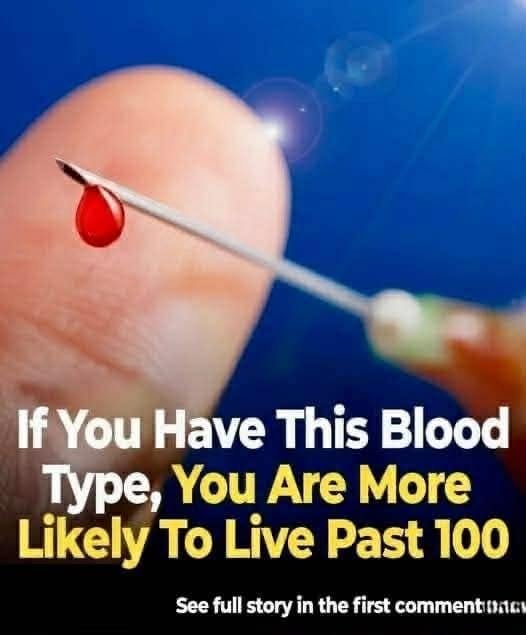
Blood Type and Longevity often appear together in attention-grabbing headlines that claim people with type O live longer or that another blood group carries a shorter life expectancy. Those claims sound simple, memorable, and scientific. However, current evidence does not support the idea that your ABO blood type determines whether you will reach 90, 100, or any other specific age.
The confusion often starts when articles mix up blood type with blood biomarkers. Your ABO blood type describes an inherited characteristic such as A, B, AB, or O. In contrast, blood biomarkers include measurable substances such as glucose, creatinine, cholesterol, iron, and uric acid.
That distinction matters because a major Swedish longevity study followed 44,636 older adults for as long as 35 years and compared several blood biomarkers between people who eventually reached 100 and those who did not. The researchers did not test whether type O, A, B, or AB produced longer life. Instead, they examined metabolic, kidney, liver, inflammatory, and nutritional markers.
Therefore, the science behind exceptional longevity looks much more complicated than a single letter on your blood-type card.
A conversation about this topic once started at a family dinner after someone shared a headline claiming that one blood type was the “secret” to living past 100. Several relatives immediately began comparing their own types and joking about who had won the genetic lottery. However, once we looked more closely at the research behind the headline, the story changed completely. The study everyone discussed had measured glucose, kidney markers, cholesterol, and other laboratory values rather than ABO type. That moment stuck with me because it showed how easily one medical term can transform into another online. Since then, I always check what researchers actually measured before accepting a longevity claim.
Blood Type and Longevity Are Not the Same as Blood Biomarkers
What the Swedish Centenarian Study Actually Examined
One of the most widely discussed longevity studies used data from the Swedish AMORIS cohort. Researchers analyzed 44,636 people who had blood measurements taken between 1985 and 1996. Participants ranged from 64 to 99 years old at their first measurement, and investigators followed them through Swedish registers for up to 35 years. Of the total group, 1,224 people eventually reached age 100.
Importantly, the researchers studied 12 blood-based biomarkers. These included glucose, total cholesterol, creatinine, uric acid, iron, total iron-binding capacity, albumin, and several liver-related enzymes.
They did not divide participants according to ABO blood type.
The study found that people who eventually became centenarians generally showed more favorable values in several common biomarkers from about age 65 onward. For example, lower glucose, creatinine, and uric acid levels showed associations with a greater likelihood of reaching 100. Researchers also found associations involving several liver markers, iron, and total cholesterol.
However, these findings do not create a simple recipe for living to 100.
Association does not prove that deliberately lowering or raising one particular laboratory result will extend life. In addition, medications, underlying illnesses, nutrition, genetics, body composition, kidney function, and lifestyle can all affect laboratory values.
Therefore, you should not treat the study’s results as target numbers to pursue without medical guidance.
Instead, the study supports a broader idea: people who reach exceptionally old ages often show signs of healthier metabolic and organ function long before their 100th birthday.
Why Blood Type Gets Confused With Blood Test Results
The phrase “blood markers” sounds similar to “blood type,” which makes misunderstanding easy.
Blood type comes primarily from inherited genes. In the ABO system, you inherit versions of the ABO gene that determine whether A antigens, B antigens, both, or neither appear on your red blood cells.
Therefore, you generally keep the same ABO blood type throughout life.
Blood biomarkers behave very differently.
Glucose can change after eating, during illness, or as metabolic health changes. Creatinine relates partly to kidney function but also varies with muscle mass and other factors. Cholesterol responds to genetics, diet, medications, endocrine conditions, age, and many other influences.
Consequently, a study of glucose and creatinine tells you something very different from a study comparing people with type A and type O blood.
The Swedish researchers specifically examined biomarkers related to metabolism, inflammation, kidney function, liver function, anemia, and nutrition. They concluded that future centenarians showed comparatively favorable biomarker profiles years before reaching extreme old age.
That finding remains interesting without turning it into a claim about ABO blood groups.
Unfortunately, simplified online summaries sometimes blur these concepts. A headline may mention “blood” and “living to 100,” while readers understandably assume that researchers studied blood type.
Therefore, the safest approach involves checking the original study question.
Ask: Did researchers measure ABO type, or did they measure laboratory values?
That single distinction can prevent a major misunderstanding.
What Scientists Know About ABO Blood Type and Health
Blood Type Can Influence Certain Disease Risks
Although Blood Type and Longevity do not have a simple cause-and-effect relationship, ABO type does appear to influence some biological processes.
One of the clearest examples involves blood clotting.
ABO blood groups influence circulating levels of von Willebrand factor and factor VIII, two proteins involved in hemostasis and clot formation. People with non-O blood groups generally have higher levels of these clotting-related proteins than people with type O.
As a result, research has repeatedly associated non-O blood groups with a higher risk of venous thromboembolism, which includes deep vein thrombosis and pulmonary embolism.
A major review reported an association between non-O blood type and roughly twice the risk of venous thrombosis compared with type O, although individual risk still depends heavily on many other factors.
A 2026 review likewise concluded that non-O groups show higher overall thromboembolic risk, while type O may carry a greater tendency toward bleeding in some situations. However, the authors also emphasized considerable variation among studies and did not recommend treating ABO type as a stand-alone prediction system.
Researchers have also investigated ABO blood group in relation to coronary artery disease, heart attack, stroke, and some cancers.
However, those associations generally remain much weaker and more complicated than viral headlines imply.
For example, a systematic review found only modest associations between non-O blood groups and some arterial vascular events. Moreover, results differed depending on study quality and outcome.
Therefore, type O does not function as a universal shield against disease, and non-O blood does not function as a prediction of poor health.
Why Disease Risk Does Not Equal Lifespan
Suppose one blood group carries a modestly lower risk for one disease. That finding still does not prove that people with that blood group live longer overall.
Human lifespan reflects many competing risks.
For example, type O may offer some relative protection against thrombotic disease because of lower average von Willebrand factor levels. However, type O can also associate with a greater tendency toward certain bleeding outcomes.
Therefore, biology often involves trade-offs rather than one universally “best” blood type.
Moreover, longevity depends on far more than clotting.
Cardiovascular health, cancer risk, infections, kidney function, metabolic health, neurological disease, smoking, physical activity, access to healthcare, socioeconomic conditions, diet, genetics, medications, environmental exposure, and chance all influence survival.
Consequently, even a real association between ABO type and a particular disease may have only a small effect on total lifespan at the population level.
Researchers have explored whether ABO type relates directly to exceptional longevity, but available evidence has not established one blood type as a reliable predictor of reaching 100.
That distinction matters.
A risk factor can influence one part of health without determining an individual’s future.
For example, a person with a statistically less favorable blood group may maintain excellent cardiovascular health through age 100. Meanwhile, someone with a statistically favorable blood group may develop serious illness much earlier for completely unrelated reasons.
Population statistics describe averages, not destinies.
Therefore, Blood Type and Longevity should never become a personal prediction tool.
What the Centenarian Research Really Teaches Us
Metabolic, Kidney, and Inflammatory Health Matter
The Swedish study provides more practical information when you focus on the biomarkers researchers actually measured.
Future centenarians generally had lower glucose, creatinine, and uric acid values than people who died earlier. Researchers observed these differences years before the centenarians reached age 100.
Glucose reflects part of metabolic health. Persistently elevated blood glucose can accompany diabetes and insulin resistance, which can increase the risk of cardiovascular, kidney, nerve, and other complications.
Creatinine provides information that clinicians use when evaluating kidney function, although age, muscle mass, hydration, and other factors can also affect it.
Uric acid reflects another complex pathway. Higher concentrations can contribute to gout and may accompany metabolic or kidney-related problems, although researchers continue to study its wider role.
The centenarian study also found differences involving several liver-associated enzymes.
However, researchers did not identify one single “longevity number.”
Instead, future centenarians displayed a generally favorable pattern across several systems.
That broader pattern probably matters more than any isolated laboratory value.
Interestingly, the researchers found that higher total cholesterol associated with reaching 100 in their particular older population.
However, that result does not mean people should intentionally increase cholesterol.
Older populations create complicated statistical relationships because illness, frailty, medication use, nutrition, genetics, and survival selection can influence cholesterol levels. Therefore, clinical cholesterol goals should continue to depend on individual cardiovascular risk and professional medical guidance rather than a longevity headline.
The same caution applies to iron and every other measured biomarker.
Healthy Aging Starts Long Before Age 100
Perhaps the most useful lesson from the Swedish data involves timing.
Differences between eventual centenarians and non-centenarians appeared from approximately age 65 onward, often more than a decade before death or the 100th birthday.
Therefore, exceptional longevity probably reflects processes that develop over many years rather than one dramatic late-life intervention.
Genetics almost certainly contributes.
However, the researchers also noted that lifestyle-related factors may influence several of the biomarkers they measured. They specifically discussed the possibility that health behaviors and other modifiable factors could contribute to the patterns they observed.
That conclusion fits a broader understanding of healthy aging.
Regular physical activity supports cardiovascular, metabolic, muscular, and cognitive health. Avoiding tobacco reduces the risk of numerous diseases. Adequate sleep supports metabolic and neurological function. A balanced dietary pattern can support cardiovascular health, while preventive care can identify high blood pressure, diabetes, cancer, and other conditions before complications develop.
Social connection also matters to overall well-being, while maintaining strength and mobility becomes increasingly important with age.
None of those factors guarantees a 100th birthday.
However, unlike ABO blood type, they involve areas that people can often influence.
Therefore, focusing excessively on inherited blood type may distract from far more meaningful aspects of health.
Your ABO group matters enormously when you need a blood transfusion. It may also contribute modestly to certain disease risks.
However, it does not provide a practical roadmap to exceptional longevity.
How to Interpret Blood Type and Longevity Headlines
Look for Association, Not Destiny
Whenever a headline claims that one biological trait causes longer life, examine the language carefully.
Researchers often report an association, which means two things occurred together more often than expected.
Association does not automatically prove causation.
For example, if researchers found more people with type O among centenarians in a particular region, several explanations could exist. Population ancestry may influence both blood-group distribution and genetic background. Historical survival patterns can also affect who enters an older study population.
Meanwhile, diet, healthcare, socioeconomic circumstances, migration, sex distribution, smoking, and numerous other variables can influence lifespan.
Therefore, scientists need large, carefully designed studies before they can make strong claims.
Even then, results may apply to populations rather than individuals.
The same rule applies to laboratory biomarkers.
The Swedish research found statistical differences between eventual centenarians and non-centenarians, but researchers did not claim that manipulating one biomarker would make someone live to 100.
Furthermore, one later correction clarified specific statistical details involving creatinine and aspartate aminotransferase, which illustrates why careful reading of the published record matters.
Therefore, trustworthy interpretation requires more than repeating the most dramatic result.
It requires understanding what researchers measured, who participated, what researchers controlled for, and whether later studies reproduced the finding.
What You Can Actually Do With This Information
You cannot change your ABO blood group through diet, supplements, or lifestyle.
Fortunately, current evidence gives no reason to believe that you need to.
If you know your blood type, use that information primarily for its established medical relevance, especially transfusion compatibility.
Meanwhile, focus your attention on health measures that clinicians can evaluate and manage.
Regular blood pressure checks can identify hypertension. Appropriate glucose testing can detect diabetes or prediabetes. Lipid testing can help estimate cardiovascular risk. Kidney and liver tests can reveal problems that deserve follow-up.
However, laboratory values require context.
A “normal” result for one person may require a different interpretation in another person depending on age, medications, medical history, pregnancy status, muscle mass, symptoms, and other factors.
Therefore, do not try to recreate the Swedish centenarians’ biomarker profile by changing medications, diet, supplements, or fluid intake without professional advice.
Instead, treat longevity research as a clue about broader healthy aging.
The strongest message does not say, “Get the right blood type.”
It says that people who reach exceptional ages often maintain relatively favorable function across several biological systems for many years.
That message offers less drama than a viral headline.
However, it gives a far more accurate picture of what the science actually shows.
Frequently Asked Questions
Which blood type lives the longest?
Current evidence does not establish A, B, AB, or O as the blood type that reliably lives longest. Researchers have identified relationships between ABO type and certain disease risks, particularly blood clotting, but these associations do not prove that one group has the longest overall lifespan.
Does blood type O mean you will live longer?
No. Type O may associate with a lower average risk of venous thrombosis compared with non-O blood groups, largely because ABO type influences von Willebrand factor and factor VIII. However, this does not mean type O guarantees greater longevity.
Did the Swedish study prove that certain blood types reach 100?
No. The Swedish AMORIS study analyzed 12 blood biomarkers in 44,636 participants and followed them for as long as 35 years. It examined glucose, cholesterol, creatinine, uric acid, liver-related markers, iron measures, and other biomarkers rather than ABO blood type.
What blood results were associated with reaching age 100?
The Swedish study found associations between reaching 100 and lower levels of glucose, creatinine, uric acid, and several other biomarkers, while higher total cholesterol and iron also showed associations in that population. These observational findings should not become self-directed treatment targets.
Can lifestyle matter more than blood type for longevity?
ABO blood type represents only one inherited biological characteristic. Overall health and lifespan reflect genetics together with cardiovascular health, metabolic health, smoking, physical activity, diet, healthcare, disease exposure, socioeconomic factors, and chance. Therefore, blood type alone cannot meaningfully predict how long an individual will live.
Conclusion
Blood Type and Longevity make an appealing headline because the idea feels wonderfully simple: discover your blood group, then learn whether you have an advantage in reaching 100.
However, human longevity does not work that way.
ABO blood type does influence some aspects of biology. In particular, researchers have established meaningful relationships between ABO type, von Willebrand factor, factor VIII, and thrombotic risk. Non-O blood groups generally carry a higher risk of venous thrombosis than type O, although type O can show different bleeding tendencies.
Still, those disease associations do not make one blood group the “longevity blood type.”
Meanwhile, the major Swedish study often mentioned in discussions about reaching 100 did not analyze ABO blood types. It followed 44,636 people and examined 12 common blood biomarkers related to metabolic, kidney, liver, inflammatory, and nutritional health. Among them, 1,224 participants reached their 100th birthday.
The more useful lesson involves long-term health patterns.
Future centenarians tended to display comparatively favorable biomarker profiles years before reaching 100. Therefore, exceptional longevity appears to involve health across multiple body systems rather than one magic blood type, food, supplement, or laboratory number.
Your blood type matters medically, but it does not write your life-expectancy forecast.
WP Recipe Maker JSON Import
{
  "title": "Blood Type and Longevity: What Science Actually Says About Reaching 100",
  "summary": "A science-based guide explaining why ABO blood type does not determine lifespan, what centenarian research actually measured, and how blood biomarkers differ from blood groups.",
  "notes": "This is an informational health guide rather than a food recipe. ABO blood type should not be used to predict individual lifespan. Laboratory values require individualized medical interpretation.",
  "ingredients_flat": [
    { "amount": "1", "unit": "", "name": "understanding of ABO blood type" },
    { "amount": "1", "unit": "", "name": "understanding of blood biomarkers" },
    { "amount": "1", "unit": "", "name": "evidence from longevity research" }
  ],
  "instructions_flat": [
    {
      "name": "Step 1",
      "text": "Distinguish inherited ABO blood type from changeable laboratory biomarkers such as glucose, cholesterol, creatinine, and uric acid.",
      "summary": "",
      "image_url": ""
    },
    {
      "name": "Step 2",
      "text": "Recognize that the Swedish centenarian study examined blood biomarkers rather than ABO blood groups.",
      "summary": "",
      "image_url": ""
    },
    {
      "name": "Step 3",
      "text": "Interpret associations between blood groups and diseases as population-level risk differences rather than predictions of individual lifespan.",
      "summary": "",
      "image_url": ""
    },
    {
      "name": "Step 4",
      "text": "Use routine health measurements in context with professional medical guidance rather than trying to copy laboratory values observed in centenarians.",
      "summary": "",
      "image_url": ""
    },
    {
      "name": "Step 5",
      "text": "Focus on long-term cardiovascular, metabolic, kidney, and overall health instead of treating one blood type as a longevity advantage.",
      "summary": "",
      "image_url": ""
    }
  ],
  "equipment": [
    { "name": "Reliable medical research sources", "notes": "" },
    { "name": "Routine health screening when appropriate", "notes": "" },
    { "name": "Healthcare professional for individual interpretation", "notes": "" }
  ],
  "nutrition": {
    "calories": "0",
    "carbohydrates": "0 g",
    "protein": "0 g",
    "fat": "0 g",
    "saturated_fat": "0 g",
    "polyunsaturated_fat": "0 g",
    "monounsaturated_fat": "0 g",
    "trans_fat": "0 g",
    "cholesterol": "0 mg",
    "sodium": "0 mg",
    "potassium": "0 mg",
    "fiber": "0 g",
    "sugar": "0 g",
    "vitamin_a": "0 IU",
    "vitamin_c": "0 mg",
    "calcium": "0 mg",
    "iron": "0 mg"
  },
  "tags": {
    "course": ["Health Guide"],
    "cuisine": ["Not Applicable"],
    "keyword": ["Blood Type and Longevity", "blood type lifespan", "centenarian study", "living to 100", "blood biomarkers and longevity"]
  }
}
SEO Output
Focus Keyword: Blood Type and Longevity
SEO Title: Blood Type and Longevity: What Science Says About Reaching 100
Meta Description: Blood Type and Longevity: discover what science really says about ABO groups, blood biomarkers, centenarians, and reaching age 100.
Expert SEO Title: Blood Type and Longevity: 7 Powerful Facts Science Reveals
Midjourney Prompt: science-based editorial health image about blood type and longevity, elderly healthy centenarian hands beside a clean medical blood-type card showing A B AB O symbols, subtle laboratory blood test tubes in background, visual distinction between ABO blood groups and routine blood biomarkers, warm natural light, trustworthy realistic medical photography, thoughtful healthy aging theme, no sensational imagery, clean modern neutral background, vertical composition, sharp realistic details, ample negative space in upper portion for Pinterest text overlay –v 6 –ar 2:3
More Blog
- Drinking Water on an Empty Stomach — What Science Actually Supports (No Hype, Just Facts)
- Waking Up Between 3 and 5 AM? It Might Be Your Soul Trying to Talk to You
- What a “Bleach” Patch on Your Underwear Really Means — And Why It’s Actually a Good Sign
- This Drink May Weaken Your Bones From The Inside — But Everyone Drinks It Anyway