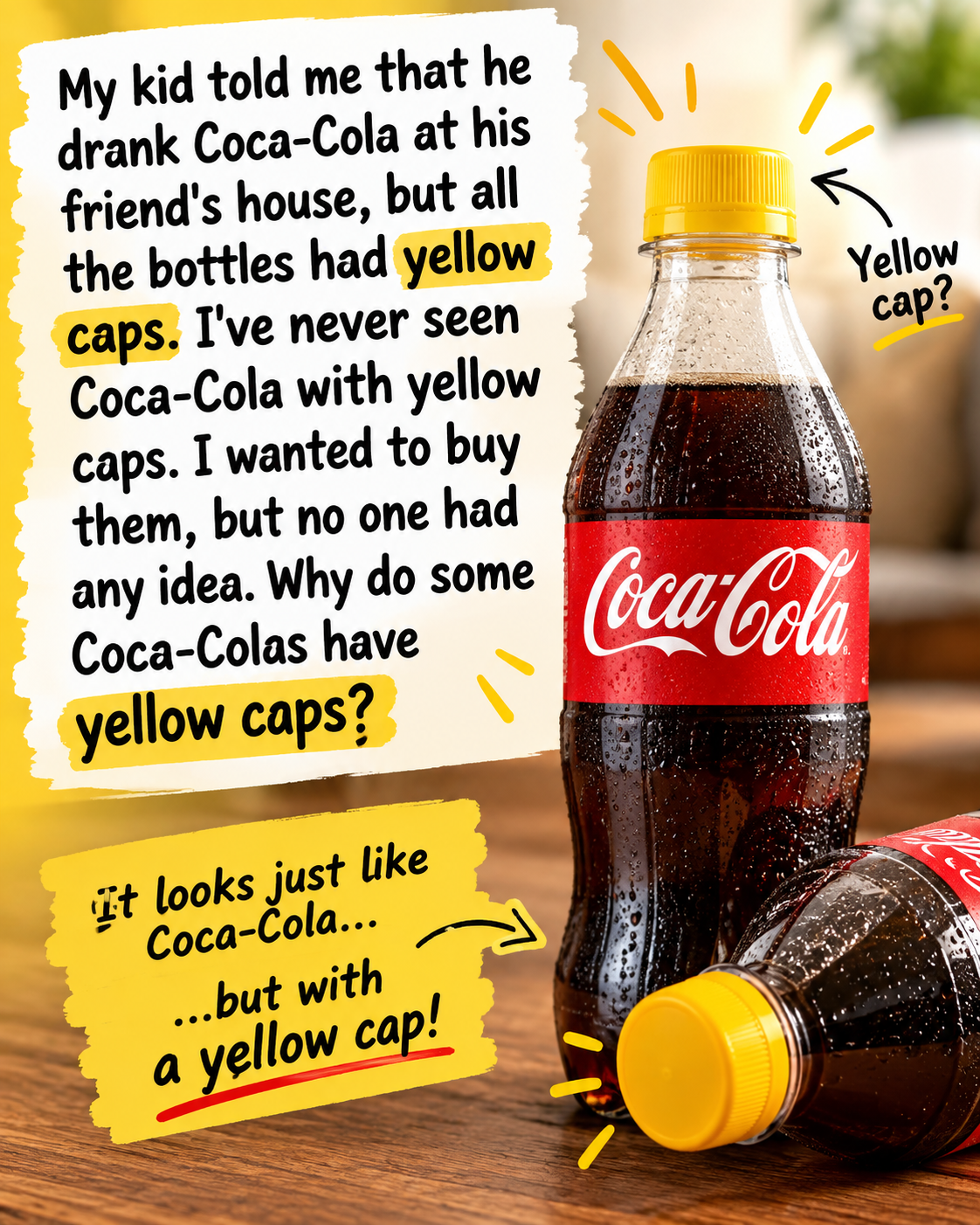
The Secret Behind Coca-Cola’s Yellow Bottle Caps is much more interesting than a seasonal packaging change. Those bright yellow caps mark special Coca-Cola products certified for Passover, the Jewish holiday that comes each spring. For shoppers who follow Passover dietary rules, the cap provides a quick visual clue that the bottle belongs to a specially supervised production run.
The Orthodox Union confirms that Coca-Cola continues to produce Passover-certified Regular Coke and Diet Coke in selected U.S. markets. For Passover 2026, the organization says the qualifying products are sold in 2-liter bottles and carry an OU-P certification, with distinctive yellow caps bearing that Passover symbol.
I remember the first time I noticed yellow-capped Coke in a grocery store. I assumed Coca-Cola had launched another temporary flavor or promotional design. However, the small change turned out to have a much deeper purpose. Once I learned that the cap helps shoppers identify a beverage prepared for Passover, the packaging suddenly made sense. It is a good example of how something as ordinary as a bottle cap can quietly communicate information about ingredients, religious practice, manufacturing, and decades of food tradition.
There is also an important detail that often gets lost in social-media explanations. The yellow cap is helpful, but shoppers observing Passover should still look for the actual kosher-for-Passover certification. The Orthodox Union specifically says Passover Coca-Cola requires the OU-P symbol rather than relying on cap color alone.
Why Coca-Cola Uses Yellow Bottle Caps
The Yellow Cap Identifies Passover Coca-Cola
The main purpose of Coca-Cola’s yellow bottle caps is identification. During the weeks surrounding Passover, specially produced bottles appear in selected markets with packaging that helps distinguish them from ordinary year-round Coca-Cola.
For Passover 2026, the Orthodox Union lists Regular Coca-Cola and Diet Coca-Cola among products available with OU-P certification. It also states that Passover Coke items use a distinctive yellow cap bearing the OU-P symbol. Distribution includes the New York metropolitan area as well as bottling in Jacksonville, Florida, and Los Angeles.
That means the yellow cap is not merely decorative. It gives shoppers an immediate way to spot bottles produced under Passover supervision. However, distribution remains regional rather than universal, so people in some parts of the country may never encounter the bottles.
The label and certification still matter more than color alone. The Orthodox Union advises consumers looking for Passover products to check for a recognized Passover designation such as OU-P. Processed foods and beverages often require special supervision for the holiday even if they are already certified kosher during the rest of the year.
Therefore, the most accurate rule is simple: a yellow cap strongly suggests Passover Coca-Cola in the markets where the program operates, but the OU-P symbol confirms the product’s certified status.
Why Regular Kosher Certification Is Not Enough
Coca-Cola sold in the United States can already carry year-round kosher certification. However, Passover introduces additional dietary requirements that make ordinary kosher status insufficient for many observant consumers.
Jewish dietary law for Passover prohibits chametz, which refers to certain fermented products made from wheat, barley, rye, oats, and spelt. In addition, many Ashkenazi Jewish communities traditionally avoid kitniyot, a category that includes foods such as corn, rice, and legumes. Customs vary among Jewish communities, so not everyone follows identical restrictions.
That distinction matters for soft drinks because standard U.S. Coca-Cola commonly uses high-fructose corn syrup. For people who avoid corn-derived ingredients as kitniyot during Passover, the ordinary formulation does not fit their holiday practice.
Coca-Cola therefore produces special Passover batches under rabbinic supervision. The manufacturing requirements involve more than simply swapping one ingredient for another. Equipment, ingredients, production conditions, and certification must all meet the requirements established by the supervising kosher authority.
This is why the OU-P symbol remains so important. A consumer does not need to determine independently whether every flavor, processing aid, or production line meets Passover requirements. The certification provides that assurance for the specific product carrying it.
What Is Different Inside Yellow-Cap Coca-Cola
Cane Sugar Replaces Corn-Based Sweetener in Regular Coke
The difference that attracts the most attention involves the sweetener. Regular U.S. Coca-Cola is commonly sweetened with high-fructose corn syrup, while the Passover version of Regular Coca-Cola uses sugar rather than the corn-derived sweetener.
Reports on yellow-cap Coca-Cola describe the Passover formulation as using cane sugar or sucrose. That change is especially relevant to consumers who follow the Ashkenazi custom of avoiding corn during Passover.
This ingredient change also explains why people who are not shopping for religious reasons sometimes look specifically for yellow-cap bottles. Some consumers say they prefer the flavor of Coca-Cola made with sugar rather than high-fructose corn syrup.
Taste preference remains subjective, of course. Cane sugar does not automatically make the drink healthier, nor does a yellow cap transform soda into a health food. Both versions remain sugar-sweetened soft drinks and should be considered within the broader context of overall diet.
However, the formulation difference is real and meaningful. For Passover observers, it helps the product meet holiday requirements. For other shoppers, it offers a limited seasonal opportunity to try a different sweetener formulation.
The best way to know what is inside a specific bottle is to read the ingredient label. Packaging and formulations can vary by region, year, and product type, so the label provides more reliable information than assumptions based on social-media posts.
Diet Coke Shows Why Certification Is About More Than Corn Syrup
Diet Coke adds an interesting twist to the yellow-cap story. Since Diet Coke does not depend on high-fructose corn syrup in the same way as regular Coca-Cola, its Passover certification demonstrates that the holiday requirements extend beyond a simple sweetener substitution.
The Orthodox Union’s 2026 Passover update specifically lists both Regular and Diet Coca-Cola with OU-P certification. Both qualifying products receive the distinctive yellow-cap treatment.
That detail highlights an important point about kosher certification. Ingredients are only part of the equation. Flavorings, processing aids, equipment, production lines, and manufacturing procedures can all matter when determining whether a processed product qualifies for Passover.
A person looking only at a standard ingredient list may therefore miss important production considerations. That is why kosher certification agencies advise consumers to rely on proper Passover symbols rather than trying to determine suitability from ingredients alone.
This also prevents a common misunderstanding: yellow caps do not simply mean “Coke made with cane sugar.” More accurately, they identify special Coca-Cola products made and certified for Passover. Cane sugar is a notable feature of Regular Passover Coca-Cola, but certification is the broader purpose.
Understanding that distinction makes the tradition much easier to explain. The yellow cap is not fundamentally about flavor experimentation. It is a practical marker for religious observance.
The Jewish Tradition Behind the Yellow Caps
Passover Has Additional Food Requirements
Passover commemorates the biblical Exodus from Egypt and carries distinctive dietary practices. Jewish families who observe the holiday remove or avoid chametz, and many also follow community-specific customs involving additional foods.
The Orthodox Union explains that even foods considered kosher throughout the rest of the year may need special preparation or certification for Passover. Most processed foods and beverages therefore require specific Passover supervision.
This is where Coca-Cola’s seasonal production becomes especially useful. A widely consumed product can remain available to people who want it during the holiday without requiring shoppers to investigate the manufacturing process themselves.
The yellow cap also demonstrates how major food companies sometimes adapt products for religious communities. Instead of creating an entirely different brand, Coca-Cola changes the necessary production details and gives consumers a clear way to identify the certified version.
For many families, these bottles have therefore become a familiar seasonal sight. They can appear on grocery shelves in the weeks leading up to Passover, particularly in communities with larger Jewish populations.
Availability varies, though. The Orthodox Union’s annual updates specify particular bottling locations and markets, so consumers should not assume every store or region will receive the product.
The Tradition Has Deep Historical Roots
The relationship between Coca-Cola and kosher certification extends back many decades. Historical accounts frequently point to Rabbi Tobias Geffen, an Atlanta rabbi who worked with Coca-Cola in the 1930s to address kosher concerns surrounding the beverage’s formulation.
That history helped establish a long-running relationship between Coca-Cola and kosher supervision. The Orthodox Union now certifies many Coca-Cola products in the United States and has documented its oversight of the company’s beverage bases, syrups, and finished products.
The modern yellow-cap tradition developed as a convenient way to distinguish the Passover formulation. OU Passover guides have documented the distinctive caps for many years, showing that this is not a recent social-media trend.
In that sense, the cap represents both history and practicality. A global beverage company adapts part of its production for a specific religious observance, while a small packaging detail helps the intended shoppers find it.
The tradition also illustrates how food customs evolve alongside industrial manufacturing. Observing Passover in a world of packaged foods requires more than checking whether a product visibly contains bread or grain. Modern ingredients and shared production equipment create more complicated questions.
Certification organizations bridge that gap. Their symbols allow consumers to make decisions quickly without needing technical knowledge of every production process.
Why Yellow-Cap Coke Has Fans Beyond Passover
Some Shoppers Prefer the Cane-Sugar Flavor
The Secret Behind Coca-Cola’s Yellow Bottle Caps has gained wider attention because the bottles attract shoppers who do not necessarily observe Passover. The reason usually comes down to the sweetener.
Some soda fans describe cane-sugar Coca-Cola as having a cleaner or different sweetness compared with the standard U.S. formulation. That preference has helped yellow-cap bottles develop a following beyond their original religious purpose.
Media coverage has documented shoppers seeking out the Passover version specifically because it uses cane sugar, sometimes comparing it with imported Mexican Coca-Cola.
However, those comparisons need a little caution. Formulations can differ by market and bottler, and taste involves much more than the type of sweetener. Packaging, carbonation, temperature, freshness, and expectation can all influence how someone perceives a drink.
There is also no strong reason to call one version substantially healthier simply because it uses cane sugar. High-fructose corn syrup and sucrose both contribute added sugars and calories. The main difference here is dietary compatibility for Passover and, for some consumers, taste preference.
Therefore, buying yellow-cap Coke for flavor is a personal choice. Buying it for Passover requires paying attention to certification as well.
How to Identify the Correct Bottle
If you are specifically shopping for Coca-Cola that is kosher for Passover, start by looking for the yellow cap during the weeks before the holiday. In markets participating in the program, it should stand out clearly beside ordinary red-capped bottles.
Next, check for the OU-P symbol. This certification matters more than the cap color because it indicates that the specific bottle has been approved for Passover use under Orthodox Union supervision.
Then read the ingredient label if you are interested in the sweetener. Regular Passover Coca-Cola sold in these special runs is associated with sugar rather than high-fructose corn syrup. The label lets you confirm the formulation on the bottle in your hand.
Do not assume that every yellow-capped beverage everywhere in the world follows the same rules. Packaging conventions differ by country, and the Orthodox Union explicitly notes that its information about Coca-Cola certification does not automatically extend to every manufacturing location worldwide.
Finally, remember that Passover requirements and customs vary among Jewish communities. Someone observing the holiday should follow the guidance they normally rely on rather than treating a general internet article as a substitute for their own religious practice.
That small amount of label checking prevents most confusion. Yellow draws your attention; certification provides the answer.
Frequently Asked Questions
What does a yellow cap on Coca-Cola mean?
In participating U.S. markets around Passover, the distinctive yellow cap identifies Coca-Cola produced with kosher-for-Passover certification. For Passover 2026, the Orthodox Union says certified Regular Coke and Diet Coke in its program carry yellow caps bearing the OU-P symbol.
Is yellow-cap Coca-Cola made with real sugar?
Regular Passover Coca-Cola is produced with sugar rather than the high-fructose corn syrup commonly used in standard U.S. Coke. Reports and product coverage describe this sweetener as cane sugar or sucrose.
Is all yellow-cap Coke automatically kosher for Passover?
Consumers should not rely on cap color alone. The Orthodox Union advises shoppers to look for the OU-P or another reliable Passover certification on processed foods and beverages.
Why is corn an issue during Passover?
Chametz specifically involves five grains, but many Ashkenazi Jewish communities also traditionally avoid kitniyot, a category that includes corn. Because regular U.S. Coca-Cola commonly contains high-fructose corn syrup, a specially certified formulation is produced for consumers following that custom.
Can anyone buy yellow-cap Coca-Cola?
Yes. The bottles are regular retail products and are not restricted to people observing Passover. However, availability is limited and regional, so stores in areas served by the participating bottling program are more likely to carry them.
Conclusion
The Secret Behind Coca-Cola’s Yellow Bottle Caps is a longstanding Passover tradition rather than a random promotion. The yellow caps help identify specially produced Coca-Cola that carries kosher-for-Passover certification, allowing observant consumers to distinguish it quickly from ordinary year-round bottles.
For Regular Coca-Cola, the seasonal formulation is especially notable because it replaces the corn-based sweetener commonly used in standard U.S. Coke with sugar. That change helps accommodate consumers who follow Passover customs that include avoiding corn as kitniyot. Diet Coke can also receive the special certification, showing that Passover production involves more than sweetener alone.
The most important detail is the certification itself. The Orthodox Union’s 2026 guidance says qualifying Coca-Cola products bear the OU-P symbol and distinctive yellow caps. Shoppers observing Passover should look for that mark instead of assuming color alone provides sufficient confirmation.
For everyone else, yellow-cap Coke offers a fascinating glimpse at how a familiar global product can adapt to a specific religious tradition. Some people seek it out for the cane-sugar flavor, while others simply enjoy learning what the unusual packaging means.
Either way, that small yellow cap carries more information than it appears to. It represents ingredients, certification, Passover customs, manufacturing changes, and a tradition that has connected Coca-Cola with Jewish consumers for generations.
More Blog
- Drinking Water on an Empty Stomach — What Science Actually Supports (No Hype, Just Facts)
- Waking Up Between 3 and 5 AM? It Might Be Your Soul Trying to Talk to You
- What a “Bleach” Patch on Your Underwear Really Means — And Why It’s Actually a Good Sign
- This Drink May Weaken Your Bones From The Inside — But Everyone Drinks It Anyway