Pour This Creamy Mixture Over Potatoes for the Coziest Winter Casserole when you want a warm, bubbling side dish that makes an ordinary dinner feel special. Thinly sliced potatoes bake beneath a rich mixture of heavy cream, Parmesan, caramelized onions, black pepper, and thyme. As everything cooks, the potatoes soften while the cream thickens around them. Meanwhile, Parmesan creates a savory golden finish.
This casserole falls deliciously between scalloped potatoes and a classic potato gratin. However, the caramelized onions give it an extra layer of sweetness and depth. Better yet, the preparation stays straightforward enough for beginners.
I first started making creamy baked potatoes when I wanted something more interesting than mashed potatoes for a cold-weather dinner. I loved the flavor, but early versions sometimes had potatoes that stayed firm in the center. Eventually, I learned that thin, even slices and a tightly covered first bake made all the difference. Adding slowly caramelized onions was another improvement I kept. Now, when I pour this creamy mixture over potatoes, I know the oven will transform a few familiar ingredients into a tender, golden casserole that feels comforting without requiring complicated techniques.
Why Pour This Creamy Mixture Over Potatoes
The Creamy Sauce Reaches Every Layer
The best part of this casserole comes from the way the sauce surrounds the potatoes. Instead of simply spreading cheese over the surface, you combine heavy cream, Parmesan, seasonings, thyme, and caramelized onions before pouring everything over the sliced potatoes.
Therefore, flavor reaches much more than the top layer.
Heavy cream provides enough richness to create a luxurious texture without requiring a separate flour-based sauce. As the casserole bakes, the potatoes release some of their natural starch. That starch helps thicken the cream and creates a smooth sauce between the slices.
Parmesan adds another important element. It brings a salty, nutty flavor that balances the mild potatoes and sweet onions. Furthermore, the extra Parmesan scattered across the surface develops appealing golden spots during the uncovered portion of baking.
Fresh thyme gives the dish a fragrant, earthy note. However, dried thyme also works well when fresh herbs aren’t available.
Black pepper cuts through the richness, while salt brings the potatoes, cream, cheese, and onions together.
Consequently, each ingredient performs a simple but important job. You don’t need a long ingredient list because the combination already provides plenty of flavor.
Caramelized Onions Add Richness Without Heaviness
Caramelized onions make this casserole stand out from basic creamy potatoes.
Raw onions taste sharp and can release considerable moisture. Slowly cooked onions behave differently. As they soften and brown, their flavor becomes mellow, savory, and naturally sweet.
Start them in butter over medium heat. Then, reduce the heat when necessary so they soften instead of scorching.
Patience matters here. Proper caramelization generally takes about 20 to 25 minutes. Although you can add a teaspoon of sugar, you don’t need it. The onions naturally become sweeter as they cook.
If the skillet looks dry, add a small amount of olive oil or a splash of water. Most importantly, keep stirring occasionally so the onions cook evenly.
Once they turn deeply golden, mix them directly into the cream. This distributes their flavor throughout the casserole rather than creating a single onion layer.
As a result, nearly every serving contains tender potatoes, savory Parmesan, herbs, and soft pieces of golden onion.
Choosing and Preparing the Potatoes
Russet and Yukon Gold Potatoes Both Work
The potato variety affects the final texture, so choose according to the result you prefer.
Russet potatoes contain plenty of starch. Therefore, they help produce a thick, exceptionally creamy casserole. They also become very soft when fully baked, which makes them ideal when you want a traditional comfort-food texture.
Yukon Gold potatoes offer a slightly different result. They have a naturally buttery flavor and hold their shape somewhat better. Consequently, you can see more distinct layers when you serve the casserole.
Either variety works beautifully.
You can also peel the potatoes or leave the skins intact. Peeling creates a smoother, more traditional presentation. On the other hand, leaving thin, clean skins in place saves preparation time and adds a little texture.
Whichever potato you choose, avoid soaking the slices in water after cutting them. Washing away too much surface starch can reduce the sauce’s natural thickening ability.
Instead, slice the potatoes shortly before assembling the casserole.
Also, don’t prepare them too far ahead. Cut potatoes can discolor when exposed to air for an extended period. Fortunately, this recipe moves quickly once the onions finish caramelizing.
Thin, Even Slices Are Essential
Thickness matters more than fancy arrangement.
Aim for potato slices approximately 1/8 inch thick. A mandoline makes uniform slices quickly. However, a sharp chef’s knife works perfectly well if you take your time.
Consistent slices cook at approximately the same rate. In contrast, very thick pieces can remain firm while thinner pieces become completely soft.
After slicing, spread the potatoes throughout a greased 9-by-13-inch casserole dish.
You don’t need to create perfectly overlapping rows unless you want a decorative presentation. Instead, focus on distributing the potatoes evenly. This allows the cream to move around and between the slices.
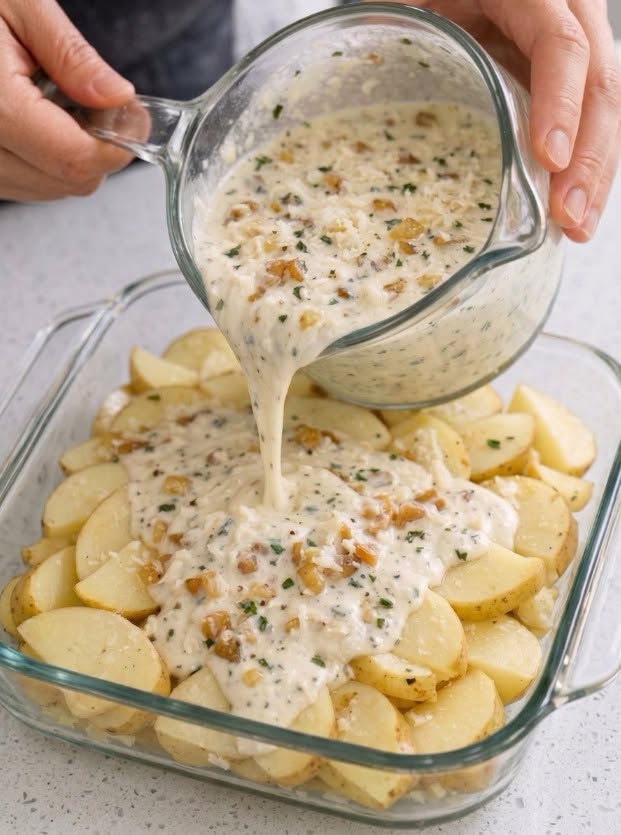
Next, slowly pour the cream and onion mixture across the entire dish.
Gently shake the casserole dish afterward. Alternatively, lift and separate a few potato slices with a spoon. Either technique encourages the sauce to reach lower layers.
This small step makes a noticeable difference.
When you pour this creamy mixture over potatoes evenly, you reduce the chance of dry patches. Additionally, the onions remain distributed throughout the dish instead of collecting in one corner.
Finally, sprinkle Parmesan over the surface before covering the casserole.
How to Get Tender Potatoes and a Golden Top
Cover the Casserole During the First Bake
One of the easiest mistakes with potato casseroles involves browning the top before the potatoes become tender.
Fortunately, aluminum foil solves that problem.
Cover the casserole dish tightly before placing it into a 375°F oven. The foil traps steam, which helps the potato slices cook evenly while protecting the creamy sauce from excessive evaporation.
Bake the covered casserole for about 45 to 55 minutes.
However, don’t rely only on the clock. Potato varieties, slice thickness, casserole dishes, and ovens can affect cooking time.
Instead, test the potatoes near the center with a thin knife or fork. The utensil should slide through the slices easily.
If you feel substantial resistance, cover the casserole again and continue baking. Check it after another 5 to 10 minutes.
Don’t rush this stage.
Once you uncover the dish, the surface will brown quickly. Therefore, you want the potatoes almost completely tender beforehand.
A glass casserole dish works particularly well because you can see the sauce bubbling around the edges. Still, a ceramic baking dish also works.
For easier cleanup, place the casserole dish on a rimmed baking sheet if it looks particularly full. The cream can bubble enthusiastically as it thickens.
Finish Uncovered for Crisp, Golden Edges
Once the potatoes feel tender, carefully remove the aluminum foil.
At this point, the casserole may look pale and quite saucy. That’s normal. The uncovered baking stage changes both its appearance and texture.
Return the dish to the oven for another 15 to 20 minutes.
During this time, excess moisture evaporates. Meanwhile, the Parmesan browns and the exposed potato edges develop light crispness.
Look for active bubbling around the sides and a golden surface.
For additional browning, you can briefly use the broiler at the end. However, watch the casserole constantly because Parmesan can change from golden to burned very quickly.
After baking, resist the temptation to serve it immediately.
Instead, allow the casserole to rest for about 10 to 15 minutes. The sauce will continue thickening as it cools slightly. Therefore, portions will hold together better when transferred to plates.
The resting period also makes the casserole easier and safer to serve because the creamy center will be extremely hot when it first leaves the oven.
Serving, Storing, and Customizing the Casserole
What to Serve With Creamy Baked Potatoes
Because this casserole tastes rich and savory, it pairs especially well with simple main dishes.
Roasted chicken makes an excellent choice. Pork chops, baked ham, meatloaf, and roast beef also complement the creamy potatoes. Furthermore, the casserole works beautifully as part of a holiday dinner.
Try balancing the richness with something fresh or green.
Steamed green beans provide a clean contrast. Roasted broccoli also works well, while a crisp salad with a tangy vinaigrette helps refresh the palate between bites.
For an especially cozy dinner, serve crusty bread alongside the casserole. The bread can soak up any creamy sauce left on the plate.
You can also serve smaller portions because this dish feels quite satisfying. A 9-by-13-inch casserole comfortably provides about six generous side-dish servings.
For gatherings, you can stretch it further when several other sides appear on the table.
Most importantly, serve it warm rather than piping hot. After resting, the sauce becomes creamier and the flavors become easier to appreciate.
Make-Ahead Tips and Easy Variations
You can prepare several components ahead of time.
For example, caramelize the onions a day in advance and refrigerate them in an airtight container. Then, bring them out while you prepare the remaining ingredients.
You can also assemble the entire casserole several hours before dinner. Cover it tightly and refrigerate it. However, a chilled casserole may require additional baking time because the center starts much colder.
Leftovers keep well, too.
Transfer cooled portions to an airtight container and refrigerate them promptly. Then, reheat individual servings until thoroughly hot. For larger portions, cover them while reheating so the potatoes don’t dry out.
You can also customize the flavor without changing the basic technique.
For example, replace some Parmesan with Gruyère for a nuttier, meltier finish. A little garlic works nicely with the thyme. Rosemary can replace thyme, although its stronger flavor means you should use it more sparingly.
For extra savory flavor, add a small pinch of garlic powder to the cream mixture.
Still, avoid adding too many extras at once. The appeal of this casserole comes from its simple balance of tender potatoes, sweet onions, rich cream, herbs, and salty cheese.
Ingredients
- 2 tablespoons unsalted butter
- 2 large yellow onions, thinly sliced
- 1 teaspoon granulated sugar, optional
- 1 tablespoon olive oil, optional
- 2 cups heavy cream
- 1 cup finely grated Parmesan cheese
- 2 tablespoons finely grated Parmesan cheese, for topping
- 1 1/2 teaspoons kosher salt, divided
- 1 teaspoon freshly ground black pepper
- 2 teaspoons chopped fresh thyme leaves, or 1 teaspoon dried thyme
- 3 pounds russet or Yukon Gold potatoes, thinly sliced
- 1 tablespoon unsalted butter or cooking spray, for greasing the dish
Instructions
- Preheat the oven to 375°F. Grease a 9-by-13-inch casserole dish with butter or cooking spray.
- Melt 2 tablespoons butter in a large skillet over medium heat. Add the onions and 1/2 teaspoon salt.
- Cook the onions for 20 to 25 minutes, stirring occasionally, until soft and deeply golden. Add the optional sugar for faster browning. If needed, add olive oil or a splash of water to prevent sticking.
- Whisk the heavy cream, 1 cup Parmesan, remaining 1 teaspoon salt, black pepper, and thyme in a medium bowl. Stir in the caramelized onions.
- Slice the potatoes into approximately 1/8-inch rounds and distribute them evenly in the prepared casserole dish.
- Pour the creamy onion mixture evenly over the potatoes. Gently shake the dish or separate a few slices so the cream reaches between them.
- Sprinkle the remaining 2 tablespoons Parmesan over the surface. Cover tightly with aluminum foil.
- Bake for 45 to 55 minutes, or until a knife easily pierces the potatoes near the center.
- Remove the foil and bake for another 15 to 20 minutes, until the casserole bubbles and develops a lightly browned top.
- Rest for 10 to 15 minutes before serving so the creamy sauce can thicken.
Frequently Asked Questions
Can I make this potato casserole ahead of time?
Yes. You can assemble it several hours ahead, cover it tightly, and refrigerate it. Because the casserole starts cold, allow additional oven time and check the center carefully for tenderness before removing the foil.
Why are my potatoes still hard after baking?
The slices may be too thick, or the casserole may need more covered baking time. Slice potatoes approximately 1/8 inch thick and keep the dish tightly covered until a knife easily passes through the center.
Can I use milk instead of heavy cream?
You can, but the result won’t taste as rich and the sauce may remain thinner. Heavy cream provides the most reliable creamy consistency. If you want a lighter casserole, replacing only part of the cream with whole milk works better than replacing all of it.
What cheese can I use instead of Parmesan?
Gruyère makes an excellent alternative because it melts smoothly and provides a rich, nutty flavor. You can also combine Parmesan and Gruyère. However, remember that different cheeses contain different amounts of salt, so adjust the seasoning accordingly.
Do I need to peel the potatoes?
No. You can leave the skins on Yukon Gold or well-scrubbed russet potatoes. However, peeling them creates a smoother texture and a more traditional creamy potato casserole.
Conclusion
Pour This Creamy Mixture Over Potatoes for the Coziest Winter Casserole and simple sliced potatoes become a rich, golden side dish worthy of Sunday dinner or a holiday table. Caramelized onions bring gentle sweetness, while Parmesan and thyme give the cream plenty of savory flavor.
More importantly, the technique stays simple. Slice the potatoes thinly, distribute the sauce evenly, and keep the casserole covered until the potatoes become tender. Then, uncover it and let the oven create those bubbling, browned edges.
After a short rest, you’ll have tender layers surrounded by thick, creamy sauce and topped with golden Parmesan. Serve the casserole with roasted meat and fresh vegetables for an easy, satisfying cold-weather meal.
More Blog
- Drinking Water on an Empty Stomach — What Science Actually Supports (No Hype, Just Facts)
- Waking Up Between 3 and 5 AM? It Might Be Your Soul Trying to Talk to You
- What a “Bleach” Patch on Your Underwear Really Means — And Why It’s Actually a Good Sign
- This Drink May Weaken Your Bones From The Inside — But Everyone Drinks It Anyway