For Ryan Finley, an ordinary morning became the beginning of a medical crisis that would change his life forever.
His wife, Jill, was only 31 when Ryan reportedly tried to wake her and received no response. Within moments, what had seemed like a normal day turned into an emergency.
Ryan called for medical assistance and began performing CPR while waiting for paramedics to arrive. Jill was rushed to the hospital, where doctors determined that she had suffered cardiac arrest.
What followed was an agonizing period of uncertainty for Ryan, their relatives, and friends.
Jill Fell Into a Coma
Doctors worked to stabilize Jill, but her condition remained extremely serious. She eventually slipped into a coma.
Ryan suddenly found himself facing circumstances few spouses are prepared to confront. The woman who had appeared healthy only a short time earlier was now unconscious and dependent on medical care.
For days, family members and friends visited Jill, hoping for signs of improvement.
According to Ryan’s account, faith also became an important source of comfort during the ordeal. After one of Jill’s relatives brought a Bible to the hospital, Ryan began reading passages aloud beside his wife’s bed.
Still, Jill did not wake.
A Devastating Decision
As the days passed without the recovery everyone desperately hoped for, Ryan was confronted with an extraordinarily difficult decision.
After discussions about Jill’s condition and prognosis, the possibility of withdrawing life-sustaining treatment was raised.
Ryan ultimately agreed.
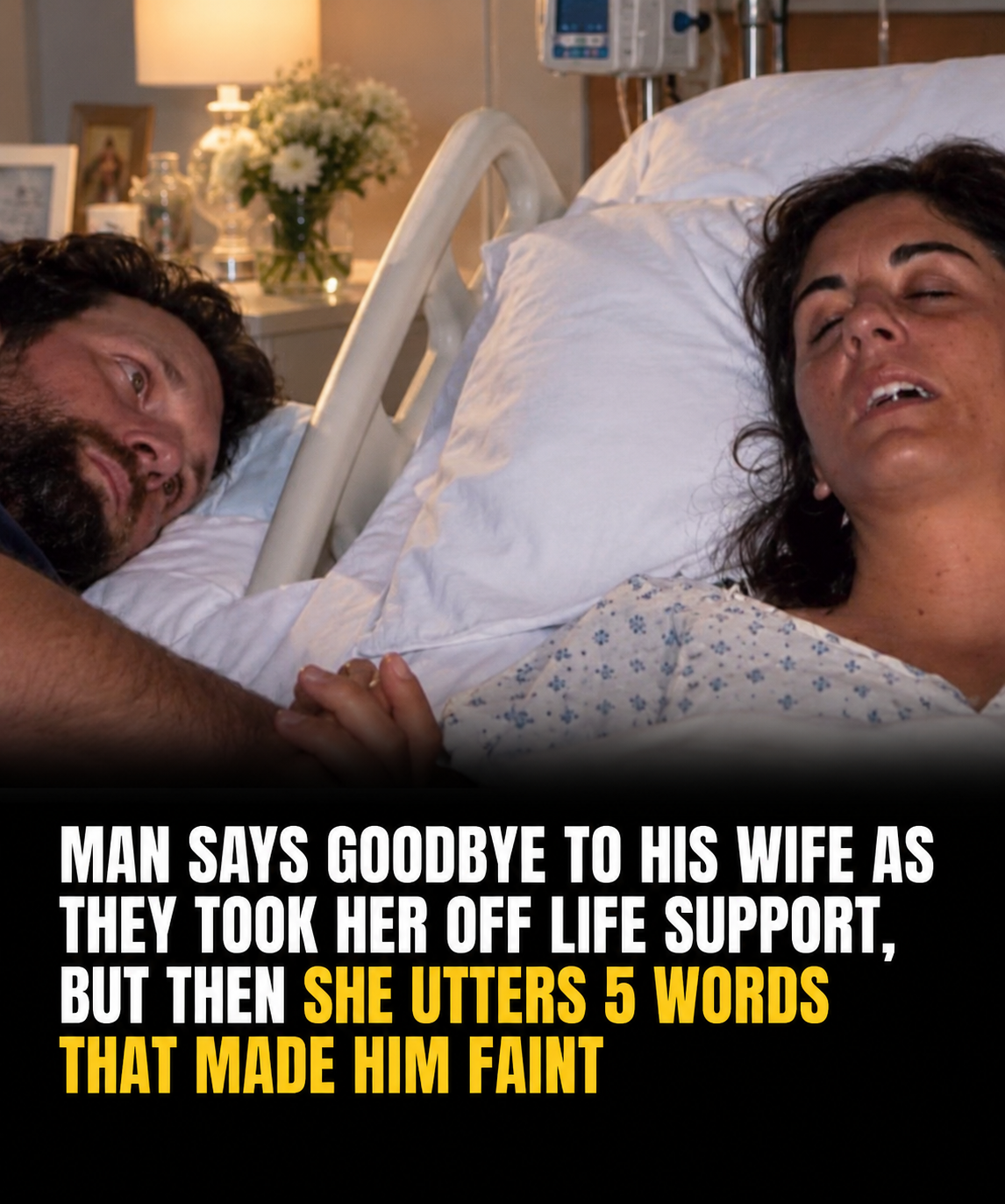
On the 14th day of the ordeal, life support was withdrawn. Ryan believed he was preparing to lose his wife and began confronting the reality that their life together might be ending.
But approximately five hours later, something unexpected happened.
Jill began moving and making sounds.
Initially, Ryan reportedly believed these were simply part of the dying process. Overwhelmed by the situation, he stepped away.
Then a nurse came to find him.
Jill was speaking.
“I Want to Go Home”
Ryan hurried back to his wife’s bedside, uncertain about what he was about to see.
Instead of finding Jill unconscious, he found her attempting to communicate.
Among the first things she expressed was a desire to leave the hospital and return home.
Ryan could hardly believe what was happening. He initially wondered whether her words were confused or involuntary, so he began asking questions designed to determine whether she was truly aware of her surroundings.
He reportedly asked Jill about their pets and gave her simple math problems.
She answered correctly.
Jill even talked about going to one of her favorite restaurants.
For Ryan, those responses represented something extraordinary: the goodbye he had been preparing himself to make suddenly no longer seemed final.
His wife was awake.
Recovery Was Only Beginning
Jill’s awakening did not mean that everything immediately returned to normal.
After spending an extended period critically ill and unconscious, she faced significant rehabilitation. Everyday activities that most people perform automatically had to be relearned.
Tasks such as brushing her teeth and tying her shoes became part of the recovery process as she worked to regain lost abilities.
Her return to consciousness was therefore not the end of the couple’s ordeal. Instead, it marked the beginning of another demanding chapter—one focused on rehabilitation and rebuilding daily life.
Faith and a Second Chance
Ryan has attributed Jill’s unexpected recovery to divine intervention, describing his faith as central to how he understands what happened.
For the couple, the experience also transformed the way they viewed their time together.
Interestingly, Jill reportedly did not blame Ryan for agreeing to withdraw life support. Given the medical information he had at the time, she understood the impossible position in which he had been placed.
Ryan, meanwhile, admitted that the experience remained with him even after Jill returned home.
He described occasionally waking during the night and checking that she was beside him—a small gesture reflecting how deeply the possibility of losing her had affected him.
A Story About How Quickly Life Can Change
Stories involving severe medical emergencies and unexpected recoveries can be emotionally powerful, but they also highlight the complexity of critical-care medicine.
Decisions involving life-sustaining treatment are highly individual and depend on a patient’s medical condition, prognosis, wishes, and discussions between families and qualified healthcare professionals. One person’s experience should therefore never be treated as a prediction of what will happen in another medical case.
For Ryan and Jill, however, what began as an ordinary morning became an experience neither could have anticipated.
Ryan had reached the point where he believed he was saying goodbye to his wife.
Instead, hours after life support was withdrawn, he heard something he thought he might never hear again:
Jill’s voice.
Their experience ultimately became not only a story of survival, but also a reminder of how suddenly life can change—and how precious ordinary moments with the people we love can become.
More Blog
- Drinking Water on an Empty Stomach — What Science Actually Supports (No Hype, Just Facts)
- Waking Up Between 3 and 5 AM? It Might Be Your Soul Trying to Talk to You
- What a “Bleach” Patch on Your Underwear Really Means — And Why It’s Actually a Good Sign
- This Drink May Weaken Your Bones From The Inside — But Everyone Drinks It Anyway