Thanks to This Trick, you can give your home a warm, inviting fragrance with two ordinary ingredients and without continuously spraying perfume into every room.
The simplest version requires only water and citrus peels.
Place them in a small saucepan, bring the water to a gentle simmer, and let the natural citrus aroma drift through the nearby rooms. Add more water whenever the level becomes low, and never leave the pot unattended.
That is the entire trick.
Of course, the phrase “never stop smelling amazing” exaggerates what any home-fragrance method can accomplish. No fragrance lasts forever, and constantly adding scent does not actually make indoor air cleaner. However, a gently simmering pot can make a kitchen and surrounding living space smell pleasant while you use it.
More importantly, this approach avoids one questionable internet hack: spraying diluted fabric softener into the air. Fabric softener is designed for laundry, not as an improvised room spray, and fragranced household products can contribute volatile organic compounds to indoor air. The U.S. Environmental Protection Agency lists air fresheners among household sources of VOCs.
I started using this idea after walking into a kitchen where someone had left orange peels simmering gently in water after breakfast. Nothing smelled artificially perfumed. Instead, the room carried a soft citrus fragrance that made the whole space feel fresher. What surprised me most was how little the method required. There were no expensive cartridges, complicated blends, or mysterious bottles hiding under the sink. Later, I experimented with lemon peels and discovered the same basic principle worked beautifully. Since then, I have preferred using simple kitchen scraps when I want temporary fragrance. It costs almost nothing, creates less waste, and makes an ordinary afternoon at home feel surprisingly cozy.
Why This Two-Ingredient Home Fragrance Trick Works
Water Carries Aroma Through the Room
The beauty of Thanks to This Trick lies in something incredibly simple: warm water helps release aromatic compounds from citrus peel.
Orange, lemon, lime, and other citrus peels contain fragrant oils. When you warm the peels gently in water, heat encourages some of those aromatic compounds to enter the surrounding air.
Meanwhile, water vapor helps distribute the aroma around the kitchen.
You do not need to boil the mixture aggressively.
In fact, a quiet simmer works better because it reduces splashing and slows evaporation.
Start with about four cups of water and the peel from one or two oranges.
Then place the saucepan over low heat.
As the mixture warms, the fragrance becomes more noticeable.
You can also use lemon peel if you prefer a sharper, cleaner-smelling citrus aroma.
However, remember an important distinction: pleasant fragrance and clean air are not identical.
A citrus simmer pot can change how your room smells. It does not remove every contaminant, disinfect the house, eliminate mold, or replace ventilation.
If a room smells unpleasant because of garbage, spoiled food, moisture, smoke, dirty drains, or another source, address the source first.
Then use fragrance if you still want it.
That approach makes Thanks to This Trick much more useful because you are enhancing a clean space instead of trying to cover an unresolved odor.
Why Simmering Beats the Fabric-Softener Spray Hack
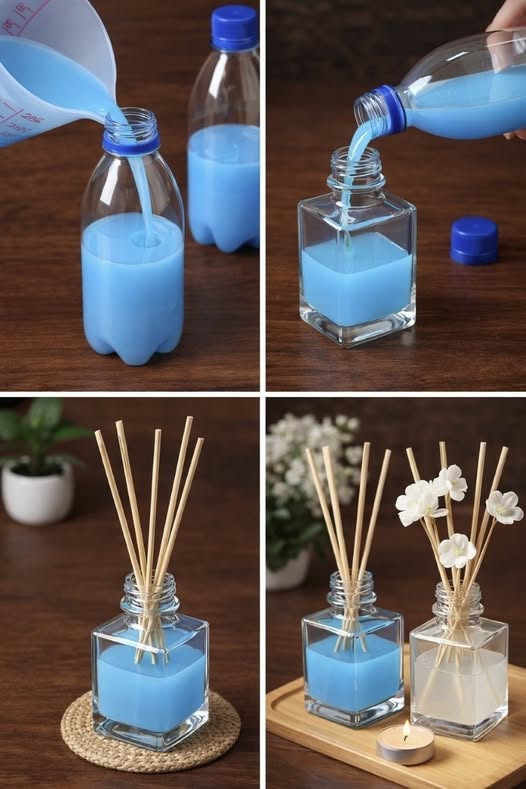
A popular version of this idea tells people to mix fabric softener and water in a spray bottle.
The mixture certainly smells fragranced.
However, that does not make it an ideal room spray.
Fabric softener manufacturers formulate their products for laundry use. Unless a specific product label says otherwise, spraying it around the home introduces it through a route the manufacturer did not necessarily intend.
Additionally, household fragrance products can contribute chemicals to indoor air.
The EPA notes that many VOC concentrations are higher indoors than outdoors and identifies products such as air fresheners and cleaning supplies among potential sources.
Some fragrance ingredients can also react with other chemicals in indoor air. The EPA notes that pine- or citrus-scented products can react with ozone to form particulate matter and formaldehyde under some conditions.
That does not mean every scented product automatically creates a dangerous home.
It does mean “it smells good” and “it improves air quality” should not become interchangeable statements.
Therefore, Thanks to This Trick works best as a modest fragrance idea, not as a detox claim.
Water and leftover citrus peels give you a straightforward alternative without turning a laundry product into an airborne spray.
How to Make the Two-Ingredient Simmer Pot
The Basic Orange-Peel Method
For the easiest version of Thanks to This Trick, gather only two ingredients:
Water and orange peel.
Add about four cups of water to a small saucepan.
Next, add the peel from one or two oranges.
You can use fresh peels immediately after eating the fruit, which makes this method an easy way to reuse something you might otherwise throw away.
Place the saucepan over medium heat until the water becomes hot.
Then reduce the burner to its lowest practical setting and maintain a gentle simmer.
Do not allow the pot to boil dry.
Check it regularly and add additional water whenever necessary.
The amount of time you can simmer it depends on your stove, saucepan, water level, and heat setting.
Never leave a simmer pot running when you leave the house.
Likewise, turn the burner off before going to sleep.
A home fragrance is never worth creating a cooking or fire hazard.
Once you finish, let the mixture cool before disposing of the peels and water.
Then wash the saucepan normally.
This version gives the room a warm orange fragrance without requiring a long list of ingredients.
Change the Scent Without Complicating the Recipe
The two-ingredient formula also works with different citrus peels.
For a bright scent, use lemon peel and water.
For something sweeter, use orange peel.
You can even combine peels from citrus fruit that you already plan to eat, although technically that turns the recipe into more than two ingredients if you mix varieties.
Many simmer-pot recipes add cinnamon sticks, cloves, rosemary, vanilla, apples, cranberries, or other aromatics.
Those combinations can smell wonderful.
However, you do not need them for Thanks to This Trick.
Keeping the method minimal saves money and avoids buying ingredients solely to perfume the house.
You can also refrigerate citrus peels briefly until you have enough for your simmer pot.
However, discard any peel that develops visible mold, an unusual slimy texture, or another sign of spoilage.
The goal is to create a pleasant aroma, not simmer decomposing food.
Also, avoid adding household cleaners, perfumes, fabric softeners, or random chemicals to the saucepan.
Heating products can change how compounds enter the air, and you should never heat something simply because an online post says it smells good.
Stick with water and ordinary food ingredients.
What Actually Makes a House Smell Fresh
Remove Bad Odors Before Adding Good Ones
Thanks to This Trick works much better in a reasonably clean home.
Fragrance cannot permanently solve odor from a dirty garbage disposal, damp towel, overflowing trash can, litter box, spoiled food, mildew, or forgotten laundry.
Start by finding the source.
Empty trash regularly.
Wash kitchen sponges and dishcloths or replace them when needed.
Clean food spills before they sour.
Dry wet towels instead of leaving them crumpled.
Check refrigerator drawers for forgotten produce.
Wash pet bedding according to its care instructions.
Clean drains when buildup causes odor.
Then ventilate the home when outdoor conditions make that practical.
Opening windows can sometimes reduce indoor pollutant concentrations by increasing outdoor-air exchange, although ventilation choices depend on outdoor conditions, allergies, weather, and local air quality.
Once you deal with the source, your simmer pot becomes an accent rather than camouflage.
That distinction makes an enormous difference.
A truly fresh-smelling house usually smells subtle.
It does not need to smell like someone emptied an entire fragrance bottle into the living room.
Often, the most pleasant indoor scent combines clean surfaces, fresh laundry, normal ventilation, and one gentle aroma in the background.
More Fragrance Is Not Always Better
Scent preferences vary widely.
One person may find orange fragrance comforting, while another develops a headache around strong scents.
Therefore, use Thanks to This Trick lightly.
You do not need to produce an aroma strong enough to reach every corner of a large home.
If the scent becomes overwhelming, turn off the burner and ventilate the area.
People with asthma, fragrance sensitivities, migraines, or other respiratory concerns may prefer little or no added fragrance.
Likewise, “natural” does not automatically mean harmless.
Essential oils provide a good example.
They come from plants, but concentrated oils can cause poisoning when misused. Poison Control advises using essential-oil products according to their labels and keeping them where children cannot access them.
Therefore, replacing synthetic fragrance with unlimited essential oil does not automatically create a safer solution.
The simplest approach remains the easiest to control:
Use a small amount of ordinary citrus peel in water, keep the fragrance mild, and stop if anyone in the home finds it irritating.
Important Safety Tips Before You Try This Trick
Keep Pets and Children in Mind
If you have children or pets, Thanks to This Trick requires a few additional precautions.
First, treat the simmering saucepan exactly like any other hot cooking vessel.
Keep children away from the stove.
Turn pot handles inward when appropriate so someone cannot accidentally knock the pan down.
Never leave the mixture unattended.
Store leftover citrus and other ingredients where children cannot create a mess or access anything unsafe nearby.
Essential oils require even greater caution.
The ASPCA explains that concentrated essential oils can pose risks to pets and notes that cats and dogs can experience health problems after certain exposures. It recommends particular care with diffusers, especially around animals with breathing problems.
Therefore, do not assume that adding essential oil makes a simmer pot “healthier.”
If you have pets, especially animals with respiratory disease, consult your veterinarian before routinely diffusing concentrated oils in shared spaces.
Also, never allow pets to drink simmer-pot water.
Once you finish, cool and dispose of the mixture appropriately.
Never Leave a Simmer Pot Running Unattended
This rule deserves repeating.
A stovetop fragrance still involves a hot burner.
Water gradually evaporates.
If enough water disappears, the contents can scorch, the saucepan can become damaged, and a pleasant home-fragrance idea can become a serious safety problem.
Therefore, remain nearby while the pot simmers.
Check the water level regularly.
Add more water before it becomes low.
Turn the burner off when you finish using the fragrance.
Do not leave it operating while you run errands.
Do not leave it simmering overnight.
If you want fragrance without monitoring a stove, skip the simmer pot at that time rather than trying to make the method unattended.
You can still keep a home pleasant through ordinary cleaning and ventilation.
Thanks to This Trick should remain a small comfort, not a constant household system.
The safest version is temporary, supervised, gentle, and uncomplicated.
Frequently Asked Questions
What are the two ingredients in this home fragrance trick?
The simplest version uses only water and citrus peels. Orange peel creates a warm, sweet fragrance, while lemon peel produces a brighter citrus scent.
How long can I simmer orange peels?
You can keep the mixture at a gentle simmer while you remain nearby and maintain enough water in the saucepan. Check it regularly and add water as needed. Turn off the stove whenever you leave the room for an extended period, leave home, or go to sleep.
Can I spray fabric softener and water around my house?
Using fabric softener as an improvised room spray is unnecessary. Fabric softener is designed for laundry use, and fragranced household products can contribute compounds to indoor air. Use products according to their labels.
Are essential oils safer than air fresheners?
Not automatically. Essential oils are concentrated substances and can cause irritation or poisoning when misused. They also require special care around children and pets. “Natural” does not automatically mean risk-free.
Does a simmer pot actually clean indoor air?
No. A simmer pot primarily adds fragrance. It should not replace cleaning, source control, appropriate ventilation, or solutions for mold, smoke, moisture, sewage odors, or other indoor-air problems.
Conclusion
Thanks to This Trick, you really can make a room smell inviting with only two ingredients.
You need water.
You need citrus peel.
That is enough.
Add them to a saucepan, maintain a gentle simmer while you remain nearby, and replenish the water before the level drops too far.
The warm citrus aroma can give your kitchen and surrounding rooms a cozy fragrance without requiring an elaborate recipe.
However, keep your expectations realistic.
No fragrance lasts forever.
A simmer pot does not purify indoor air.
It does not disinfect a room.
It cannot fix moisture, mold, garbage, smoke, pet accidents, or other sources of unwanted odor.
Good home fragrance begins with removing the source of bad smells. After that, a light scent can make the space feel more inviting.
Also, skip the temptation to turn fabric softener into a homemade air spray simply because viral posts recommend it. Fragranced household products can contribute VOCs to indoor air, and manufacturers formulate laundry products for their intended uses.
Treat essential oils carefully as well, particularly around children and pets. Concentrated oils can cause harm when misused, and some exposures pose concerns for animals.
Sometimes the best household tricks are the ones that remain genuinely simple.
Save the orange peel from breakfast.
Add water.
Turn the heat down low.
Then enjoy the warm, fresh scent while you are home to supervise it.
More Blog
- Drinking Water on an Empty Stomach — What Science Actually Supports (No Hype, Just Facts)
- Waking Up Between 3 and 5 AM? It Might Be Your Soul Trying to Talk to You
- What a “Bleach” Patch on Your Underwear Really Means — And Why It’s Actually a Good Sign
- This Drink May Weaken Your Bones From The Inside — But Everyone Drinks It Anyway