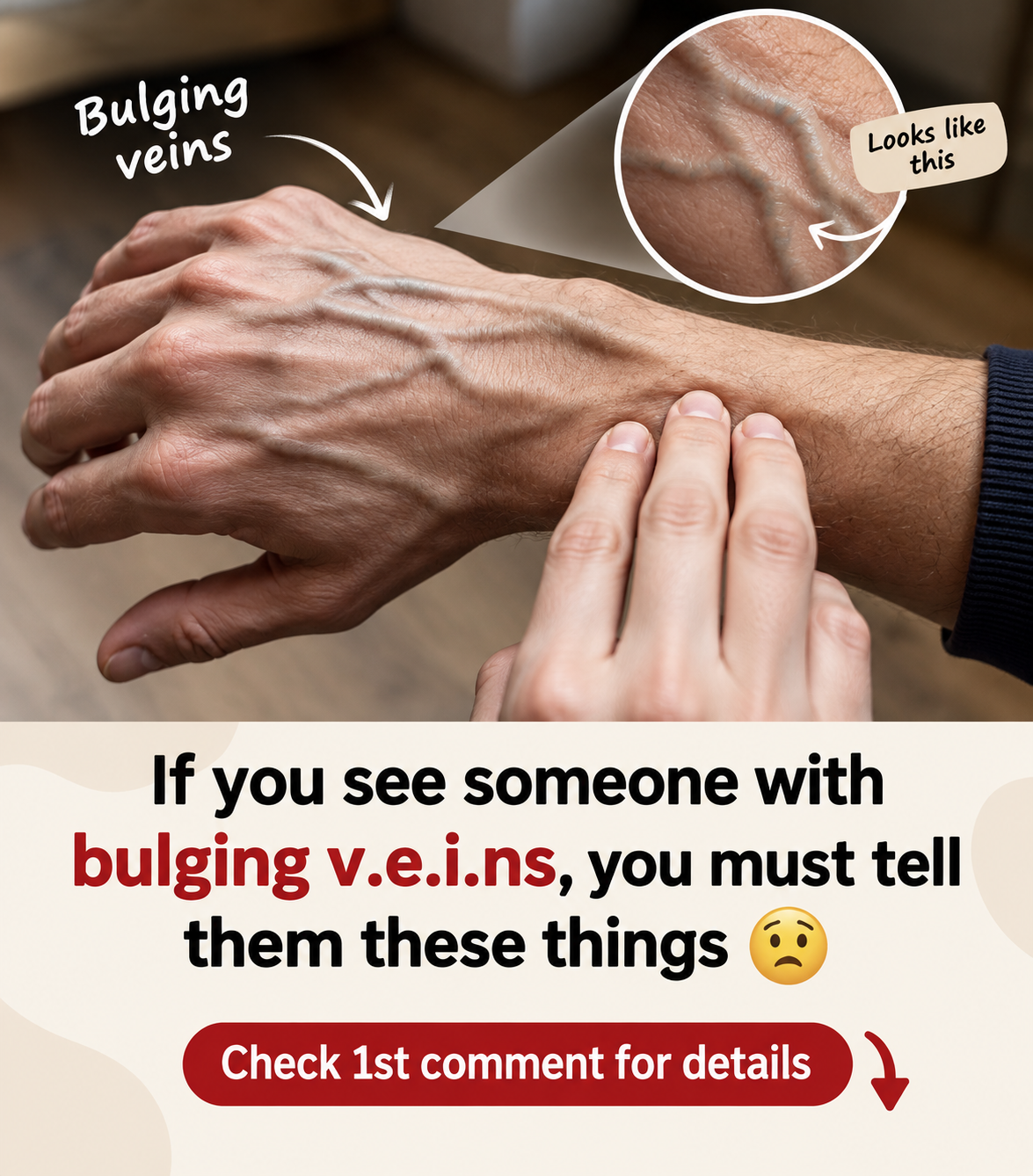
If You Notice Bulging Veins, Here’s What Your Body Might Be Trying to Tell You can depend greatly on where the veins appear, how long they have been visible, and whether you have other symptoms. In many people, prominent veins simply reflect genetics, exercise, lower body fat, warm temperatures, or normal changes that occur with age.
However, bulging veins can sometimes point to varicose veins or other circulation problems, particularly when they appear twisted, enlarged, painful, swollen, or accompanied by changes in the surrounding skin. Varicose veins develop when vein walls or one-way valves weaken or become damaged, allowing blood to pool instead of moving efficiently toward the heart.
The appearance of veins also varies widely from one person to another. Someone may naturally have prominent veins throughout adulthood without developing a medical problem, while another person may suddenly notice a new enlarged vein after years of having barely visible blood vessels.
I have noticed how easy it is to become concerned after spotting a vein that suddenly looks more prominent than usual. Sometimes the explanation turns out to be simple, such as exercising in hot weather or losing a little weight. Still, the situation feels different when the vein starts aching, the leg swells, or the surrounding skin changes color. That distinction matters. The vein itself does not always tell the whole story, so paying attention to accompanying symptoms gives you a much clearer picture of when visible veins are harmless and when they deserve medical attention.
Why Bulging Veins Become More Visible
Aging, Genetics, Body Fat, and Skin Changes
If You Notice Bulging Veins, Here’s What Your Body Might Be Trying to Tell You often starts with completely normal changes in your body. Veins sit beneath the skin, so anything that makes the skin thinner or reduces the layer of fat above those veins can make blood vessels easier to see.
Aging plays a major role. Skin gradually becomes thinner and loses some of its supporting structure, making superficial veins more noticeable. At the same time, changes in vein walls and valves can increase the likelihood of developing true varicose veins as people get older. The National Heart, Lung, and Blood Institute lists age as one of several factors that can raise the risk of varicose veins.
Genetics also matters. Some people simply inherit more visible veins or a greater tendency toward weak vein walls and valves. Therefore, seeing similar veins in parents or siblings may help explain why yours become noticeable over time.
Body composition can also change their appearance. People with relatively low levels of fat under the skin often have more visible veins because less tissue covers the blood vessels. Weight loss can therefore make previously hidden veins appear more prominent even when circulation has not changed dramatically.
These situations generally cause little concern when the veins remain soft, painless, stable, and free from swelling or skin changes. However, appearance alone cannot always distinguish ordinary visible veins from early venous disease.
Exercise and Heat Can Make Veins Stand Out
Exercise commonly makes veins more noticeable. Working muscles need increased blood flow, and blood vessels adjust to support that demand. As a result, veins in the arms, hands, legs, and other areas can temporarily appear larger during or after physical activity.
Strength training can make this effect especially obvious. Contracting muscles push superficial veins closer to the skin while increased circulation makes those vessels look fuller. Runners, cyclists, weightlifters, and other active people may therefore see prominent veins without having an underlying medical problem.
Warm temperatures can create a similar effect. Heat causes blood vessels near the skin to widen as the body tries to release heat. Consequently, veins can look more prominent during summer weather, after a hot shower, or while spending time in a warm environment.
These temporary changes often settle once your body cools down or your circulation returns to its resting state. That pattern generally differs from varicose veins, which remain enlarged and may appear twisted or rope-like.
Still, exercise does not make every swollen vein harmless. If a new prominent vein appears with persistent pain, swelling, warmth, or redness, the surrounding symptoms matter more than whether you recently exercised.
Pay attention to the difference between a vein that becomes visible temporarily and a vein that changes permanently. Persistent enlargement provides more reason to discuss the issue with a healthcare professional.
When Bulging Veins May Be Varicose Veins
What Causes Varicose Veins to Form
Varicose veins are swollen, enlarged, and often twisted veins that usually develop in the legs. They form when the vein walls or one-way valves inside the veins stop working efficiently. Normally, these valves help prevent blood from flowing backward as it travels toward the heart.
When the valves weaken or become damaged, blood can pool inside the vein. Pressure then increases, causing the vessel to stretch and become enlarged or distorted. Over time, the vein may become visibly raised beneath the skin.
Several factors can increase risk. The National Heart, Lung, and Blood Institute notes that age, pregnancy, overweight or obesity, prolonged sitting or standing, low physical activity, and family history can contribute to varicose veins.
Varicose veins commonly appear blue or purple, although the color varies with skin tone and vessel depth. They often look twisted rather than appearing as a single straight line.
Not everyone with varicose veins experiences discomfort. Some people notice only a cosmetic change, while others develop aching, heaviness, swelling, itching, burning, or nighttime cramps. Symptoms can become worse after sitting or standing for long periods and may improve after lying down or elevating the legs.
The presence of varicose veins does not automatically mean you have a dangerous circulation problem. However, persistent symptoms deserve evaluation because complications can develop in some people.
Symptoms That Suggest Chronic Venous Problems
Chronic venous insufficiency occurs when blood does not move efficiently from the legs back toward the heart. Varicose veins can appear as part of this problem, although not everyone with visible veins has significant venous insufficiency.
Symptoms can include aching, heaviness, cramping, itching, tingling, and swelling. Pain may worsen after standing for long periods and improve after elevating the legs.
Skin changes provide another important clue. Poor venous circulation can lead to discoloration, dry or irritated skin, thickening around the lower legs or ankles, and wounds that heal slowly.
An open sore near the ankle deserves particular attention. Venous ulcers can develop when longstanding high pressure inside leg veins damages the surrounding tissues. The National Heart, Lung, and Blood Institute recommends contacting a healthcare provider if varicose veins suddenly worsen or if a sore develops.
Persistent swelling can also suggest that the problem involves more than simple vein visibility. One leg may feel heavy or tight by the end of the day, especially after prolonged standing.
A clinician can often begin the evaluation with a physical examination. If more information is needed, duplex ultrasound can assess blood flow and help identify problems with vein valves or possible blood clots.
Warning Signs That Need Faster Medical Attention
Sudden Swelling, Warmth, Redness, or Pain
If You Notice Bulging Veins, Here’s What Your Body Might Be Trying to Tell You becomes more urgent when the change happens suddenly and affects only one limb. Sudden swelling, unexplained pain or tenderness, warmth, and redness or discoloration can occur with deep vein thrombosis, also known as DVT.
DVT develops when a blood clot forms in a deep vein, most often in a leg but sometimes in an arm. Importantly, the CDC notes that roughly half of people with DVT may have no symptoms at all. When symptoms do occur, swelling, pain, warmth, and skin discoloration rank among the most common warning signs.
A DVT does not always cause an obviously bulging surface vein. Therefore, people should not rely on vein appearance alone. The combination of sudden one-sided swelling and pain matters much more.
Risk can rise after surgery, hospitalization, long periods of limited movement, or lengthy travel, especially when other risk factors are present. People with a previous clot, certain medical conditions, pregnancy, recent surgery, or other recognized risks should discuss sudden symptoms promptly with a healthcare professional.
If you experience possible DVT symptoms, seek medical evaluation as soon as possible. Doctors may use ultrasound and other tests to determine whether a clot is present.
Avoid trying to diagnose a blood clot by pressing on the leg, comparing vein size, or relying on home tests. DVT symptoms can overlap with muscle injuries and other conditions, and proper evaluation matters because untreated clots can become dangerous.
Chest Pain or Shortness of Breath Is an Emergency
A blood clot in a deep vein can sometimes break loose and travel to the lungs. Doctors call this complication a pulmonary embolism, or PE. It can become life-threatening and requires emergency medical care.
The CDC lists sudden difficulty breathing, chest pain that may become worse with a deep breath or cough, coughing or coughing up blood, and an unusually fast or irregular heartbeat among possible warning signs.
Someone can develop a pulmonary embolism without first noticing obvious DVT symptoms. Therefore, unexplained shortness of breath or chest pain should not be dismissed simply because the legs look normal.
Seek emergency medical care immediately if you develop symptoms that could indicate a pulmonary embolism. Do not wait for the symptoms to pass or attempt to treat them at home.
Bleeding from a varicose vein also requires urgent attention. The National Heart, Lung, and Blood Institute advises calling emergency services for bleeding from varicose veins because it can constitute a medical emergency.
The key distinction involves sudden change. Longstanding painless veins usually deserve routine evaluation when bothersome, while abrupt swelling, pain, breathing difficulty, major bleeding, or rapidly worsening symptoms require faster action.
How to Support Healthy Veins and Know When to Get Checked
Daily Habits That Can Support Circulation
Regular movement helps the leg muscles push blood back toward the heart. Walking, exercising, and avoiding long periods of complete inactivity can therefore support normal venous circulation. The National Heart, Lung, and Blood Institute specifically recommends staying physically active as part of managing or reducing symptoms of varicose veins.
If your job requires sitting for long stretches, stand and move periodically when possible. Likewise, people who stand all day can benefit from changing position and taking opportunities to sit or walk rather than remaining motionless.
Maintaining a weight that supports your overall health may also reduce pressure on leg veins. Excess body weight can increase venous pressure and contribute to the development or worsening of varicose veins.
Elevating the legs can help some people with aching or heaviness because gravity assists blood return toward the heart. Symptoms of varicose veins often improve when people put their feet up.
Compression stockings can help certain people, but they do not suit every situation. A healthcare professional can recommend whether compression makes sense and what strength or type to use.
Healthy habits cannot eliminate every risk. Genetics, age, pregnancy, and previous vein damage can still influence whether varicose veins develop. However, regular movement and appropriate medical care can help manage symptoms and reduce unnecessary strain on the venous system.
When to Schedule a Medical Evaluation
Consider making a routine appointment if enlarged veins remain painful, continue getting larger, cause persistent swelling, or interfere with daily activities. The same applies if you develop chronic itching, skin discoloration, heaviness, or recurrent leg cramps around affected veins.
An open wound near the ankle also deserves medical evaluation, particularly if it heals slowly. Longstanding venous pressure can contribute to ulcers, and early treatment may help prevent complications.
A healthcare professional may ask about family history, previous blood clots, pregnancy, surgeries, activity level, and how long you have noticed the veins. They may also examine the legs while you stand because gravity can make enlarged veins easier to evaluate.
Duplex ultrasound commonly helps doctors assess blood flow and valve function. The test does not require surgery and can also help identify other circulation problems.
Treatment varies according to the symptoms and severity. Some people only need lifestyle measures or compression, while others may benefit from procedures designed to close or remove problematic veins.
The goal does not always involve appearance. Treatment can also relieve pain, reduce swelling, improve function, and help prevent complications such as ulcers or bleeding.
Frequently Asked Questions
Are bulging veins always a sign of poor circulation?
No. Bulging veins can appear because of genetics, exercise, heat, aging, or low body fat without indicating a serious circulation problem. However, twisted veins accompanied by aching, swelling, itching, heaviness, or skin changes may indicate varicose veins or chronic venous problems.
Why do my veins bulge when I exercise?
Exercise increases blood flow to working muscles and can temporarily make superficial veins appear larger. Contracting muscles can also push veins closer to the skin. If the veins return toward their usual appearance afterward and cause no pain or swelling, this effect is often harmless.
When should I worry about a bulging vein in my leg?
Seek prompt medical evaluation if a new vein change occurs with sudden one-sided swelling, unexplained pain or tenderness, warmth, redness, or discoloration. These symptoms can occur with DVT.
Can varicose veins cause skin problems?
Yes. Chronic venous problems can sometimes cause itching, discoloration, irritated skin, thickened skin, and sores that heal poorly, particularly near the ankles. These changes deserve medical evaluation.
Can walking help varicose veins?
Walking and other regular physical activity can help the lower-leg muscles move blood back toward the heart and may reduce pooling in the veins. Exercise cannot necessarily remove existing varicose veins, but it can form part of a healthy vein-care plan.
Conclusion
If You Notice Bulging Veins, Here’s What Your Body Might Be Trying to Tell You depends on far more than appearance alone. Prominent veins often result from harmless factors such as genetics, aging, exercise, heat, or lower levels of body fat.
However, persistent twisted or swollen veins may represent varicose veins, especially when they occur with aching, heaviness, itching, swelling, or changes in the surrounding skin. Weak or damaged vein valves can allow blood to pool, gradually enlarging the affected vessels.
The most important warning signs involve sudden changes. One-sided swelling, pain, warmth, and redness can occur with DVT, while unexplained shortness of breath or chest pain can signal a potentially life-threatening pulmonary embolism. Those symptoms require prompt or emergency medical care.
For ordinary visible veins, simple habits such as staying active, changing position regularly, maintaining a healthy weight, and elevating the legs when appropriate can support circulation. However, chronic pain, swelling, skin changes, sores, or rapidly worsening veins deserve professional evaluation.
A prominent vein is often simply a visible feature of your circulation. Still, your body can provide important clues when something changes. Paying attention to the vein itself and the symptoms around it can help you know when reassurance is enough and when a closer medical look makes sense.
More Blog
- Drinking Water on an Empty Stomach — What Science Actually Supports (No Hype, Just Facts)
- Waking Up Between 3 and 5 AM? It Might Be Your Soul Trying to Talk to You
- What a “Bleach” Patch on Your Underwear Really Means — And Why It’s Actually a Good Sign
- This Drink May Weaken Your Bones From The Inside — But Everyone Drinks It Anyway