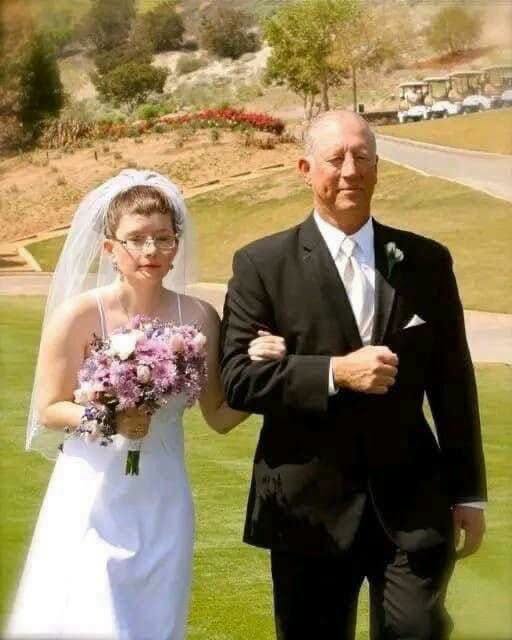
When I first met my stepfather, I never imagined that one day I would become his wife. At the time, he was simply the man who had entered my mother’s life. He seemed confident, calm, and experienced. While other people saw him as a parental figure, I saw someone who carried himself differently from the men I had known. He spoke thoughtfully, listened carefully, and always seemed to know exactly what to say.
Back then, our interactions were innocent. We talked about books, current events, work, and life goals. He treated me with respect, and I admired his maturity. As the years passed, circumstances changed. My mother and he eventually separated, and our lives drifted apart for a while. During that time, I grew older, built my own career, and experienced relationships that taught me difficult lessons about love and disappointment.
Several years later, our paths crossed again.
By then, we were both adults living entirely different lives than before. What began as occasional conversations gradually became a close friendship. We shared stories about our experiences, our failures, and our hopes for the future. The age difference between us no longer seemed significant. Instead, I felt drawn to the stability and wisdom he offered.
Many people would later judge our relationship without knowing the full story. Some assumed it began while he was still married to my mother, which was not true. Others believed I was motivated by financial security or that he was trying to relive his youth. The reality was far more ordinary and complicated.
We simply connected.
At first, that connection felt extraordinary.
Every conversation seemed fascinating. We could sit together for hours discussing everything from politics to childhood memories. We traveled, explored new places, and spent weekends trying restaurants neither of us had visited before. He introduced me to experiences I had never considered, and I appreciated the confidence that came with his age.
Friends often told me that I glowed whenever I talked about him.
I believed I had found something rare.
When we eventually married, I felt completely certain about my decision. I understood that people would talk. I knew some family members would struggle to accept the relationship. Yet I believed that love was enough to overcome criticism and obstacles.
For a while, it seemed I was right.
The first years of marriage were happy. We built routines together and created a comfortable home. We celebrated holidays, hosted dinners, and supported each other through life’s inevitable challenges. Whenever doubts appeared, I reminded myself why I had fallen in love with him in the first place.
But relationships rarely remain frozen in their honeymoon stage.
Gradually, things began to change.
The conversations that once captivated me started to feel repetitive. Stories I had found fascinating became stories I had heard dozens of times. Our adventures became less frequent. Instead of discovering new experiences together, we settled into predictable routines.
At first, I thought the feeling would pass.
After all, every marriage goes through periods of routine. Not every day can be exciting. Real life involves bills, responsibilities, work obligations, and household chores. I told myself that what I was experiencing was normal.
Yet the feeling persisted.
I found myself becoming restless.
While he seemed content with our established routines, I wanted more change and exploration. I wanted to travel spontaneously, learn new skills, and challenge myself in different ways. He preferred familiarity and comfort.
Neither approach was wrong.
The problem was that our priorities were beginning to move in different directions.
The qualities that once attracted me suddenly looked different through the lens of daily life. His predictability, which had once felt reassuring, sometimes felt limiting. His caution, which had once seemed wise, occasionally felt restrictive.
Meanwhile, I was changing too.
The person who had fallen in love with him years earlier was no longer exactly the same person. My interests evolved. My ambitions shifted. My understanding of what I wanted from life became more complex.
One of the most difficult realizations in any relationship is recognizing that love and compatibility are not always identical.
You can genuinely care about someone while also acknowledging that you have grown apart in certain ways.
For a long time, I felt guilty for admitting this to myself.
After all, he had done nothing wrong.
He remained loyal, supportive, and caring. He continued to be the same person I had married. The problem was not betrayal, dishonesty, or conflict.
The problem was stagnation.
I began asking myself difficult questions.
Was I bored with him?
Or was I bored with my own life?
Was the marriage lacking something?
Or had I simply stopped investing effort into maintaining excitement and connection?
Those questions forced me to examine my own role in the situation.
It was easy to focus on his habits and routines. It was harder to acknowledge how predictable I had become as well.
Relationships often mirror our own growth and limitations.
When we stop growing individually, our relationships can begin to feel stagnant too.
As I reflected on our marriage, I realized that I had spent years expecting the relationship itself to provide excitement. I had forgotten that meaningful connections require active participation from both people.
No marriage can survive indefinitely on memories of how things used to feel.
Every relationship needs renewal.
It needs new experiences, new conversations, and new reasons to appreciate one another.
The truth is that long-term love looks very different from early attraction.
Attraction thrives on novelty.
Love thrives on commitment.
Attraction is fueled by discovery.
Love is sustained by understanding.
Attraction often focuses on excitement.
Love requires patience, effort, and adaptability.
Understanding this distinction changed my perspective.
Instead of viewing boredom as proof that the relationship had failed, I began seeing it as a signal that something needed attention.
Perhaps we needed new shared experiences.
Perhaps we needed deeper conversations.
Perhaps we needed to challenge ourselves instead of relying on familiar routines.
The answers were not simple.
Some days remain difficult.
There are still moments when I miss the intensity of the beginning. I miss the anticipation that came with every conversation and the excitement of discovering new things about each other.
Yet I also recognize that those feelings were never meant to last forever.
Every relationship evolves.
The challenge is learning how to evolve alongside it.
Today, I no longer view my journey with regret.
It has taught me valuable lessons about love, expectations, and personal growth. It has shown me that relationships are not static achievements but ongoing processes. They require maintenance, communication, and willingness to adapt.
Most importantly, I have learned that lasting happiness does not come from finding a perfect person.
It comes from continually choosing to understand, support, and grow with another imperfect human being.
Whether our future brings renewed excitement, deeper companionship, or entirely new chapters, I am grateful for the lessons this relationship has taught me.
The spark that first brought us together may have changed, but the wisdom gained through the experience remains.
And perhaps that is what mature love really is—not the endless thrill of the beginning, but the willingness to keep learning, growing, and showing up for each other long after the novelty has faded.
More Blog
- Drinking Water on an Empty Stomach — What Science Actually Supports (No Hype, Just Facts)
- Waking Up Between 3 and 5 AM? It Might Be Your Soul Trying to Talk to You
- What a “Bleach” Patch on Your Underwear Really Means — And Why It’s Actually a Good Sign
- This Drink May Weaken Your Bones From The Inside — But Everyone Drinks It Anyway