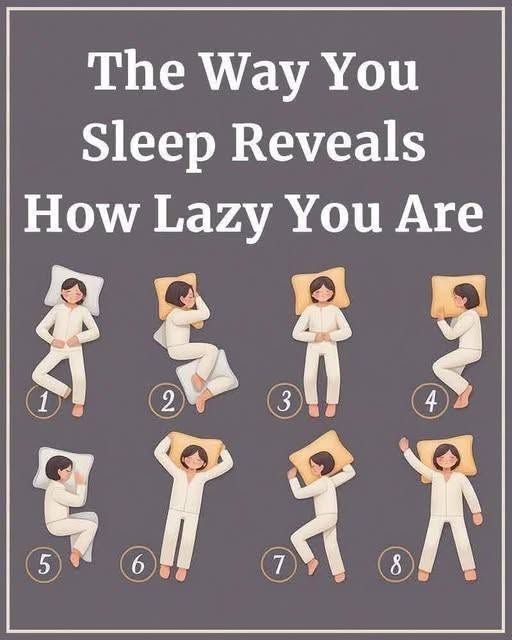
How Your Sleep Position Reflects Your Stress sounds like the beginning of a personality test. You may have seen posts claiming that curling into a fetal position means you feel emotionally overwhelmed, sleeping on your stomach proves you need control, or lying flat on your back reveals confidence. These interpretations can feel surprisingly personal, but science does not support using sleep position as a reliable test of personality, work ethic, emotional strength, or “laziness.”
Sleep posture usually tells us much more about comfort, breathing, pain, habit, body temperature, pregnancy, reflux, and other physical needs.
Stress can still influence sleep. Research strongly connects psychological stress and anxiety with difficulty falling asleep, waking during the night, lighter sleep, and insomnia. However, researchers have not established a dependable one-to-one system in which a specific sleeping position reveals a specific emotional state. Reviews instead describe the relationship between stress and sleep as complex and bidirectional. Stress can disrupt sleep, while poor sleep can also increase vulnerability to stress and anxiety.
Therefore, if you suddenly curl tightly beneath the blankets after a difficult week, stress might play a role. Yet your position alone cannot tell anyone what you feel.
I once noticed that I slept very differently during a particularly demanding stretch of life. Some nights I curled tightly on my side, while on calmer weekends I seemed to take up far more space. It would have been easy to turn those observations into a neat emotional theory. However, other details mattered just as much. My room temperature changed, my shoulders felt sore, and I sometimes ate dinner later than usual. That experience became a useful reminder that sleeping posture rarely has one explanation. Stress can certainly influence how comfortably we rest, but the position we wake up in does not provide a secret personality diagnosis.
How Your Sleep Position Reflects Your Stress Without Becoming a Personality Test
Stress Changes Sleep More Reliably Than It Changes One Specific Position
The strongest scientific connection involves stress and sleep quality rather than stress and a particular posture.
When people experience ongoing psychological stress, their bodies and minds may remain more alert around bedtime. Researchers sometimes describe this heightened response as hyperarousal or increased sleep reactivity.
Instead of smoothly transitioning into sleep, a stressed person may continue thinking about work, family problems, finances, relationships, or unfinished responsibilities.
Consequently, falling asleep may take longer.
Stress can also contribute to repeated waking during the night or waking earlier than intended.
A major review of stress and sleep describes a well-established relationship in which stressful events and daily hassles can interfere with normal sleep. However, individuals differ substantially in how strongly their sleep reacts to stress.
Anxiety has a similarly complex relationship with sleep.
A recent systematic review found substantial overlap between insomnia and anxiety disorders and described evidence supporting a bidirectional relationship. In other words, anxiety can interfere with sleep, while persistent sleep problems may also contribute to anxiety vulnerability.
None of this creates a scientifically validated “stress position.”
One person may curl onto their side during a difficult period. Another may lie on their back. Someone else may move repeatedly all night.
Therefore, How Your Sleep Position Reflects Your Stress is best understood indirectly.
Stress may make you seek whichever posture feels safest, warmest, least painful, or most familiar. However, the position itself does not reveal why you chose it.
Why “Lazy” Sleep Position Claims Do Not Hold Up
Calling someone lazy because of the way they sleep makes even less sense.
Sleep is an essential biological process rather than an act of productivity or inactivity that reveals character.
Adults naturally spend a substantial portion of each day asleep because the brain and body require sleep for memory, emotional regulation, immune function, metabolism, and physical recovery.
Moreover, people do not consciously maintain one carefully selected posture throughout the night.
Many sleepers change positions repeatedly.
Therefore, a photograph taken at one moment cannot reliably show how someone spent the entire night.
The idea that spreading out indicates confidence or curling tightly indicates weakness often comes from popular body-language interpretations rather than sleep medicine.
Those stories can be entertaining, but they should not become judgments about someone’s mental state.
Someone sleeping in a compact position may simply feel cold.
A person sleeping on one side may have shoulder or back discomfort.
Another person may choose the left side because it reduces nighttime reflux.
Meanwhile, someone sleeping on their back may simply find that position comfortable.
Health research actually supports several physical reasons for choosing different postures. For example, a 2023 review found that airway obstruction in obstructive sleep apnea often occurs more frequently while lying on the back than while sleeping laterally.
Likewise, research on gastroesophageal reflux suggests that sleeping on the left side can reduce nighttime acid exposure in people with GERD.
These physiological explanations carry much more evidence than claims about personality or motivation.
How Your Sleep Position Reflects Your Stress Through Comfort and Tension
The Fetal and Side-Sleeping Positions
Side sleeping ranks among the most common ways to sleep, and many people naturally bend their knees slightly.
When the knees come farther toward the chest, the posture resembles a fetal position.
Popular articles sometimes claim this posture proves someone feels vulnerable, emotionally exhausted, or secretly sensitive.
Science does not support that kind of diagnosis.
However, it makes sense that someone experiencing stress might occasionally prefer a compact posture because familiar positions can feel comfortable.
Stress may also increase muscular tension. Someone whose shoulders, neck, or back feel tight may naturally experiment with positions that reduce pressure.
Still, the same fetal posture may simply come from habit.
Side sleeping can also have physical advantages.
For people with certain forms of obstructive sleep apnea, lateral sleeping may reduce airway collapse compared with back sleeping. A major review of positional sleep apnea found that obstructive events frequently occur more often in the supine position and described side-position strategies as an established area of treatment.
The left side may also help some people with nighttime reflux.
A systematic review and meta-analysis found that left-side sleeping reduced esophageal acid exposure and improved nocturnal reflux measures compared with right-side or back sleeping in people with GERD.
Therefore, someone who consistently sleeps on one side may be responding to their digestive system or breathing rather than their emotions.
Side sleeping also becomes particularly relevant during pregnancy, although recommendations depend on the stage of pregnancy and individual medical circumstances. Research funded by the NIH found no increased complication risk from back or side sleeping through 30 weeks, while later pregnancy raises additional considerations.
These examples show why interpreting posture requires context.
Back and Stomach Sleeping Have Physical Explanations Too
Back sleeping often receives personality labels such as “confident,” “independent,” or “self-assured.”
Again, those descriptions lack strong scientific evidence.
Some people simply find that lying on their backs distributes body weight comfortably.
However, back sleeping can affect breathing.
In people with positional obstructive sleep apnea, gravity can make upper-airway collapse more likely while lying supine. Researchers describe supine-related obstructive sleep apnea as a common clinical phenotype.
Therefore, loud snoring, gasping, choking sensations, morning headaches, or excessive daytime sleepiness deserve more attention than the supposed personality meaning of back sleeping.
Stomach sleeping receives similarly creative interpretations online.
Some posts claim stomach sleepers feel anxious or need control.
Yet a much simpler explanation exists: some people became accustomed to sleeping that way as children and continue because it feels familiar.
Stomach sleeping may also change spinal positioning, particularly when someone rotates the head strongly to one side.
Therefore, pillow height and mattress support can matter more than psychological symbolism.
The best sleeping position depends partly on individual anatomy and health needs. General sleep guidance often emphasizes spinal alignment, breathing, and comfort rather than personality.
If you wake rested and comfortable, your preferred position usually does not need interpretation.
However, if you repeatedly wake with neck pain, numbness, reflux, headaches, or breathing problems, the physical consequences of the position become relevant.
Those symptoms provide meaningful information.
The position itself does not provide a psychological diagnosis.
How Your Sleep Position Reflects Your Stress Through Nighttime Behavior
Restlessness May Tell You More Than the Final Position
Instead of focusing only on which position you wake up in, consider the broader pattern of sleep.
During stressful periods, people may toss and turn, wake repeatedly, feel overheated, experience racing thoughts, clench their jaws, or struggle to settle comfortably.
Those patterns can offer more useful clues about stress than whether someone sleeps on the right or left side.
A cross-sectional study of young adults published in 2024 found associations between sleep quality and psychological factors including stress and anxiety. Although observational studies cannot prove that one factor caused another, the findings fit a larger body of evidence linking psychological strain with disrupted sleep.
Longitudinal research also suggests that sleep disturbance and anxiety can reinforce each other.
A systematic review found evidence for a bidirectional relationship between insomnia and anxiety or depression.
Therefore, someone experiencing stress may notice changes such as needing longer to fall asleep, waking more often, sleeping fewer hours, or feeling less refreshed.
These changes matter more than whether their knees bend toward their chest.
You may also move more during the night simply because the bedroom feels too warm, your mattress creates pressure points, or pain makes one posture difficult to maintain.
Meanwhile, another person under significant stress may barely move at all.
Bodies do not express stress through one universal sleep pattern.
That individuality explains why How Your Sleep Position Reflects Your Stress cannot become a diagnostic chart.
It can only become an invitation to notice whether your overall sleep changes when your stress level changes.
Better Sleep Can Support Better Emotional Health
The connection between sleep and emotional well-being does not stop with stress disrupting sleep.
Improving sleep itself may improve mental health.
A large meta-analysis of randomized controlled trials examined interventions that successfully improved sleep quality. Researchers found that better sleep produced improvements in overall mental health, including reductions in anxiety, depression, and stress symptoms.
This finding offers a more useful direction than interpreting posture.
Instead of asking, “What does my sleeping position say about me?” consider asking, “Am I actually sleeping well?”
Do you usually fall asleep without a long struggle?
Do you wake frequently?
Do you feel reasonably refreshed in the morning?
Does daytime sleepiness interfere with concentration?
Has stress started keeping you awake?
Do you depend heavily on caffeine because you feel exhausted?
These questions reveal more about sleep health than a personality chart based on bed posture.
If stress consistently interferes with sleep, simple routines may help.
Keep wake times relatively consistent.
Give yourself a quieter transition before bed.
Reduce stimulating work close to bedtime when possible.
Create a bedroom that feels dark, quiet, and comfortably cool.
Regular physical activity can also support sleep, although vigorous exercise immediately before bedtime affects people differently.
Meanwhile, people with chronic insomnia may benefit from professional evaluation. Cognitive behavioral therapy for insomnia, commonly called CBT-I, has strong clinical support and addresses thoughts and behaviors that perpetuate insomnia.
The goal is not to force yourself into a psychologically “correct” sleeping position.
The goal is restorative sleep.
How Your Sleep Position Reflects Your Stress Versus a Health Problem
When Position Changes Point Toward Pain, Reflux, or Breathing
A new sleep position sometimes develops because the body is trying to reduce discomfort.
For example, a person with nighttime reflux may discover that the left side feels noticeably better.
That observation aligns with research showing reduced nighttime reflux in the left lateral position.
Someone with shoulder pain may stop sleeping on the painful side.
A person with back discomfort may add a pillow beneath the knees or between the legs.
Meanwhile, someone with obstructive sleep apnea may breathe better on the side than on the back.
These physical signals deserve attention because they can guide practical adjustments.
However, do not diagnose a medical condition from position alone.
Snoring does not always mean sleep apnea.
Back pain does not always come from the mattress.
Reflux symptoms can have multiple causes.
Still, repeated patterns provide useful information to share with a healthcare professional.
For example, mention if your partner notices loud snoring that becomes much worse when you sleep on your back.
Likewise, mention waking with choking or gasping, unexplained daytime sleepiness, morning headaches, or witnessed pauses in breathing.
Those symptoms may warrant evaluation for sleep-disordered breathing.
Similarly, frequent nighttime heartburn deserves appropriate management rather than relying only on a new sleeping position.
Position can help some symptoms, but it does not replace diagnosis or treatment.
That is another reason to avoid psychological interpretations.
A sleeping posture may reveal a body’s attempt to manage a physical problem before it reveals anything meaningful about personality.
When Stress and Sleep Problems Deserve More Attention
Occasional poor sleep during stressful periods happens to almost everyone.
A difficult deadline, family conflict, travel, illness, grief, or an important event can temporarily disrupt sleep.
However, persistent insomnia deserves attention.
The relationship between anxiety and insomnia can become self-reinforcing. Someone may worry because they cannot sleep, then become more alert because they worry about not sleeping.
Over time, bedtime itself can start to feel stressful.
Research increasingly supports treating sleep disturbance as an important mental-health target rather than simply assuming it will disappear once every source of stress disappears.
Consider seeking professional guidance if sleep problems occur regularly, continue for weeks or months, or interfere with work, relationships, concentration, safety, or emotional well-being.
Likewise, seek help if you experience severe anxiety, panic, persistent low mood, or other mental-health symptoms.
You do not need to wait until exhaustion becomes overwhelming.
Your sleep position may change while these problems develop, but it cannot tell you how severe they are.
Instead, pay attention to duration, daytime impairment, sleep quality, and other symptoms.
The most useful interpretation of How Your Sleep Position Reflects Your Stress is therefore gentle and practical.
Notice changes.
Look for patterns.
Avoid judging yourself.
Then focus on what actually improves comfort and sleep quality.
Frequently Asked Questions
Does the fetal sleeping position mean I am stressed?
Not necessarily. Stress may influence comfort and nighttime restlessness, but research does not establish the fetal position as a reliable marker of anxiety or emotional distress. Habit, warmth, pain, mattress comfort, and simple preference can all explain the same posture.
Can anxiety change the way I sleep?
Yes, anxiety can affect sleep substantially. Research connects anxiety with insomnia, difficulty maintaining sleep, and poorer sleep quality. However, anxiety does not produce one universal sleeping position.
What is the healthiest sleeping position?
There is no single ideal position for everyone. Side or back sleeping can support comfortable spinal alignment for many people, while specific health conditions may change the recommendation. Side sleeping can help some people with positional sleep apnea, while left-side sleeping may reduce nighttime reflux.
Does sleeping on your back mean you are confident?
No strong scientific evidence supports using back sleeping as a measure of confidence, independence, or personality. Physical comfort, habit, breathing, spinal support, and mattress characteristics provide more plausible explanations.
Should I worry if my sleeping position suddenly changes?
A temporary change usually does not indicate anything serious. However, pay attention if the change accompanies persistent pain, numbness, reflux, loud snoring, gasping, breathing pauses, severe daytime sleepiness, or ongoing insomnia. Those accompanying symptoms provide more useful health information than the position itself.
Conclusion
How Your Sleep Position Reflects Your Stress makes an appealing headline because people naturally look for meaning in everyday habits.
Yet the science offers a more grounded explanation.
Stress absolutely can affect sleep.
Anxiety and psychological strain can make falling asleep harder, increase nighttime waking, reduce sleep quality, and contribute to insomnia. Poor sleep can then worsen emotional well-being, creating a bidirectional relationship.
However, no scientifically established chart can tell you that curling up means emotional exhaustion, stomach sleeping means anxiety, or back sleeping means confidence.
Sleep positions primarily reflect comfort, habit, anatomy, temperature, pain, breathing, digestion, pregnancy, and other individual factors.
Some positions even have measurable physiological effects.
Back sleeping can worsen airway collapse in people with positional obstructive sleep apnea, while left-side sleeping may reduce nocturnal reflux in people with GERD.
Therefore, pay attention to how you sleep, not what a social-media chart says your posture means.
If you feel comfortable, breathe normally, sleep soundly, and wake reasonably refreshed, your position does not need a personality interpretation.
If stress begins disrupting your sleep, focus on restoring sleep quality.
And if you notice persistent pain, severe snoring, gasping, reflux, insomnia, or daytime exhaustion, consider those symptoms far more meaningful than whether you sleep curled up or stretched across the bed.
Rest is a biological need, not a measure of laziness.
WP Recipe Maker JSON Import
{
  "title": "How Your Sleep Position Reflects Your Stress (Not Laziness)",
  "summary": "A science-based guide explaining how stress can affect sleep quality while showing why sleep position reflects comfort, health, and habit more reliably than personality.",
  "notes": "This is an informational sleep-health guide rather than a food recipe. Sleep position alone cannot diagnose stress, anxiety, sleep apnea, reflux, pain, or another health condition.",
  "ingredients_flat": [
    { "amount": "1", "unit": "", "name": "comfortable sleep environment" },
    { "amount": "1", "unit": "", "name": "consistent sleep routine" },
    { "amount": "1", "unit": "", "name": "awareness of stress and sleep patterns" },
    { "amount": "1", "unit": "", "name": "supportive pillow and mattress setup" }
  ],
  "instructions_flat": [
    {
      "name": "Step 1",
      "text": "Notice your usual sleeping position without assigning personality traits or moral judgments to it.",
      "summary": "",
      "image_url": ""
    },
    {
      "name": "Step 2",
      "text": "Track broader sleep changes such as difficulty falling asleep, repeated waking, restlessness, or daytime fatigue during stressful periods.",
      "summary": "",
      "image_url": ""
    },
    {
      "name": "Step 3",
      "text": "Adjust pillows, mattress support, room temperature, and sleeping position according to comfort and any known physical needs.",
      "summary": "",
      "image_url": ""
    },
    {
      "name": "Step 4",
      "text": "Maintain a reasonably consistent sleep schedule and create a quieter transition before bedtime when stress interferes with relaxation.",
      "summary": "",
      "image_url": ""
    },
    {
      "name": "Step 5",
      "text": "Pay attention to physical symptoms such as persistent pain, reflux, loud snoring, gasping, breathing pauses, or morning headaches.",
      "summary": "",
      "image_url": ""
    },
    {
      "name": "Step 6",
      "text": "Seek appropriate professional evaluation when chronic insomnia, severe daytime sleepiness, breathing problems, or significant anxiety repeatedly interfere with daily life.",
      "summary": "",
      "image_url": ""
    }
  ],
  "equipment": [
    { "name": "Supportive pillow", "notes": "" },
    { "name": "Comfortable mattress", "notes": "" },
    { "name": "Dark and quiet bedroom", "notes": "" },
    { "name": "Sleep diary if useful", "notes": "" }
  ],
  "nutrition": {
    "calories": "0",
    "carbohydrates": "0 g",
    "protein": "0 g",
    "fat": "0 g",
    "saturated_fat": "0 g",
    "polyunsaturated_fat": "0 g",
    "monounsaturated_fat": "0 g",
    "trans_fat": "0 g",
    "cholesterol": "0 mg",
    "sodium": "0 mg",
    "potassium": "0 mg",
    "fiber": "0 g",
    "sugar": "0 g",
    "vitamin_a": "0 IU",
    "vitamin_c": "0 mg",
    "calcium": "0 mg",
    "iron": "0 mg"
  },
  "tags": {
    "course": ["Sleep Health Guide"],
    "cuisine": ["Not Applicable"],
    "keyword": ["How Your Sleep Position Reflects Your Stress", "sleep position and stress", "sleeping posture meaning", "stress and sleep", "best sleep position"]
  }
}
SEO Output
Focus Keyword: How Your Sleep Position Reflects Your Stress
SEO Title: How Your Sleep Position Reflects Your Stress: What Science Says
Meta Description: How Your Sleep Position Reflects Your Stress explains what posture can reveal about comfort, anxiety, breathing, reflux, and sleep quality.
Expert SEO Title: How Your Sleep Position Reflects Your Stress: 7 Surprising Truths
Midjourney Prompt: peaceful adult sleeping comfortably in a modern bedroom, subtle visual suggestion of several natural sleeping positions including side sleeping, fetal posture and back sleeping through tasteful layered editorial composition, soft pillows and neutral bedding, calm nighttime atmosphere, realistic lifestyle photography, gentle moonlit and warm bedside illumination, wellness and stress-management theme, relaxed nonjudgmental mood, no medical equipment, clean uncluttered background, vertical composition, generous negative space near the upper portion for Pinterest text overlay –v 6 –ar 2:3
More Blog
- Drinking Water on an Empty Stomach — What Science Actually Supports (No Hype, Just Facts)
- Waking Up Between 3 and 5 AM? It Might Be Your Soul Trying to Talk to You
- What a “Bleach” Patch on Your Underwear Really Means — And Why It’s Actually a Good Sign
- This Drink May Weaken Your Bones From The Inside — But Everyone Drinks It Anyway