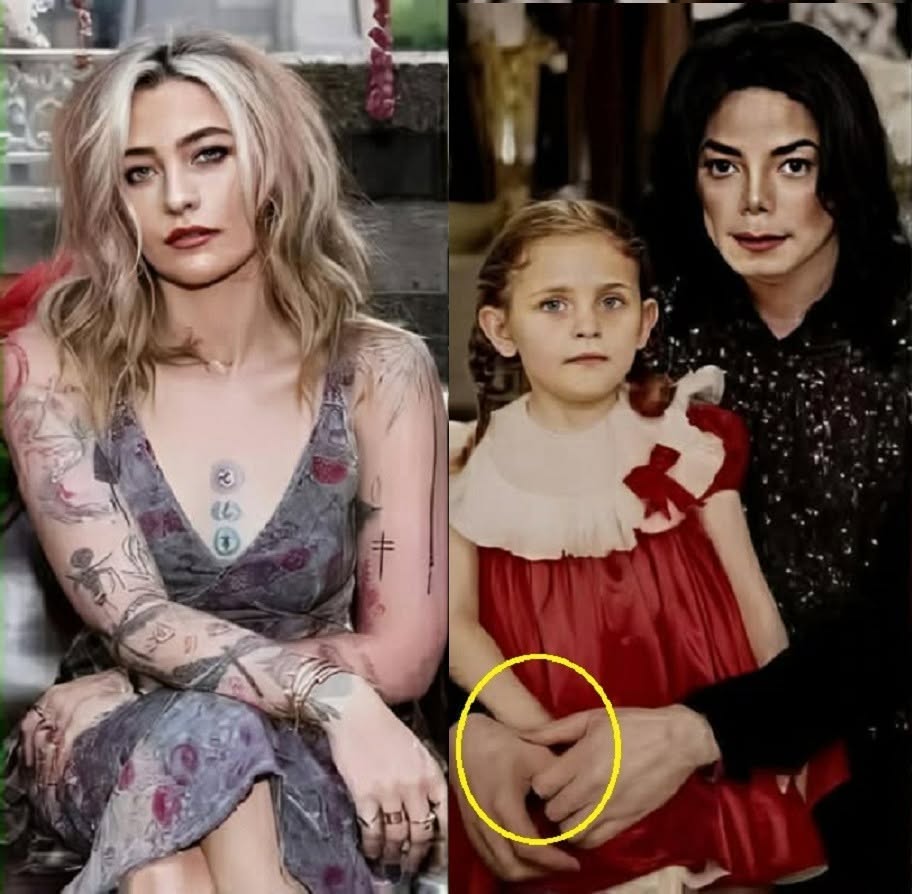
Finding Her Own Rhythm has defined much of Paris Jackson’s public journey. Being the daughter of Michael Jackson gave her a surname recognized around the world before she had any opportunity to decide what she wanted to create herself. Yet adulthood has brought a different challenge: building a career and identity that people can understand on their own terms.
Paris has explored music, acting, fashion, and modeling rather than following a single predictable path. Her credits include projects such as Gringo, American Horror Stories, Swarm, Doctor Odyssey, and One Spoon of Chocolate. Meanwhile, her music career has continued to evolve beyond her 2020 album Wilted, with her official music site now highlighting releases including the lost ep, “Just You,” “teenage drama,” and Happiest Day of My Life.
That variety matters because Finding Her Own Rhythm does not mean rejecting where she came from. Instead, it means making enough personal choices that her work can eventually stand beside the famous family story rather than disappear beneath it.
There is something compelling about watching someone inherit enormous public recognition and still face the ordinary human task of deciding who they want to become. Most people get to experiment quietly with clothing, work, creativity, beliefs, and relationships. Paris has often had to do that while strangers analyze the process. Looking at her career over time, what stands out is not one perfect reinvention but her willingness to keep exploring. She has moved between studios, film sets, fashion events, and live performances while gradually making privacy itself part of the identity she protects.
Finding Her Own Rhythm Through Music and Creative Independence
Building a Sound That Does Not Simply Copy Her Father
Music creates the most obvious comparison between Paris Jackson and her father, which makes her artistic choices especially significant. Instead of trying to reproduce Michael Jackson’s pop sound, Paris moved toward an alternative singer-songwriter style with rock, folk, and indie influences.
Her debut studio album, Wilted, arrived in 2020 and included the single “Let Down.” The album helped establish that she intended to approach music through her own aesthetic rather than imitate the catalog attached to her surname. Her official website now presents a broader body of work, including the lost ep and newer releases such as “Just You,” “teenage drama,” and Happiest Day of My Life.
That choice represents an important part of Finding Her Own Rhythm. Children of famous artists often face an impossible comparison. If they sound too similar, critics call them imitators. If they sound completely different, people question why they did not inherit the same artistic style.
Paris appears to have avoided treating that comparison as the main creative goal. Her music instead emphasizes guitar-driven arrangements, intimate vocals, and personal songwriting. The result gives listeners something that belongs to her catalog rather than functioning as an extension of Michael Jackson’s work.
Creative independence does not require pretending a family influence never existed. Every artist absorbs music, memories, relationships, and experiences from childhood. However, independence appears when those influences become raw material rather than instructions.
Finding Her Own Rhythm therefore becomes less about escaping a surname and more about developing enough musical identity that the surname no longer explains everything.
Letting Creative Growth Remain an Ongoing Process
One of the most useful ways to understand Paris Jackson’s career involves resisting the urge to treat every project as a final statement about who she is. Artists change, and young artists often change quickly.
Her official music catalog shows that she has continued releasing work beyond the early attention surrounding Wilted. That matters because artistic identity develops through repetition: writing another song, performing another show, revising a sound, and deciding what still feels authentic.
Finding Her Own Rhythm can therefore mean accepting that the rhythm itself may change. A musician does not have to preserve the exact sound of a debut album forever. Exploration can become part of the identity rather than evidence that the artist lacks direction.
Paris has also worked across several creative fields. That can broaden musical instincts because acting, modeling, visual storytelling, and fashion all involve different ways of thinking about mood and presentation.
At the same time, maintaining a music career under intense public scrutiny requires separating creative motivation from outside expectations. Listeners may arrive because they recognize the Jackson name, but keeping them requires songs that create their own reason to stay.
That challenge gives her career an unusual tension. The legacy guarantees attention, but attention alone cannot create an artistic identity.
Ultimately, Finding Her Own Rhythm in music means continuing to release, perform, experiment, and allow listeners to judge the work itself. No single song can complete that process.
Finding Her Own Rhythm Across Acting and Fashion
Acting Gave Paris Another Creative Language
Paris Jackson has not limited her career to music. Acting became another major part of her professional life, with credits stretching across television and film.
Her acting work has included Star, Gringo, Scream, American Horror Stories, Habit, Swarm, Doctor Odyssey, and One Spoon of Chocolate. Current industry listings also show additional projects in various stages of production.
This work matters because acting places different demands on a performer. Music often asks artists to reveal or construct a version of themselves. Acting asks them to disappear, at least partly, into another character.
That difference can create useful creative distance. A performer who constantly faces questions about her family can step into a scripted role where the task becomes serving someone else’s story.
Paris has taken parts across comedy, drama, horror, and more stylized projects. She appeared as Maya in American Horror Stories, for example, while later credits expanded into projects such as Swarm and Doctor Odyssey.
Finding Her Own Rhythm through acting does not require becoming exclusively an actor. The variety itself appears central to her career.
Some creative people thrive when they move between disciplines. Music may satisfy one part of their expression, while acting offers another. Instead of forcing everything into one professional label, they build a career from the combination.
Fashion Became Another Form of Self-Presentation
Fashion also plays a visible role in Paris Jackson’s public identity. Her tattoos, hair, red-carpet choices, and mix of rock, bohemian, and high-fashion influences have made visual style an important element of how audiences recognize her.
However, style does more than attract attention. For someone raised under extraordinary public scrutiny, controlling personal presentation can become one of the few visible areas where choice remains immediate.
Clothes, tattoos, makeup, and hairstyles allow a person to communicate something without producing a formal explanation. They can change with mood and age while remaining intensely personal.
Paris has worked professionally in modeling as well as entertainment, which connects that visual identity to her broader career. Industry profiles consistently identify her as a model, musician, and actress rather than reducing her work to one category.
Finding Her Own Rhythm therefore extends beyond choosing a musical genre. It also involves deciding how much of herself she wants to present publicly and how she wants that presentation to look.
Fashion can become especially meaningful for people who inherit a recognizable family image. Michael Jackson developed some of the most recognizable visual signatures in popular music. Paris has instead cultivated an aesthetic that looks distinctly different.
That difference does not have to function as rebellion. Personal style naturally develops when adults gain control over how they present themselves.
In that sense, Finding Her Own Rhythm means allowing visual identity to evolve without treating every hairstyle, tattoo, outfit, or runway appearance as a statement about her father.
Finding Her Own Rhythm While Living With a Famous Legacy
Her Relationship With Michael Jackson Remains Personal
The most complicated part of Paris Jackson’s public identity may involve the fact that millions of people feel invested in memories of her father. Michael Jackson remains one of the most discussed entertainers in popular culture, which means questions about him frequently follow Paris into interviews.
In 2026, Paris publicly emphasized that her relationship with her late father belongs to her private life. She described herself as being in a positive place with that relationship while pushing back against the expectation that she must publicly perform her feelings for others.
That distinction represents a significant form of Finding Her Own Rhythm. Public figures often face pressure to turn personal grief into content, particularly when the person they lost was famous.
Yet grief does not become public property because millions of other people admired the same person. A daughter’s relationship with her father carries memories and emotions that celebrity culture cannot fully access.
Paris has spoken about him at different stages of her life, but her more recent emphasis on privacy suggests a clearer boundary between remembrance and public performance.
That boundary does not diminish Michael Jackson’s importance in her life. Instead, it gives Paris greater control over how she carries that relationship into adulthood.
Finding Her Own Rhythm can include honoring family without continuously explaining family. That principle applies far beyond celebrity.
Many adults eventually discover that loving their parents and establishing an independent identity can happen at the same time. Paris simply navigates that universal process under an unusually bright spotlight.
Privacy Has Become Part of Her Independence
Paris Jackson entered public awareness before she could choose it. That makes privacy different for her than it is for someone who actively sought fame as an adult.
Earlier interviews showed that she sometimes stepped away from social media when online attention became emotionally overwhelming. In a 2017 interview, she described days when she simply did not want to go online.
More recently, she has spoken more directly about deciding which parts of her relationship with her father belong to the public and which do not. That evolution suggests a broader lesson about boundaries: people can change how much access they give others.
Finding Her Own Rhythm therefore involves controlling not only what she creates but also what she withholds.
Celebrity culture often rewards constant disclosure. Social platforms encourage public figures to provide regular updates, personal photographs, emotional reactions, and intimate details.
However, visibility does not automatically equal authenticity. Sometimes authentic living requires refusing to explain everything.
Paris can release music publicly while keeping family memories private. She can act in films while declining to participate in every public conversation about her father. Those positions do not contradict each other.
Instead, boundaries can make creative work more sustainable. When an artist maintains some private space, every part of life does not have to become material for public consumption.
Finding Her Own Rhythm Offers a Broader Lesson About Identity
A Famous Family Name Can Open Doors and Create Pressure
It would be unrealistic to discuss Paris Jackson’s career without acknowledging the advantages of her family name. Fame creates access, recognition, media attention, and opportunities that most emerging artists never receive.
At the same time, inherited fame creates a different kind of challenge. Every project can become a comparison, and every accomplishment can prompt questions about whether family connections made it possible.
Both realities can exist together. Privilege does not erase personal effort, while personal effort does not erase privilege.
Finding Her Own Rhythm requires operating inside that tension rather than pretending it does not exist.
Paris herself has pushed back against assumptions that she simply received everything without effort. In her 2026 comments about her upbringing, she said her father emphasized work ethic and that productivity remained important to her.
Ultimately, audiences decide whether creative work resonates with them. A famous surname might generate an initial click, ticket sale, or interview, but it cannot guarantee long-term artistic connection.
That makes consistency important. Each song, role, and project adds another piece to a professional identity that exists independently of childhood fame.
The longer Paris works, the more material audiences have available when deciding how to understand her career.
Authenticity Does Not Require Rejecting Your Past
There is a tempting cultural narrative that says independence requires dramatic rejection. According to that idea, someone must escape their family, reinvent themselves completely, and prove that nothing from the past defines them.
Real identity rarely works that neatly.
Finding Her Own Rhythm can involve carrying some parts of the past forward while changing others. Paris does not need to erase her family history to build something personal.
She can honor her father and still choose a different musical style. She can acknowledge inherited opportunity while taking her own creative risks. She can work in entertainment while rejecting the expectation that the public deserves access to every private emotion.
That balance makes her journey more relatable than the celebrity circumstances might suggest.
Most people eventually face some version of the same question. How much of who we are comes from family, and how much do we choose for ourselves?
The answer usually changes over time. People inherit traditions, habits, values, fears, opportunities, and expectations. Adulthood gives them the chance to decide what they want to keep.
Paris Jackson’s circumstances may be extraordinary, but that process remains deeply ordinary.
Finding Her Own Rhythm is ultimately less about escaping Michael Jackson’s legacy than about adding enough chapters to her own life that the public can recognize a separate story.
Frequently Asked Questions
What kind of music does Paris Jackson make?
Paris Jackson has generally pursued alternative, folk-rock, indie, and singer-songwriter sounds rather than the pop style most associated with her father. Her catalog includes the 2020 album Wilted, the lost ep, and more recent releases listed on her official music site.
Has Paris Jackson worked as an actress?
Yes. Her acting credits include Gringo, American Horror Stories, Swarm, Doctor Odyssey, Habit, and One Spoon of Chocolate, among other projects.
Is Paris Jackson only known for music?
No. She has worked across music, acting, modeling, and fashion. Her career has developed as a combination of creative disciplines rather than one single professional track.
How does Paris Jackson talk about Michael Jackson today?
In 2026, Paris said that her personal relationship with her late father had reached a positive place while emphasizing that she no longer feels obligated to share the details publicly. She framed that relationship as something personal rather than something she must continually perform for an audience.
What makes Finding Her Own Rhythm important to Paris Jackson’s story?
Finding Her Own Rhythm describes the process of building an individual career while carrying one of entertainment’s most recognizable family names. Her different music, acting choices, visual style, and increasingly clear privacy boundaries all contribute to an identity that extends beyond being Michael Jackson’s daughter.
Conclusion
Finding Her Own Rhythm does not require Paris Jackson to outrun her family history. Nobody with a legacy that famous could realistically separate from it completely, and she does not need to.
Instead, her career shows a slower form of independence. She has developed music with a sound distinct from her father’s catalog, taken roles across television and film, explored modeling and fashion, and continued releasing creative work under her own name.
Just as importantly, she appears increasingly willing to draw boundaries around the parts of her life that do not belong to an audience. Her recent comments about keeping her relationship with her father private show that independence can involve deciding what not to share.
That makes Finding Her Own Rhythm a useful way to understand her journey. The story is not simply about a famous daughter trying to become famous independently. It is about someone learning how to carry a complicated inheritance without allowing it to become the only explanation for who she is.
Her surname will always attract attention. Michael Jackson’s place in music history guarantees that comparisons will continue.
Yet every new song, performance, acting role, and personal boundary adds material to a different story.
Finding Her Own Rhythm ultimately means making enough deliberate choices that identity becomes something lived rather than inherited. Paris Jackson appears to be doing exactly that—one project, one boundary, and one creative decision at a time.
More Blog
- Drinking Water on an Empty Stomach — What Science Actually Supports (No Hype, Just Facts)
- Waking Up Between 3 and 5 AM? It Might Be Your Soul Trying to Talk to You
- What a “Bleach” Patch on Your Underwear Really Means — And Why It’s Actually a Good Sign
- This Drink May Weaken Your Bones From The Inside — But Everyone Drinks It Anyway