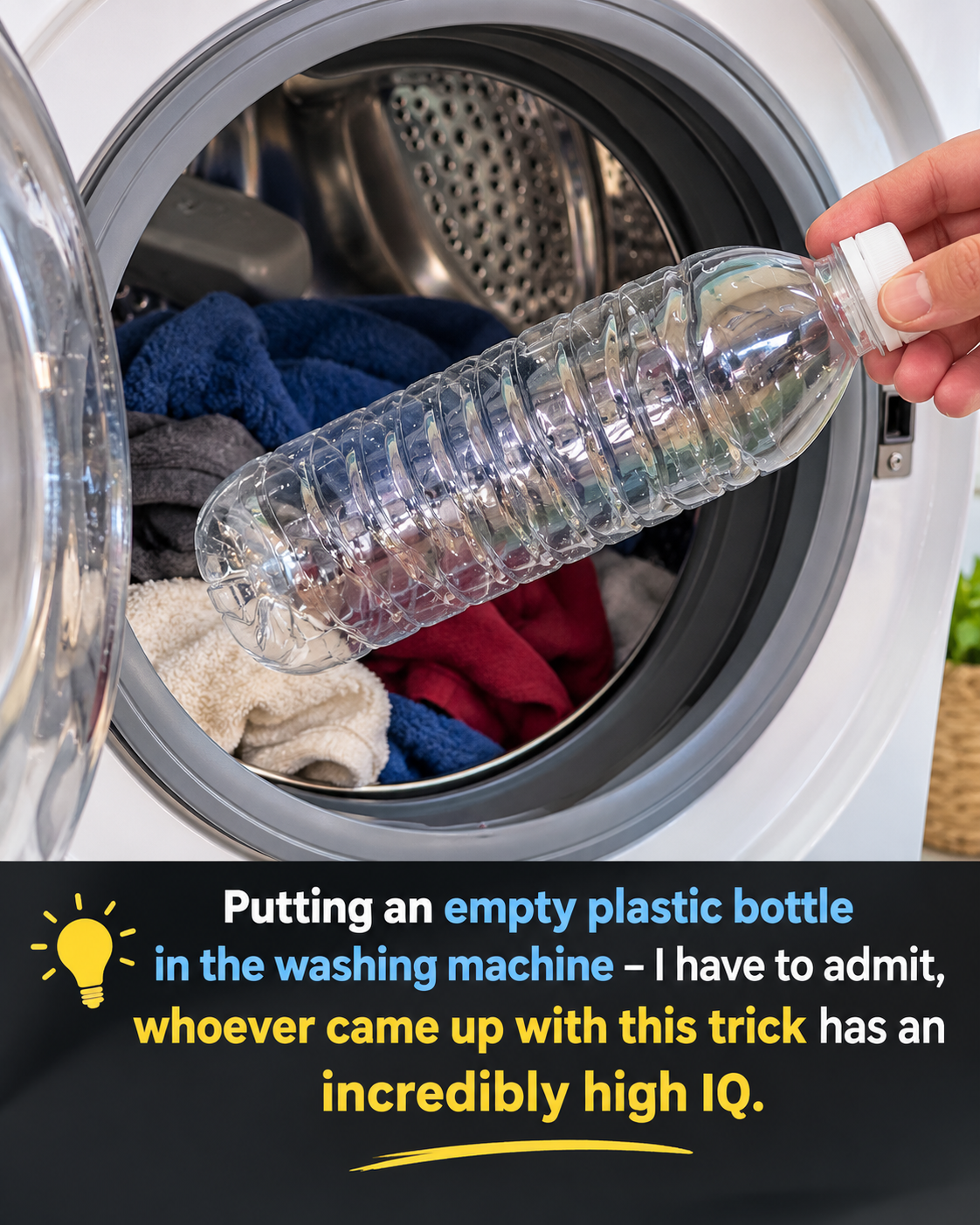
The Genius Laundry Hack of putting an empty plastic bottle in the washing machine has been circulating online with a tempting promise: fewer tangled clothes, fewer wrinkles, and an easier time unloading your laundry. It sounds almost too simple. After all, most of us already have an empty water bottle somewhere in the recycling bin.
However, there is an important catch. Major washing-machine manufacturers recommend specific ways to prevent tangling and unbalanced loads, but they do not generally recommend adding a loose plastic bottle to the drum. Whirlpool advises loading clothes loosely, avoiding overloading, and mixing different types and sizes of garments so they can move freely. Samsung and LG offer similar advice for preventing load imbalance and tangling.
That means this Genius Laundry Hack deserves a closer look before you try it. While the basic idea behind it makes intuitive sense—adding an object that might interrupt clothes from twisting together—a loose bottle can also move unpredictably during agitation and spinning. Your washer was designed around laundry, not improvised objects.
I understand why this trick sounds so appealing. I remember dealing with loads of sheets, long-sleeved shirts, and pants that seemed to emerge from the washer tied together in one enormous knot. Separating everything took longer than expected, and the wrinkled fabric made laundry day even more frustrating. A simple household trick would have been welcome. However, I have learned that the best laundry shortcuts are the ones that solve the problem without risking clothing or appliances. Fortunately, several manufacturer-supported methods can achieve what this viral bottle trick promises.
Why the Genius Laundry Hack Became So Popular
Tangled Laundry Is a Real and Common Problem
Anyone who regularly does laundry knows how easily clothes can twist together. Long sleeves wrap around pant legs, drawstrings catch on other garments, and sheets can trap smaller items inside themselves.
Tangling becomes more likely when clothes do not have enough room to move. Whirlpool specifically explains that tightly packed laundry can increase twisting, tangling, and wrinkling because garments need space to tumble freely.
Loads containing many similar garments can also create problems. For example, washing a full load of long-sleeved shirts gives the sleeves plenty of opportunities to wrap around one another. Whirlpool recommends mixing different kinds and sizes of items to reduce that effect.
Large items create their own challenges. Sheets, blankets, and other bulky fabrics can gather into one heavy section of the drum. Samsung notes that large absorbent items may become tangled and create an uneven load during spinning.
Once that happens, a modern washer may slow down, stop, redistribute the load, or display an imbalance error. LG explains that bulky laundry collecting on one side can trigger a UE unbalance error and may require manual redistribution.
Therefore, the frustration that inspired the Genius Laundry Hack is completely understandable. Tangling is not imaginary, and it can affect more than convenience.
Twisted clothing may remain wetter after the spin cycle, come out more wrinkled, and require additional handling before drying.
Why an Empty Bottle Sounds Like a Clever Solution
The theory behind the Genius Laundry Hack is simple. Supporters suggest that an empty, capped plastic bottle moves between garments and prevents them from clumping into one solid mass.
In theory, the bottle creates physical separation while the washer agitates or tumbles. That extra object could appear to interrupt sleeves, pant legs, or sheets before they wrap tightly together.
This idea resembles the way dryer balls work in a clothes dryer. Dryer balls are purpose-made products designed to move among fabrics and help separate them while drying.
However, a washing machine creates a very different environment. The drum fills with water, changes direction, agitates, drains, and eventually spins at high speed.
A disposable bottle was not designed for that mechanical process. It can compress, deform, crack, become trapped, or move in ways you cannot predict.
More importantly, manufacturer troubleshooting guides for tangled clothes focus on loading technique, load size, garment sorting, and cycle choice rather than recommending loose bottles inside the machine.
Therefore, the concept behind the Genius Laundry Hack may sound logical, but that does not automatically make the bottle itself a good laundry tool.
A smarter approach involves using the same basic principle—giving clothes room to move—without introducing an object that your washer manufacturer has not approved.
Safer Ways to Get the Same Genius Laundry Hack Results
Load the Washer Loosely Instead of Packing It Full
The easiest way to reduce tangling starts before you press the Start button.
Place garments loosely into the washer rather than pushing them down to make room for more. Clothing needs space to move independently during the wash cycle.
Whirlpool recommends loose loads because tightly packed garments can increase wrinkling and tangling. The company also advises that laundry should move freely inside the washer.
This simple change often provides the effect people hope to get from the Genius Laundry Hack. When clothes have room to circulate, they are less likely to twist into one dense bundle.
Avoid judging a load only by whether you can physically fit more clothing into the drum. A washer may still close and run even when the load is too tightly packed for good movement.
Instead, follow the capacity guidance in your machine’s manual. Different washer designs handle loads differently, so a front-loader and a top-loader may require different loading habits.
It also helps to combine garment sizes. Washing several shirts with a few shorter items can reduce the repeated sleeve-on-sleeve twisting that occurs when every item has a similar shape.
Whirlpool specifically recommends mixing different types of garments to reduce twisting and tangling.
Finally, do not ignore pockets and fasteners. Whirlpool recommends emptying pockets and securing zippers, snaps, and hooks so loose objects and hardware do not snag fabrics.
These habits may feel less dramatic than tossing a bottle into the drum, but they offer a more reliable Genius Laundry Hack because they address why tangling happens in the first place.
Match the Cycle to the Laundry You Are Washing
Cycle choice also matters more than many people realize.
Modern washing machines use different combinations of water level, agitation, tumble patterns, wash duration, and spin speed depending on the selected cycle.
Choosing the wrong setting can create more twisting than necessary. Whirlpool notes that longer wash times and stronger wash action may increase tangling and wrinkling for certain loads.
Samsung similarly recommends matching the wash cycle to the type of fabric and load because incorrect settings can contribute to poor performance and imbalance.
For sheets, blankets, and other bulky pieces, use the cycle recommended by your machine manufacturer. These settings often handle large absorbent items differently from ordinary clothing.
If your machine repeatedly shakes, stops spinning, or produces an imbalance code, pause the cycle when safe and redistribute the laundry evenly. LG and Samsung both recommend redistributing uneven loads rather than allowing one heavy bundle to remain on one side.
Reducing spin speed may also help with certain difficult loads, particularly large items that bunch together.
The goal of this version of the Genius Laundry Hack is balance. Balanced laundry moves more predictably, spins more efficiently, and places less unnecessary strain on the machine.
You may also find that smaller loads finish with fewer deep wrinkles. Clothing that can tumble freely does not spend the entire cycle compressed against other wet garments.
Therefore, before experimenting with bottles or other household objects, try adjusting the cycle and load first.
What to Know Before Putting a Plastic Bottle in the Washer
A Loose Bottle Is Not the Same as a Laundry Accessory
The biggest problem with the viral Genius Laundry Hack is that an ordinary disposable bottle was never designed as a washing-machine accessory.
Purpose-made laundry products account for heat, water, movement, impact, and repeated use. A disposable drink bottle does not necessarily meet those expectations.
During a wash cycle, a bottle can be pushed against the drum, agitator, door, or other garments repeatedly. During spinning, everything inside the machine experiences much greater forces.
A partially crushed bottle could develop sharp edges. A loose cap could separate. A label could peel off, and lightweight plastic could become lodged where it does not belong.
Whirlpool advises checking the washer for loose objects that could snag or damage clothing. While its guidance does not specifically discuss plastic bottles, the broader principle supports keeping unnecessary loose objects out of the drum.
Unusual items may also create noise. Samsung recommends removing loose metal objects and other materials that can cause impact or interference during washing.
Most importantly, appliance designs vary. Something that appears harmless in one washer may interfere with another machine’s agitator, impeller, seals, drainage system, or sensing process.
For that reason, do not assume a viral Genius Laundry Hack applies safely to every machine.
Check your washer’s owner’s manual before adding any product or object that is not ordinary laundry, detergent, or a manufacturer-approved laundry accessory.
Protecting an expensive appliance is worth more than saving a few minutes separating shirts.
Better Anti-Tangle Tricks Require No Extra Object
Fortunately, you can copy the goal of the Genius Laundry Hack without using a bottle.
Start by untangling garments before loading them. Do not place pants, sleeves, or sheets into the washer already twisted together.
Wash very long or delicate garments in mesh laundry bags when their care instructions allow it. The bag keeps smaller or fragile pieces contained and reduces opportunities for them to wrap around larger garments.
Tie long drawstrings loosely when appropriate, or secure them according to the garment’s care instructions. Close hooks and other fasteners that might grab neighboring fabrics.
For bedding, avoid stuffing every sheet, pillowcase, and towel you own into one load. Large flat fabrics need enough room to circulate.
Mixing a few different sizes of appropriate garments can also help break up repetitive movement. Whirlpool recommends combining different types of items rather than filling a washer with one garment style.
Remove laundry promptly when the cycle ends. Wet clothing that remains compressed in the drum can develop deeper wrinkles.
Then shake each item before placing it in the dryer or hanging it to dry. That small action separates folds and helps fabrics dry more evenly.
These steps may not sound as surprising as the bottle-based Genius Laundry Hack, but they are simple, practical, and aligned with manufacturer guidance.
Making Laundry Faster Without Risking Your Washer
Small Routine Changes Can Save More Time Than Viral Tricks
A genuinely useful Genius Laundry Hack should make laundry easier without creating another problem.
One of the best time-saving habits is sorting strategically. You do not need dozens of categories, but separating bulky bedding from ordinary clothing can prevent imbalance and tangling.
Likewise, keep delicate garments away from heavy jeans, towels, and items with hardware that may rub or snag them.
Do not automatically choose the longest or strongest cycle. More washing action is not always better. Whirlpool notes that excessively long wash times can increase wrinkling and tangling depending on the load.
Use the amount of detergent recommended for your washer, water conditions, and product. Too much detergent does not necessarily improve cleaning and may leave residue.
Check pockets while sorting rather than after everything reaches the machine. This prevents tissues, coins, pens, and other objects from becoming a second laundry problem.
Finally, deal with unbalanced loads early. If the washer begins repeatedly attempting to redistribute the load, follow the machine’s instructions rather than allowing it to struggle through the cycle.
Samsung notes that improperly distributed laundry can cause poor spinning and imbalance, while LG recommends redistributing items when its machines detect an uneven load.
These small habits can save more time over the long term than a questionable shortcut.
Know When a Laundry Problem Points to the Machine
Sometimes tangled or soaking-wet clothes are not simply a loading problem.
If your washer suddenly starts leaving laundry unusually wet, shaking violently, making new noises, or repeatedly stopping with balance errors despite correctly sized loads, the machine may need attention.
First, check whether the washer stands level. Both LG and Samsung emphasize proper leveling when troubleshooting excessive movement and imbalance.
Then inspect the drum for loose objects and make sure nothing has become trapped where it should not be.
Confirm that you selected the appropriate cycle and that the load does not contain one exceptionally heavy item pulling everything to one side.
If those steps do not resolve the issue, consult the owner’s manual or an authorized service provider.
Adding a plastic bottle to compensate for a mechanical or balance problem can hide the symptom without addressing the cause.
The best Genius Laundry Hack is sometimes simply recognizing when the machine needs proper troubleshooting.
Laundry should become easier with experience, not increasingly unpredictable.
Frequently Asked Questions
Does putting an empty plastic bottle in the washing machine really stop clothes from tangling?
The idea is that the bottle may separate garments as they move, but major washer manufacturers recommend reducing tangles through proper loading, sorting, load size, and cycle selection instead. There is no need to rely on a loose bottle to accomplish those goals.
Can an empty plastic bottle damage a washing machine?
A disposable bottle is not designed as a washer accessory, and different machines use different drum, agitator, impeller, seal, and sensor systems. Check your owner’s manual before placing non-laundry objects in the washer. If the manufacturer does not recommend the practice, using proven loading techniques is the safer option.
Why do my clothes keep tangling in the washer?
Common reasons include overloading, tightly packed clothing, washing many similar long garments together, bulky items gathering on one side, or choosing an unsuitable cycle. Clothes need enough room to move freely.
How can I stop bedsheets from tangling?
Avoid overloading the washer, use the appropriate bedding or bulky cycle when your machine provides one, and give sheets plenty of room to move. If they become unbalanced during spinning, redistribute them according to your washer’s instructions.
What is the safest Genius Laundry Hack for fewer wrinkles?
Load garments loosely, select the correct cycle, avoid excessively long washing when it is unnecessary, and remove clothes promptly at the end of the cycle. Shaking garments before drying can also help release folds. Whirlpool specifically advises proper load size and cycle selection to reduce tangling and wrinkling.
Conclusion
The Genius Laundry Hack involving an empty plastic bottle is appealing because it promises an effortless solution to a genuine annoyance. Tangled laundry creates wrinkles, slows unloading, and can contribute to an unbalanced washer.
However, an ordinary disposable bottle is not a standard washing-machine accessory, and manufacturers already provide safer methods for addressing the underlying problem.
Load clothes loosely. Give every item enough room to move. Mix appropriate garment sizes instead of washing a drum packed with identical long items. Choose the correct cycle, and keep bulky bedding loads manageable.
If the washer becomes unbalanced, redistribute the load rather than trying to solve the problem with an improvised object. Whirlpool, LG, and Samsung all emphasize load size, balance, movement, and cycle selection when troubleshooting tangling or spin problems.
So the most useful lesson from this Genius Laundry Hack is not necessarily to put a plastic bottle in your machine. It is to understand why clothes tangle in the first place.
Once garments have room to move freely, laundry generally becomes easier to separate, easier to dry, and less wrinkled.
That approach may not sound as surprising as a viral bottle trick, but it offers something much better: a simple laundry routine you can use repeatedly without gambling with your clothes or your washing machine.
More Blog
- Drinking Water on an Empty Stomach — What Science Actually Supports (No Hype, Just Facts)
- Waking Up Between 3 and 5 AM? It Might Be Your Soul Trying to Talk to You
- What a “Bleach” Patch on Your Underwear Really Means — And Why It’s Actually a Good Sign
- This Drink May Weaken Your Bones From The Inside — But Everyone Drinks It Anyway