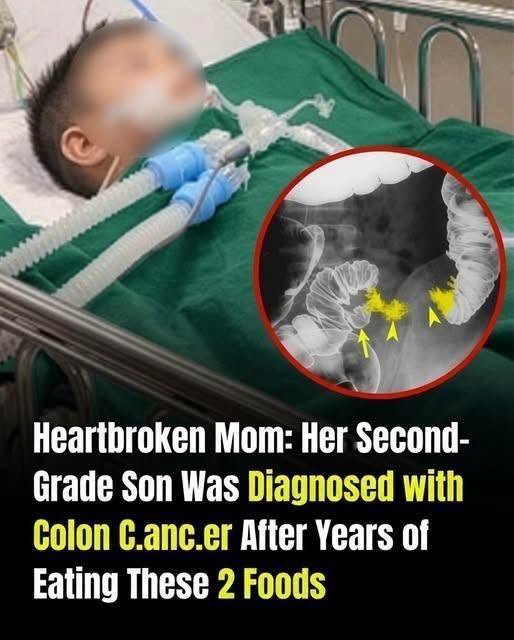
Child Diagnosed With Colon Cancer is the kind of headline that immediately gets a parent’s attention. Colorectal cancer is strongly associated with adulthood, so hearing about a child receiving this diagnosis can feel shocking and confusing.
Fortunately, colorectal cancer remains extremely rare in children. The National Cancer Institute says fewer than 100 children are diagnosed with colorectal cancer each year in the United States, with an annual incidence of roughly 0.5 cases per 100,000 people younger than 20.
When a rare diagnosis occurs, families understandably search for an explanation. Food often becomes an easy target because diet does influence colorectal cancer risk over a lifetime. However, no credible evidence supports blaming one snack, one meal, or one particular food for causing colorectal cancer in a child.
Cancer develops through complex biological changes. In some young patients, inherited genetic syndromes or chronic inflammatory conditions may play an important role. In others, doctors may never identify one clear cause.
I can understand why a family in this situation might replay years of meals and wonder whether something they served contributed to the illness. That reaction feels natural when people desperately want an explanation. Yet cancer rarely offers such a simple answer. A child can eat nutritious meals and still develop a serious disease, while another child can eat less-than-perfectly and never develop cancer. The more useful approach focuses on symptoms, family history, genetics, medical evaluation, and healthy long-term habits rather than guilt over individual foods.
Why Childhood Colon Cancer Is So Unusual
Colorectal Cancer Is Rare in Children and Teens
Child Diagnosed With Colon Cancer sounds unusual because it truly is. Colorectal cancer develops far more commonly in older adults, while pediatric cases represent a tiny fraction of diagnoses.
According to the National Cancer Institute, childhood colorectal cancer forms in tissues of the colon or rectum and occurs in fewer than 100 children each year in the United States. This rarity creates challenges because doctors encounter relatively few pediatric cases compared with adult colorectal cancer.
Because the disease is uncommon, symptoms can initially resemble far more ordinary childhood digestive problems. Constipation, infections, food intolerance, hemorrhoids, and inflammatory bowel conditions can all produce abdominal or bowel symptoms.
That does not mean parents should assume the worst whenever a child develops stomach pain. Most digestive complaints in children have much more common explanations.
However, persistent symptoms deserve attention. A problem that repeatedly returns, steadily worsens, causes bleeding, or affects a child’s weight, energy, or normal activities should prompt medical evaluation.
The goal is balance. Parents do not need to fear every stomachache, but they should also avoid ignoring symptoms simply because colorectal cancer seems unlikely.
Why Young Patients Can Still Develop the Disease
Cancer begins when cells acquire changes that allow abnormal growth. Those changes can arise for many reasons, and childhood colorectal cancer does not have one universal cause.
Some young patients have inherited genetic conditions that dramatically increase colorectal cancer risk. These syndromes can affect how cells repair DNA or how polyps develop within the colon.
Familial adenomatous polyposis, often shortened to FAP, is one important example. People with FAP can develop large numbers of colorectal polyps at a young age, and without appropriate surveillance and treatment, their lifetime cancer risk becomes very high.
Lynch syndrome also increases colorectal cancer risk because inherited changes interfere with normal DNA repair. Families with repeated cases of colorectal, uterine, or related cancers may receive recommendations for genetic counseling and testing.
Chronic inflammatory bowel diseases can also affect colorectal cancer risk over time. The National Cancer Institute notes an association between childhood-onset inflammatory bowel disease and later colorectal cancer risk.
Still, not every young patient has an inherited syndrome or known inflammatory condition. Sometimes cancer develops without an obvious explanation, which is another reason simplistic food-based claims can be misleading.
Why Diet Is Only One Part of Colorectal Cancer Risk
Food Can Influence Risk Without Acting as a Direct Cause
Diet matters for long-term health, but risk factors and direct causes are not the same thing. A risk factor changes the probability that a disease may develop; it does not guarantee that someone will get the disease.
In adults, long-term diets high in red and processed meats have been associated with increased colorectal cancer risk. The American Cancer Society also identifies excess body weight, physical inactivity, type 2 diabetes, smoking, and alcohol use among factors that can affect risk.
However, these findings come primarily from adult populations and reflect patterns maintained over many years. They do not prove that one hot dog, one processed snack, or one frequently eaten childhood food suddenly causes colon cancer.
That distinction becomes especially important when discussing Child Diagnosed With Colon Cancer stories. Viral posts sometimes imply that a child’s illness happened because of two or three foods the family supposedly served regularly.
Such claims can create unnecessary guilt while oversimplifying cancer biology. A single food cannot explain the combined influence of genetics, cell mutations, inflammation, environment, family history, and other factors.
Healthy eating still matters. Families can reduce some long-term health risks by building balanced dietary habits, but nutrition should support prevention rather than become a source of blame after a rare diagnosis.
Fiber, Fruits, Vegetables, and Overall Eating Patterns
A healthy dietary pattern generally includes fruits, vegetables, whole grains, beans, and other minimally processed foods. These foods provide fiber, vitamins, minerals, and a variety of plant compounds.
The American Cancer Society reports that eating patterns high in vegetables, fruits, and whole grains and lower in red and processed meats probably reduce colorectal cancer risk. However, research continues into exactly which components provide the greatest benefit.
Fiber remains especially interesting because it supports normal bowel function and helps create a diverse intestinal environment. Yet researchers continue studying how strongly fiber itself affects colorectal cancer risk, so families should focus on the overall diet rather than chasing one supposedly protective nutrient.
Processed meat deserves moderation because long-term intake has been linked to colorectal cancer. The American Cancer Society notes that processed meat has been classified as carcinogenic to humans based largely on evidence connecting it with colorectal cancer.
Still, that classification describes increased risk across populations, not certainty for an individual. It also does not mean that a child who ate processed meat developed cancer because of that food.
A balanced family diet should aim for variety and moderation, not fear. Healthy eating works best when it becomes an ordinary routine rather than a rigid effort to eliminate every food that has ever appeared in a cancer-risk headline.
Warning Signs Parents Should Take Seriously
Persistent Digestive Changes Deserve Evaluation
Child Diagnosed With Colon Cancer stories often involve symptoms that initially appeared ordinary. Abdominal pain, constipation, diarrhea, fatigue, or appetite changes occur commonly in childhood and usually do not indicate cancer.
The concern increases when symptoms persist or progressively worsen. A child who repeatedly experiences abdominal pain over an extended period may need evaluation even if the first episodes seemed minor.
Blood in the stool deserves medical attention as well. Many noncancerous problems can cause rectal bleeding, but unexplained or recurring blood should not simply be ignored.
Changes in bowel habits can also matter when they last. Prolonged constipation, diarrhea, unusually narrow stools, or a persistent feeling of incomplete bowel movements may justify a discussion with a pediatrician.
Unexplained fatigue or weakness can sometimes reflect anemia. If a child becomes unusually pale, tires easily, or develops low iron without an obvious reason, doctors may investigate possible blood loss or other medical causes.
None of these symptoms proves colorectal cancer. In fact, much more common conditions usually explain them. However, persistent symptoms deserve an answer rather than repeated assumptions.
Weight Loss, Anemia, and Worsening Symptoms Need Attention
Unexplained weight loss is another symptom that should prompt medical evaluation. Children naturally change weight as they grow, but losing weight without trying or failing to gain expected weight can signal that something is interfering with normal health.
Anemia can provide another clue. Slow bleeding from the digestive tract may gradually lower iron levels, leading to fatigue, weakness, shortness of breath with activity, or pale skin.
Severe or worsening abdominal pain also deserves attention. Parents should seek care when pain interferes with sleep, school, eating, or normal activity, especially when it comes with vomiting, bleeding, or weight loss.
Doctors may begin with a physical examination, medical history, blood tests, or stool testing. Depending on the findings, they may recommend imaging, referral to a pediatric gastroenterologist, colonoscopy, or other specialized testing.
The rarity of childhood colorectal cancer should provide reassurance, not a reason to dismiss serious symptoms. Early evaluation can identify many treatable conditions, whether the cause turns out to be constipation, inflammatory bowel disease, infection, anemia, or something rarer.
Parents know when a child’s usual pattern changes. Persistent changes deserve professional attention even when a serious diagnosis remains unlikely.
Genetics, Prevention, and What Families Can Actually Do
Family History Can Be More Important Than One Food
One of the most useful things families can do involves learning their medical history. A pattern of colorectal cancer across several relatives, especially at young ages, can suggest an inherited cancer syndrome.
The same applies when relatives have numerous colon polyps or a combination of colorectal and other associated cancers. In those situations, a healthcare provider may recommend genetic counseling.
Genetic counselors help families understand whether testing makes sense, what the results could mean, and whether children or other relatives need earlier surveillance.
This type of information can lead to targeted screening long before symptoms appear. For families with conditions such as FAP or Lynch syndrome, preventive care may begin much earlier than standard adult colorectal cancer screening.
A genetic predisposition does not mean cancer becomes inevitable in every family member. It means medical teams can identify higher-risk individuals and monitor them appropriately.
That makes family history far more useful than trying to identify one food that “caused” a diagnosis. Genetics can directly change medical recommendations, while blaming yesterday’s dinner usually cannot.
Healthy Habits Still Matter for Long-Term Prevention
Even though diet does not explain every cancer case, healthy habits remain valuable. Children benefit from balanced meals, regular physical activity, adequate sleep, and routine medical care for many reasons beyond cancer prevention.
Encourage fruits, vegetables, whole grains, beans, nuts when age-appropriate, lean protein sources, and other minimally processed foods. Limit heavily processed foods and processed meats without turning them into forbidden objects that create anxiety around eating.
Physical activity matters too. The American Cancer Society identifies regular activity as one factor associated with lower colorectal cancer risk in adults, while exercise also supports cardiovascular fitness, bone health, sleep, mood, and weight regulation.
Families should also avoid tobacco exposure and encourage healthy habits that can continue into adulthood. Prevention usually works through years of repeated choices rather than through one dramatic change.
Most importantly, medical care should remain part of the plan. Routine checkups give parents opportunities to discuss symptoms, growth, family history, and any health changes that seem unusual.
No lifestyle can guarantee that a child will never develop cancer. Healthy habits reduce certain risks and support overall well-being, but they should never become a reason to blame families when disease occurs.
Frequently Asked Questions
How common is colon cancer in children?
Childhood colorectal cancer is extremely rare. The National Cancer Institute reports fewer than 100 cases each year in children in the United States, with an incidence of about 0.5 cases per 100,000 people younger than 20.
Can one food cause colon cancer in a child?
There is no evidence that one specific food directly causes colorectal cancer in a child. Diet can influence long-term cancer risk, especially in adults, but cancer develops through complex interactions involving genetics, biology, environment, and other factors.
What symptoms of colorectal cancer can occur in children?
Possible symptoms can include persistent abdominal pain, blood in the stool, changes in bowel habits, unexplained weight loss, fatigue, or anemia. These symptoms usually have more common causes, but persistent or worsening problems should receive medical evaluation.
Can colorectal cancer run in families?
Yes. Inherited conditions such as familial adenomatous polyposis and Lynch syndrome can significantly increase colorectal cancer risk. Families with several relatives who developed colorectal or related cancers at young ages should discuss family history and possible genetic counseling with a healthcare professional.
Should parents avoid processed meat completely?
Processed meat is linked with increased colorectal cancer risk, particularly when eaten regularly over time. The American Cancer Society recommends limiting it and emphasizes eating patterns rich in vegetables, fruits, and whole grains. Occasional intake does not mean a child will develop cancer.
Conclusion
Child Diagnosed With Colon Cancer is an understandably frightening topic, especially because colorectal cancer is so uncommon in childhood. According to the National Cancer Institute, fewer than 100 children receive this diagnosis each year in the United States.
That rarity makes simplistic explanations especially tempting. Families may search for something they can blame, and viral stories often point toward one food, snack, or dietary habit.
However, cancer does not usually work that way. Genetics, inherited syndromes, chronic inflammation, spontaneous cellular changes, lifestyle, and other factors can all play a role. In some patients, doctors never identify one clear cause.
Healthy eating still matters. Diets rich in vegetables, fruits, whole grains, and other minimally processed foods support overall health, while long-term high intake of processed meat has been associated with greater colorectal cancer risk.
Yet nutrition should guide prevention, not create guilt. No parent should assume that a child’s cancer happened because they occasionally served the “wrong” food.
The more useful lessons involve paying attention to persistent symptoms, knowing family medical history, seeking evaluation when something does not seem right, and following specialized screening recommendations when inherited risk exists.
Most childhood stomachaches will never turn out to be cancer. Still, persistent bleeding, unexplained weight loss, prolonged bowel changes, anemia, or worsening abdominal pain deserve professional attention.
When it comes to Child Diagnosed With Colon Cancer, the message is not to fear individual foods. It is to understand that rare cancers are complex, healthy habits matter over the long term, and timely medical evaluation can make an important difference.
More Blog
- Drinking Water on an Empty Stomach — What Science Actually Supports (No Hype, Just Facts)
- Waking Up Between 3 and 5 AM? It Might Be Your Soul Trying to Talk to You
- What a “Bleach” Patch on Your Underwear Really Means — And Why It’s Actually a Good Sign
- This Drink May Weaken Your Bones From The Inside — But Everyone Drinks It Anyway