A Strange Object Dangling From a Ceiling Sent the Internet Into Hysterics—Until the Mystery Was Finally Solved began with the kind of photograph that practically demands a second look.
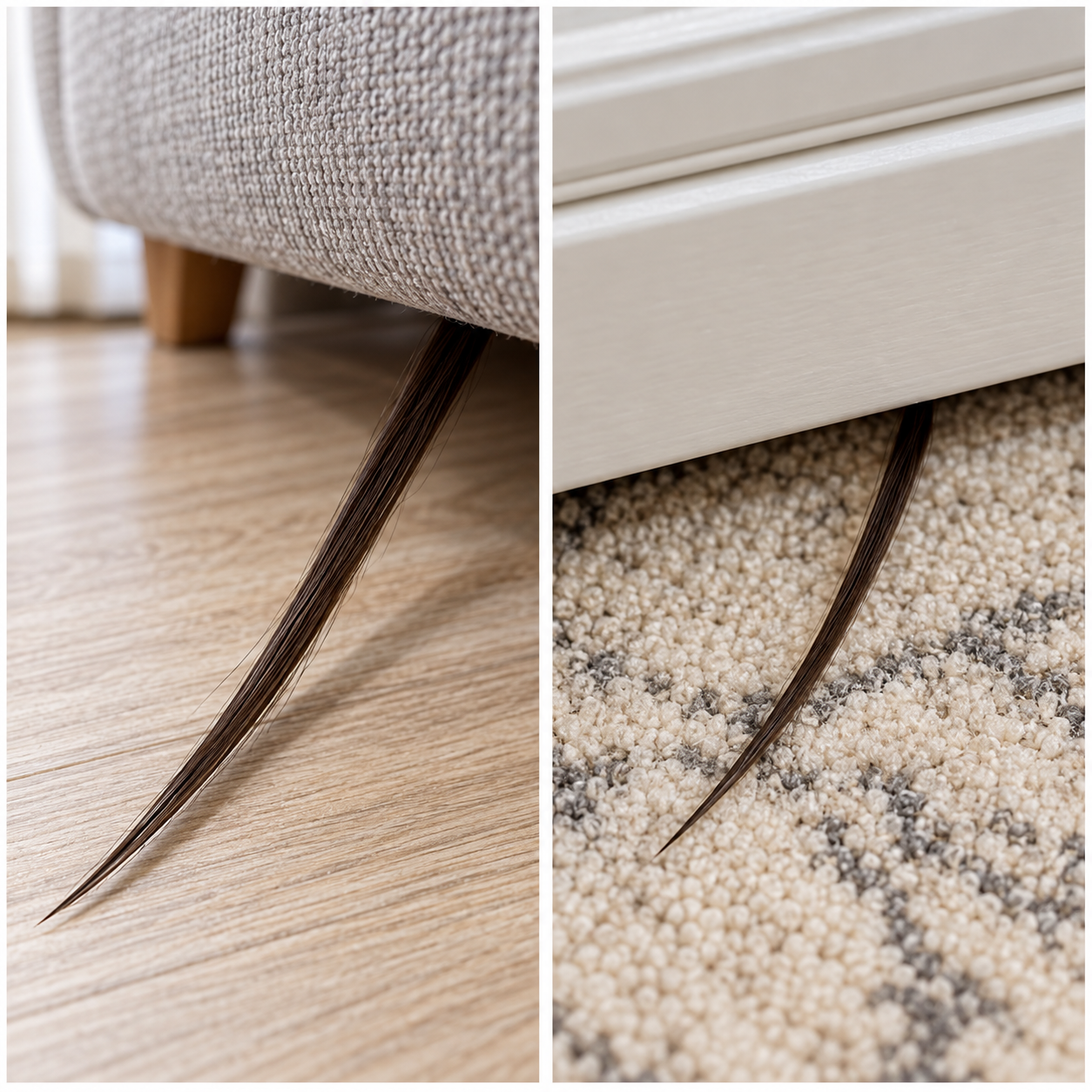
A dark, thin object appeared through a narrow opening between ceiling panels. It looked strangely organic. It had a slightly hairy texture, and, according to the homeowner who discovered it, the object could move.
The image quickly became an online mystery. Some viewers suspected a rodent. Others imagined much stranger creatures hiding above the ceiling. Meanwhile, plenty of people simply joked that they would leave the house immediately.
Eventually, the mystery received a much more ordinary explanation: the object was a rat’s tail.
Still, the story offers more than an entertaining internet reveal. A rat appearing through a ceiling gap can indicate hidden rodent activity in a part of the home that people rarely inspect.
I have always found household mysteries more unsettling when you can see only a tiny piece of the problem. A strange sound behind a wall is one thing. Seeing something move through the ceiling feels completely different because you immediately start imagining what remains hidden on the other side. Yet that is also why these situations reward a practical response. Instead of pulling on an unidentified object or opening a ceiling panel impulsively, it makes much more sense to observe what is happening, keep your distance, and investigate safely. Sometimes the least dramatic explanation turns out to be correct, but it can still reveal a household problem worth addressing.
How One Strange Ceiling Discovery Became an Internet Mystery
The mysterious object appeared to be alive
The original photograph showed something dark extending through a small ceiling opening.
At first, viewers had little information beyond its appearance.
Was it part of an animal? A cable? Plant material? A shadow? Something trapped above the ceiling?
Then came the detail that transformed a curious photograph into something much more unsettling.
The object moved.
Once the person who posted the image reported that it could wiggle, theories about an animal hiding above the ceiling became much more plausible.
Online commenters quickly began studying the visible shape.
Some thought it looked exactly like a rat’s tail. Others suggested larger or more unusual animals. The limited photograph encouraged speculation because nobody could see what remained hidden above the ceiling panels.
That uncertainty explains why visual mysteries spread so easily online.
The human brain naturally tries to complete incomplete pictures. When we see only a tail-shaped object, we mentally construct the creature attached to it.
However, an image alone does not always provide enough information for reliable identification.
Movement, location, texture, size, surrounding evidence, and follow-up observations all help.
In this case, movement strongly suggested that the object belonged to a living animal.
Still, the homeowner made a sensible decision not to grab it.
An unidentified animal hidden inside a ceiling should be treated cautiously rather than turned into an experiment.
The final update revealed a rat’s tail
As the discussion continued, the mysterious object suddenly disappeared back into the ceiling.
That development only made the story more entertaining for the people following it.
The object had not fallen to the floor. Instead, something apparently pulled or moved it back above the ceiling.
Eventually, the original poster provided the answer everyone had been waiting for.
After considering the responses and investigating further, he confirmed that the mysterious object was a rat’s tail.
The strange ceiling visitor was not an exotic reptile, unexplained creature, or bizarre piece of building material.
It was a rodent hiding overhead.
The reveal may have ended the online mystery, but it created a more practical concern for the homeowner.
If a rat can position itself close enough to a ceiling opening for its tail to hang into a room, it has already gained access to part of the building.
Therefore, the important question changes.
Instead of asking, “What is that thing?” the homeowner now needs to ask, “How did the rat get inside, and are there others?”
One sighting cannot establish the size of a rodent problem.
However, it provides enough evidence to justify investigating the ceiling, attic, walls, roofline, and other potential entry points.
The funny photograph had revealed a genuine home-maintenance issue.
What a Rat in the Ceiling Could Mean for Your Home
Rodents often stay hidden from view
Rats generally do not spend their time running through open rooms when people are nearby.
Instead, they favor protected areas where they can move with less disturbance.
Attics can provide suitable shelter. So can wall cavities, crawl spaces, ceiling voids, garages, storage areas, and other quiet parts of a building.
Consequently, homeowners may have rodent activity without seeing an actual animal.
Sounds often provide an earlier clue.
Scratching, scurrying, gnawing, or movement above a ceiling or behind a wall can indicate animal activity, particularly when the sounds recur at similar times.
Droppings provide another clue.
You may also notice shredded paper, fabric, insulation, or other materials that rodents could use for nesting.
Food packaging with gnaw marks deserves attention as well.
Additionally, rodents can chew materials while exploring or attempting to access food and shelter.
Unusual odors may eventually develop when activity becomes established.
However, avoid assuming that every noise or mark proves you have rats.
Mice, squirrels, birds, insects, and even ordinary building movement can sometimes produce confusing signs.
That is why several clues together provide stronger evidence than one isolated sound.
In the viral story, the visible tail offered unusually direct evidence that a rodent had reached the ceiling space.
Entry points may be smaller than expected
Finding a rat inside naturally raises another question: how did it get there?
Rodents can exploit openings around buildings, especially where maintenance problems have developed.
Possible entry areas include gaps around pipes, utility lines, vents, roof edges, doors, damaged screens, and structural openings.
Therefore, inspecting only the room where you saw the rat may not reveal the actual access point.
The animal could enter somewhere else and travel through hidden spaces before reaching the ceiling.
Start with the exterior of the building.
Look for obvious holes, damaged vents, loose materials, gaps around utility penetrations, and other openings.
Pay attention to places where branches, fences, pipes, or structures may provide access toward the roof.
Indoors, inspect areas where you have found droppings, gnawing, nesting material, or repeated sounds.
However, use caution when entering attics, crawl spaces, or damaged ceiling areas.
Electrical wiring, unstable surfaces, insulation, animal waste, and frightened wildlife can create hazards.
Furthermore, simply sealing the first opening you find may not solve the problem if animals remain inside.
A comprehensive approach involves identifying active areas, dealing with the rodents appropriately, and then closing access points.
Otherwise, you may trap an animal within the structure or leave another entrance available.
Signs That Rats May Be Hiding in Walls or Ceilings
Droppings, gnawing, and nesting materials offer clues
A visible rat tail represents an unusually obvious clue.
Most homeowners receive subtler warnings.
Rodent droppings may appear in cupboards, storage areas, garages, attics, or along travel routes. Because animal droppings can carry germs, avoid handling them casually with bare hands.
Gnaw marks can also indicate rodent activity.
Check food packaging, cardboard containers, wood, and other accessible materials when you suspect a problem.
Nesting material provides another clue.
Rodents may shred paper, cardboard, fabric, insulation, and similar materials to create protected nesting spaces.
You might also notice food disappearing or packaging becoming damaged.
These signs become more meaningful when they occur together.
For example, one damaged cardboard box may have an innocent explanation. However, fresh gnaw marks combined with droppings and nighttime scratching strongly justify further investigation.
The location of the evidence can also help determine where rodents travel.
Rats often prefer routes close to walls and protected edges rather than crossing exposed spaces unnecessarily.
Therefore, inspect along baseboards and behind stored belongings when practical.
Avoid deliberately reaching into dark cavities where an animal may be hiding.
Instead, use safe observation and professional assistance when necessary.
A frightened rat may defend itself if trapped or handled.
Sounds and odors can reveal activity you cannot see
Sometimes you hear a rodent problem before you see it.
Scratching above the ceiling can become particularly noticeable at night when the house grows quiet.
You might also hear rapid movement, gnawing, or intermittent rustling.
However, sound travels through building materials.
Something that seems directly above your bed may actually originate several feet away.
Therefore, use recurring sounds as a clue rather than a precise map.
Odor can provide another warning.
Persistent musty or stale smells may develop in areas with rodent activity. Urine and droppings can contribute to unpleasant odors as well.
A particularly strong odor could also indicate a dead animal inside a wall or another inaccessible space.
In that situation, identifying the source may require professional assistance.
Pets sometimes notice hidden animals before people do.
A dog or cat repeatedly staring at, sniffing, or pawing one particular wall or ceiling area may have detected movement or scent.
However, pet behavior alone cannot confirm rats.
Look for physical evidence too.
Ultimately, the most reliable approach combines observation with inspection.
When repeated noises, droppings, gnaw marks, nesting materials, and unusual odors appear together, the possibility of active rodents becomes harder to dismiss.
What to Do When You Suspect Rats in Your Home
Avoid risky reactions to a surprise encounter
A Strange Object Dangling From a Ceiling Sent the Internet Into Hysterics—Until the Mystery Was Finally Solved also demonstrates what not to do.
Some online commenters jokingly encouraged the homeowner to grab or pull the mysterious object.
That would have been a poor idea.
Never deliberately grab an unidentified animal or body part protruding from a wall, ceiling, vent, or other enclosed space.
Likewise, avoid opening ceiling panels impulsively when you suspect a frightened animal may be directly above them.
Keep children and pets away from the area.
If you encounter rodent droppings or contaminated nesting material, avoid sweeping or vacuuming it dry immediately, since disturbing contaminated material can send particles into the air.
Follow appropriate public-health guidance for cleaning rodent-contaminated areas and use suitable protective measures.
Food safety also matters.
Discard food that rodents have clearly accessed or contaminated, especially when packaging has been chewed open.
Next, inspect the home for signs of activity and potential entry routes.
If the problem appears substantial or involves inaccessible walls, ceilings, or attics, a qualified pest-control professional can help assess the situation.
The goal should involve more than removing the one rat you happened to see.
You also need to understand why it entered and whether the conditions that attracted it remain.
Prevention requires food control and structural maintenance
Rodent prevention works best when you reduce food, shelter, and access at the same time.
Start with food.
Store vulnerable pantry items and pet food securely. Clean spills and crumbs promptly. Avoid leaving easily accessible food out overnight.
Garbage also needs attention.
Use appropriate containers and keep waste areas reasonably clean.
Next, reduce unnecessary clutter, particularly in garages, storage rooms, and other quiet spaces.
Clutter provides protected hiding areas and can make evidence of rodent activity harder to notice.
Then, examine the building itself.
Repair damaged screens and suitable exterior gaps. Inspect vents, doors, roof areas, and utility penetrations.
However, if you already know rodents are inside, coordinate exclusion carefully so you do not simply trap them within the structure.
Outdoor maintenance can help as well.
Keep unnecessary debris away from the house and manage vegetation that creates sheltered routes toward the building.
Most importantly, continue monitoring after the immediate problem appears resolved.
Listen for recurring sounds. Check for fresh droppings or gnawing. Inspect areas where previous activity occurred.
Removing one visible rodent may feel like the end of the problem.
In reality, preventing another entry provides the more complete solution.
Frequently Asked Questions
What was the strange object hanging from the ceiling?
According to the original poster’s follow-up described in the supplied story, the moving object was ultimately confirmed to be a rat’s tail.
Does seeing one rat mean there are many more?
Not necessarily. One sighting confirms at least one rodent but does not reveal how many others may be present. However, rats can live near other rats, so evidence of one provides a sensible reason to inspect for additional activity.
What are common signs of rats in a house?
Possible clues include droppings, gnaw marks, shredded nesting material, damaged food packaging, scratching or scurrying sounds, unusual odors, and direct sightings.
Should I grab a rat’s tail if it sticks through a ceiling?
No. Avoid touching or pulling an unidentified animal. A trapped or frightened rat may bite or scratch. Keep your distance and address the rodent problem using appropriate control methods or professional assistance.
Why would rats live above a ceiling?
Ceiling voids and attics can provide warmth, darkness, shelter, and relatively little human disturbance. If rodents can access these spaces through structural openings, they may use them for travel or nesting.
Conclusion
A Strange Object Dangling From a Ceiling Sent the Internet Into Hysterics—Until the Mystery Was Finally Solved began as an amusing online puzzle but ended with a useful household lesson.
The strange object moved. Then, it disappeared. Finally, the homeowner confirmed the answer: a rat’s tail had been protruding through the ceiling.
While the internet enjoyed the mystery, the discovery indicated something worth investigating.
Rats can remain hidden in attics, ceilings, walls, crawl spaces, and other protected parts of a building. Therefore, homeowners may notice droppings, scratching noises, gnawing, odors, or nesting material long before they see an actual rodent.
If you suspect rats, avoid grabbing animals or disturbing contaminated material carelessly.
Instead, inspect for evidence, secure food, reduce clutter, identify possible access points, and use qualified professional help when the problem extends into inaccessible areas.
Finally, remember that the most important part of rodent control happens after the mystery gets solved.
Finding the rat explains the strange object.
Finding out how it entered can help prevent the next surprise.
More Blog
- Drinking Water on an Empty Stomach — What Science Actually Supports (No Hype, Just Facts)
- Waking Up Between 3 and 5 AM? It Might Be Your Soul Trying to Talk to You
- What a “Bleach” Patch on Your Underwear Really Means — And Why It’s Actually a Good Sign
- This Drink May Weaken Your Bones From The Inside — But Everyone Drinks It Anyway