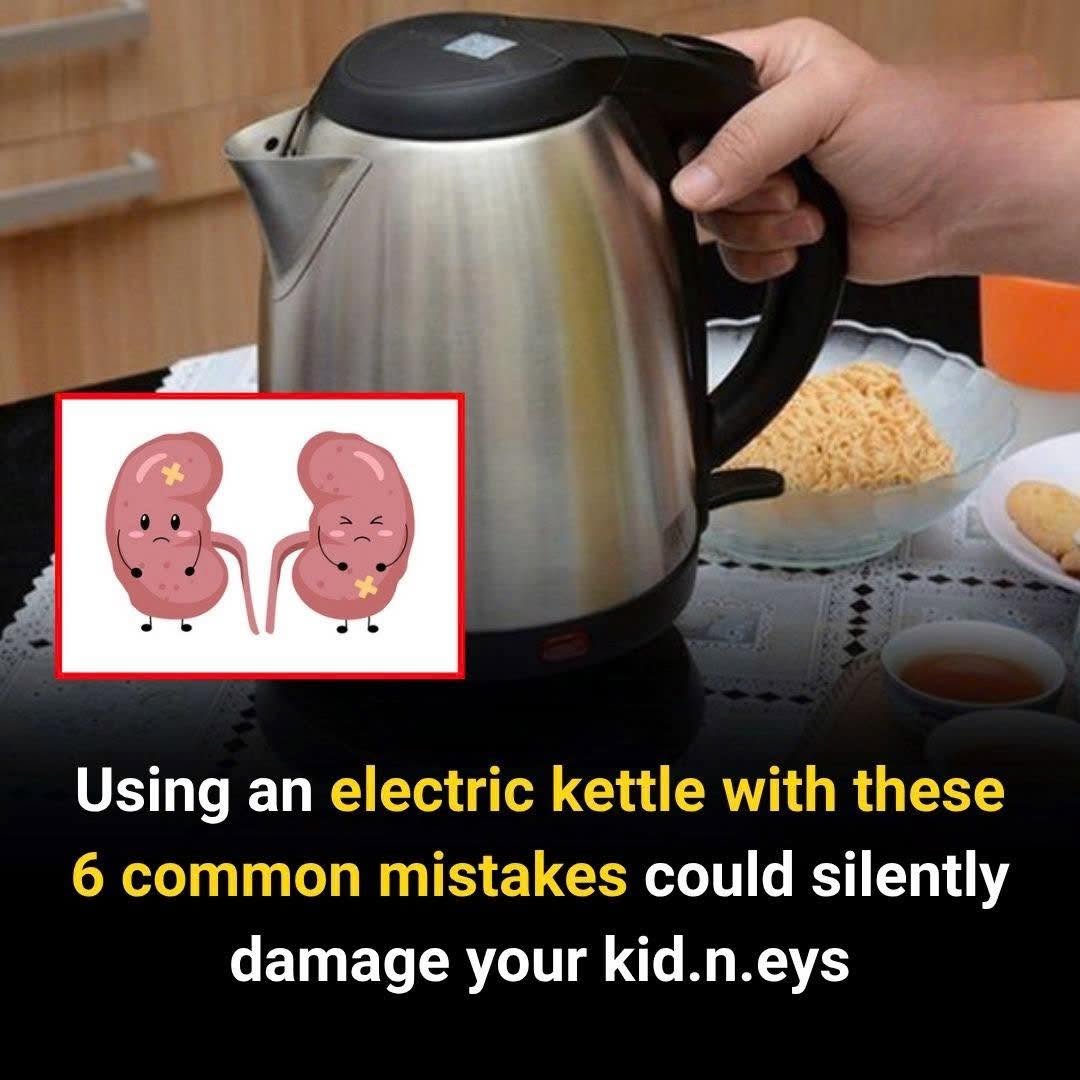
An electric kettle makes everyday life easier. You add water, press a switch, and within minutes you can prepare tea, coffee, oatmeal, or another hot drink. However, alarming claims about kettles and kidney health often spread online without enough context. A Common Mistake Countless Families Don’t Even Know They’re Making may sound frightening, especially when the supposed mistake involves something as ordinary as boiling water twice.
Fortunately, normal kettle use does not automatically damage your kidneys. Reboiling safe drinking water does not suddenly turn it into a dangerous liquid. Still, water quality, kettle cleanliness, hydration habits, and the condition of the appliance can matter. Therefore, understanding the difference between reasonable precautions and exaggerated warnings can help you use your kettle confidently.
A few years ago, I noticed how often leftover water stayed in the kettle after breakfast. Instead of emptying it, someone would simply add more water the next morning and boil everything again. It seemed harmless, but it made me curious about the cloudy mineral scale collecting around the bottom. After learning more, I stopped treating that buildup as evidence that the water had become poisonous. Instead, I started using fresh drinking water when convenient and cleaning the kettle regularly. That small routine made the kettle cleaner, improved the taste of hot drinks, and turned an alarming internet warning into a practical household habit.
What Actually Happens When You Reboil Water?
Reboiling Changes Concentration, but Context Matters
When water boils, some of it escapes as steam. Meanwhile, dissolved substances generally remain behind. Consequently, if you repeatedly boil a shrinking amount of water without replacing it, the concentration of dissolved minerals and other nonvolatile substances can increase.
However, that fact alone does not prove that reboiled water damages healthy kidneys.
Safe drinking water naturally contains dissolved minerals. Calcium and magnesium, for example, commonly occur in hard water. These minerals can also create the chalky white scale that appears inside a kettle. Although the buildup may look concerning, visible limescale does not mean that the kettle has produced toxic water.
The starting water matters much more.
If your household water meets applicable drinking-water standards, boiling it a second time does not normally transform it into a kidney-damaging drink. On the other hand, boiling cannot remove every possible chemical contaminant. Therefore, households with questionable well water, old plumbing, contamination advisories, or known water-quality problems should address the source of the water rather than relying on a kettle to purify it.
This distinction matters when discussing A Common Mistake Countless Families Don’t Even Know They’re Making. Reboiling water and starting with contaminated water represent two very different situations.
Additionally, ordinary household use rarely involves boiling the same tiny volume dozens of times until most of the water disappears. Most people boil water, pour out a significant portion, and refill the kettle later.
Therefore, concentration effects that sound dramatic in theory may have much less significance during normal use.
Does Reboiled Water Cause Kidney Stones?
Kidney stones have several possible causes and risk factors. Therefore, blaming one everyday appliance oversimplifies a complicated health issue.
Low fluid intake represents an important consideration because concentrated urine can make stone formation more likely in susceptible people. Diet, genetics, medical conditions, medications, and the chemical composition of urine can also influence risk.
Consequently, staying adequately hydrated generally matters more than worrying about whether your drinking water entered a kettle once or twice.
Some online warnings also suggest that calcium in hard water automatically causes calcium kidney stones. However, the relationship between dietary calcium, drinking-water minerals, and kidney stones remains more complicated than that claim suggests. The body processes calcium from different sources, while individual risk varies considerably.
Therefore, you should not assume that visible kettle scale predicts kidney stones.
If you already experience kidney stones, chronic kidney disease, electrolyte problems, or another condition that requires fluid or mineral restrictions, follow individualized guidance from a qualified healthcare professional. General household advice cannot replace a medical plan designed around laboratory results, medications, and kidney function.
For everyone else, focus on safe drinking water and sensible kettle maintenance rather than fear.
6 Electric Kettle Habits Worth Changing
Fresh Water and Proper Kettle Use
Several habits can affect cleanliness, appliance performance, or water quality. However, they do not all carry the same health significance.
First, avoid repeatedly topping up old water for days at a time. Fresh water often tastes better, and regularly emptying the kettle makes cleaning easier. Furthermore, this habit prevents water from sitting unnecessarily inside the appliance.
Second, use the kettle only for substances the manufacturer allows. Many standard electric kettles were designed specifically for water. Therefore, boiling milk, soup, noodles, eggs, oil, or sugary liquids can create residue, interfere with sensors, cause foaming, or make the kettle difficult to clean.
Third, do not ignore heavy mineral scale. Hard water can leave calcium-rich deposits on the heating surface. Although scale does not automatically make the water dangerous, thick deposits can reduce efficiency and affect taste. Consequently, routine descaling helps keep the appliance working properly.
Fourth, use potable water. A Common Mistake Countless Families Don’t Even Know They’re Making becomes much more relevant when people assume boiling fixes every water-quality problem. It does not.
Boiling can kill many disease-causing microorganisms when performed correctly. However, it does not reliably remove dissolved metals, salts, nitrates, or many other chemical contaminants. In fact, evaporation can leave nonvolatile substances behind.
Therefore, if local authorities issue a specific water advisory, follow their instructions instead of assuming that an electric kettle provides complete purification.
Cleanliness and Appliance Condition Matter Too
Fifth, clean the kettle regularly.
Mineral deposits can gradually coat the bottom and sides. Additionally, residue can accumulate around the lid, spout, filter, and other areas that remain damp.
Always unplug the kettle and let it cool before cleaning it. Then follow the manufacturer’s care instructions. Many kettles can be descaled with an appropriate descaling solution, while some manufacturers permit diluted vinegar or citric acid.
Afterward, rinse the kettle thoroughly before using it again.
Sixth, replace damaged appliances instead of continuing to use them indefinitely. Cracked plastic, damaged electrical components, corrosion, deteriorating seals, or exposed internal parts deserve attention.
Likewise, avoid exceeding the maximum fill line. Overfilling can cause boiling water to splash or spill. Although this issue concerns burn and electrical safety rather than kidney health, it represents a genuine kettle hazard that deserves more attention than sensational claims about ordinary reboiled water.
You should also avoid operating a kettle without enough water unless its instructions specifically permit it. Many modern models include boil-dry protection, but you should not depend on that feature during routine use.
Ultimately, sensible appliance habits provide practical benefits without creating unnecessary anxiety.
Water Quality, Minerals, and Your Kidneys
Start With the Water Before Blaming the Kettle
The most useful question often isn’t, “Did I boil this twice?” Instead, ask, “Was this water safe to drink before I put it in the kettle?”
Municipal drinking water usually undergoes treatment and testing according to local requirements. However, water conditions differ by location. Private wells require different considerations because homeowners may carry more responsibility for testing.
Older buildings can also introduce plumbing concerns. Therefore, people who suspect lead, excessive nitrates, unusual salinity, or another contamination problem should seek appropriate testing or guidance from local water authorities.
Importantly, boiling should not serve as a universal treatment for chemically contaminated water.
That point helps put A Common Mistake Countless Families Don’t Even Know They’re Making into perspective. A kettle heats water. It does not function as a complete chemical purification system.
Meanwhile, hard water deserves separate consideration. Hardness primarily reflects dissolved calcium and magnesium. When you heat hard water, some minerals can form scale inside the kettle.
Therefore, a white coating usually indicates mineral deposits rather than mysterious toxins.
If scale develops quickly, clean the kettle more frequently. Additionally, follow the appliance instructions regarding filters and descaling products. These simple measures can improve taste and maintain heating efficiency.
However, do not diagnose a health risk simply by looking at kettle scale.
Hydration Usually Deserves More Attention
Your kidneys continuously help regulate fluid, electrolytes, and waste products. Therefore, adequate hydration plays an important role in normal kidney and urinary function.
For many healthy adults, drinking enough fluid throughout the day helps maintain normal hydration. However, individual needs vary with body size, climate, activity, diet, pregnancy, illness, and medications.
Additionally, some people with heart failure, advanced kidney disease, or other medical conditions may receive instructions to restrict fluids. Consequently, universal rules such as “everyone must drink a gallon every day” can create problems.
Pay attention to your own circumstances instead.
Tea and coffee prepared with a kettle can contribute to daily fluid intake. Still, what you add to those drinks matters. Large amounts of sugar, for example, can turn a simple beverage into a significant source of added sugar.
Therefore, the broader pattern of your diet and hydration often matters more than whether you reheated a kettle.
If you experience persistent swelling, blood in the urine, significant changes in urination, severe flank pain, recurrent kidney stones, or other concerning symptoms, seek medical evaluation. A kettle-cleaning routine cannot diagnose or treat kidney disease.
A Simple, Safer Electric Kettle Routine
What to Do Every Day
Fortunately, you do not need a complicated routine.
Start with drinking water that you trust. Next, add only the amount you expect to use. This approach reduces wasted electricity and leaves less water sitting in the kettle afterward.
If some water remains for a short period, you do not need to panic. Reboiling ordinary safe drinking water once does not mean that it has suddenly become toxic. Nevertheless, replacing old standing water with fresh water offers a simple way to maintain taste and kettle cleanliness.
Additionally, keep the kettle’s exterior and electrical base dry. Never immerse an electrical kettle or its powered base unless the manufacturer’s instructions explicitly describe a safe cleaning procedure.
Check the maximum and minimum fill markings before boiling. Then close the lid correctly and keep the spout pointed away from people.
After pouring, allow the appliance to cool normally.
These steps provide a more balanced response to A Common Mistake Countless Families Don’t Even Know They’re Making than dramatic warnings do. Instead of fearing your kettle, use it according to its intended design.
Furthermore, check the appliance manual because kettle designs vary. Some models contain removable filters, concealed heating elements, temperature controls, or specific descaling requirements.
Following those instructions can extend the appliance’s useful life.
How Often Should You Descale?
Descaling frequency depends largely on water hardness and kettle use.
If you use hard water several times each day, deposits may appear quickly. Therefore, you may need to descale more frequently. Conversely, households with softer water may notice very little buildup.
Rather than following an arbitrary schedule, inspect the inside of the kettle regularly. When a visible mineral layer develops, clean it according to the manufacturer’s instructions.
After descaling, rinse carefully. Then boil and discard fresh water if the cleaning-product instructions recommend that step.
Never mix household cleaning chemicals unless the product instructions specifically permit the combination. In particular, avoid experimenting with combinations of cleaners in an attempt to remove scale faster.
Additionally, clean removable filters as directed.
A clean kettle generally heats efficiently and keeps drinks tasting fresh. More importantly, this routine addresses a real maintenance issue without claiming that normal mineral scale automatically damages your kidneys.
The practical message remains simple: use safe drinking water, keep the appliance clean, stay appropriately hydrated, and follow legitimate water-quality advisories.
Those habits make far more sense than treating every second boil as a medical emergency.
Frequently Asked Questions
Is it dangerous to boil water twice in an electric kettle?
For ordinary potable water, boiling it twice does not automatically make it dangerous or kidney-damaging. Some water evaporates during boiling, so dissolved substances can become slightly more concentrated. However, normal household reboiling differs greatly from repeatedly reducing contaminated water. Starting water quality matters much more.
Does reboiled water cause kidney stones?
You should not treat reboiled kettle water as a proven direct cause of kidney stones. Kidney stone formation depends on several factors, including urine chemistry, hydration, diet, genetics, medications, and medical conditions. People with recurrent stones should seek individualized medical guidance.
Is white kettle scale harmful?
White or pale scale commonly forms from minerals associated with hard water, especially calcium compounds. Its presence does not by itself prove that the water is unsafe. However, heavy scale can affect kettle efficiency and drink quality, so regular descaling makes sense.
Should I empty my electric kettle after every use?
You do not need to panic if a small amount of safe drinking water remains temporarily. However, regularly emptying and refilling the kettle can improve freshness and make maintenance easier. Avoid leaving water stagnant for unnecessarily long periods.
Can boiling make contaminated water completely safe?
No. Boiling can address many microbial hazards when done correctly, but it does not remove every chemical contaminant. Dissolved metals, salts, nitrates, and other substances may remain. Therefore, always follow official instructions during a drinking-water contamination advisory.
Conclusion
A Common Mistake Countless Families Don’t Even Know They’re Making should not become another reason to fear an ordinary kitchen appliance. Electric kettles provide a convenient way to heat water, and normal reboiling of potable water does not automatically translate into kidney damage.
Instead, focus on factors that you can manage sensibly. Start with safe drinking water. Use the kettle for its intended purpose. Clean mineral deposits when they accumulate. Replace damaged appliances, and follow local water advisories whenever authorities identify a contamination problem.
Most importantly, keep kidney health in perspective. Hydration, medical history, diet, medications, blood pressure, diabetes, and other factors can matter far more than whether your kettle boiled the same safe water twice.
If you have kidney disease, recurrent kidney stones, or medically prescribed fluid or mineral restrictions, follow your healthcare professional’s individualized advice. Otherwise, a clean kettle, trustworthy water, and reasonable household habits can keep that morning cup simple.
WP Recipe Maker JSON Import Block
{
  "title": "A Common Mistake Countless Families Don’t Even Know They’re Making — And How It Could Be Quietly Hurting Your Kidneys",
  "summary": "A practical guide to safer electric kettle habits, water quality, routine descaling, and common misconceptions about reboiled water and kidney health.",
  "notes": "This is an informational household guide rather than a food recipe. Use potable drinking water, follow your kettle manufacturer's instructions, and follow official water-quality advisories when applicable.",
  "ingredients_flat": [
    {
      "amount": "as needed",
      "unit": "",
      "name": "fresh potable drinking water"
    }
  ],
  "instructions_flat": [
    {
      "name": "Step 1",
      "text": "Fill the electric kettle with fresh potable drinking water without exceeding the maximum fill line.",
      "summary": "",
      "image_url": ""
    },
    {
      "name": "Step 2",
      "text": "Use the kettle only for water unless the manufacturer specifically states that other liquids or foods are suitable.",
      "summary": "",
      "image_url": ""
    },
    {
      "name": "Step 3",
      "text": "Boil only the amount of water you reasonably expect to use.",
      "summary": "",
      "image_url": ""
    },
    {
      "name": "Step 4",
      "text": "Regularly replace old standing water with fresh drinking water for better freshness and easier kettle maintenance.",
      "summary": "",
      "image_url": ""
    },
    {
      "name": "Step 5",
      "text": "Inspect the kettle for mineral scale and descale it according to the manufacturer's cleaning instructions when buildup appears.",
      "summary": "",
      "image_url": ""
    },
    {
      "name": "Step 6",
      "text": "Rinse the kettle thoroughly after descaling and replace the appliance if you notice significant damage or deterioration.",
      "summary": "",
      "image_url": ""
    }
  ],
  "equipment": [
    {
      "name": "Electric kettle",
      "notes": ""
    },
    {
      "name": "Measuring jug or drinking-water container",
      "notes": ""
    }
  ],
  "nutrition": {
    "calories": "0 kcal",
    "carbohydrates": "0 g",
    "protein": "0 g",
    "fat": "0 g",
    "saturated_fat": "0 g",
    "polyunsaturated_fat": "0 g",
    "monounsaturated_fat": "0 g",
    "trans_fat": "0 g",
    "cholesterol": "0 mg",
    "sodium": "varies by water source",
    "potassium": "varies by water source",
    "fiber": "0 g",
    "sugar": "0 g",
    "vitamin_a": "0 mcg",
    "vitamin_c": "0 mg",
    "calcium": "varies by water source",
    "iron": "varies by water source"
  },
  "tags": {
    "course": ["Drinks"],
    "cuisine": ["General"],
    "keyword": ["A Common Mistake Countless Families Don’t Even Know They’re Making", "electric kettle safety", "reboiling water", "kettle cleaning", "water quality"]
  }
}
SEO Output
Focus Keyword
A Common Mistake Countless Families Don’t Even Know They’re Making
SEO Title
A Common Mistake Countless Families Don’t Even Know They’re Making With Kettles
Meta Description
A Common Mistake Countless Families Don’t Even Know They’re Making: learn the facts about reboiling water, kettle scale, and safer use.
Expert SEO Title
A Common Mistake Countless Families Don’t Even Know: 6 Crucial Facts
Midjourney Prompt
Realistic editorial food and wellness photography of a modern electric kettle on a clean kitchen counter, kettle partly open with clear fresh water inside, subtle mineral scale visible near the heating plate, glass of clean water beside it, soft natural morning window light, realistic household setting, educational health article aesthetic without frightening medical imagery, vertical composition, clean uncluttered background, highly detailed photorealistic textures, generous negative space in upper portion for Pinterest text overlay, professional lifestyle photography –v 6 –ar 2:3
More Blog
- Drinking Water on an Empty Stomach — What Science Actually Supports (No Hype, Just Facts)
- Waking Up Between 3 and 5 AM? It Might Be Your Soul Trying to Talk to You
- What a “Bleach” Patch on Your Underwear Really Means — And Why It’s Actually a Good Sign
- This Drink May Weaken Your Bones From The Inside — But Everyone Drinks It Anyway