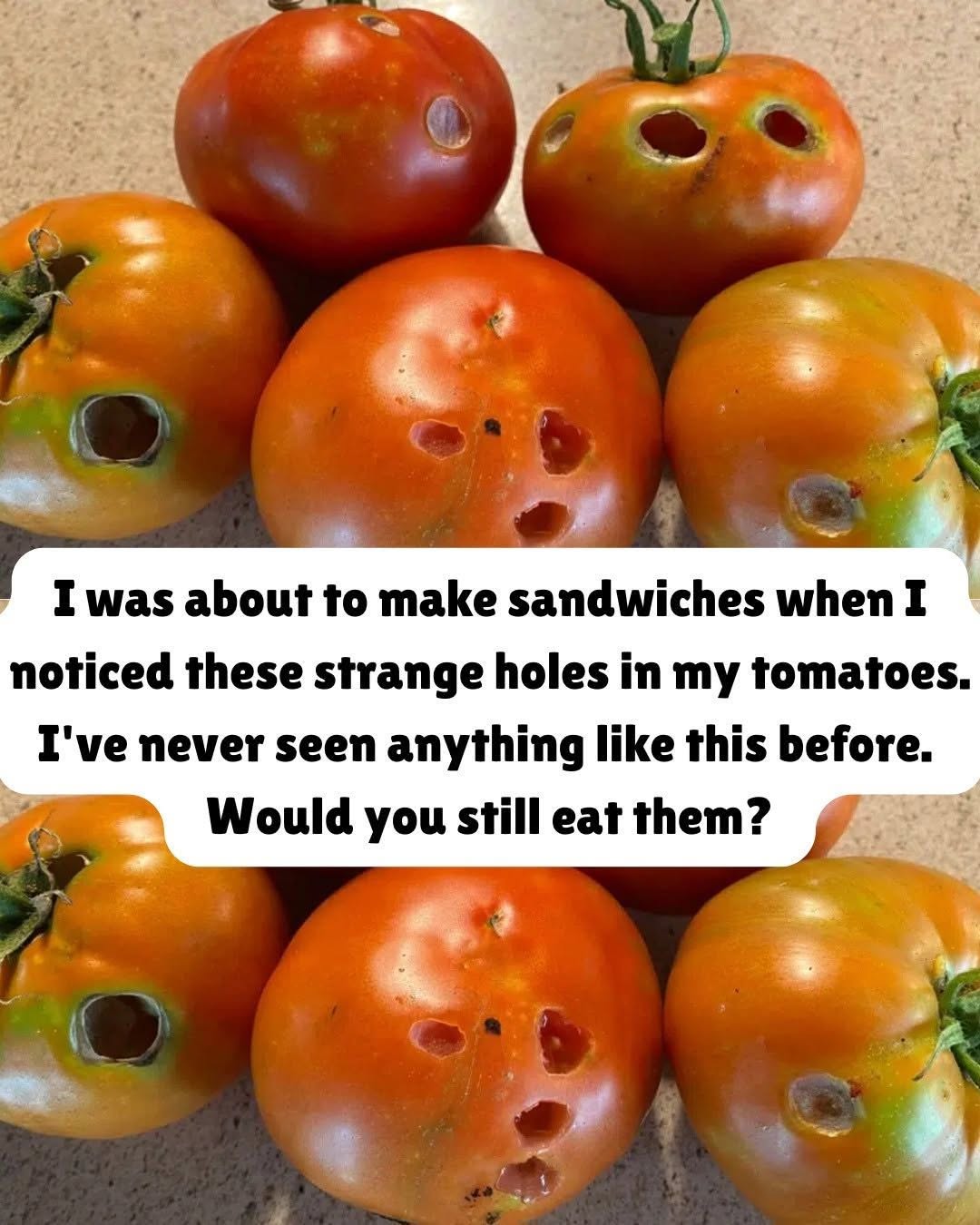
Few things are more disappointing for a gardener than finding a beautiful tomato with mysterious holes in its skin. Sometimes the damage is minor, while other times it can indicate insects or animals feeding on your crop.
The size, shape, and location of the holes can provide important clues about what caused them.
Why Do Tomatoes Develop Holes?
Holes don’t usually appear spontaneously. In most cases, something has damaged the fruit from the outside. Common causes include caterpillars, slugs, birds, rodents, and occasionally physical damage that later becomes enlarged.
Understanding the difference can help you protect the rest of your tomatoes.
1. Tomato Fruitworms
One of the most common suspects is the tomato fruitworm, a caterpillar that feeds directly on developing tomatoes.
Fruitworms often create holes near the stem and may burrow partially inside the fruit. You may also notice damaged tissue or caterpillar waste around the opening.
Because the insect can move between fruits, checking nearby tomatoes is important.
What to Do
Inspect the plant carefully, especially around flowers and developing fruit. Remove visible caterpillars and badly damaged tomatoes.
Regular inspection can prevent a small problem from becoming a larger infestation.
2. Tomato Hornworms
Tomato hornworms are large green caterpillars that can consume an impressive amount of plant material.
Unlike fruitworms, they frequently attack the leaves and stems as well as the tomatoes themselves.
Signs can include missing leaves, irregular bites in fruit, dark droppings beneath the plant, and partially stripped stems.
Because their green coloring provides excellent camouflage, inspect plants carefully.
3. Slugs and Snails
If the damage appears overnight and the holes are irregular or shallow, slugs or snails could be responsible.
Another clue is a shiny or silvery trail around the plant, fruit, soil, or nearby containers.
They are particularly active in damp environments and often hide beneath pots, mulch, boards, or dense vegetation during the daytime.
Reducing unnecessary moisture around plants and removing hiding places can help.
4. Birds
A perfectly ripe tomato can be difficult for birds to resist.
Bird damage commonly appears as small pecks or shallow holes rather than deep tunnels.
Sometimes birds are primarily looking for moisture rather than food, particularly during hot, dry weather.
Garden netting or other appropriate physical barriers can help protect ripening tomatoes.
5. Squirrels and Other Small Animals
If you’re finding larger bites, partially eaten tomatoes, or fruit disappearing entirely, squirrels, chipmunks, rats, or other animals may be responsible.
Animal damage tends to look considerably larger and less precise than caterpillar holes.
Finding damaged tomatoes away from the plant can be another clue that an animal carried or moved them.
6. Cracking and Physical Damage
Not every opening comes from a pest.
Tomatoes can split after sudden changes in water availability, particularly when heavy watering or rain follows a dry period.
The damaged area can sometimes widen and resemble a hole as the tomato continues growing.
Maintaining relatively consistent soil moisture helps reduce cracking.
Can You Still Eat a Tomato With a Hole?
This is where caution matters.
If the tomato has only superficial physical damage and the affected area is clean and fresh, it may sometimes still be usable after thoroughly washing and removing the damaged portion.
However, discard tomatoes showing mold, rot, an unpleasant odor, extensive insect tunneling, animal bites, or significant deterioration. Openings in the skin can allow microorganisms to enter the fruit, so when the source or condition of the damage is uncertain, throwing it away is the safer choice.
How to Prevent Holes in Future Tomatoes
A few simple gardening habits can dramatically reduce damage:
- Inspect plants regularly, including underneath leaves.
- Remove caterpillars when discovered.
- Pick ripe tomatoes promptly.
- Remove badly damaged or rotting fruit from the garden.
- Keep the growing area reasonably clean.
- Maintain consistent watering.
- Use suitable barriers or netting when birds and animals are the problem.
The Bottom Line
Small round holes may suggest fruitworms, large irregular damage can point toward hornworms or animals, ragged nighttime damage with slime trails suggests slugs or snails, and shallow punctures may come from birds.
The good news is that finding one damaged tomato doesn’t necessarily mean your crop is ruined. Identify the pattern, inspect the surrounding plants, remove affected fruit when necessary, and address the likely culprit early.
A little observation can often tell you exactly what’s been visiting your tomato patch—and help ensure the next ripe tomato makes it safely from the garden to your kitchen.
More Blog
- Drinking Water on an Empty Stomach — What Science Actually Supports (No Hype, Just Facts)
- Waking Up Between 3 and 5 AM? It Might Be Your Soul Trying to Talk to You
- What a “Bleach” Patch on Your Underwear Really Means — And Why It’s Actually a Good Sign
- This Drink May Weaken Your Bones From The Inside — But Everyone Drinks It Anyway