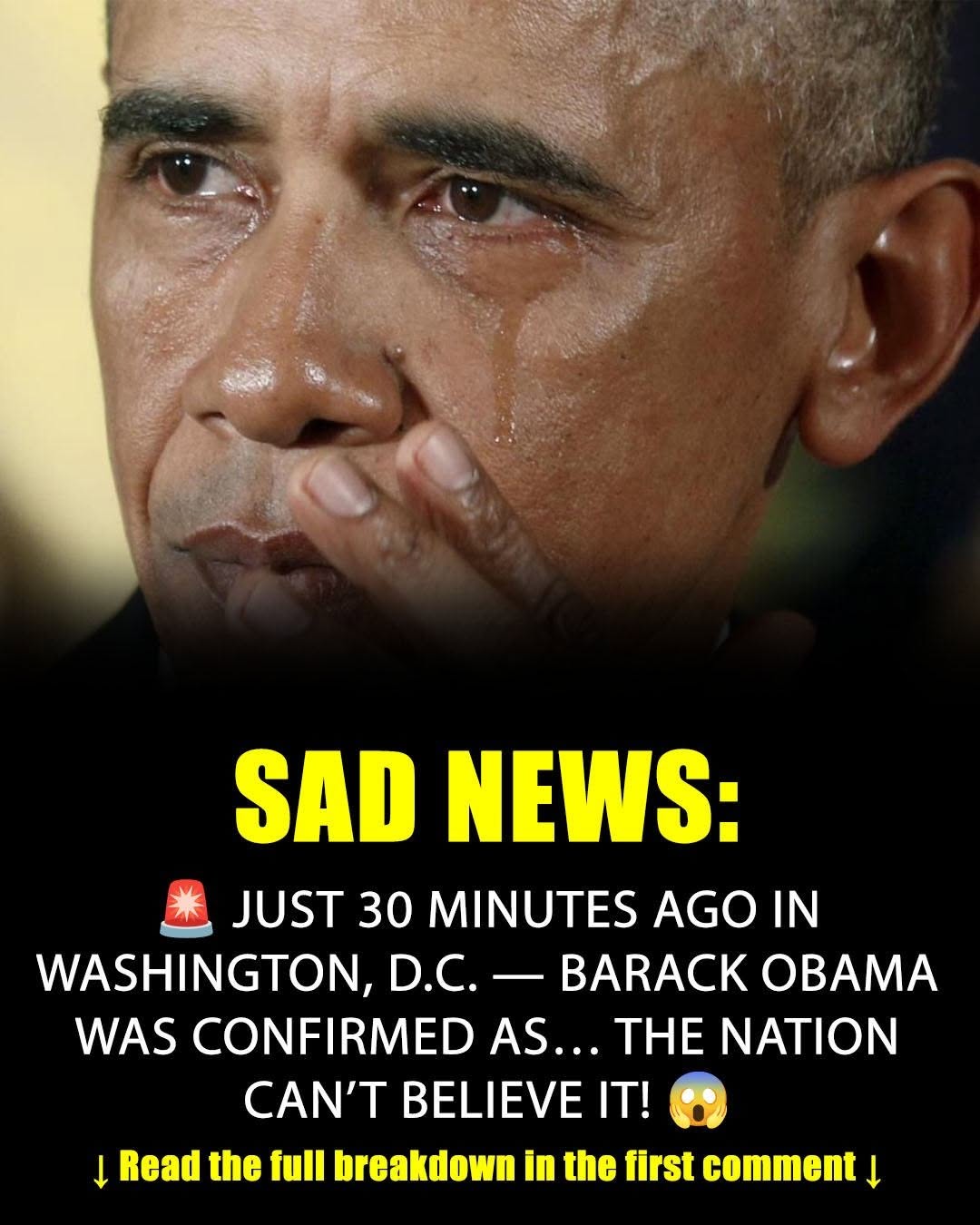
A Moment of Humanity can sometimes reveal more about political leadership than a carefully polished speech. Barack Obama built much of his public image around composure, deliberation, and what observers often called his restrained style. Yet some of the most remembered moments of his presidency came when that restraint visibly gave way to grief.
Those moments followed events that tested the country emotionally as well as politically. After the Sandy Hook Elementary School shooting in 2012, Obama addressed a grieving nation and later traveled to Newtown, Connecticut. At the community vigil, he spoke about 20 children and six adults who had been killed and ended by reading the first names of the 20 children.
Years later, while discussing gun violence at the White House in January 2016, he became visibly emotional while recalling those children. Obama later said that reaction surprised even him and described the Newtown visit as one of the worst days of his presidency.
A Moment of Humanity also appeared in Charleston, South Carolina, where Obama delivered the eulogy for Reverend Clementa Pinckney after nine people were murdered at Emanuel African Methodist Episcopal Church. Near the conclusion, Obama began singing “Amazing Grace,” and the congregation joined him.
These scenes became part of a broader debate about emotional leadership. Supporters saw empathy and sincerity. Skeptics could reasonably point out that every presidential appearance takes place in a highly public, political environment. Both observations can coexist. Public emotion can feel genuine while also carrying political meaning.
I remember watching one of those speeches with people who rarely agreed about politics. The policy debate divided the room almost immediately, yet everyone became quiet when the subject turned to grieving parents and children. What stayed with me was not a particular proposal or partisan argument. It was the sudden change in atmosphere when a public official stopped sounding distant and began sounding personally affected. Some people saw strength in that vulnerability, while others remained skeptical of emotion in politics. Still, the moment sparked a useful conversation about leadership itself: whether people sometimes need facts and decisions, and at other times need someone willing to acknowledge grief without pretending words can erase it.
A Moment of Humanity in Times of National Grief
Sandy Hook and the Language of Shared Loss
The Sandy Hook Elementary School shooting on December 14, 2012, killed 20 children and six educators. Obama addressed the nation that day, speaking not only as president but explicitly invoking the emotions of parents across the country. The White House record shows him describing the victims as “our children” and saying that families in Connecticut needed the country to be at its best.
Two days later, Obama traveled to Newtown for an interfaith vigil.
His speech there offers one of the clearest examples of A Moment of Humanity because he did not present grief as something experienced only by the immediate families. Instead, he framed it as a collective responsibility. He told the community that Americans had wept with them and that they were not alone.
Near the conclusion, he read the first names of the 20 children who had died: Charlotte, Daniel, Olivia, Josephine, Ana, Dylan, Madeleine, Catherine, Chase, Jesse, James, Grace, Emilie, Jack, Noah, Caroline, Jessica, Benjamin, Avielle, and Allison.
That detail matters because it moved the speech away from abstract statistics.
Twenty deaths could appear as a number in a headline. Twenty names forced listeners to confront individual lives.
Several years later, Obama returned to the memory of Sandy Hook while announcing gun-safety executive actions. In a subsequent town hall, interviewer Anderson Cooper referred to the White House ceremony as “obviously emotional.” Obama said he had been surprised by his own reaction and recalled seeing grieving siblings and even Secret Service personnel crying during his Newtown visit.
Therefore, the emotional response often remembered from the Obama presidency did not occur only in December 2012. Sandy Hook continued to affect his public remarks years later.
Emotion Without Pretending Grief Has an Easy Answer
A Moment of Humanity becomes meaningful partly because grief creates a difficult task for any president.
A president must represent national authority while addressing people whose losses no government speech can repair.
Obama acknowledged that limitation directly at Newtown. He said words could not match the depth of the community’s sorrow or heal wounded hearts.
That admission shaped his emotional leadership.
Instead of promising emotional closure, he emphasized presence. He spoke about sharing sadness, comforting families, supporting survivors, and accepting responsibility for protecting children.
However, the speech also moved from mourning into policy.
Obama argued that repeated mass shootings required change and said the country could not accept such events as routine.
That transition demonstrates why emotional leadership in politics remains complicated.
For supporters of Obama’s gun policies, his grief reinforced the urgency of action. For critics of those policies, emotional scenes could risk blurring the line between mourning and political persuasion.
That disagreement does not erase A Moment of Humanity. Instead, it shows how presidents operate simultaneously as mourners, policymakers, communicators, and political actors.
A leader’s emotional response can be sincere while people still disagree strongly about the policies that follow.
Understanding that distinction allows us to examine emotional leadership without turning the discussion into either hero worship or cynicism.
A Moment of Humanity in Charleston and Orlando
When Obama Sang “Amazing Grace”
On June 26, 2015, Obama traveled to Charleston to deliver the eulogy for Reverend Clementa Pinckney, one of nine people murdered during Bible study at Emanuel AME Church.
The setting required something different from a conventional presidential address.
Pinckney was not only a pastor but also a South Carolina state senator whom Obama had previously met. During the eulogy, Obama spoke extensively about the Christian concept of grace and about the families who had responded to horrifying violence with expressions of forgiveness.
Then came A Moment of Humanity that became one of the defining images of the speech.
Obama paused while discussing grace and began singing “Amazing Grace.” The congregation responded, and the moment transformed the eulogy from a political speech into something closer to a communal religious expression. The official transcript records the point where he began singing and the audience joined with applause.
The importance of the moment came partly from its unexpectedness.
Presidents routinely attend memorial services. They frequently deliver carefully prepared remarks. However, singing placed Obama inside the congregation’s emotional language rather than solely above it as the country’s chief executive.
Still, observers can interpret the episode differently.
Some viewed the moment as deeply authentic. Others may see any highly visible presidential act through the unavoidable lens of political symbolism.
Yet the historical record clearly establishes what happened: Obama delivered Pinckney’s eulogy, reflected extensively on grace, and began the hymn before concluding by naming the nine victims.
That makes Charleston an especially strong example of how emotion, faith, rhetoric, and presidential leadership can intersect during collective mourning.
What the Record Shows About Pulse
After the Pulse nightclub shooting in Orlando in June 2016, Obama and Vice President Joe Biden met with victims’ families.
The official White House record confirms an intensely emotional encounter. Obama said the families’ grief was “beyond description” and explained that they had spoken through their tears about their sons and daughters and the joy those loved ones had brought into their lives.
However, precision matters here.
Claims that Obama himself “wept openly while consoling families” circulate in retellings of the event, but the primary White House transcript confirms the families’ tears rather than specifically documenting Obama crying during those private meetings.
Therefore, A Moment of Humanity should not depend on embellishing the record.
What Obama actually said publicly already carried substantial emotional weight.
He described Pulse as a sanctuary for many LGBT people and recognized that the attack specifically targeted that community. He also emphasized compassion, empathy, dignity, and the bonds connecting Americans despite the attack’s hatred.
This distinction between verified fact and emotional reconstruction matters.
Public memories often combine images from different events. Obama visibly cried during other appearances, including his January 2016 remarks about gun violence and Sandy Hook. Over time, those images can become attached to later stories.
Responsible storytelling separates them.
A Moment of Humanity does not become less powerful when the details remain precise. In fact, accuracy strengthens the story because readers do not have to choose between emotional meaning and factual reliability.
A Moment of Humanity and the Meaning of Vulnerable Leadership
Does Showing Emotion Make a Leader Stronger?
Traditional expectations often encourage political leaders to project control.
Presidents handle wars, economic crises, natural disasters, terrorist attacks, public-health emergencies, and national tragedies. Therefore, citizens reasonably expect steadiness.
However, steadiness does not require emotional detachment.
A Moment of Humanity can communicate that a leader understands the emotional dimension of an event rather than processing it only through statistics, policy documents, or official briefings.
Obama’s public persona makes this particularly interesting.
He frequently projected calm and analytical discipline. Consequently, moments when he became visibly emotional attracted greater attention because they contrasted with that familiar style.
His January 2016 reaction to Sandy Hook provides a clear example. Asked shortly afterward about the moment, Obama said he had not expected his own emotional response and explained that the Newtown experience continued to haunt him.
That does not prove anything about the wisdom of the policies he advocated.
Instead, it tells us something narrower but meaningful: the event retained personal emotional significance for him years after it happened.
The distinction matters because emotional authenticity and policy correctness represent separate questions.
Someone may believe Obama’s grief was genuine while opposing his proposals. Likewise, someone may support his policies without believing public emotion should influence political debate.
A useful discussion of A Moment of Humanity leaves room for both positions.
Emotional leadership works best when feeling does not replace reasoning but accompanies it.
Why Skepticism About Political Emotion Is Reasonable
Politics involves persuasion.
Presidents use language, staging, symbolism, location, timing, stories, and imagery to communicate. Therefore, citizens should not suspend critical thinking simply because a politician becomes emotional.
A Moment of Humanity can inspire empathy, but audiences should still evaluate the argument surrounding it.
That means asking whether factual claims hold up, whether proposed policies match the stated goals, and whether leaders apply their moral standards consistently.
The same principle applies across political parties.
A Republican president comforting disaster victims, a Democratic president mourning shooting victims, or any leader speaking after national tragedy deserves evaluation on both human and political levels.
People can also disagree about how much emotion they want from leaders.
Some voters prefer visible empathy because it demonstrates connection. Others prefer restraint because they believe a president’s primary responsibility involves stability and decision-making.
Neither preference automatically proves greater compassion or seriousness.
What makes Obama’s case worth studying is not simply that he cried.
Rather, A Moment of Humanity repeatedly became part of his communication during events involving children, racial violence, terrorism, hate crimes, and gun violence.
Those moments shaped how supporters and critics understood him, even when they reached completely different conclusions.
A Moment of Humanity as Part of Obama’s Historical Image
What Remains Years After the Presidency
Obama left office on January 20, 2017, after serving two terms as the 44th president of the United States.
As of August 2026, his official site identifies him as the 44th president and operates as the Office of Barack and Michelle Obama. Recent reporting also shows him participating in civic, cultural, and political activities as a former president rather than holding a newly confirmed government position in Washington.
Therefore, claims suggesting that a recent emotional image proves Obama has been “confirmed” for a new Washington role should require independent verification.
The emotional photographs most often circulated online frequently come from events during his presidency, especially discussions of gun violence.
That context matters.
A Moment of Humanity can remain memorable for years, but an old photograph can easily acquire a misleading new caption when social media recycles it.
The most famous images of Obama wiping tears over gun violence connect strongly to his January 2016 White House remarks. The official record from a CNN town hall two days later directly discussed that emotional episode.
Meanwhile, the Charleston singing episode dates to June 26, 2015, and the Newtown vigil to December 16, 2012.
Keeping those dates attached to the images protects the historical record.
The Larger Lesson About Leadership and Empathy
A Moment of Humanity ultimately raises a question that reaches beyond Barack Obama.
What do people expect a leader to do when policy cannot undo grief?
No speech can restore a murdered child, reunite a grieving family, or erase the shock of violence.
Yet presidents still have to speak.
Their words become part of how a country processes the event, and their behavior can either create distance or acknowledge shared pain.
Obama’s most memorable responses often combined emotional recognition with a call for collective responsibility.
At Newtown, he moved from mourning toward questions about protecting children. In Charleston, he framed tragedy through grace, racial history, faith, and community. In Orlando, he emphasized compassion while explicitly recognizing the attack on LGBT people.
Whether someone admires Obama’s politics or rejects them, these speeches offer useful material for studying the emotional role of the presidency.
A Moment of Humanity does not require pretending that a leader has no political motives.
Nor does healthy skepticism require assuming every tear must be false.
Human behavior rarely fits either extreme.
A leader can feel grief, understand the symbolism of expressing it publicly, and still use that moment to advocate for policy.
Those realities can exist at the same time.
That complexity may explain why the images endure. They capture a president not simply delivering information but visibly confronting events that resisted easy language.
Frequently Asked Questions
Did Barack Obama cry over the Sandy Hook shooting?
Yes. Obama displayed visible emotion when speaking about Sandy Hook, including during January 2016 White House remarks on gun violence. He later discussed that emotional reaction at a CNN town hall and said the Newtown experience continued to haunt him.
Did Obama read the names of the Sandy Hook children?
At the December 16, 2012, Newtown interfaith vigil, Obama concluded part of his remarks by reciting the first names of the 20 children killed at Sandy Hook Elementary School. The official transcript preserves the complete sequence.
Did Barack Obama really sing “Amazing Grace” in Charleston?
Yes. During Reverend Clementa Pinckney’s June 26, 2015, funeral service, Obama began singing “Amazing Grace” near the end of his eulogy. The moment appears in the official White House transcript and video record.
Did Obama cry while meeting Pulse nightclub victims’ families?
The official record confirms that Obama and Biden met with grieving families and that Obama described family members speaking through tears. However, the primary transcript does not specifically establish the frequently repeated claim that Obama himself openly wept during those private meetings.
Does Barack Obama currently hold a new government role in Washington?
As of August 2026, official and recent reliable sources identify Obama as a former president operating through the Office of Barack and Michelle Obama and engaging in public activities. The sources reviewed here do not establish a newly confirmed federal government position in Washington.
Conclusion
A Moment of Humanity remains one of the most revealing ways to examine Barack Obama’s public leadership because it highlights the tension between presidential authority and ordinary human emotion.
The historical record supports several powerful examples.
After Sandy Hook, Obama spoke to grieving families in Newtown and ended by naming the 20 children who had been killed. Years later, remembering those children brought visible tears during his discussion of gun violence.
In Charleston, he delivered Reverend Clementa Pinckney’s eulogy and unexpectedly moved into “Amazing Grace,” turning a presidential address into a shared moment with the congregation.
After Pulse, he met grieving families and publicly emphasized compassion, dignity, and solidarity while recognizing that the attack had targeted the LGBT community.
None of these events requires us to accept a particular political interpretation.
Supporters can view them as evidence of empathy. Critics can continue questioning the policies and political messaging surrounding them. Both responses belong in a serious discussion of presidential leadership.
What A Moment of Humanity demonstrates most clearly is that emotional expression and political power are not necessarily opposites.
Sometimes the person standing behind the presidential seal still has to confront an experience for which authority offers no simple answer.
In those moments, leadership may involve action, policy, restraint, and strength. However, it can also involve acknowledging that a country is grieving and allowing the public to see that the person speaking feels some of that grief too.
WP Recipe Maker JSON Import
{
  "title": "A Moment of Humanity: Barack Obama’s Emotional Leadership",
  "summary": "A fact-checked examination of Barack Obama’s emotional leadership during Sandy Hook, Charleston, Orlando, and other moments of national grief.",
  "notes": "This entry is an informational historical and political analysis rather than a food recipe. It distinguishes verified public records from interpretations or unsupported viral claims.",
  "ingredients_flat": [
    { "amount": "1", "unit": "", "name": "historical context" },
    { "amount": "1", "unit": "", "name": "verified public records" },
    { "amount": "1", "unit": "", "name": "balanced analysis of emotional leadership" }
  ],
  "instructions_flat": [
    {
      "name": "Step 1",
      "text": "Review verified records of Barack Obama’s responses to major national tragedies, including Sandy Hook, Charleston, and Orlando.",
      "summary": "",
      "image_url": ""
    },
    {
      "name": "Step 2",
      "text": "Separate documented events from later retellings, photographs, captions, and unverified claims.",
      "summary": "",
      "image_url": ""
    },
    {
      "name": "Step 3",
      "text": "Consider how empathy, grief, public communication, and policymaking can operate simultaneously in presidential leadership.",
      "summary": "",
      "image_url": ""
    },
    {
      "name": "Step 4",
      "text": "Recognize that sincere emotion does not require agreement with the policies or political conclusions surrounding it.",
      "summary": "",
      "image_url": ""
    },
    {
      "name": "Step 5",
      "text": "Evaluate emotional political moments with both empathy and critical attention to historical accuracy.",
      "summary": "",
      "image_url": ""
    }
  ],
  "equipment": [
    { "name": "Verified historical records", "notes": "" },
    { "name": "Primary-source transcripts", "notes": "" },
    { "name": "Reliable current reporting", "notes": "" }
  ],
  "nutrition": {
    "calories": "0",
    "carbohydrates": "0 g",
    "protein": "0 g",
    "fat": "0 g",
    "saturated_fat": "0 g",
    "polyunsaturated_fat": "0 g",
    "monounsaturated_fat": "0 g",
    "trans_fat": "0 g",
    "cholesterol": "0 mg",
    "sodium": "0 mg",
    "potassium": "0 mg",
    "fiber": "0 g",
    "sugar": "0 g",
    "vitamin_a": "0 IU",
    "vitamin_c": "0 mg",
    "calcium": "0 mg",
    "iron": "0 mg"
  },
  "tags": {
    "course": ["Historical Analysis"],
    "cuisine": ["Not Applicable"],
    "keyword": ["A Moment of Humanity", "Barack Obama emotional leadership", "Obama Sandy Hook speech", "Obama Amazing Grace", "presidential empathy"]
  }
}
SEO Output
Focus Keyword: A Moment of Humanity
SEO Title: A Moment of Humanity: Barack Obama’s Emotional Leadership
Meta Description: A Moment of Humanity explores Barack Obama’s emotional leadership during Sandy Hook, Charleston, Orlando, and moments of national grief.
Expert SEO Title: A Moment of Humanity: 7 Powerful Lessons From Obama
Midjourney Prompt: Barack Obama during a solemn presidential speech, visibly emotional with reflective expression and slightly bowed head, dignified dark suit and presidential setting, subtle American flag in the background, documentary-style realistic photography inspired by moments of national mourning, respectful nonpartisan editorial mood, natural facial detail, soft dramatic lighting, restrained composition, historically grounded atmosphere, vertical composition, clean background, generous negative space near the upper portion for Pinterest text overlay –v 6 –ar 2:3
More Blog
- Drinking Water on an Empty Stomach — What Science Actually Supports (No Hype, Just Facts)
- Waking Up Between 3 and 5 AM? It Might Be Your Soul Trying to Talk to You
- What a “Bleach” Patch on Your Underwear Really Means — And Why It’s Actually a Good Sign
- This Drink May Weaken Your Bones From The Inside — But Everyone Drinks It Anyway